A significant new residential development has been proposed for Kickham Street in Thurles, potentially providing 42 homes close to the town centre.
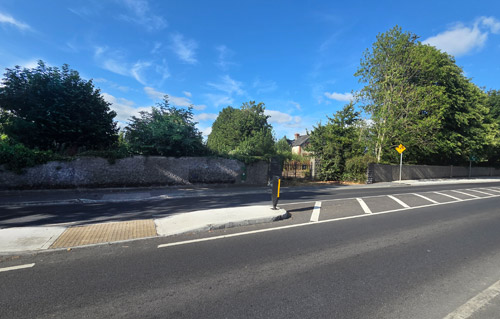
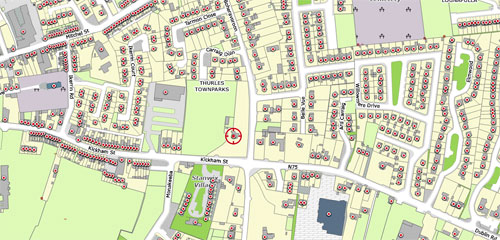
Coolross Homes Ltd has submitted a planning application to Tipperary County Council for the development on lands at Innisfail, Kickham Street, Thurles, (Eircode E41 P8X8). The proposed scheme would offer a varied selection of houses and apartments intended to accommodate individuals, couples and families with different housing requirements.
Plans for the site include two-storey semi-detached houses containing two, three and four bedrooms. A two-storey terraced building incorporating one-bedroom and two-bedroom apartments is also included in the application.
The mixture of property sizes is one of the most notable elements of the proposal. Smaller apartments could provide options for single occupants, couples, older residents or people hoping to establish their first independent home. Meanwhile, the larger houses would be more suitable for families requiring additional bedrooms and living space.
The proposed location could also prove attractive because of its proximity to the centre of Thurles. Residents would potentially be within convenient reach of shops, schools, sporting facilities, public services and other local amenities. Developing homes within or close to an established urban area may also help support local businesses while reducing dependence on longer journeys for everyday needs.
View Identifying Map.
Thurles has experienced continued demand for additional housing, with several public and private residential projects progressing through planning, design or construction in recent years. Recent developments in the town have included homes of different sizes and tenures, demonstrating the need for a broad range of accommodation rather than a single type of property.
However, the submission of an application does not mean that construction has been approved. Tipperary County Council must examine the proposal in detail, including matters such as access, traffic, drainage, public services, residential amenity, landscaping and the development’s relationship with neighbouring properties.
Given the continued failure of local politicians to deliver meaningful progress on either the proposed Inner Relief Road or the long-awaited Outer Ring Road, traffic congestion must now become a central and decisive consideration in the assessment of every future planning application in Thurles. Any further permissions granted, without first addressing the town’s already serious traffic problems, risk placing an intolerable additional burden on an increasingly overstretched road network.
Members of the public will also have an opportunity to examine the planning documents and make observations within the statutory consultation period.
The council’s eventual decision will determine whether the 42-home development can proceed as submitted, requires amendments or is refused permission.
The Local Authority Waters Programme, commonly known as LAWPRO, has now officially become the River Basin Management Service, marking a new chapter in the organisation’s work to protect and restore water quality across Ireland.
The service works on behalf of Ireland’s 31 local authorities and is funded by the Department of Housing, Local Government and Heritage. It supports the protection of rivers, lakes, estuaries, groundwater and coastal waters through scientific catchment assessments, community engagement and coordinated local-authority action. Although the organisation has adopted a new name and visual identity, its mission, structure and responsibilities remain unchanged. The new title is intended to provide a clearer description of its role in supporting Ireland’s national water-quality objectives and the implementation of river basin management plans.
Established in 2016, the organisation has worked with local authorities, government agencies, farmers, landowners, volunteers, environmental organisations and community groups to identify pressures affecting water quality and develop suitable local responses.
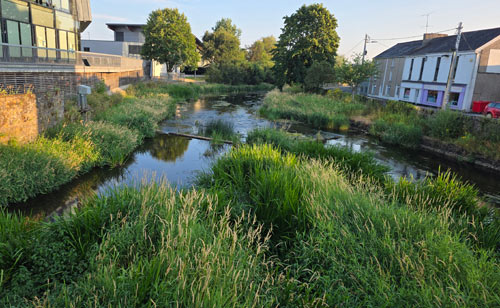
Unsatisfactory state of the River Suir, in Thurles town centre, yesterday. Pic; G. Willoughby.
Minister for Housing, Local Government and Heritage Mr James Browne, TD, welcomed the announcement. He said the new name reflects the organisation’s important role in coordinating and supporting the protection and restoration of water bodies as Ireland prepares its next Water Action Plan. The River Basin Management Service will continue carrying out catchment-science assessments, helping local authorities implement national water policy and providing financial assistance to community organisations working to improve their local waters.
Community participation has been central to the organisation’s activities. Since its establishment, approximately €7.5 million has been awarded to 1,208 projects through the Community Water Development Fund and Catchment Support Fund. Further support has been provided through the Small Grants and Events Scheme and annual Heritage Week funding. These programmes enable communities to organise water-awareness events, citizen-science initiatives, biodiversity projects, environmental surveys and other activities that benefit local rivers, lakes and coastal areas. The organisation’s work is particularly relevant to communities along the River Suir, including Thurles, where residents have raised concerns about declining water quality, excessive aquatic vegetation and changes affecting fish and other wildlife.
At a public meeting in County Tipperary in November 2025, attendees highlighted concerns about the River Suir from Thurles upstream. Issues discussed included nutrient pollution, excessive weed growth and reductions in fish and aquatic life. The meeting also heard that scientific assessments were being conducted across the wider Suir catchment to identify the main pressures affecting its waters.
Despite all the talking, no serious effort by Tipperary Co. Council to halt effluent flowing from drainage pipes, easily visible from Thurles Town centre.
Such assessments demonstrate the importance of combining scientific evidence with local knowledge. Information from residents, anglers, farmers and community groups can help specialists understand changes within a river and determine which measures are most likely to improve its ecological condition.
Mr Anthony Coleman, Director of Services at the River Basin Management Service, confirmed that the organisation will continue operating as the same local-authority shared service. Its work will remain focused on catchment science, community engagement, partnership development, funding support and collaborative action. The service will maintain a science-led approach to identifying environmental pressures and targeting solutions. Its specialists examine water bodies and surrounding landscapes to establish which activities may be affecting water quality and where intervention is most urgently needed.
It will also continue developing its Nature-based Solutions programme and the Blue Dot Catchments Programme, which supports the protection of Ireland’s highest-quality waters. In addition, it will coordinate the Farming for Water European Innovation Partnership and expand training programmes for local-authority staff.
By adopting the Local Government Ireland identity, the River Basin Management Service is strengthening its connection with the local-government sector and aligning itself with other shared services. While its name has changed, its central commitment remains the same; bringing together science, local authorities and communities to protect Ireland’s waters and create healthier catchments for future generations.
Minister for Rural and Community Development and the Gaeltacht, Mr Dara Calleary TD, will visit Tipperary and Clare on Friday, 24 July, for a full programme highlighting newly completed community, recreational and biodiversity projects.
The Minister’s visit begins at 9:00am with the official opening of Thurles Market Quarter, Town Parks, Thurles. He will then open Loughtagalla Biodiversity Play Park, Thurles at 10.30am, followed by Carrig Community Park, Carrig, Co. Tipperary, at 11.50am.
At 12.35pm, Minister Calleary will travel to Lorrha to view the renovated St Ruadhan’s Hall and visit the SCEAL Community Shop and Café, two facilities supporting local services and community life.
The afternoon programme moves to County Clare, beginning in Bunratty at 3.15pm, where the Minister will launch a new boat for Bunratty Search and Rescue Service.At 5.15pm, he will officially open the upgraded Lahinch Playground and launch the Clare Outdoor Recreation Plan on the town’s promenade. The day will conclude at 6.45pm with the opening of Corofin Community Centre.
This series of engagements will recognise the work of local volunteers, community organisations and public bodies involved in bringing the projects to completion.
Together, the developments provide improved parks, play areas, rescue resources, meeting spaces and community services for residents and visitors. They also demonstrate the important role locally led projects can play in strengthening rural towns and villages, supporting wellbeing, protecting biodiversity and creating welcoming public spaces for people of all ages.
One Council Restores History While Another Erases It – The Loss of Thurles’s Famine Double Ditch.
The decision by Dún Laoghaire-Rathdown County Council to spend approximately €660,000plus VAT restoring a historic ha-ha wall in Marlay Park (latter a sunken landscape boundary that uses a hidden trench and a vertical retaining wall), has understandably generated debate. The 197-metre structure, believed to date from the early nineteenth century, was designed to separate landscaped gardens from grazing animals without interrupting views across the estate. Much of its original locally sourced granite survived beneath vegetation, but the wall had fallen into disrepair. Restoration required specialist conservation work, dismantling and rebuilding sections of dry-stone wall, repairing the ditch and incorporating drainage infrastructure. The original contract was valued at €625,398 excluding VAT, with the final estimate rising to €660,374 following delays, unsuitable ground material, severe weather and difficulties obtaining appropriate stone.
Local construction professionals and taxpayers are entitled to question whether that represents value for money. Public bodies must explain how costs are calculated, why projects exceed their initial budgets and whether procurement arrangements adequately protect the public purse. Dún Laoghaire-Rathdown County Council has already faced criticism over the €753,528 cost of works at an entrance to Deerpark in Mount Merrion. That project is frequently described as the construction of “14 steps”, although the council says it also included a wheelchair-accessible ramp, retaining walls, granite paving, seating, landscaping, pedestrian crossings, road resurfacing, drainage, traffic-signal equipment and other public-realm works. The criticism of these costs is legitimate. Nevertheless, one important fact should not be forgotten: Dún Laoghaire-Rathdown County Council recognised that an historic structure was worth preserving.
That approach stands in painful contrast to what happened in Thurles.
The Thurles Great Famine Double Ditch was regarded locally as a rare surviving famine-era landscape feature. Local historical accounts date its construction accurately to 1846 and associate it with relief work provided to men and boys during the Great Famine. Rather than representing the landscaped elegance of a wealthy Dublin estate, this Double Ditch recalled hunger, poverty and the desperate struggle of local families to survive. It was not simply an old embankment. It was a physical connection with one of the darkest periods in Irish history. For generations, the route was also described locally as a public walkway and Mass path. Campaigners argued that it formed part of the social history of Thurles and should have been incorporated into a protected heritage trail.
Despite repeated warnings, the entire section of the Double Ditch was cleared in March 2022 supported by local councillors, as part of works connected with as yet a non existent, only proposed Thurles inner relief road. Contemporary photographs and local reporting showed mature vegetation being removed and the historic landscape feature being levelled by machinery.
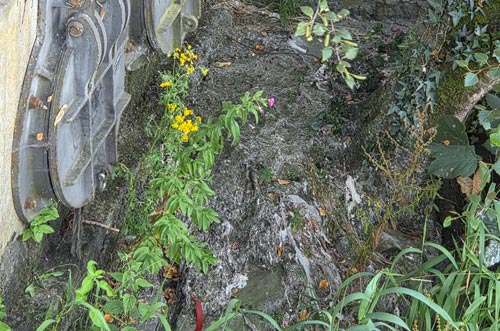
Historic Thurles Double Ditch Eradicated in 2022. Pic. G.Willoughby.
Once such a structure is destroyed, it cannot truly be recreated. A replica might reproduce its approximate appearance, but it cannot restore the original stones, soil, boundaries and physical connection with the people who constructed it during the Great Famine.
This is the real loss suffered by Thurles. Tipperary County Council regularly speaks about protecting heritage and connecting communities with their past. Yet the treatment of the Double Ditch demonstrates the gulf that can exist between heritage policies and decisions taken on the ground. Roads and development are necessary, but heritage protection does not require a complete rejection of progress. It requires imagination, consultation and a willingness to examine alternative designs before destruction becomes inevitable.
The contrast between the two councils is striking. In Dublin, hundreds of thousands of euro are being spent restoring an aristocratic landscape feature. In Thurles, a structure associated with ordinary people surviving the Great Famine was treated as totally expendable. The Marlay Park bill deserves detailed scrutiny. So does every major publicly funded project. But the principle of conserving historic structures should be welcomed.
Led by the denials of elected councillors; mainly Mr Michaél Lowry (Non Party), Mr Sean Ryan (FF) and Mr Seamus Hanafin (FF), together with senior council officials, through wilful ignorance, self-deception, blind persistence and despite knowing better oversaw this reckless destruction. Thus the tragedy in Thurles is that the debate never reached the question of restoration costs.
The Double Ditch was not protected long enough for restoration to become an option. Dún Laoghaire–Rathdown County Council may reasonably be criticised for excessive costs. Tipperary County Council should be criticised for allowing irreplaceable local history to be destroyed.
One council appears willing to spend too much preserving history. The other did too little before all of that history was totally eradicated and lost forever.
Neither approach represents good stewardship of public money or public heritage, and the waste continues without the consent of the Irish taxpayer.
County Tipperary Chamber is calling on every business in Thurles and the surrounding area to complete the Thurles Bypass Business Impact Survey before Friday, 7 August 2026.
For decades, the people and businesses of Thurles have heard proposals, commitments and political assurances regarding essential road infrastructure. However, the town is still waiting for the completed Inner Relief Road and the long-promised Outer Ring Road or Thurles Bypass.
As recently highlighted by Thurles.info, announcements and expressions of political support are not the same as approved funding, a binding construction programme or a completed road.
Thurles businesses need delivery, certainty and measurable progress. Traffic congestion is not merely an inconvenience. It imposes real and continuing costs on local employers. It delays deliveries, wastes staff time, disrupts logistics, restricts customer access and makes it more difficult for businesses to plan, invest and expand. Every delayed journey affects productivity. Every customer discouraged by congestion represents a potential loss to the local economy. Every infrastructure project that remains uncertain can influence future investment and employment decisions.
This aforementioned survey provides businesses with an opportunity to transform those daily experiences into clear, credible and representative evidence. County Tipperary Chamber recently welcomed Thurles native Mr John O’Shaughnessy CDir MBA LL.B (Hons) Dip IOD, Managing Director of Clancy, as its new President. Mr O’Shaughnessy has taken on the presidency at a critical time for business confidence and regional competitiveness. His focus on delivery, effective advocacy and ensuring that the voice of Tipperary business is heard consistently at local and national level is particularly relevant to the infrastructure challenges facing Thurles.
Under his leadership, the Chamber is determined to ensure that the concerns of local businesses are supported by strong evidence and presented directly to Government and other decision-makers.
That effort now requires the support of the Thurles business community. Whether you operate a retail shop, hospitality venue, professional practice, manufacturing company, transport business or family enterprise, your experience matters.
The survey is open to Chamber members and non-members and to businesses of every size and sector.
Government departments require more than general expressions of concern. They require evidence showing how congestion affects operating costs, staffing, deliveries, customer access, competitiveness, investment and future growth.
The greater the response, the stronger the Chamber’s case will be.
This is not about creating another report that sits on a shelf. It is about establishing a compelling business case for action and demonstrating that Thurles cannot continue to compete effectively without modern, dependable transport infrastructure.
A sincere thanks to every business that has already participated. Your time and first-hand knowledge are all helping to build the evidence needed to secure meaningful progress. To those who have not yet responded, please do not assume that another business will speak for you. Every completed survey adds weight, credibility and urgency to this campaign.
Thurles deserves roads, investment and delivery, not more uncertainty or political promises.
This website uses cookies to improve your experience. We'll assume you're ok with this, but you can opt-out if you wish.AcceptRead More
Privacy & Cookies Policy
Privacy Overview
This website uses cookies to improve your experience while you navigate through the website. Out of these, the cookies that are categorized as necessary are stored on your browser as they are essential for the working of basic functionalities of the website. We also use third-party cookies that help us analyze and understand how you use this website. These cookies will be stored in your browser only with your consent. You also have the option to opt-out of these cookies. But opting out of some of these cookies may affect your browsing experience.
Necessary cookies are absolutely essential for the website to function properly. This category only includes cookies that ensures basic functionalities and security features of the website. These cookies do not store any personal information.
Any cookies that may not be particularly necessary for the website to function and is used specifically to collect user personal data via analytics, ads, other embedded contents are termed as non-necessary cookies. It is mandatory to procure user consent prior to running these cookies on your website.






Recent Comments