Application Ref: 2660461. Applicant: Air Impact Ltd. Development Address: Racecourse Retail Park, Thurles, Co. Tipperary. Development Description: The temporary storage containers on site and PERMISSION for change of design of previously granted store shed, which consists of increase footprint/area and alterations to elevations of previously granted store shed, including all ancillary site works. This store shed was previously granted permission under planning permission Ref. no. 2560292. Status: Conditional. Application Received: 18/05/2026. Decision Date: 01/07/2026. Further Details:http://www.eplanning.ie/TipperaryCC/AppFileRefDetails/2660461/0.
Sinn Féin’s Housing Record: Opposition, Alternatives and the Charge of NIMBYism, (“Not In My Backyard”).
Ireland’s housing crisis has produced no shortage of political outrage. Sinn Féin has been among the loudest voices condemning missed targets, unaffordable rents and the chronic shortage of homes. But a party that presents itself as the answer to the housing emergency must be judged not only by what it promises nationally, but by what its representatives do when actual developments are proposed locally. That is why Mrs Mary Lou McDonald’s latest planning appeal matters.
The Sinn Féin president and Dublin Central TD has joined local party councillor Seamus McGratten in appealing permission for a 249-bed student-accommodation development on the former Matt’s of Cabra pub site, at Fassaugh Avenue in Dublin 7. An Coimisiún Pleanála’s official record confirms the appeal, which was lodged in June 2026. A decision is due by October 6.
Mrs McDonald argues that the land should instead be used for social and affordable housing. She has raised concerns about height, overlooking, traffic, parking, drainage, road safety and pressure on local services. Any one of those concerns may sound reasonable when considered in isolation. Almost every substantial urban development creates some local inconvenience or planning trade-off. The problem is that Ireland can no longer pretend those trade-offs do not exist. We cannot demand tens of thousands of additional homes and student beds while insisting that every development must create no traffic, cast no shadow, inconvenience no neighbour, alter no streetscape and place no pressure on existing services. That is not a housing policy. It is a formula for building almost nothing.
The Cabra scheme is particularly revealing because this is not the first time Mrs McDonald has opposed a major residential proposal on the same site. An earlier application sought permission for 117 build-to-rent apartments. That proposal also faced opposition from the Sinn Féin leader. The political message is difficult to ignore: apartments were unsuitable, and now student accommodation is unsuitable too. Social and affordable housing is presented as the preferred alternative, but no equivalent 249-unit public-housing project is currently being delivered on the site.
It is always easier to endorse the ideal development that does not yet exist than to accept the imperfect one that is ready to proceed. Mrs McDonald’s suggestion that student accommodation should instead be built at Grangegorman, illustrates the familiar politics of displacement: housing is necessary, but “somewhere else.” would be better. Every constituency has a “somewhere else.” Taken together, those arguments are one reason Ireland finds itself trapped in endless cycles of objections, appeals, redesigns and delays.
Dedicated student accommodation is also not unrelated to the wider housing crisis. Students who cannot secure purpose-built rooms compete for houses and apartments in the private rental market. Blocking student beds does not eliminate demand; it pushes that demand back into neighbourhoods already struggling with high rents and limited supply.
The Cabra controversy would be less damaging for Sinn Féin if it were an isolated case. It is not. Sinn Féin representatives have opposed, appealed, challenged or voted against numerous housing-related developments. Fine Gael has claimed that the party objected to, voted against or attempted to hinder 11,687 homes in Dublin between 2018 and 2023, later increasing its claimed total to more than 12,000. Those figures come from a political opponent and should not be accepted uncritically. The totals combine formal objections with council votes, rezoning disputes, legal actions and opposition to particular development or land-transfer models.
A detailed Journal FactCheck found that an earlier claim that Sinn Féin had objected to approximately 6,000 homes was misleading because many of the cases concerned affordability, public-land disposal or tenure rather than straightforward opposition to construction. That qualification is important,but it is not a complete defence. Sinn Féin frequently says it supports building on a site but opposes the proposed mix of private, affordable and social homes. It says public land should remain public and that developments should contain more genuinely affordable housing. Those are legitimate ideological positions. However, rejecting developments because they do not conform to Sinn Féin’s preferred model still has consequences. A home delayed by a dispute over tenure remains a home unavailable to a family. A project voted down because it includes private housing does not shelter anyone while politicians debate the perfect ownership structure.
Some cases involved more direct opposition. At Kilbride Lodge in Bray, two Sinn Féin councillors voted against 18 social-housing apartments. In Knocklyon, two party councillors opposed 27 social homes proposed on football pitches, although three other Sinn Féin councillors supported the development. At Fosterstown North in Swords, Sinn Féin councillors backed legal action concerning a 278-home scheme, citing density, height and school-capacity concerns.
Oscar Traynor Road, O’Devaney Gardens, Ballymastone, Killinarden and Kilcarbery, here Sinn Féin also opposed development arrangements involving hundreds of homes. The party’s position was generally that the public land involved should deliver more social and affordable housing rather than being developed under private or mixed-tenure models.
Yet this exposes the central contradiction in Sinn Féin’s approach. The party wants to be judged on the housing system it imagines, while dismissing criticism of the developments its representatives actually oppose. It promises dramatic increases in supply, but too often treats individual projects as optional whenever the location, height, tenure or design becomes politically uncomfortable. In the 2024 general-election campaign, Sinn Féin promised 300,000 homes over five years, including 125,000 social, affordable-purchase and affordable-rental homes. Such ambition requires difficult choices. It requires accepting apartments, density, construction disruption, mixed-tenure developments and buildings taller than many existing neighbours would prefer. It requires political leaders to tell communities that additional housing cannot always be built without changing their surroundings.
The real test of a housing party is not whether it supports housing in theory. Every party supports housing in theory. The test is whether it supports enough real developments, in real communities, to match its promises. Sinn Féin is entitled to challenge poor planning and demand better affordability. But when its representatives repeatedly oppose concrete proposals, while insisting that a different development, would be preferable, scepticism is justified.
Ireland does not need another party that promises abundance nationally and practises obstruction locally. Until Sinn Féin reconciles those two positions, its housing rhetoric will continue to look less like a credible delivery plan and more like political opportunism; blame the Government for every shortage, promise a perfect alternative, and object when construction reaches your own doorstep.
Ireland may be about to create an entirely new residential construction market, but the opportunity is being misunderstood.
In April, the Irish Government announced proposed planning exemptions that would allow a detached auxiliary dwelling of between 32 m² and 45 m² to be built behind an existing home and connected to the main house’s services. The detailed conditions have not yet been finalised, and the regulations still require environmental assessment and Oireachtas approval.
That distinction matters. This is not simply permission to place a larger garden room beside the patio. It is a proposal to create a new home without the conventional planning process.
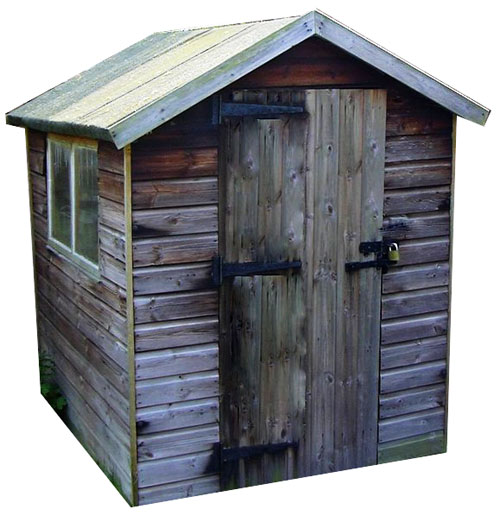
Homenot a shed!
And a home is not a shed with better finishes. The Government has explicitly stated that all relevant Building Regulations, Building Control requirements and fire-safety rules will continue to apply. Removing planning permission does not remove the obligation to design, construct and certify a safe, energy-efficient dwelling.
That is where the real market disruption begins. Ireland already has a capable garden-room sector supplying offices, gyms, studios and leisure spaces. Many of those companies deliver attractive buildings quickly and efficiently. But a structure intended for occasional use is fundamentally different from a dwelling occupied every day and night. A compliant home must address structure, insulation, ventilation, airtightness, energy performance, drainage, fire safety, radon protection, access and long-term durability. Depending on the final regulatory route, it may also require professional design input, a commencement notice, inspection documentation, energy assessment and completion certification. These obligations are not administrative extras. They are the product.
The commercial risk is obvious. Homeowners may compare two buildings that appear almost identical online: one offered as an inexpensive “garden pod” and another priced as a fully designed and certified dwelling. The cheaper option may win at the kitchen table because the most important differences are hidden inside the floor, walls, roof, ventilation system and compliance file. Those differences may only become visible years later — during a sale, an insurance claim, a mortgage application or an investigation following a fire or structural failure.
That creates four urgent challenges for the industry. ► First, design must become repeatable. The strongest providers will develop standardised systems that can be engineered, energy-modelled and documented once, then adapted responsibly for each site. ► Second, buyers need meaningful protection. A marketing promise or company guarantee is not the same as independent certification, professional indemnity cover and a credible structural warranty. ► Third, contractors need a clear delivery process. Responsibility for design, assigned roles, inspections, testing and handover documentation must be established before work begins — not assembled retrospectively when a customer asks for proof. ► Fourth, the public needs better information. “Planning exempt” must never be allowed to become shorthand for “unregulated.”
There is also confusion around tax. Revenue currently allows up to €14,000 of qualifying Rent-a-Room income to be exempt from Income Tax, PRSI and USC. However, current guidance says a detached self-contained unit does not qualify. The Government has only committed to considering how auxiliary dwellings might interact with the relief. The opportunity remains substantial. Families need flexible accommodation. Adult children need routes to independence. Older homeowners need options. Ireland needs additional housing capacity.
But the winners will not be the businesses that manufacture the cheapest box. They will be the contractors and partners that can deliver a genuine home: designed correctly, built safely, tested properly, certified transparently and supported long after handover. That is the standard serious builders should establish before the first advertising campaign begins.
In this market, compliance will not slow the sale. Compliance will be the sale.
Thurles Inner Relief Road: New Tender Documents Raise Serious Questions Over Timelines, Political Claims and the Destruction of the Great Famine Double Ditch.
The publication of new tender documents for the Thurles Inner Relief Road has been presented as a significant milestone for a long-delayed project. In one sense, it is. After years of promises, updates and political announcements, Tipperary County Council has now gone to the market seeking engineering technical consultancy services to progress the scheme. But the detail contained in the newly published tender raises serious questions about the true timeline for delivery, the accuracy of previous political claims, and the destruction of the historic Great Famine “Double Ditch”, to facilitate a road that still appears to be years away from completion.
The official eTenders notice, published in July 2026, confirms that Tipperary County Council is seeking a multi-disciplinary technical consultancy team for the Thurles Inner Relief Road. The tender describes the work as including a review of existing documents, completion of outstanding deliverables for Stages 3 and 4, and preparation of deliverables through Stages 5 to 7. Crucially, the official notice gives the contract duration as 50 months.
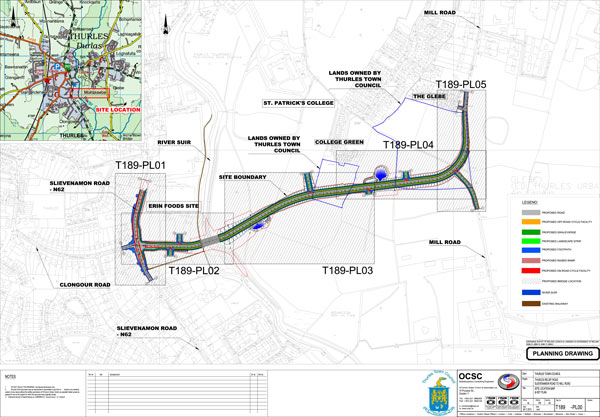
That single figure changes the entire public understanding of this project. The proposed road is not simply waiting for diggers to arrive. Tipperary County Council’s own January 2026 management report described the scheme as an approximately 1.1km local link between the N62 and Mill Road, including a signalised junction at Slievenamon Road, a new priority junction with Mill Road, five intermediate access junctions, public lighting, flood alleviation works and a 50-metre tied bowstring arch crossing of the River Suir.
This is a substantial piece of infrastructure, and the new tender shows that major consultancy, design, approval, procurement, construction supervision, handover and defects processes still remain. The public therefore deserves honesty about the timeline. That honesty is especially important because previous political messaging now appears highly questionable. In November 2025, press reported that Deputy Mr Ryan O’Meara said Minister for Transport Mr Darragh O’Brien expected construction to commence on the Thurles Inner Relief Road the following year;2026. The same report quoted Deputy O’Meara as saying that Department of Transport officials had advised him the project should be completed and opened in approximately 24 months from then.
How does that claim stand beside a 50-month consultancy contract published in July 2026? If the tender process for the consultancy team is only now underway, and if that consultancy contract itself is expected to run for approximately 50 months, then completion by late 2027 is no longer credible. It is not enough to simply welcome “progress” while ignoring the contradiction. Deputy O’Meara should clarify exactly what he was told, by whom, and on what basis the public was led to believe that the road could be completed and opened in roughly two years.
This matters because Thurles people have heard promises about this project for far too long. Planning permission for the road was granted as far back as 2014, according to earlier press and local radio reporting. More than a decade later, the project is still moving through consultancy and design stages. Local frustration is understandable. But frustration should not be used as a cover for spin. Nor should the traffic needs of Thurles be used to brush aside the heritage loss already caused by this scheme.
The planned route has been linked for years by local campaigners and heritage advocates to the Great Famine “Double Ditch” at Mill Road. In 2020, Thurles.info publicly asked whether the planned Inner Relief Road would negatively affect what it described as the 1846 Thurles Double Ditch, a right of way and Mass Path associated locally with famine-era history. The warnings did not stop there. In February 2021, Thurles.info published commentary on an Archaeological Impact Statement, arguing that the proposed road would most likely impinge on the Great Famine Double Ditch in two locations. In March 2021, the same local outlet reported that Cllr Jim Ryan had confirmed the Double Ditch was to be destroyed to construct the Inner Relief Road. This was despite phone denials by Councillor Mr Micheál Lowry of the “Lowry Team”, who readers will remember inquired as to my standing in the community. {☺☺☺}
These are not minor matters. A famine-era pathway, Mass Path or heritage landscape is not just an inconvenience on a drawing. It is part of the physical memory of a town and its people. If warnings were made before destruction occurred, then the question must be asked clearly: why was the Double Ditch not protected, preserved, recorded more fully, or incorporated into the design?
Was every alternative route examined? Was the public given a full explanation? Was the heritage value properly weighed against the road design? Who decided that destruction was acceptable? And why is Thurles now being asked to accept the loss of a historic feature while the road itself may not be complete until around 2030 or later?
Nobody disputes that Thurles needs traffic solutions. The town has long suffered from congestion, poor circulation and pressure on its historic centre. A second river crossing and an improved link between Slievenamon Road and Mill Road may well bring benefits. But infrastructure should not be delivered through vague timelines, political overstatement and irreversible heritage loss. The publication of the new tender documents should therefore be treated as more than a procedural step. It should be treated as a moment of accountability.
Tipperary County Council should publish a clear and realistic delivery programme for the Thurles Inner Relief Road. Deputy Ryan O’Meara should explain the gap between his previously reported 24-month completion claim and the newly published 50-month consultancy timeline. The Council should also account for the treatment of the Great Famine Double Ditch, including what warnings were received, what assessments were carried out, and why destruction was permitted.
Thurles deserves roads. But it also deserves truth. It deserves progress, but not spin. And it deserves development that respects the town’s history rather than erasing it first and explaining later.
Irish Rail and Córas Iompair Éireann have brought High Court proceedings against Tipperary County Council in a dispute over a train signalling mast near the old Cahir railway station.
Irish Rail
The case centres on whether the mast, located about 130 metres from the old Cahir Rail Station, should be treated as exempted development or whether it affects the setting of a protected structure. The station, described in reports as a Gothic revival railway building dating from the 1850s, is at the heart of the planning disagreement.
Tipperary County Council served an enforcement notice in June 2026 under the Planning and Development Act 2000. That notice requires Irish Rail to cease using and remove the signalling mast by September 2026. Irish Rail is now asking the High Court to quash the council’s decision.
Irish Rail argues that the local authority made errors “in law and in fact” when deciding the mast was not exempted development. It also disputes the council’s view of the “curtilage”; the land or setting attached to a protected structure and says the mast is too far from the station building to fall within that protected area.
The rail operator further says it has installed more than 700 similar masts around Ireland without complaint from other planning authorities. It claims the protected status at the Cahir location now applies only to the station building, rather than other nearby railway structures previously listed in older development plans.
The council’s position is that the mast impacts the character and setting of the historic station. The matter is expected to return before the High Court on July 20th 2026.
This website uses cookies to improve your experience. We'll assume you're ok with this, but you can opt-out if you wish.AcceptRead More
Privacy & Cookies Policy
Privacy Overview
This website uses cookies to improve your experience while you navigate through the website. Out of these, the cookies that are categorized as necessary are stored on your browser as they are essential for the working of basic functionalities of the website. We also use third-party cookies that help us analyze and understand how you use this website. These cookies will be stored in your browser only with your consent. You also have the option to opt-out of these cookies. But opting out of some of these cookies may affect your browsing experience.
Necessary cookies are absolutely essential for the website to function properly. This category only includes cookies that ensures basic functionalities and security features of the website. These cookies do not store any personal information.
Any cookies that may not be particularly necessary for the website to function and is used specifically to collect user personal data via analytics, ads, other embedded contents are termed as non-necessary cookies. It is mandatory to procure user consent prior to running these cookies on your website.






Recent Comments