Tipperary dentist sentenced for HSE deception – one-year jail term and a €100,000 payment order.
A county Tipperary dentist has been sentenced to a one-year custodial term and ordered to pay €100,000 to the Health Service Executive (HSE) after admitting deception-related offences connected to claims made under the Dental Treatment Services Scheme.
Mr Jerome Kiely, aged 47 years, of Acraboy House, Monard, Co Tipperary, pleaded guilty at Dublin Circuit Criminal Court to a number of sample charges of dishonestly inducing the HSE to make payments, including a claim of €326 for dentures, dated May 12th, 2015.
The court heard the HSE had placed trust in Mr Kiely as a practitioner, but that this trust was “misplaced”, Judge Martin Nolan said in delivering sentence. The judge accepted evidence that Mr Kiely has a history of depression and mental health difficulties, and also heard personal mitigation including a letter from his wife and references noting community involvement.
Judge Nolan imposed a three-year sentence, suspending the final two years subject to conditions. These include payment of €100,000 to the HSE within three months; a figure the court noted exceeds the amount proven and was described as an additional punitive element.
The court also heard that two bank accounts in Mr Kiely’s name, reported as containing approximately €830,000 and €667,000, have been frozen.
The Dental Treatment Services Scheme enables eligible adult medical card holders to access dental treatments and appliances through participating dentists.
Suspensions lifted for two Limerick Gardaí after long-running fixed-charge probe, with no case to answer.
Two gardaí who were suspended in late 2020, arising from a Garda investigation into the alleged unlawful “squaring” of fixed charge penalty points, have had their suspensions lifted and have been told they have no case to answer.
The two members, who were attached to the Limerick division, were contacted by Garda Headquarters today, Thursday, 12th February 2026, and informed they would be reinstated to An Garda Síochána if they so wished.
The suspensions were imposed in November 2020, and the two gardaí had consistently maintained their innocence throughout what has been described as a prolonged period of uncertainty. In reports on Thursday’s development, the suspensions were characterised as spanning a period at more than five years.
“No further comment” from Gardaí. When asked for comment on Thursday night, a Garda press officer confirmed the suspensions had been lifted, saying: “Today, 12th February 2026, suspensions against 2 members of An Garda Síochána in the Southern region were lifted.” The press officer added that Gardaí would not be providing any further comment on internal conduct investigations.
It was also reported that neither of the two gardaí had been charged with any criminal offences arising out of the inquiry, which was led by the Garda National Bureau of Criminal Investigation.
High Court move and “limbo” period. Lawyers acting for the two gardaí had previously brought an application to the High Court seeking that the suspensions be lifted, arguing that no criminal charges had been brought and that there appeared to be no clear resolution in sight. One of the two gardaí was also reported to have suffered serious injuries in the line of duty after a suspect rammed a Garda patrol car.
Garda association: “a gross mis-justice” In a statement issued on Thursday, Mr Frank Thornton of the Garda Representative Association in Limerick said the suspensions had been challenged from the outset. “We have fought these suspensions from the very beginning on the 7th November 2020, and they have been a gross mis-justice for both members,” the statement said.
It added that repeated representations had been made to Garda management about the “unjust nature” of the suspensions, and that the members felt they had no option but to seek relief through High Court proceedings, which were said to be ongoing.
The statement continued: “Thankfully, today Garda management has reinstated these members, and we now begin the process of recovery from what has been a truly devastating and painful periodfor these members and their families.”
Wider probe and recent trial The lifting of the two suspensions comes against the backdrop of a broader inquiry, in which around 130 gardaí in the southern region were interviewed by the GNBCI, according to reports.
In a separate but connected strand of the same overall investigation, four serving gardaí and a retired Garda superintendent who had been suspended and charged, were acquitted by a jury in January 2026 following a lengthy trial at Limerick Circuit Criminal Court.
Those accused had faced allegations of attempting to pervert the course of justice and had denied the charges. Following the acquittals, the Garda Commissioner lifted the suspensions of the four serving members.
The retired superintendent, Eamon O’Neill, has since retired from the force. Reports have also noted that he and another of the acquitted parties have initiated legal proceedings seeking damages arising from their arrests.
What happens next: For the two gardaí whose suspensions were lifted on Thursday, the key point is that they have been informed they have no case to answer, and reinstatement is available should they choose to take it up. While Gardaí have declined further comment on internal conduct matters, the decision ends a prolonged period of uncertainty for the two members at the centre of Thursday’s announcement and reopens broader questions about timelines, oversight and the human cost of extended suspensions where no criminal charges ultimately follow.
“Where Tipperary leads, Ireland follows” is attributed to Thomas Davis (1814–1845), a writer, poet, and prominent figure in the Young Ireland movement. He used this phrase in the 1840s in his “The Nation” newspaper, to praise the counties intense nationalistic spirit, earning it the title of “The Premier County”, thus highlighting Tipperary’s role in both political and social movements.
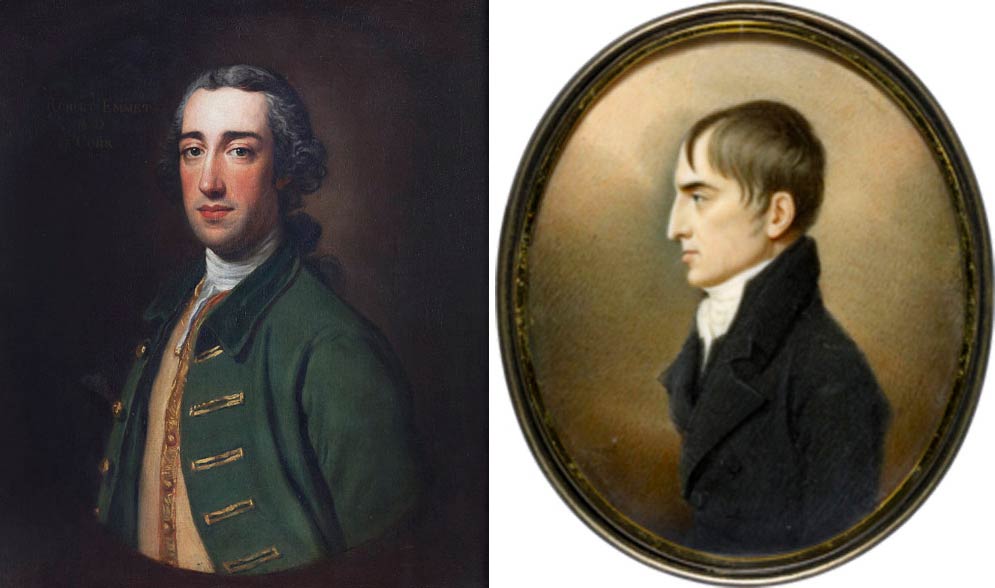
Dr. Robert Emmet M.D., the father of Irish Republican, orator and rebel leader Robert Emmet (1778 – 1803), was born in Tipperary town on November 29th 1729, the younger of two sons in a family where medicine was already a calling. While no biographical sources name a townland or house, a carefully researched account helps narrow the scene; his father’s Will referred to “the house where he resided in Tipperary”, with family interests tied to the town’s trade and market life. In other words, the Emmets belonged to the working, improving fabric of Tipperary town, not some anonymous dot on a map.
Left: Dr. Robert Emmet. Right: Executed Rebel Robert Emmet. Note the striking resemblance (around the mouth) in all Emmet family featured portraits.
His rebel leader son today has three towns in Co. Tipperarywith streets named after him : In Thurles:Emmet Street (L-4021) connecting Barry’s Bridge and Thomond Road, is most often incorrectly spelt, by Tipperary Co. Council, as “Emmett Street”. His rebel son is also commemorated on the 1798 memorial, visible standing in Liberty Square today, and locally referred to as the “Stone Man”. In Tipperary Town: Emmet Street is one of the main streets laid out connecting Dillon Street, and it’s still an everyday address in use today. In Clonmel: Emmet Street is a more central street (for example, Tipperary County Council lists its Civic Offices there, and An Post lists Clonmel Post Office as being on Emmet Street).
“Where Tipperary leads Ireland follows”. That line, by Thomas Davis, fits him surprisingly well, because the Emmet story becomes a pattern seen again and again in Irish life; provincial beginnings, serious education, success in a southern city, and finally the pull of Dublin’s institutions and power.
A doctor, made in Edinburgh and shaped by Europe. To study medicine properly in the 18th century was to look outward, and Robert Emmet did just that. He graduated at the University of Edinburgh, one of the then great medical schools of that era. A letter he wrote to a Cork newspaper, in 1763, even suggests time spent studying in Paris, the kind of continental polish ambitious doctors prized.
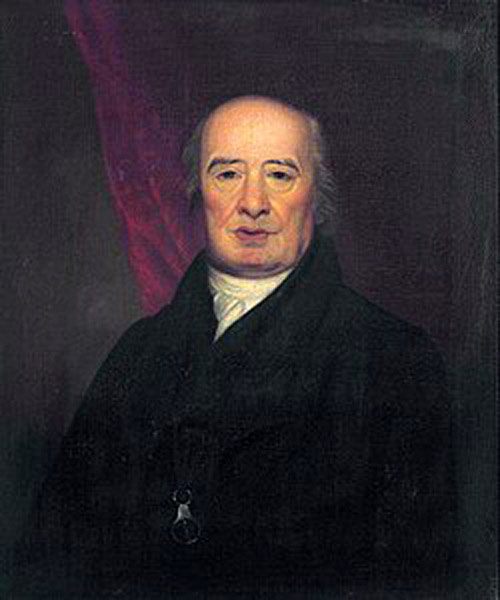
Thomas Addis Emmet.
By the time he returned to Ireland, he was not simply a local practitioner, he was the sort of physician who could move between worlds, rural and urban, Irish and European, private practice and public appointment.
Cork years: Reputation, Marriage, and a growing household: Emmet settled down to practise in Cork, and it was here that his name began to carry weight. The board of Cork’s Charitable Infirmary would later formally thank him for “the great care” he took of patients, the kind of public endorsement that tells you a doctor was not merely competent, but trusted.
In November 1760, he married Ms Elizabeth Mason, linking him to another established family network (the Masons of Munster). Some of their children can be identified clearly in sources, and they anchor the family’s Cork chapter. Christopher Temple Emmet, born in Cork in 1761. He married Anne Western Temple, daughter of Robert and Harriett (Shirley) Temple. Thomas Addis Emmet, born in Cork on April 24th 1764. He married Jane Patten (1771–1846), a daughter of John Patten and Jane (née Colville) Patten, in 1791.
Emmet was also a man of projects. The Munster account shows him involved in property and land, advertising holdings and opportunities in the countryside, a reminder that professional families often broadened their income in practical ways, through farms, leases, and investments.
The turning point –Dublin and the post of State Physician: Then came the step that changed everything. In March 1770, Emmet took up office in Dublin as state physician, after purchasing the office from the widow of the former holder for £1,000; a role that required presence in the capital and placed him close to the heart of administration. The move was abrupt enough that he was winding down Cork affairs and property as he departed; the record even notes the precise start, March 6th 1770.
Dublin was not just a new address. It was a new scale of life, bigger circles, bigger expectations, and a household that would become famous for reasons he could not control.
The sources are blunt about the family’s size and its sorrow; their son Robert was the seventeenth child, but only the fourth to ever survive. That single line captures both prosperity and loss; the realities of family life even among the comfortable classes in the 1700s.
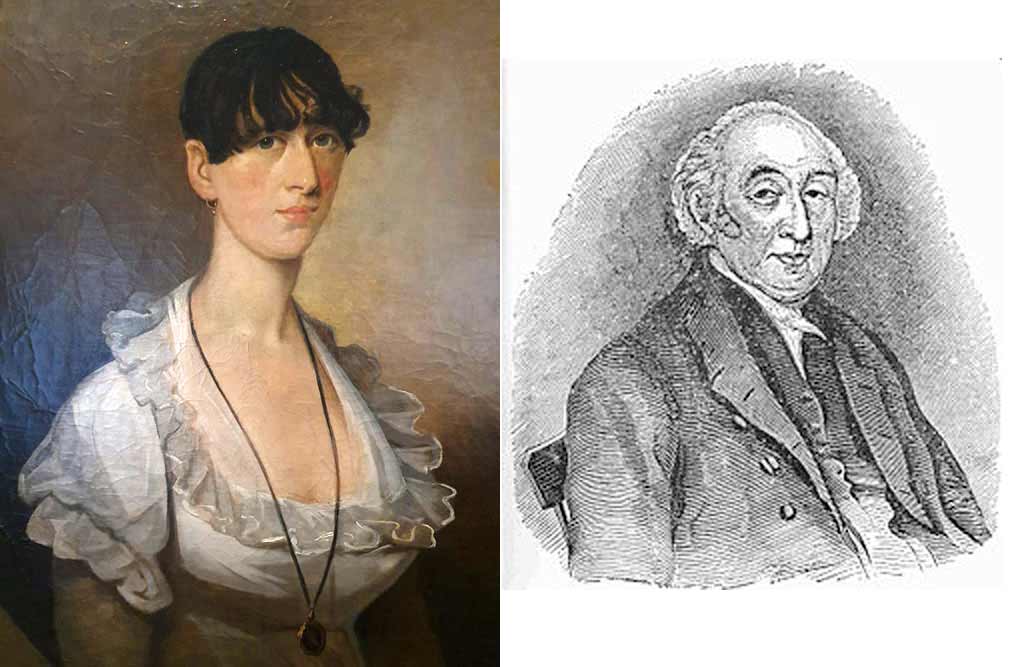
Mary Anne Holmes, (née Emmet) and husband Robert.
The four surviving children are identifiable: Christopher Temple Emmet, born Cork, 1761, and a distinguished barrister and poet, who died aged 27 years, in 1788, followed some months later by his wife. Thomas Addis Emmet, born Cork, April 24th, 1764 and a leader of the United Irishmen, before being forced into exile and later becoming a renowned lawyer in New York city. Mary Anne Holmes, (née Emmet) writer and poet, wife of barrister Robert Homes, former born in Dublin, on October 10th, 1773. Robert Emmet, (Executed Rebel in 1803), born March 4th, 1778 at 109/110, St Stephen’s Green, Dublin. The family’s Dublin story is inseparable from that address: a prosperous, educated household in the capital, and the cradle, ultimately, of one of Ireland’s most remembered names.
Final years and death: Dr. Emmet lived long enough to see his children grown and their talents emerging, and long enough, too, to sense that Irish politics were shifting underfoot. He died on December 9th 1802, and accounts of the period record his burial in the Churchyard of St Peter’s Church, Aungier Street Dublin.
He did not live to witness the family’s most dramatic and tragic chapter, that came less than a year later, when his youngest surviving son Robert junior, stepped into Irish history. It was on his death, that rebel Robert, using the £2,000 left to him by his father, laid preparations for a failed rising against what he described as “the cruel English government and their Irish ascendancy”, on July 23rd, 1803. Chief Justice Lord Norbury sentenced the rebel Emmet to be hanged, drawn and quartered, as was customary for conviction of treason. On September 20th, 1803, Emmet was executed in Thomas Street in front of St. Catherine’s. He was hanged and then beheaded once dead. Today, his actual burial place is still unknown, thus inspiring the phrase, “Do not look for him. His grave is Ireland.”
Still, step back from the legend and the Emmet story comes into sharp focus; a birth in Tipperary, a medical education in Edinburgh, professional success in Cork, a state appointment in Dublin, and a family whose “only four surviving” children would go on to shape Irish public life, literature, law, and rebellion.
Gardaí are appealing for witnesses, following a fatal road traffic collision at Holycross, Thurles, County Tipperary this afternoon.
Shortly after 2.15pm today Sunday, February 8th 2026, Gardaí and emergency services responded to a single-vehicle collision involving a car on the R660 at Holycross. The driver and sole occupant, a man in his 70s, was sadly pronounced deceased at the scene.
The man’s body has been removed to the mortuary at University Hospital Limerick, where a post-mortem examination will be carried out. The local Coroner has been notified.
A technical examination of the scene has been completed by Garda Forensic Collision Investigators, and the road has since fully reopened.
Appeal for witnesses and dash-cam footage. Gardaí are appealing to anyone who witnessed the incident to come forward. Road users who may have camera footage, including dash-cam recordings, and who were travelling on the R660 at Holycross, Thurles, around the time of the collision are asked to make this footage available to investigating Gardaí.
Anyone with information is asked to contact Thurles Garda Station on Tel: (0504) 25100, the Garda Confidential Line on Tel: 1800 666 111, or indeed any Garda station.
167 probationer Gardaí assigned to Garda Divisions nationwide.
Three further attestations scheduled to take place in 2026.
Over 200 new trainees due to enter the Garda College on Monday next, February 9th 2026.
The Minister for Justice, Home Affairs and Migration, Mr Jim O’Callaghan today welcomed the attestation of 167 new Gardaí at a ceremony in the Garda College, Templemore, Co. Tipperary.
A total of 100 men and 67 women were attested and will now be assigned to Garda divisions across the country by the Garda Commissioner.
Of this cohort, 104 probationer Gardaí will be deployed across the Dublin Metropolitan Region, with 21 assigned to the Southern Region, 31 to the Eastern Region and 11 to the North-Western Region. Only two one will be allocated to the Co. Clare/Co. Tipperary Garda division, with one being allocated to Ennis in Co. Clare and one to Clonmel in Co. Tipperary.
Speaking at the Garda College, the Minister said: “I am very pleased to see another 167 new Gardaí attest from Templemore today. This is the first of four attestations due to take place this year and I look forward to larger classes attesting as the year progresses. This cohort of newly attested Gardaí will take up positions in communities across the country as they begin a career of service to their communities, and to the people of Ireland. They join a tradition that stretches back over a century, one built on trust, integrity, and a steadfast commitment to the public they serve. Recruitment into An Garda Síochána is now gathering real momentum. I am looking forward to seeing this momentum continue in 2026. The next intake of up to 215 Garda trainees will enter the Garda College next Monday, 9 February.”
Two recruitment campaigns were held in 2025, with over 11,100 applications received to join An Garda Síochána. Engagement is continuing with publicjobs in relation to scheduling and conducting a further recruitment competition in 2026, supporting an ongoing pipeline of recruits into Templemore.
The Minister added that Budget 2026 provides €2.74 billion to support recruitment and staffing in An Garda Síochána. The Minister also said work will continue with the Garda Commissioner to optimise recruitment, including measures to expand training capacity.
The Minister also noted that the Garda Training Review Group has been established to identify how training and continuous professional development capacity can be increased, including consideration of the case for a second Garda training college, in line with a Programme for Government commitment.
This website uses cookies to improve your experience. We'll assume you're ok with this, but you can opt-out if you wish.AcceptRead More
Privacy & Cookies Policy
Privacy Overview
This website uses cookies to improve your experience while you navigate through the website. Out of these, the cookies that are categorized as necessary are stored on your browser as they are essential for the working of basic functionalities of the website. We also use third-party cookies that help us analyze and understand how you use this website. These cookies will be stored in your browser only with your consent. You also have the option to opt-out of these cookies. But opting out of some of these cookies may affect your browsing experience.
Necessary cookies are absolutely essential for the website to function properly. This category only includes cookies that ensures basic functionalities and security features of the website. These cookies do not store any personal information.
Any cookies that may not be particularly necessary for the website to function and is used specifically to collect user personal data via analytics, ads, other embedded contents are termed as non-necessary cookies. It is mandatory to procure user consent prior to running these cookies on your website.






Recent Comments