According to local radio, Mr Michael Lowry TD has rejected suggestions that the Garda Training College in Templemore is now under threat.
Mr Lowry says he secured a commitment during negotiations on the Programme for Government that Templemore would remain the primary national Garda training centre. He also says a recent review endorsed maximising Templemore’s capacity and prioritising investment there and also at an outreach facility in Tallaght. The Government previously denied making a deal with Mr Michael Lowry, however Mr Lowry nevertheless now says he secured a commitment on Templemore, during government-formation negotiations.
Templemore clearly remains Ireland’s principalGarda college and is receiving further investment. However, the wording “primary” does not mean “exclusive”.
The published Programme for Government commits to considering a second Garda training college and allowing trainees to complete parts of their training elsewhere. It does not guarantee that every existing course will remain in Templemore, Co. Tipperary. Mr Lowry’s stronger assurance appears to arise from government-formation negotiations, however no published agreement, letter or memorandum setting out its precise terms can be located.
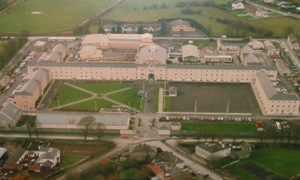
Garda Training College, Templemore, Co. Tipperary.
The Training Review A Garda Training Review Group examined how to increase training capacity, including: ► maximising Templemore’s throughput; ► establishing a second college; ► using other institutions or locations; ► providing outreach training.
Mr Lowry says the review protects Templemore’s status but concluded that developing Dromard would require unjustifiable investment. However, the complete final report, Dromard assessment and comparative costings do not appear to have been published. Until they are released, those conclusions remain Mr Lowry’s account of the review rather than independently verifiable findings.
Dromard Farm Dromard Farm at Clonmore is approximately six kilometres from Templemore and comprises about 256 acres: 160 acres of grazing land and 96 acres of woodland, together with a uninhabited period house and sheds. The OPW purchased it in 2006, at the Department of Justice’s request, for a proposed Garda Centre of Excellence. Planned uses included public-order, firearms, detective, surveillance, dog, mounted and water-unit training, together with off-road motorcycle, four-wheel-drive and other driver training. It is therefore reasonable to say that Dromard was bought partly for advanced Garda driver training. It was not purchased solely as a high-speed pursuit track. A tactical training building was constructed in 2008, while part of the woodland was used for off-road vehicle and motorcycle exercises. The notion of introducing a larger Centre of Excellence was abandoned following Ireland’s financial crisis.
What Did It Cost? The strongest contemporaneous records give Dromard’s purchase price as €4.3 million. Some recent political statements, by Mr Alan Kelly TD, use a figure of €5.5 million, but no public breakdown supporting that amount can we locate. It possibly could include fees, taxes or subsequent expenditure, but the OPW should now clarify this. Until then, €4.3 million is the best-supported purchase price. At approximately €16,800 per acre, Dromard’s €4.3 million purchase price was below reported national and regional farmland averages during the 2006 property boom. It cannot therefore be described as a clear market overpayment on the available figures. However, the property contained substantial woodland and an uninhabitable house, and the State may have purchased a much larger and more expensive estate than Garda requirements justified. The later failure to develop or fully use it turned a potentially market-priced acquisition into questionable value for the taxpayer.
Then came the Rent Controversy Between 2009 and 2013, Garda College administration rented Dromard land to local farmers, even though the OPW was its legal owner. The OPW could find no documented agreement authorising the Garda College to take over the letting. An internal audit initially identified €124,903 in rent. Instead of being paid to the OPW, the money had been lodged into the Garda College Restaurant Account. The final verified amount was €131,260.80. An Garda Síochána then repaid that money to the OPW on July 6th 2017. This same €131,260.80 was repaid to the OPW from the “Garda Vote”, latter An Garda Síochána’s taxpayer-funded annual budget. This meant that public money intended for Garda services was used to replace rent that had previously been placed in the Garda College Restaurant Account.” The Public Accounts Committee report found a serious failure to monitor and control State property and finances, but no public outrage was observed.
Was It A Cover-Up? There is strong evidence that the wider Templemore financial problems were kept from effective scrutiny for years. The Public Accounts Committee found that: ► financial problems had been identified as early as 2006; ► recommendations from earlier reports were not implemented; ► senior management had numerous opportunities to address the problems; ► internal auditors did not receive adequate support or cooperation; ► disclosure to oversight bodies was unacceptably delayed; ► a significant number of senior personnel knew about the irregularities.
Mr John Barrett, then Garda Executive Director of Human Resources, alleged that senior figures tried to prevent the issues from “breaking cover”. Evidence also emerged of communications suggesting auditors should be kept “at bay”. It is therefore reasonable in ordinary language to describe the wider affair as prolonged institutional concealment or obstruction of oversight. However, no court finding located establishes that named individuals entered into a criminal conspiracy specifically to conceal or steal the Dromard rent. Therefore it is reasonable to conclude that there is strong evidence of prolonged institutional concealment and avoidance of proper oversight concerning the wider Templemore finances. Whether this constituted a criminal cover-up of the Dromard rent specifically has not been established in a court of law. GSOC completed a six-year criminal investigation into the wider financial irregularities and sent a file to the Director of Public Prosecutions in 2023. No reliable public confirmation of a prosecution concerning the Dromard rent can be located.
Questions Still Requiring Answers Before Dromard is sold, the Government and OPW should now publish:
The final Garda Training Review report.
The complete Dromard technical and cost assessment.
Its present valuation, use and rental income.
An explanation of the €4.3 million and €5.5 million figures.
Any formal decision authorising its disposal.
The comparison between investing in Dromard, Templemore, Tallaght or a second college.
Templemore is not facing closure, but political assurances are not a substitute for published evidence. Given Dromard’s history, the public deserves complete transparency before a valuable State training asset is disposed of.
Stena Line and Irish Ferries are introducing stricter identification requirements for passengers travelling by ferry between the Republic of Ireland and Britain.
From Monday, September 28th, 2026 next, passengers, including children, will need to present a valid passport when checking in for affected sailings. Stena Line says the requirement will apply in both directions on its Dublin–Holyhead route and Rosslare–Fishguard route. No alternative forms of identification will be accepted by Stena Line. The company is contacting customers who already have bookings.
Irish Ferries has similarly announced that all passengers, including Irish and British citizens, travelling between the Republic of Ireland and Britain in either direction must carry a valid passport. Its announcement also advises Irish passengers to check that their passport or Irish passport card is in date. The operators say the change is required to comply with UK Border Force rules concerning the accuracy and integrity of passenger information collected before boarding.
This new passport rule appears to be part of the UK’s move towards a more digital, automated border system, requiring ferry operators to provide accurate, verifiable passenger information before departure. Passports make it easier to confirm travellers’ identities, nationalities and immigration permissions, so the measure is connected to immigration and border security in that operational sense; however, authorities have not linked it to any particular immigration incident or increase in illegal migration. It does not alter the Common Travel Area rights of Irish and British citizens, who remain exempt from visas and the UK’s Electronic Travel
What were the previous rules? Under the Common Travel Area, Irish and British citizens are not generally legally required to present a passport when travelling between the two countries. UK government guidance still says that Irish and British citizens travelling from Ireland to Great Britain may establish their identity and nationality using documentation other than a current passport.
Previously, ferry companies could accept alternative identification from Irish and British passengers. Depending on the operator and passenger’s age, this could include a driving licence or other official photographic ID. Irish Ferries’ earlier guidance also said that British and Irish passengers under 18 without photographic identification could usually travel with a birth certificate.
This new requirement is therefore principally a stricter carrier check-in policy. It does not remove the travel and residency rights enjoyed by Irish and British citizens under the Common Travel Area. Government guidance also makes clear that ferry operators may impose their own documentary requirements.
The change does not affect Stena Line’s services from Belfast to Liverpool, Cairnryan or Heysham. Passengers using other routes or operators should check the identification rules applying to their particular booking before travelling.
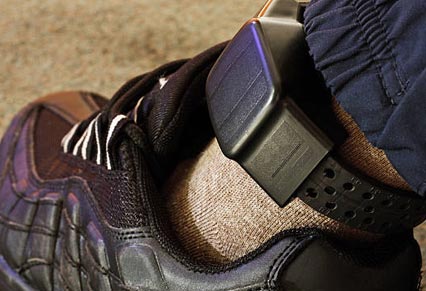
Minister for Justice, Home Affairs and Migration Mr Jim O’Callaghan has announced that a contract has been signed with Allied Universal Electronic Monitoring for Ireland’s first 12-month electronic-monitoring pilot.
The programme is expected to begin tagging selected individuals by the end of 2026. It will have the capacity to monitor approximately 90 to 150 people during the pilot period. Budget 2026 allocated €2.1 million for staffing, procurement and other establishment costs. These details are confirmed by the Department of Justice, Home Affairs and Migration.
The initiative is intended to help relieve pressure on Ireland’s prisons, while protecting the public. Decisions about suitability will reportedly take account of the individual’s risk profile and the nature, seriousness and circumstances of the alleged or proven offence.
Electronic monitoring can offer several advantages. It enables authorities to supervise compliance with curfews, movement restrictions and exclusion zones without automatically resorting to imprisonment. In appropriate cases, this may allow individuals to retain employment, accommodation and family connections; all factors that can support successful reintegration. It could also make community-based supervision more practical and provide authorities with information when restrictions are breached.
However, an electronic tag is a supervision tool, not a guarantee of public safety or rehabilitation. International evidence about its effect on reoffending remains limited and highly dependent on how, and for whom, it is used. The UK Government has acknowledged that relatively few studies reliably establish its impact on reoffending. Its assessment stresses the importance of context.
There are also legitimate concerns about privacy, location data security, equipment failures and false alerts. Wearing a tag can create stigma, discomfort and tension within a household. Overuse could also widen the reach of criminal-justice controls by imposing intensive surveillance in cases where a less restrictive condition might otherwise have been used.
For the pilot to command public confidence, monitoring must be proportionate, individually assessed and accompanied by clear data protection safeguards. Rapid procedures will be needed for responding to breaches and correcting technical errors. Electronic monitoring should also complement properly resourced probation, treatment and rehabilitation services rather than replace them.
However, the pilot is a significant development in Irish justice policy, but its success should be judged by evidence, not simply by the number of tags deployed. The eventual evaluation should examine public safety, compliance, reoffending, costs, technical reliability, privacy impacts and participants’ access to rehabilitation.
Only then will it be possible to decide whether electronic monitoring deserves a wider and permanent role in Ireland.
An Irish man remains in police custody in Australia, following the death of an Irish woman at a house in Melbourne’s southeastern suburbs.
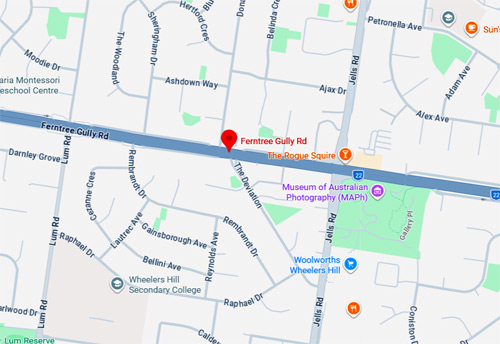
Emergency services were called to a property on Ferntree Gully Road shortly before 10:00am local time yesterday, Friday 21st August 2026. Officers found a seriously injured woman inside the residence and attempted to revive her, but she was pronounced dead at the scene.
The woman has been named in Irish media reports as Ms Anne Marie O’Reilly, a mother of three originally from County Tipperary. Victoria Police have not yet publicly confirmed her identity.
A 45-year-old Ferntree Gully man was arrested nearby. Irish reports describe him as originally from County Waterford. Police said the man and woman were believed to have known each other. Homicide Squad detectives established a crime scene and began examining the property. Local media reported that the man was wearing protective clothing when arrested and that a dog was removed from the residence. Reports that a weapon was recovered have not been publicly confirmed by Victoria Police.
The Department of Foreign Affairs said it was aware of the case and was providing consular assistance, but would not comment on its details. As of the latest publicly available update on this morning, August 22nd 2026, Victoria Police had not announced any charge against the arrested man. The investigation remains ongoing and Police have said there is no known active threat to the wider community.
Mr Jeremy O’Brien, aged 18 years, was among five teenagers sadly killed when their BMW, travelling south on the northbound M9, collided head-on with a Hyundai near Moone, Co Kildare.
The crash also left three women and a seven-year-old boy from Carlow seriously injured. They had been travelling to Dublin Airport for a family wedding.
O’Brien, who was suspected of driving the BMW, had reportedly been considered a person of interest in a separate July 15th assault investigation in Thurles, Co. Tipperary. Reports alleged the incident involved an ongoing dispute and an attack with a slash hook.
No arrest or charge involving O’Brien was reported, and the allegation was never tested or established in court. Garda investigations into the fatal collision and its surrounding circumstances remain ongoing.
This website uses cookies to improve your experience. We'll assume you're ok with this, but you can opt-out if you wish.AcceptRead More
Privacy & Cookies Policy
Privacy Overview
This website uses cookies to improve your experience while you navigate through the website. Out of these, the cookies that are categorized as necessary are stored on your browser as they are essential for the working of basic functionalities of the website. We also use third-party cookies that help us analyze and understand how you use this website. These cookies will be stored in your browser only with your consent. You also have the option to opt-out of these cookies. But opting out of some of these cookies may affect your browsing experience.
Necessary cookies are absolutely essential for the website to function properly. This category only includes cookies that ensures basic functionalities and security features of the website. These cookies do not store any personal information.
Any cookies that may not be particularly necessary for the website to function and is used specifically to collect user personal data via analytics, ads, other embedded contents are termed as non-necessary cookies. It is mandatory to procure user consent prior to running these cookies on your website.





Recent Comments