Gardaí are continuing enquiries after Independent Kerry TD Mr Michael Healy-Rae was assaulted, while sitting in his car in traffic on Cork Street, Dublin, today Wednesday, September 16th.
Officers from Kevin Street Garda Station responded shortly after 4:00pm. According to the Garda account, a lone man approached and assaulted the motorist while he was stopped in traffic. Mr Healy-Rae was brought to Kevin Street station for medical attention, before being transferred to St Vincent’s University Hospital. His injuries were described as not life-threatening.
Witnesses and camera footage sought Gardaí are asking anyone who witnessed the incident to come forward, particularly people who have camera footage from the area at the time. In the latest reports checked, no arrests had been made and enquiries remained ongoing.
Anyone with information is asked to contact Kevin Street Garda Station Tel: 01 666 9400, or the Garda Confidential Line Tel: 1800 666 111or indeed any Garda station.
Mr Oliver O’Grady, the convicted child abuser and former Roman Catholic priest; defrocked in 2001, and who previously lived and studied in Thurles, Co. Tipperary, has reportedly returned to Ireland since August of this year, 2026.
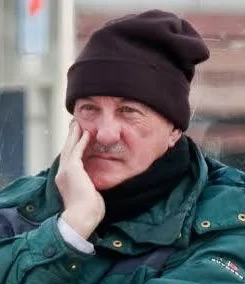
Defrocked Priest Mr Oliver O’Grady.
The Irish Sun newspaper, reporting on September 15th last, stated that the 81-year-old had completed a one-year sentence at Carregueira prison in Portugal for possessing child sexual abuse material. It reported that Portuguese police alerted Irish Gardaí before his arrival at Dublin Airport, where officers questioned him about his accommodation plans. He reportedly intended to remain in Dublin.
Mr O’Grady’s connection with Thurles dates back to 1964, when he entered St Patrick’s College, to study for the priesthood. According to the Irish Catholic Bishops’ Conference, his studies were sponsored by the Diocese of Stockton, California. He completed his training and was ordained in 1971, before moving back to California. Irish Catholic Bishops’ Conference states that he was never a priest of an Irish diocese.
He later returned to live in Thurles following imprisonment in the United States. A contemporary Associated Press report dated May 12th 2005, confirmed he had been living in the town since 2003, in rented accommodation on its outskirts. Local people described him as keeping very much to himself and regularly going for walks.
That report followed publicity surrounding his videotaped testimony in an American civil case. Neighbours would later report that Mr O’Grady had gone to Dublin to avoid the publicity. The precise length of his residence remains uncertain, although a later American news account stated that he possibly resided four years in Thurles.
His criminal history includes a 1993 California conviction for sexually abusing two brothers and a three-year Irish prison sentence in 2012 for possessing child sexual abuse material. In October 2020, Waterford Circuit Court sentenced him to a further 22 months after a jury convicted him of possessing a child abuse video.
His Thurles seminary connection also featured in litigation against the Cashel and Emly diocese. In January 2007, the Bishops’ Conference reported that a California court had dismissed claims against the archdiocese, finding no admissible evidence that it knew of his propensity to molest children.
The proportion of adults in Ireland who said they had experienced personal crime rose from 10% in 2019 to 19% in 2025, according to the Central Statistics Office (CSO).
Over the same period, the share of personal crime victims who reported incidents to gardaí fell from 39% to 30%. Published today, September 14th 2026, the Crime and Victimisation 2025 report also found increases in household, farm and vehicle crime, compared with the previous survey.
Fraud affected 11% of respondents, up from 4% in 2019. Card payment fraud was the most common form, affecting 45% of fraud victims. Non-violent theft affected 8% of adults, twice the 2019 proportion, with Dublin recording the highest rate at 11%. Violent theft increased from 2% to 3%, while physical assault rose from 2% to 4%. These categories can overlap because respondents may have experienced more than one type of crime.
Households also reported more experiences of burglary or vandalism, including attempts. The proportion affected increased from 4% to 5%, while the share reporting household crime to gardaí declined from 59% to 47%. Among households that did not report some or all incidents and gave a reason, 40% considered the incident insufficiently serious or said they had suffered no loss. That was down from 47% in 2019. A belief that Gardaí could not or would not act was cited by 56%; with respondents selecting more than one reason.
Farm crime affected more than a quarter of farming households. Some 26% said their farm had experienced crime, compared with 21% in 2019. Incidents included trespassing, stolen farm goods and damage to property.
For vehicle owners and users, 4% experienced theft or attempted theft of their vehicle, up from 3%. Dublin had the highest rate at 10%, while the corresponding rates in the Border, Midland and West regions were no higher than 2%. Bicycle theft and attempted theft, including incidents involving e-bikes, remained unchanged nationally at 5%. Dublin’s rate was substantially higher at 12%.
Concern about personal safety increased. In 2025, 23% of adults worried often or all the time about becoming a victim of crime causing physical injury or harm, compared with 15% in 2019. This concern was expressed by 29% of women and 17% of men. Nevertheless, 85% of respondents felt very or fairly safe walking in their local area, alone or accompanied.
Assessments of policing and justice also weakened. The proportion who considered Gardaí very or quite effective at tackling local crime fell from 68% to 57%. Confidence in the wider justice system’s ability to bring offenders to justice declined from 46% to 43%.
The survey collected 7,654 valid responses from a selected sample of 15,000 households, a response rate of 51%. Interviews took place during the second and third quarters of 2025.
The figures reflect adults’ experiences during the 12 months before their interview, rather than the calendar year alone. They provide survey estimates of victimisation that complement Garda-recorded crime statistics.
Minister for Justice, Home Affairs and Migration Mr Jim O’Callaghan has announced the appointment of Enda O’Neill as Chief Inspector of Asylum Border Procedures.
His five-year term began on 11th September 2026 last, following an open competition and a recommendation from Publicjobs.
Mr O’Neill brings a substantial background in law and refugee protection to the position. He headed the Dublin office of the United Nations High Commissioner for Refugees (UNHCR) from 2015 to 2025. A graduate of King’s Inns, he was called to the Bar in 2007, with areas of practice including immigration and international protection law, judicial review, European law and criminal law.
This combination of legal practice and leadership within UNHCR provides a strong foundation for the responsibilities of the new office. His experience in international protection is directly relevant to asylum procedures, while his background in judicial review and European law should support scrutiny of whether those procedures meet the required legal standards. These connections indicate the relevance of his professional background to the role.
The Office of the Chief Inspector of Asylum Border Procedures was established under the International Protection Act 2026, which took effect on June12th. Its remit is to monitor asylum border procedures and compliance with EU and international law, including the EU Charter of Fundamental Rights, within designated asylum border facilities.
Mr O’Neill will also oversee the recording and handling of complaints originating at these facilities. The Minister has confirmed that the role includes inspections and the power to conduct formal investigations into potential breaches of fundamental rights. These responsibilities place legal accountability and the protection of people undergoing asylum border procedures at the centre of the new office’s work.
Searches in Tipperary have brought a European investigation into suspected horse trafficking into focus, raising questions about animal identification, cross-border trading and the possible movement of unsuitable horses into the food chain.
The Irish searches formed part of coordinated action across Europe. According to press reports, eight searches took place in Ireland, covering counties Tipperary, Galway, Kilkenny, Kildare, Dublin and Donegal. Across Europe, authorities conducted 25 searches. Gardaí said seized evidence was being analysed and investigations remain ongoing.
While the initial Irish statement offered limited information about the suspected network, European reporting provided further context. Press sources report that police raided farms in four European Union countries as part of an investigation into possible horse trafficking. Authorities suspected that some animals might have been illegally sold for meat.
We understand the investigation involved Ireland, Belgium, France and the Netherlands, with Belgian authorities leading the inquiry. Traders have allegedly used falsified documents and manipulated microchips to present horses, latter excluded from human consumption, as suitable for slaughter. The report referred to thousands of potentially affected horses, including former racehorses, and three arrests in Belgium.
These allegations point to a central concern; whether an animal’s recorded identity accurately reflects its history. If identification records are deliberately altered, the information used to assess a horse’s suitability for slaughter could become unreliable. That possibility makes the suspected document manipulation a significant part of the investigation.
However, substantial gaps remain in the publicly available information. The Irish statement does not name the suspected network, identify its leaders or specify the Tipperary premises that have been searched. It also has announced no arrests or charges in Ireland. The material reviewed does not establish who, if anyone, will ultimately face prosecution here.
A search is an investigative step, and allegations must be distinguished from proven offences. It would therefore be premature to associate any unnamed local owner, trainer, dealer or business with criminal conduct, simply because searches occurred in their county.
For Tipperary readers, the clearest confirmed development is the county’s inclusion in a wider European inquiry. The questions now concern what the seized evidence establishes, how the suspected trading arrangements operated and whether investigators can substantiate the alleged identification fraud.
Further official updates will be needed before the network’s membership, the precise role of Irish locations and the full extent of any wrongdoing can be described with confidence. Until then, the investigation remains ongoing.
This website uses cookies to improve your experience. We'll assume you're ok with this, but you can opt-out if you wish.AcceptRead More
Privacy & Cookies Policy
Privacy Overview
This website uses cookies to improve your experience while you navigate through the website. Out of these, the cookies that are categorized as necessary are stored on your browser as they are essential for the working of basic functionalities of the website. We also use third-party cookies that help us analyze and understand how you use this website. These cookies will be stored in your browser only with your consent. You also have the option to opt-out of these cookies. But opting out of some of these cookies may affect your browsing experience.
Necessary cookies are absolutely essential for the website to function properly. This category only includes cookies that ensures basic functionalities and security features of the website. These cookies do not store any personal information.
Any cookies that may not be particularly necessary for the website to function and is used specifically to collect user personal data via analytics, ads, other embedded contents are termed as non-necessary cookies. It is mandatory to procure user consent prior to running these cookies on your website.





Recent Comments