|
|
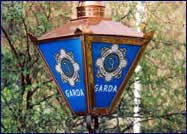 A total of 263 Gardaí, comprising 151 men and 112 women, graduated from the Garda College in Templemore, Co Tipperary on Thursday last and will now be posted to various Garda stations around the country.
Thursday’s passing out ceremony will be followed by a further graduation in October. From October next, the college will remain empty because no new recruits from existing panels have been offered posts over the past two years, as a direct result of the Garda recruitment embargo currently in place.
Minister for Justice Equality and Law Reform Dermot Ahern stated, “Plans were already in place to begin recruitment again. The timing however of the next recruitment drive and the numbers to be hired had not yet been determined. While the country is in a challenging economic position, the Government is committed to maintaining Garda numbers as high as possible.”
At Thursday’s ceremony, the “Commissioner’s Medal“, presented to a student Garda who achieves the highest academic scores during Garda training, was awarded to Garda Majella O’Sullivan, who is a native of Clonmel, in Co Tipperary and who will be stationed at Tallaght Garda Station.
The “Templemore Town Council Medal”, awarded for outstanding achievement and appreciation in the area of Social Science Studies, was presented to Garda Cathal Murphy, a native of Bishopstown, Co Cork, who will be stationed at a Garda Station, in Co Meath.
The first occurrence of fluoridated drinking water was found in Germany’s Nazi prison camps during World War 11. The Gestapo had little concern about fluoride’s supposed effect on children’s teeth; one of their alleged reason, according to some scientists, for this mass-medicating of water with sodium fluoride, was to force the prisoners in their concentration camps into a quiet, calm submission.
I now believe that there is too much sodium fluoride in Ireland’s drinking water and I base my belief on the following two reported incidents which leave me very, very confused indeed.
 Senator Ivor Callely Incident (A) – In 2009 a former treasurer of a GAA club west of Thurles was sentenced to 12 months in prison after stealing almost €100,000 of club funds. The mother of one, when reported to the Gardai, publicly admitted to multiple charges of forging cheques to the value of almost €35,000 and stealing almost €64,000 from the clubs weekly lottery. To correct her mistake, the 49-year-old raised approximately €59,000 from the sale of a house she was due to inherit from her mother.
Imposing a twelve month sentence, Judge Carroll Moran said the offence “goes to the very heart of the proper running of a social club in the community, and the gravity of the offence must be reflected in the sentence passed.”
Note: No confusion here, proper order, well done Judge Carroll Moran.
Incident (B) – Earlier this week, a Seanad committee on members’ interests found that Senator Ivor Callely, who is/was according to himself, Chairman of the Oireachtas Human Rights Committee, Member of the Foreign Affairs Committee, Head of the Irish Delegation to the Organisation for Security and Co operation in Europe, a Member and Spokesperson on Enterprise, Trade and Employment, had intentionally committed an act of “a serious and grave nature” by claiming travel expenses from west Cork rather than his home in Clontarf, Co Dublin, thus defrauding the Irish tax payer of some €80,000.
Continue reading Ivor Callely – Is There Something In Our Water
Thousands of Irish motorists, convicted of speeding offences in our villages and rural town-lands over the last six years may now be able to have those convictions overturned.
 This situation arises after a successful High Court judicial review case, taken by the Limerick based firm Hayes Solicitors, against the DPP. This case has resulted in a decision by District Judge Mary Martin to strike out speeding prosecutions brought under Section 5 of the Road Traffic Act 2004.
Section 5 of the Act governs speed limits in built-up areas, which are clearly defined in legislation as being areas of cities, towns and boroughs.
However, a recent test case brought before Nenagh District Court, here in Co.Tipperary, was withdrawn by the Gardaí, on the direction of the DPP, following this High Court judicial review.
District Judge Mary Martin, who sits in a number of courts in the Tipperary District, has now been striking out all cases involving drivers, prosecuted for speeding in villages and rural town-lands situated on both national primary routes and other roads.
Dr Hayes Stated:
“Section 5 of the Act only applied in cases where drivers were caught speeding in built-up areas. She said a built-up area under the legislation was clearly defined as being an area of a city, town or borough. In the test case taken, it was successfully argued that a town-land situated on the main Limerick to Dublin Road was not defined under the law as a built up area, therefore an essential ingredient of the alleged offence was missing. Many people have been now convicted of a non-existent offence over a prolonged period of time and their convictions were unlawful and in breach of fundamental human rights. The case has far-reaching consequences and major implications for the state particularly in respect of those who have been unlawfully convicted and obtained penalty points. There can be no punishment without law and to convict someone of a non existent offence was a breach of the European Convention on Human Rights. Drivers were entitled to seek a remedy and be compensated for being wrongly convicted. ”
Dr Hayes confirmed that the number of drivers wrongly convicted are likely to be very substantial over time and such cases had to be withdrawn by the DPP to exonerate those accused.
Peter William Sutcliffe, better known as ‘The Yorkshire Ripper‘, whose great grandfather Edward Coonan came from Tipperary in Ireland and who was jailed in 1981 for the murders of 13 women, will live out his life behind bars.
The British High Court has now ruled that the infamous serial killer will never be released despite having served 29 of his 30-year sentence. The courts believe that he remains a menace to society.
[wpyt_profile2]sLOUYSSXNF0[/wpyt_profile2]
Just last year Peter Sutcliffe changed his name to Peter Coonan, in an effort to show off his Tipperary roots. Aged 63, Sutcliffe has now served 28 years of a 30 year imposed sentence and is eligible for parole next year. At the time, British police thought the Yorkshire Ripper was Irish because several of his targeted victims who escaped stated he spoke with an Irish accent. It was because of this claim that several Irish men were actually arrested in England during the manhunt in the 1970s and early 1980s.
Irish TV presenter Garry MacDonncha who investigated the allegations as part of a documentary for RTE, Ireland’s national broadcaster, stated:
“Sutcliffe’s great grandfather, Edward Coonan… came over from Tipperary in the 1860s. We did track down his branch of the Coonans to around Ardcroney and Cloughjordan in Tipperary.”
Five additional members of staff are to be recruited to the Thurles Garda Central Vetting Unit (GCVU) to manage approximately 65,000 vetting applications currently awaiting processing.
The average processing time for vetting applications received at the GCVU is in the region of 10 to 12 weeks, given that demand is particularly high at present.
The GCVU has managed a substantial increase over recent years in the numbers of vetting applications it has receives; 187,864 in 2007, 218,404 in 2008 and 246,194 in 2009.
The GCVU provides employment vetting for a large number of organisations in Ireland, which employ persons in a full-time, part-time, voluntary or training capacity to positions where they would have substantial, unsupervised access to children and/or vulnerable adults.
An additional five persons were recently assigned to the Vetting Unit, bringing the total to 83 personnel currently assigned there, including six Gardaí and 77 Garda civilian personnel. The further five additional personnel are being recruited on a temporary basis and it is intended that these persons will commence work shortly.
Overall, this represents a very significant increase in the level of personnel assigned to the unit, which stood at only 13 before current system of Garda vetting began in 2005.
Are you interested in becoming a member of An Garda Siochana?
According to the Garda website, a Garda Trainee recruitment campaign will now commence during 2010.
To register your interest in receiving notification of the forthcoming campaign log on to www.publicjobs.ie.
|
Support Us Help keep Thurles.info online by donating below. Thank you.
Total Donated 2026: €300.00
Thank You!
Daily Thurles Mass Livestream
|



Recent Comments