|
|
I have often stated, OK possibly to the point of boredom of our readers, that Thurles & Tipperary both as a town & county have contributed more to Irish history nationally, than any other county in Ireland.
Realise how Thurles is being, dare I say ‘brutally victimised,’ yet again, in not being allowed to reveal to the world its undisputed contribution to Ireland’s powerful historic past.
The Morpeth Roll is about to embark on a 14-month tour of Ireland, from NUI Maynooth to Westport, Derrynane, Clonmel, Kilkenny, Belfast, Dublin and back to NUI Maynooth, hopefully free of charge. Disappointingly however there is no mention of Thurles in this list of viewing venues.
(Imagine this Morpeth Roll displayed beside the Derrynaflan Chalice in ‘The Source,’ exhibition centre, but alas we continue to elect indifferent, unimaginative town & county Managers, politicians & county/local councillors, all whom remain hell bent on stealing bread from the mouths of Tipperary’s future generations.)
What has Thurles got to do with the Morpheth Roll, I hear you say? Answer quite a lot really, in fact in association, this Roll has more to do directly with Thurles than possibly anywhere else it will visit on this proposed tour, particularly with regard to the Great Famine period here in Thurles, (1845-1850).
This testimonial Morpeth Roll comprises a farewell address signed by approximately 275,000 people on 652 individual sheets of paper. These sheets were subsequently joined together to create a continuous length of paper, approximately 412 meters in length (Note: In relation to length Croke Park is only 145 meters long), which was rolled onto a mahogany spool. The idea for the Morpeth Roll came as the brain child of Augustus Frederick FitzGerald, (1791-1874) 3rd Duke of Leinster, residing in Carton House, Co Kildare and it was presented to George Howard (Lord Morpeth) at the Royal Exchange, Dublin, in September 1841, following his defeat in the 1841 general election, latter which consequently led to Lord Morpeth’s departure from Ireland as then Chief Secretary.
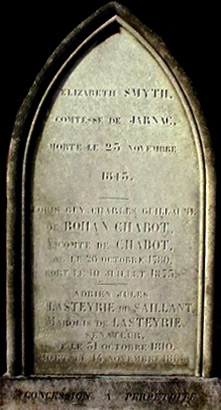 French Tomb of Elizabeth Smyth (Countess de Jarnac). Meanwhile, Francis James Mathew, 2nd and last Earl of Llandaff, had been a spendthrift. To pay his enormous racing and gambling debts, he had sold all the family estates in Wales and some of his Irish estates, while heavily mortgaging the remainder including Thurles & Thomastown. He died suddenly and intestate in Dublin on 12th March 1833, leaving no issue by his wife Gertrude La Touche, of Harristown, Co. Kildare.
Lady Elisha Mathew
These divided estate lands in Tipperary then passed to his sister, Lady Elisha (Elizabeth) Mathew, an eccentric individual, born in 1781, and who died unmarried at her house in Molesworth St., Dublin, on 14th December 1841, the same year the Morpeth Roll was presented to the aforementioned George Howard. (Click on images left for greater definition.)
Following her death, Lady Elisha Mathew, through her Will, bequeathed the Mathew, Earl of Llandaff (Welsh: Eglwys Gadeiriol Llandaf,) estates, including Thurles, Tipperary, (1,713 acres in the barony of Eliogarty and part of the Thomastown estate containing 2,378 acres in the barony of Clanwilliam,) to:-
(1) Her cousin the Comte de Jarnac,Viscount Chabot, of the Rohan family of France who had married Elizabeth Smyth (Feb 5th 1777), (Sister of Sir Skeffington Smyth of Tinny Park, county Wicklow,) Elisha’s aunt, sister of Elisha’s mother.
(2) Captain William Mathew, Elisha’s son (Born out of wedlock & fathered by the Prince Regent, latter who became King George IV ) former who died without issue in 1845.
(3) James Daly, later 1st Baron Dunsandle, who married Maria, daughter of Sir Edward Skeffington Smyth, maternal uncle of Lady Elisha.
Lady Elisha’s early death, possibly caused by alcohol abuse, revealed that there were mortgages amounting to £104,200 on her estates, £66,200 on Thurles and £38,000 on Thomastown. The total annual rents expected from both estates were only £4,500 per year.
Continue reading Morpeth Roll & The Forgotten Thurles Connection
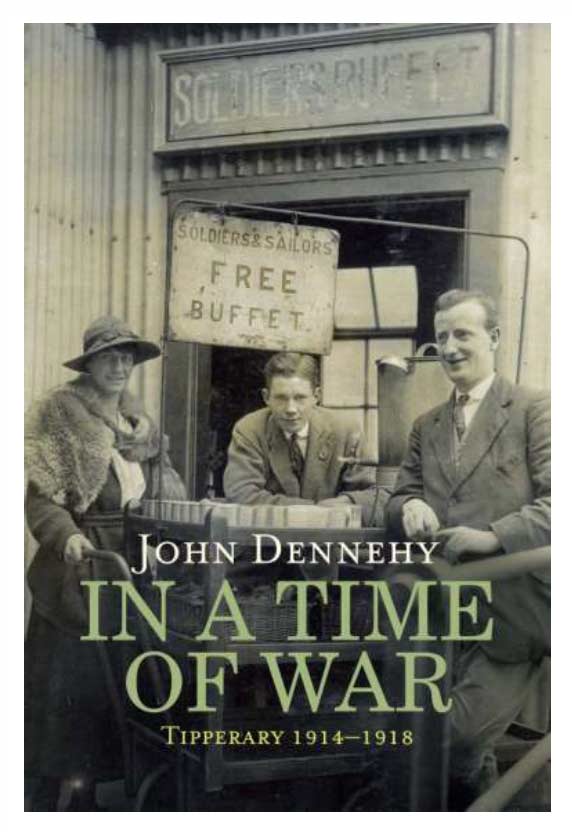 A new book by author John Dennehy will be officially launched in Thurles Library, situated in The Source building, Cathedral Street, on Thursday next, June 20th 2013, at 7.00pm. A new book by author John Dennehy will be officially launched in Thurles Library, situated in The Source building, Cathedral Street, on Thursday next, June 20th 2013, at 7.00pm.
Guest speaker for this event will be Mr Denis Marnane.
In this captivating new history book, entitled “In A Time Of War,” (1914 – 1918,) Tipperary native John Dennehy explores in great detail the profound political, economic, military and social impact of the Great War on just one Irish county; his own County Tipperary.
Little has been written about the impact of World War I on everyday life – food prices, the role played of women, soldier suicide, foreign refugees, etc.
It was a time of contested loyalties at home and unparalleled brutality abroad, and while the ordinary citizens were well aware of the bloody toll, thousands still continued to enlist. With the men now moved to fight, the women were mobilized to assist, playing a central role in all aspects of the home front from fund-raising to training in first-aid, yet all contributing to the emergence of women’s freedoms in Ireland after the war.
Yet, the insensitive handling of recruitment and the aborted attempt to impose conscription thus ensured there would be no successful transition from war to peace and Tipperary emerged radicalised and divided from this conflict.
The dramatic general election of December 1918 and the battle for independence that followed, muffled the trauma and emotion Tipperary experienced during World War I and set the scene for the political convulsions that would follow.
This is the story of that time – a microcosm for the impact of the Great War on Irish society as a whole. A truly excellent & factual read.
About The Author:
John Dennehy is a journalist from Clonmel, Co. Tipperary. He gained his PhD in history at University College Cork and has contributed to several publications on the subject of Tipperary during the First World War.
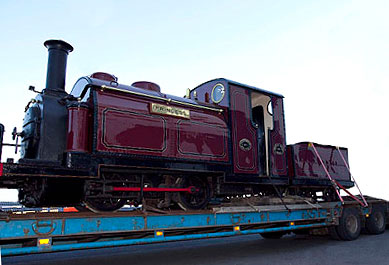 A Welsh steam-engine crossed the Irish Sea yesterday and is to be placed on display in Dublin’s Heuston Station as part of the Gathering Ireland 2013. A Welsh steam-engine crossed the Irish Sea yesterday and is to be placed on display in Dublin’s Heuston Station as part of the Gathering Ireland 2013.
The narrow gauge railway engine ‘Princess‘ from the Ffestiniog Railway in Snowdonia was built in 1868, just 30 years after Stephenson’s Rockets and was shipped the 175.4 km to Dublin on board the Stena Adventurer, latter following the Holyhead-Dublin Port route.
The steam-locomotive, one of six remaining out of a total of six built by George England of London, today representing one of the oldest surviving narrow gauge locomotives in the world & which was originally used to haul empty slate wagons between Porthmadog Harbour and the slate-quarrying town of Blaenau Ffestiniog, a distance of some 13.5 miles.
Public Transport Minister & Tipperary TD Mr Alan Kelly has stated that the Princess represents a piece of our transport history that we will rarely see and for rail and history enthusiasts and the general public, it is great that this locomotive has come to Dublin. “It is important we recognise our history of rail travel and this being the year of “The Gathering,” the Princess locomotive is the perfect way to do so,” he stated.
With rail tickets, Thurles to Dublin, costing €46.50 (Day return,), €51.50 (Monthly open return,) or €27.99 (Booked on line,) for a journey distance of 139.05km one way, with passenger usually positioned in a ‘standing only,’ pose for 1.25 hours, it is unlikely many locals will be tempted to take the trip solely, over the six week period this engine will remain on public display.
This is the same powerless Tipperary TD Mr Alan Kelly, who remained silent when asked to locate the Derrynaflan Chalice back to its home town of Thurles, just 152.3km away, claiming deceitfully, through his office, via Tipp FM radio that he received no communications in relation to same.
Meanwhile, in a recent conversation with Tipperary Deputy Noel Coonan, we learn that officialdom in North Tipperary Co Council and in Thurles Town Council, are solely to blame, in that no submission was ever made to the National Museum in relation to Tipperary artefacts, currently financially benefiting our capital city of Dublin, at the Tipperary Taxpayers expense.
Three Questions: (1) Who is paying for this return trip of a train to Snowdonia? (2) How many extra rail fares & jobs would have been generated, by locating the Derrynaflan Chalice back to Thurles? (3) With the Tipperary electorate mad to vote Labour, when is the next local election?
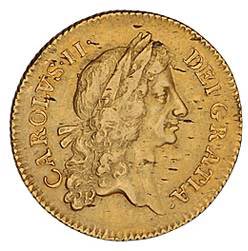 Charles II Gold Coin A 17th Century hoard of Gold coins dating back some 400 years and found by builders in the foundations of Cooney’s bar in Carrick-on-Suir, Co Tipperary last January, have gone on display in the National Museum of Ireland, for the benefit of the Dublin economy, since Thursday last.
The hoard comprising 81 coins that date from 1664 to 1701 are believed to have been secretly collected by a Catholic merchant during the Penal Laws and amassed in hiding with a future view to fleeing the country in a hurry should circumstances have then arisen.
The coins were discovered in a line together in the ground by Shane Murray, publican David Kiersey, contractor Shane Comerford, and builders Tom Kennedy and Pat McGrath, during groundwork’s at Mr Kiersey’s licensed premises.
It is understood that the National Museum have now offered these coins on temporary loan to South Tipperary Co Council, for display at the South Tipperary Museum in Clonmel in the Autumn, when the main Tipperary 2013 tourism season is ended & discussions are also taking place with the Office of Public Works (OPW) to have this display of coins placed on show in Ormond Castle in Carrick-on-Suir for an open day, in advance of the County Museum display.
The Tipperary finders are expected to receive a generous reward which remains, as yet, publicly undisclosed.
The Down Survey of Ireland was taken between the years 1656-1658, and was the first ever detailed land survey, on a national scale, taken anywhere in the world. This survey sought to measure all the land of Ireland to be forfeited by Irish Catholic in order to facilitate its redistribution to Merchant Adventurers and English soldiers.
The survey was called the “Down Survey” by Petty, because the results were set down in maps; ‘admeasurement down,’ was the term used and is referred to by that name in Petty’s own last Will and Testament.
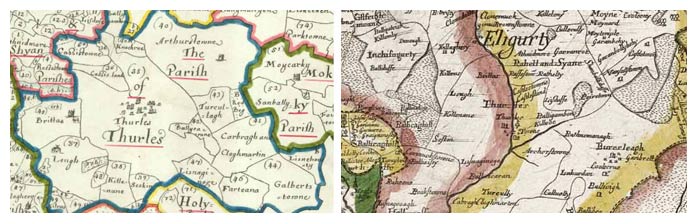
The Barony of Eligurty ( Eliogurty ) As Described By William Petty’s Survey
We accompt to be a third part meadow ground and arable lands but much spent by tillage, another part there of woody, heathy pasture, Turbarries, pastureable bogg and mountaine and the other third part to be deep unprofitable curraghs or shrubby bogg, much of the said unprofitable lands being mixed with meadows, arable and pasture lands. In this halfe baronye are seaven castles and three stone houses all wanting repaire, besides the castles and stone houses which within Thurles are returned by themselves. There are likewise the castle and stumpts hereafter mentioned out of all repaire. In this halfe barony runneth the river of Shewer and severall other rivoletts and brookes. The said river of Shewer springeth out of the mountaine called Baneduffe on the East side, and from thence runneth southwards nyne or ten myles to Noddstowne in the Barony of Middlethird. There are upon this river two stone bridges vizt: The one in Thurles and the other in Hollycrosse; on the North side of the said mountaine of Baneduff springeth the river Feorr and runneth from thence foure or five miles eastwards of this barony until it meets the Barony of Upper Ossory in the County of Kilkenny.
This Down Survey Project has now brought together for the first time in over 300 years, all surviving maps, same being digitised and made available as a truly valuable public on-line computer resource and lovers of history can access this new website by simply clicking HERE
The armies of the English Commonwealth, commanded then by Oliver Cromwell, had emerged victorious and began immediately to undertake an ambitious project of social engineering, underpinned by a massive transfer of this landownership from Irish Catholics to English Protestants. To allow this to happen, the land had to be accurately surveyed and mapped, a task overseen by the surgeon-general of the English army, William Petty, (1623-1687,).
Copies of these maps have survived in dozens of libraries and archives throughout Ireland, Britain as well as in the National Library of France. This is thanks partially to several of the manuscript and other works in the collection of Mr. James Weale, latter who died in 1838, being purchased through the enlightened and liberal intervention of Sir Robert Peel, latter who entered politics in 1809, at the young age of 21, as MP for the Irish Rotten Pocket Borough of Cashel, here in County Tipperary and visited by Queen Elizabeth II in May 2011.
Sir Robert Peel, 2nd Baronet ( 5th February 1788 – 2nd July 1850 ) was a British Conservative statesman, who later went on to serve as Prime Minister of the United Kingdom from ( 10th December 1834 to 8th April 1835 ) and also from ( 30th August 1841 to 29th June 1846 ).
While he was Home Secretary, Robert Peel helped create the modern concept of our modern day police force, leading to officers being known as “Bobbies” (In England) and “Peelers” (In Ireland). This was also the same Prime Minister Robert Peel who was to appoint a brilliant young man of unimpeachable integrity, named Charles Edward Trevelyan, to oversee relief operations during the Great Famine period in Ireland. The latter would become the single most important British administrator during the Great Famine years, here in Ireland.
|
Support Us Help keep Thurles.info online by donating below. Thank you.
Total Donated 2026: €290.00
Thank You!
Daily Thurles Mass Livestream
|





Recent Comments