|
|
Before you all start to panic unduly, this is a true story from history and has no bearing whatsoever on our present banking difficulties.
Many readers, however, will identify similarities to the current prevailing individual greed recently exposed with regard to our present bankers, politicians and so called developers.
Until recent times at least, John Sadlier was the best known of all Irish fraudsters who came to prominence during the Victorian era.
John was born in 1813 near Shrone Hill, Co. Tipperary, of wealthy parents. Raised a Catholic he was educated at Clongowes Wood College, latter founded in 1814 by the Society of Jesus (Jesuits). His professional career began when he succeeded his uncle to a very prosperous solicitor’s practice in Dublin.
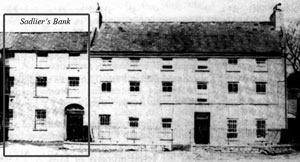 The once Sadliers Bank, Thurles, Co. Tipperary. In Tipperary there was no banking system which served the savings of small farmers, clerks and local shopkeepers, so he ventured a joint stock bank in 1838, known as Sadlier’s Bank. This new occupation as a banker was in his blood. His grandfather James Scully had established a bank in Tipperary town in 1803. This new bank was founded, with James Scully his uncle taking on the position of Chairman.
This new business set about targeting small farmers, tradesmen and clerks, and offered above average interest rates on deposits. The bank appeared to prosper and by 1845 there were numerous branches in operation, extending north from Tipperary, into Thomastown, Co Kilkenny, Athy, Co Kildare and into Co.Carlow. In Tipperary branches were established in Clonmel, Carrick, Tipperary Town, Thurles, Nenagh, Roscrea and even in the small remote village of Glengoole, near Thurles.
The Sadlier’s Bank premise in Thurles was then situated to the left of the old Constabulary Barracks, latter in use up to 1903, in Liberty Square, Thurles. ( See framed section in photograph.) It was behind the then Singer Sewing Machine shop, now Quigley’s Bakery, in a large three story house, which later became the ‘Thurles Poor School ‘. Both the Barracks and Bank house sites stood on the spot presently replaced in more recent years by the Ursuline Convent Primary school.
Among the early shareholders in this venture were James Sadlier of Shronell, Rev Thomas O’Mahony of Templebraden, Richard Scully of Tipperary, James Scully of Athassel, Pat Cleary Cahirvillahowe, James Sadlier Clonacody, Robert Keating Garrinlea and John Ryan Scarteen.
John Sadlier’s only visible vice’s were that he kept company with landed gentry, owned a stable at Watford from whence he hunted with the Gunnersbury hounds and to be consumed by attaining celebrity status and positions of power.
Continue reading A Tipperary Bank Is Declared Bankrupt
 Faddan More Psalter A TV documentary on the Faddan More Psalter, latter a remarkable archaeological find in a remote bog at Faddan More in North Tipperary and its conservation, will go out on RTE Television tonight at 10.15 p.m.
“Treasure of the bogs” is a documentary about a unique archaeological find here in County Tipperary which reveals the potential links between Irish Christianity and the Coptic Church of the Middle East.
The find, a fragmented illuminated vellum manuscript of psalms dating back to the late eighth century was cased in a leather binding and is the first manuscript to be found in a water logged state in a bog, posing unique and profound difficulties for the Conservation Department at the National Museum.
This documentary offers exclusive insight into the work of leading Irish book conservator John Gillis and the National Museum’s team as they embarked upon this dramatic and pain-staking journey of recovery and indeed discovery.
This is a programme not to be missed by lovers of Tipperary history.
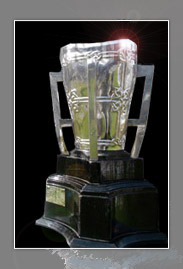 The Liam McCarthy Cup As Kilkenny aim for a historic five-in-a-row, Tipperary chief Liam Sheedy has confirmed his team will remain unchanged for Sunday’s All-Ireland Senior Hurling Final against their old rivals.
Tipperary Team: B Cummins, P Stapleton, P Curran, M Cahill, D Fanning, C O’Mahony, Padraic Maher, B Maher, S McGrath, G Ryan, Patrick Maher, J O’Brien, N McGrath, E Kelly, L Corbett.
Twelve of the present side which played in last year’s decider against Kilkenny will again start at Croke Park, with Gearoid Ryan, Michael Cahill and Patrick ‘Bonner’ Maher the only new faces this year, replacing Pat Kerwick, James Woodlock and Seamus Callanan.
Padraic Maher is now at wing-back, Paul Curran is at full-back and former wing-back Brendan Maher is now starring at midfield.
Noel McGrath is again named at corner forward, alongside Lar Corbett and Eoin Kelly, while John O’Brien retains his place after his recent outstanding game against Waterford.
The Liam McCarthy Cup
The Liam McCarthy Cup is the trophy awarded annually by the Gaelic Athletic Association to the hurling team that wins the All-Ireland Senior Hurling Championship, perhaps GAA fans will spare a thought for the man whose name this cup bears.
Liam’s parents, Eoghan and Brigid MacCarthy, emigrated from Ballygarvan,Co. Cork and settled on the South bank of the Thames in 1851, on the site now occupied by the County Hall.
Eoghan was a sportsman, athlete and wrestler, known as ‘MacCarthy Capall’ or MacCarthy the Horse and spoke mostly Irish, having very little of the English language.
His son Liam MacCarthy was born in London on the 21st May 1853 and at the age of 14 he was playing hurling on Clapham Common. In his early years to earn his living he worked as a blacksmith’s hammer man on the railways.
Continue reading Tipperary Senior Hurling Team Remains Unchanged
 Theodor Paul Albrecht (28 March 1922 – 24 July 2010) Theo Albrecht, the joint founder of the popular budget supermarket giant Aldi, last seen in public after his release from kidnap 39 years ago, has died aged 88. The company said he died on Saturday in his home city of Essen, but gave no cause of death.
The Albrecht brothers, Karl and Theo, co-founders of Aldi, were amongst the two wealthiest people in Germany, with fortunes in excess of €17.35bn and €16.75bn respectively.
Little is known about the two reclusive brother billionaires, with Theo’s last public appearance being in 1971, shortly after his release, after 17 days captivity, by kidnappers who were reportedly paid a $4.67 million ransom.
One rare photo of Theo Albrecht, from the 1980s, shows a nondescript looking man with grey hair and glasses who apparently devoted his spare time to collecting old typewriters, growing orchids and to playing golf on his own private greens.
The first Aldi stores – an acronym standing for “Albrecht Discount” – opened in the early 1960s under the motto: “Concentrating on the basics: a limited selection of goods for daily needs.” The stores began sprouted up all over Germany and are now to be found in nearly 20 countries since their conception.
The Aldi group presently operates about 8,210 individual stores worldwide. A new store opens every week in Britain alone, and the company operates approximately 70 outlets here in Ireland with one popular outlet here in Thurles, Co.Tipperary.
Theo Paul Albrecht was renowned as a hard working man who was always decent with his business partners and employees and who always treated people with the greatest respect.
Mr Albrecht and his elder brother both served as German soldiers in the Second World War, before returning home to Essen and taking over a grocery store their parents owned. They flourished as the German economy, then in shambles after the war, came back to life in what is often referred too as the “Economic Miracle”. If you think Ireland has severe financial problems presently, remember Germany, according to the Potsdam Conference held between July 17 and August 2, 1945, had to pay the Allies $20 billion mainly in machinery, and manufacturing plants. In addition, in accordance with the agreed policy of de-industrialisation and pastoralization, large numbers of civilian factories were dismantled for transport to France and the UK, or simply destroyed. Germany paid Israel 450 million DM in Holocaust reparations, and paid 3 billion DM to the World Jewish Congress to compensate survivors in other countries.
When Forbes featured the brothers in 1992 as two of the world’s richest men, the magazine had to uses silhouettes rather than photographs to illustrate the article since no pictures of them had been published in many years.
The German Retail Federation said that Germany had lost one of its greatest entrepreneurs. “There are only a few people who have stamped their mark on an entire business sector of the economy. Theo Albrecht achieved just that,” the Federation’s managing director, Stefan Genth, said in a statement.
Aldi now has more than 4,000 outlets in Germany alone, where it is known for its no-frills quality shopping environment, streamlined processes and a limited range of discount products.
The brothers retired as CEOs in 1993 and gave most of their wealth to foundations. The Aldi group operates about 8,210 individual stores worldwide, with a new store opening every week in Britain alone.
Go ndéana Dia trócaire ar a anam dílis.
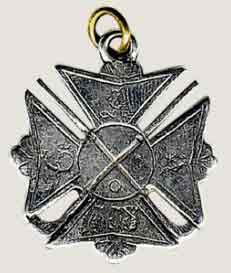 "The Invaders" GAA Medal A rare Co.Tipperary GAA medal, commemorating the first ever GAA hurling match in America is to be auctioned on Thursday, July 29th, at Mealy’s auctioneering premises in Castlecomer, Co Kilkenny. This is the first medal ever to go on sale from the GAA’s first official trip to the United States in 1888.
1888 was the year that the Gaelic Athletic Association organised a trip to New York for hurlers and with the view of strengthening the interest of the exiles in their native pastime, but more importantly to raise funds for the hosting of a ‘Celtic Festival’ or ‘Tailteann Games‘ (An Aonach Tailteann).
The medal soon to be auctioned is, we understand, presently is in the ownership of as yet an unnamed Tipperary family.
Five players from Tipperary were included in this group of 51 persons, dubbed “The Invaders” or Invasion Tour and included members of the Tipperary team who had won the previous year’s inaugural All-Ireland Hurling final.
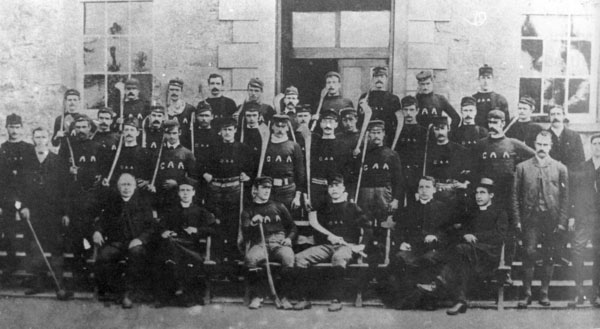 39 members of "The Invasion" Tour. (Figure left with hammer is Maurice Davin.) It is understood that only 39 of these silver medals, in the shape of a ‘crosse pattée‘ featuring a design of crossed hurley’s in the centre, were originally distributed. An interesting fact is that when “The Invaders” tour left America on October 31st 1888, its original number had fallen somewhat from the original 51 returning home, with 17 men at least choosing to remain in America permanently.
In 1888 the idea of hosting this ‘Celtic Festival’ was discussed and plans were put in place to hold this festival in Dublin in the Summer of 1889. This festival was to include athletic contests, field games, an Irish industrial exhibition and traditional music /literary competition. The estimated cost of hosting such a festival was estimated at £5,000.
To raise necessary funding it was planned that a group of Irish hurlers and athletes would embark on a fundraising tour of strongly inhabited Irish centres in America staging displays of hurling and athletics. While the process of selecting hurlers and athletes to accompany the tour began, £1,000 had to be raised through a nationwide fundraising campaign to cover players fares and each of the 800 or so affiliated clubs were asked to contribute a small amount.
Continue reading “Invaders” GAA Medal Goes On Sale
|
Support Us Help keep Thurles.info online by donating below. Thank you.
Total Donated 2026: €300.00
Thank You!
Daily Thurles Mass Livestream
|



Recent Comments