|
|
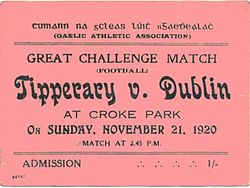 A rare GAA Gaelic football match ticket for a game between Tipperary and Dublin and which was played on “Bloody Sunday,” November 21st 1920, goes on sale next week. A rare GAA Gaelic football match ticket for a game between Tipperary and Dublin and which was played on “Bloody Sunday,” November 21st 1920, goes on sale next week.
The ticket is one of only a handful still in existence from that infamous football game held in Croke Park, in which 14 people were killed and 60 wounded, after British soldiers fired on attending spectators and players.
This rare ticket, in fine condition, is attracting huge International attention and is expected to be sold at between €5,000 – €30,000, during a two day auction tomorrow (13th) and Tuesday 14th February, in Foley’s Auction Rooms, Sixmilebridge, Co. Clare.
The story of Bloody Sunday 1920 is a tale of extreme violence in Dublin during the Irish War of Independence, when a total of 31 people, fourteen British, fourteen Irish civilians and three republican prisoners were killed.
The day had begun with an Irish Republican Army’s (IRA) operation, under the direction of Michael Collins and Richard Mulcahy, to assassinate the “Cairo Gang,“or “Special Gang,” and others, using a clandestine group of IRA members known as the “The Twelve Apostles.”
 The “Cairo Gang,“or “Special Gang,” were a team of undercover British agents working and living in Dublin. Twelve were British Army officers, one a member of the Royal Irish Constabulary and the last a civilian informant. In the end, of the 35 people originally on Collins’ hit list, only about a third were assisinated, however the action would terrify and cripple British intelligence here in Ireland. The “Cairo Gang,“or “Special Gang,” were a team of undercover British agents working and living in Dublin. Twelve were British Army officers, one a member of the Royal Irish Constabulary and the last a civilian informant. In the end, of the 35 people originally on Collins’ hit list, only about a third were assisinated, however the action would terrify and cripple British intelligence here in Ireland.
In retaliation for this IRA action, the Royal Irish Constabulary opened fire on a crowd attending a Gaelic football match in Croke Park, killing fourteen civilians. Some police fired into the fleeing crowd, while others outside the Park, opened fire from the Canal Bridge at spectators who climbed over the Canal end wall in their attempt to escape. When the firing stopped seven people had been shot to death, five more had been fatally wounded and another two people lay trampled to death by the fleeing crowd. The dead included two boys aged 10 and 11 years and Tipperary Gaelic football player Michael Hogan, a native of Grandemockler, Co Tipperary. Hogan’s name was memorialised posthumously by the building of the Hogan Stand at Croke Park, in 1924. Later that evening, three IRA suspects in Dublin Castle were beaten and killed by their British captors, allegedly while trying to escape.
Continue reading Tipperary GAA Bloody Sunday Football Ticket For Sale
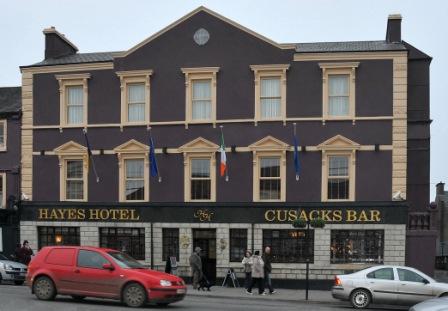 Hayes Hotel, Thurles, Co Tipperary Campaigners against Septic Tank, Water, and Household Tax charges will hold a public meeting in Hayes Hotel Liberty Square, on Friday next, February 10th, beginning at 8.00pm sharp.
This event is just one of a series of such meetings planned around the country in the coming weeks.
People are being invited to attend to listen to argument as to why they should “boycott,” or voluntarily abstain from registering for this promised planned controversial taxation, which appears to target rural Ireland dwellers in particular.
It is interesting to note that the word “boycott,” first entered our English language during the Irish “Land War,” a prolonged period of civil unrest in the rural Ireland of the 1870s, 1880s and 1890s. The word derives from the surname of a land agent, one called Captain Charles Boycott, who then managed the estate of absentee landlord, Lord Erne, who owned property at Lough Mask House, in County Mayo.
Boycott was the subject of effective social ostracism, organized by the Irish Land League. Harvests had been poor in 1880 and Lord Erne had offered his tenants a 10% reduction in their rents. In September of that year, however protesting tenants demanded a 25% reduction, which was refused. Attempts by Boycott to evict eleven tenants, for non payment of rents demanded, further exacerbated the situation.
In a speech in Ennis, Co Clare, landowner, nationalist political leader and land reform agitator, Charles Stewart Parnell, proposed that when dealing with tenants who rented or took up residence on farms where a previous tenant was evicted, rather than resorting to violence, everyone in the locality should shun them.
This advice would lead to Charles Boycott being isolated. Soon his employees stopped work in his fields and stables. Domestic staff refused to work in his house and local businessmen stopped trading with him. Even the local postman refused to deliver his mail.
Next Friday’s evenings meeting in Hayes Hotel will offer Tipperary residents a chance to speak up for themselves and their particular communities, thus demonstrating their wish not to be treated in an unfair matter.
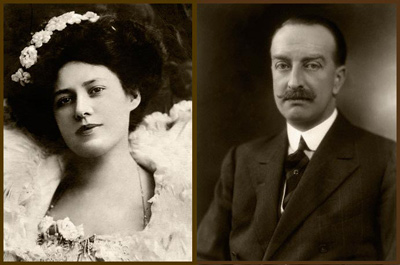 Rosie and the Marquess of Headfort Highlights of the May 2012 “Irish Art Sale,” by Sotheby’s Auction House in London, will go on view in Dublin at No 16 Molesworth Street, on April 24th and 25th and will include two portraits by Dublin born, Sir William Orphen, Ireland’s if not the world’s greatest portrait painter.
Interestingly both of these portraits in this auction have strong Thurles associations to this very day. The portraits are of the glamorous music-hall star Rosie Boote and a Co Meath aristocrat, Geoffrey Thomas Taylour, 4th Marquess of Headfort DL, JP, FZS (1878 – 1943) both of whom were to enthrall and scandalised Edwardian society in 1901.
Rose Boote, (1878-1958) or ‘Miss Rosie Boote,’ latter her later stage name, was the only daughter of Charles Boote, a comedian and while little is known of her mother, it was believed she was a straw hat sewer.
Rose however was sent to the Ursuline Convent School in Thurles in the 1890’s to be educated. The Ursuline Convent then, as now, had a high reputation in educational circles, renowned for their proficiency in turning girls into young, well educated ladies, who could take their place even in the highest society.
Having left the Ursuline Convent School in Thurles, Rose, possibly through connections of her father, was introduced to George Joseph Edwardes, (1855–1915) an English theatre manager, born ‘George Edwards,’ a native of Co Wexford, Ireland. George had introduced a new era into musical theatre on the British stage.
George now introduced Rose to the stage as one of his ‘Gaiety Girls,’ where she achieved great acclaim. Gaiety Girls were the chorus girls of Edwardian musical comedies, which had its beginning earlier in the 1890s, at the Gaiety Theatre, on the Strand, London. The sudden popularity of this genre of musical theatre depended, mainly on these beautiful dancing troupes of “Gaiety Girls” appearing onstage in bathing attire and in the latest fashions from London and Paris.
Gaiety girls were considered polite, educated, well-behaved young women, unlike those corseted actresses from London’s earlier musical burlesque shows. They became a popular attraction and a symbol of ideal womanhood, soon attracting the attention of aristocratic young men, known as “Stage Door Johnnies.” These young men would often wait outside the rear stage door in the hope of escorting one of these young ladies to dinner. Rose’s mentor, Edwardes had arranged with Romano’s Restaurant, on the Strand, for his girls to dine there at half-price. It was good exposure for his girls and made Romano’s Restaurant the embodiment of London’s night-life.
Continue reading Thurles Gaiety Girl Rosie Boote Scandalises Edwardian Society
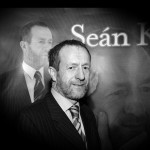 Munster MEP Mr Sean Kelly “The GAA should buy the famous Hayes Hotel here in Thurles.” So says former GAA President and current Fine Gael Munster MEP, Mr Sean Kelly, who has once again reiterated his proposal that the GAA should buy this historic home of the Gaelic Athletic Association.
Mr Kelly stated; “Hayes Hotel is a major symbol of Irish cultural and sporting heritage and the location of the first GAA meeting in 1884. The GAA was founded at this hotel, so it is the perfect site for a museum to showcase GAA history and its continued growing success nationally and globally. A GAA museum would be an enormous tourist attraction for sports fans. The GAA is built on the dedication and success of local clubs and future EU sports policy will reinforce the need to support grassroots sports. Indeed, I have often cited the GAA as a leading example of how sport can boost the physical, social and economic health of regional towns, during my work at the European Parliament. Hayes Hotel could also be used as a regional GAA headquarters with staff tasked with supporting local clubs across the country. The creation of a GAA museum, at this time would be timely, as Thurles has been named the 2012 ‘European Town of Sport’.”
Picture courtesy G.Willoughby
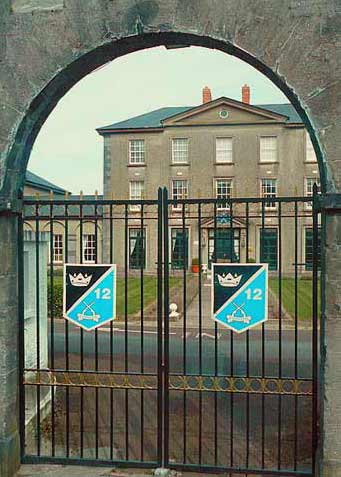 Kickham Barracks, Clonmel. It is officially confirmed this afternoon that Kickham Barracks, Waterford Road, Clonmel, Co. Tipperary is to close as part of the Governments Comprehensive Review of Expenditure. Despite protests from the families of Army personnel, Minister for Defence Alan Shatter made the announcement, following a Cabinet meeting at lunchtime today.
No time frame given yet on when the closure will take place, however a barrack consolidation report for the transfer from Clonmel to Limerick shows short-term costs of €250,000 to include €100,000 to accommodate lockers and €50,000 to purchase 12 containers for armoury and stores.
Clonmel, Co Tipperary, has been a garrison town for British troops since its surrender to Cromwell in 1650, but a permanent military barracks was not built in the town until 1780. The reason behind its original construction was a believed threat of rebellion from the growing Irish Volunteer movement. In 1805 the garrison was extended, with the erection of an artillery barracks, built in anticipation of an invasion by Napoleon and the 1870’s saw an enlargement of the existing quarters.
It became the regimental depot for the Royal Irish Regiment in 1882. Indeed a particularly finely crafted early twentieth-century monument still exists, commemorating those soldiers of the Royal Irish Regiment who died in Boer War, in South Africa. latter was erected there in 1910, having been designed by landscape painter and architect R.C. Orpen (1863-1938).
It was at this Barracks that soldiers from the southeast of Ireland, were trained prior to World War I. It was here also that Anti-Treaty Volunteer Jerome Lyons was shot dead in 1923, whilst under interrogation. Lyons was shot when he grabbed the revolver of the interrogating office, while being questioned. Lyons was then only 26 years old.
During the Irish War of Independence Clonmel was garrisoned by the Devonshire Regiment and from mid-1921, the York and Lancaster Regiment. In February 1922 the Barracks was taken over by Richard Dalton, commander of 5th Battalion of the 3rd Tipperary Brigade of the IRA.
The Barracks was renovated in 1945, and housed members of the 12th Infantry Battalion.
Junior Labour Minister Willie Penrose has, today, also resigned his Cabinet post, over the closure of Columb Barracks in Mullingar, latter an Army base in his own constituency.
|
Support Us Help keep Thurles.info online by donating below. Thank you.
Total Donated 2026: €300.00
Thank You!
Daily Thurles Mass Livestream
|



Recent Comments