|
|
 The Office of Public Works (OPW) has announced that there will be free admission to all the heritage sites operated by the OPW in Ireland on the first Wednesday of every month during 2012. The OPW operated this scheme last year and it was so successful that it has decided it will be operated again this year. The Office of Public Works (OPW) has announced that there will be free admission to all the heritage sites operated by the OPW in Ireland on the first Wednesday of every month during 2012. The OPW operated this scheme last year and it was so successful that it has decided it will be operated again this year.
The following is a list of the heritage sites that will be free in the Tipperary area during the offer;
- Rock of Cashel
- Cahir Castle
- Roscrea Heritage and the Blackmills
- Swiss Cottage
Full details on all the available heritage sites around Ireland can be found on www.heritageireland.ie website.
A PDF file with complete info and details on the free access to heritage sites for 2012 is available here;
http://www.heritageireland.ie/en/media/Free%20Wednesdays.pdf
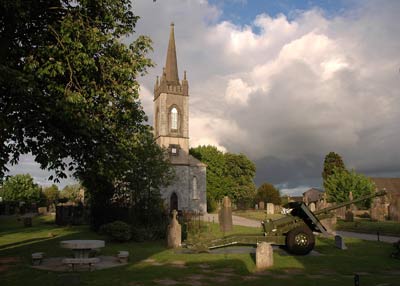 St. Mary's Famine Museum, Thurles. Tipperary. All schools around Ireland will hold a minute’s silence tomorrow as a mark of respect for all those who died, suffered or were forced to emigrated, during the Great Famine period 1845-1849, here in Ireland.
Known, mostly outside of Ireland, as the Irish Potato Famine, this period witnessed the death of approximately 1.3 million people and the emigration of at least 1 million others from Ireland, causing the island’s population to fall by between 20% and 25%.
On Sunday next St Mary’s Famine Museum here in Thurles will officially open from 2:00pm – 5:30pm for the current Tipperary tourism season (May 1st to September 30th) with the museum running a series of “Guided Tour Lectures,” on the afternoon, as part of the Irelands 2012 National Famine Commemorations.
Thurles Famine Museum now holds the largest collection of original Famine Memorabilia in Ireland and a number of new exhibition items will go on display for the very first time on Sunday, including an original document which is the only proof in existence of the “Tithe Wars,” here in Thurles.
Sandhurst Military Academy Uniforms And Holocaust Exhibition
Other events planned for later this year at St. Marys Museum include:-
- An exhibition of clothing and other artefacts from the Downton Abbey era of Irish history, including old military uniforms from the Royal Military Academy Sandhurst, Surrey, England.
- A Holocaust photographic exhibition entitled “The Shoah,” dedicated to the memory and genocide of 5.29 – 6.2 million of our Jewish brethren.
Full details of these exhibitions will be announced by St Mary’s Famine Museum, in the coming weeks.
In the meanwhile if you are out and about on Sunday afternoon next do call to St Mary’s Famine Museum in Thurles. Entry for this event costs just €2.50 which includes the ‘Lecture Tour,’ latter which begins sharp at 3:00pm.
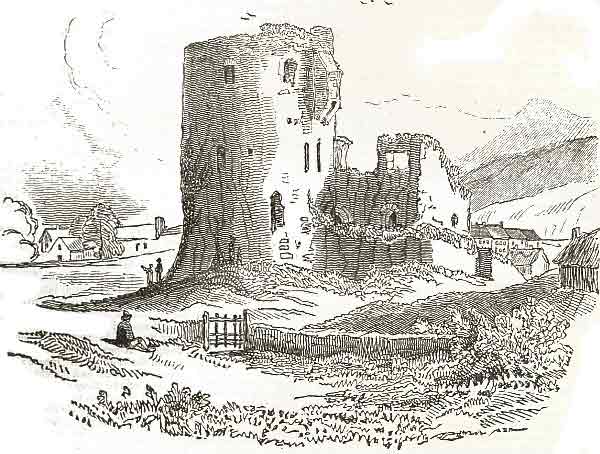 Restoration of Nenagh Castle’s ‘Keep,’ will be completed by June of this year, in time for a visit by President Michael D. Higgins, to the castle site. (Click on image for larger resolution.) Restoration of Nenagh Castle’s ‘Keep,’ will be completed by June of this year, in time for a visit by President Michael D. Higgins, to the castle site. (Click on image for larger resolution.)
The Director of Services Marcus O’Connor and Nenagh Town Clerk Donal Purcell will finalise external works around the historic building by June 2012.
The visit to Nenagh by President Michael D. Higgins is planned for June 6th next and when the ‘Keep,’ is opened to the public, it will be an added attraction to visitors, when taken in conjunction with the Nenagh Arts Centre, Nenagh Courthouse, Nenagh Jail and other nearby churches in the area.
The tall castle tower which overlooks Nenagh town is by far its oldest building, indeed its construction in the early 13th Century laid the foundation stone for the future development of this area as a fine agricultural market town which today is the administrative centre for North Tipperary.
Nenagh castle served as the main seat of the Butler family until 1391, before they moved to Gowran, County Kilkenny, partially driven out by the native clan of the O’Kennedys and their allies. The family would later acquire Kilkenny Castle, which was to remain their main seat of power for the next 500 years.
The existing tower or ‘Keep,’ (Latter a strong central tower used as a dungeon or more usually as a fortress.) or ‘Donjon,’ (From the French word meaning a keep, a derivative of the word dungeon, still used in France to describe some medieval monuments.) was originally one of a number of towers interspersed inside the curtain wall of the castle complex.
The existing 100ft high x 55 ft external diameter tower being restored and today known as Nenagh Castle or locally “Nenagh Round,” used to be attached to a curtain wall which surrounded a five-sided courtyard. Today most of this fortified enclosures curtain walls, have gone, but isolated parts do still remain.
 Prince Charles, Prince of Wales, the British heir apparent, is expected to visit Ireland in the next few months, but will he be visiting his ancestral home of Thurles, here in Co Tipperary? Prince Charles, Prince of Wales, the British heir apparent, is expected to visit Ireland in the next few months, but will he be visiting his ancestral home of Thurles, here in Co Tipperary?
Well, of course, he will have to receive a formal invitation. So hopefully one of our North Tipperary County Councillors, who hourly tune into Thurles.Info, (mainly to view what I am saying publically about their ability to govern) will see this blog and identify the possibility of “Donning their Chains of Office,” not to mention the obvious opportunity for photographic, TV and celebrity status, which could be then placed on their CV’s prior to the next local elections. So you never know, we could be lucky, after all this is Brain Awareness Week (BAW)
The Prince of Wales has made space in his diary for a three day trip to Ireland and will be visiting alone. Sources state that Her Majesty Queen Elizabeth II has encouraged Prince Charles to make the trip, but the appointment of a British Ambassador to Ireland, to replace Mr Julian King, is delaying slightly the finalisation of his intended planned visit.
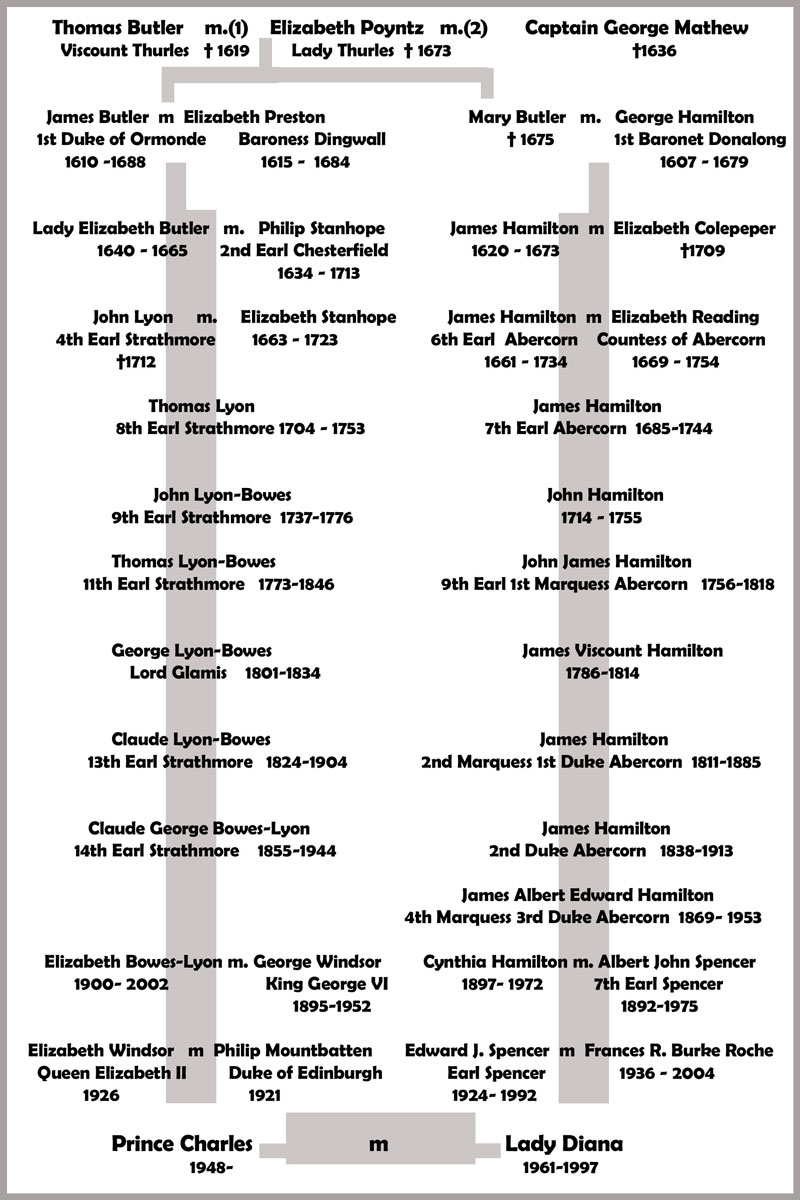
Prince Charles is a direct descendant of Viscount and Lady Thurles, through their eldest son, the Duke of Ormond. This same Duke’s daughter, Elizabeth, married Philip Stanhope, 2nd Earl Chesterfield, and their daughter Elizabeth Stanhope married John Lyon, 4th Earl Strathmore. (Click on image to view larger image of Family Tree). Six generations later in direct line was the 14th Earl Strathmore whose daughter, Elizabeth Bowes-Lyon married the future King George VI; and these are the grandparents of Prince Charles.
North Tipperary County Council aided by our Local Town Councillors failed to get an invitation out on time to Her Majesty Queen Elizabeth II, for her visit last year, resulting in a huge loss of future tourism revenue to the town. Instead she visited Cashel where they forgot to show her the grave of one of her ancestors Edmund Butler, Archbishop of Cashel.
By not coming to Thurles, regrettably Her Majesty missed out on seeing the Butler Chalice made in 1620 for Walter Butler the rightful 11th Earl of Ormond, his wife Ellane and Queen Elizabeth’s direct descendant.
The Ormond Butlers owned most of counties Kilkenny and Tipperary, including Thurles. In 1620, the year the chalice was made, the family was in deep trouble. The previous year their son, Thomas Butler, Viscount Thurles, who owned Thurles and lived in the Castle at the top of what is now Liberty Square, had been drowned while travelling to England, to answer charges of treason. Since 1617 Walter himself was in the notorious Fleet Prison in London for refusing to kowtow to King James I, the latter who had deprived him of the Ormond title and estates and given them to one of his cronies, Sir Richard Preston and his wife. Walter got out of jail only in 1625 when he got the title and part of the estates back from the next king, Charles I. The rest of the estates were only gotten back in 1629 and 1630 when Walter’s grandson, James Butler (Direct ancestor of Prince Charles) effectively bought the 14-year-old Preston heiress from her guardians and married her.
Thurles waits powerless as usual, in silent anticipation, to see if any of their elected public representatives of all “political persuasions,” really have any real power or leadership. By real power I mean the ability to grant, an art collection owned by the State, valued at €5m-€6m to the Crawford Gallery in Cork.
Maybe Arts, Heritage and the Gaeltacht Minister Jimmy Deenihan, if approached, could “decentralise,” history stolen from us here in rural Ireland, presently housed in the National Museum supporting a Dublin economy. E.g. the Derrynaflan Hoard, the Faddan More Psalter, the Book of Dimma and the kept ever so secret Two-Mile-orris Silver Hoard, just to name a few visitor attractions.
Are we a ‘soft touch,’ here in County Tipperary?
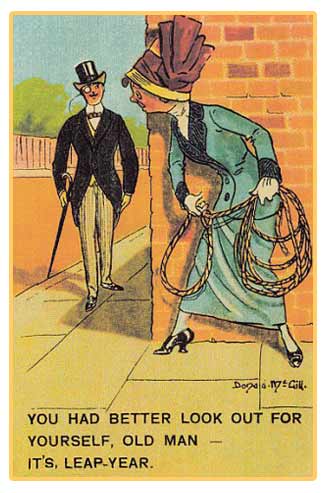 ‘Leap Day,’ is tomorrow, February 29th, that extra day added, nearly every 4 years, to our modern Gregorian Calendar, thus making our calendar year 366 days instead of the normal 365. ‘Leap Day,’ is tomorrow, February 29th, that extra day added, nearly every 4 years, to our modern Gregorian Calendar, thus making our calendar year 366 days instead of the normal 365.
‘Leap Years,’ are needed to keep our calendar in alignment with the Earth’s revolutions around our sun, which takes approximately 365.242199 days, 5 hours, 48 minutes, and 46 seconds to circle once. Our Gregorian calendar has only 365 days in any single year, so we need to add a day on nearly every 4 years, otherwise we would lose almost six hours off our calendar each calendar year. Were this correction not made, every 100 years our calendar would be short approximately 24 days.
Julius Caesar introduced Leap Years over 2000 years ago into the Julian calendar, but the rule:- “Any year evenly divisible by 4 would be a leap year,” lead to there being too many leap years, and was therefore corrected by the introduction of the Gregorian calendar, more than 1500 years later.
According to an old Irish legend, St Bridget struck a deal with St Patrick allowing women to propose marriage to men, on leap days. This was to balance the traditional roles of men and women in a similar way as to how Leap Days balances our calendar.
So gentlemen be careful out there tomorrow, as according to tradition men was expected to pay a penalty, such as the gift of a new dress, 12 pairs of gloves or an offer of substantial money, if they refuse a marriage proposal from a lady on ‘Leap Day.’ The intention of the ‘gift of gloves,’ is that the woman could wear the gloves to hide her embarrassment for not having an engagement ring on show.
So Gentlemen, keep in mind that while behind every successful man there may be a woman, behind the fall of a successful man is usually another woman.
|
Support Us Help keep Thurles.info online by donating below. Thank you.
Total Donated 2026: €300.00
Thank You!
Daily Thurles Mass Livestream
|



Recent Comments