|
|
 Thurles Courthouse Templemore courthouse is to close early next year, Minister for Justice Alan Shatter has confirmed in the Dáil.
He said the Courts Service board last week have approved the closure and the courthouse in Templemore, Co Tipperary will now move all hearings to the newly restored Thurles Court facility.
Defending the closure, the Minister said the Courts Service board had amalgamated 140 district courthouses over the past 12 years.
Alan Shatter stated that “The decision to close any courthouse is generally taken due to the buildings being in poor condition.”
Thurles Courthouse was nominated at the Irish Architecture Awards in 2009, and is regarded as a major civic and historical landmark in the centre of Thurles. Erected in 1828, the courthouse itself has played host to many historic events, the public meeting regarding Famine Public Works schemes in April 1846, the famous GAA Convention of November 9th 1887, the inaugural meeting of Thurles Golf Club on January 21st 1909.
Photo courtesy G.Willoughby.
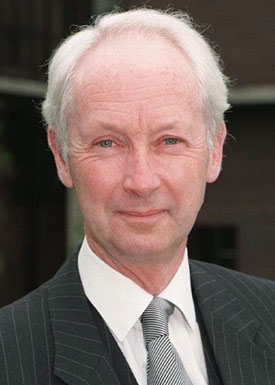 Dr Ed Walsh Dr Ed Walsh is the founding president of the University of Limerick and has been conferred by his peers with an Honorary Doctorate, confirming him as a person of exceptional quality.
Amongst his many contributions to this island, Dr Walsh has served as founding Chairman of the Irish Council for Science Technology and Innovation, the National Technological Park, the National Council for Curriculum and Assessment, Citywest’s Growcorp and the National Self-Portrait Collection of Ireland. He has also served as chairman of the Conference of Heads of Irish Universities and of Shannon Development.
Those close to him, regard his name as synonymous with ground-breaking advances in third level education in Ireland and he is highly regarded both as an educational visionary and a transformational policy influencer.
As a lover of Ireland, combined with his love of fact, logic and truth, it comes therefore as no great surprise to most, that Dr Ed Walsh, given a suitable forum, would launch a blistering attack on Sinn Féin’s presidential candidate Mr Martin McGuinness.
James Martin Pacelli McGuinness has admitted to being a member of the IRA during the 1970’s. He originally joined the Official IRA, possibly in 1969, but switched to the Provisional IRA a short time later, when the organisation split. In 1973, he was convicted by the Republic of Ireland’s Special Criminal Court, after being caught with a car containing 250 lb (or 113 kg) of explosives and nearly 5,000 rounds of ammunition. He refused to recognise the Irish court, and was sentenced to six months imprisonment. After his release, and following another conviction in the Republic, for IRA membership, he became increasingly prominent in Sinn Féin, the political wing of the republican movement. McGuinness now believes he should be rewarded by holding the post of President of Ireland.
Dr Walsh told his audience at a literary festival in Tipperary last Friday night that “Standing before the judges in The Hague, answering questions, related to war crimes and IRA activities, would appear to be more fitting that standing before the Irish electorate, seeking to represent the highest office in the Republic.”
Dr Walsh continued “Mr McGuinness has serious questions to answer regarding IRA activities, the IRA’s killing of 644 civilians, sadistic torture, kneecapping, kidnapping and the arbitrary destruction of the lives of its victims, are in clear contravention of the fourth Geneva Convention. Whatever about McGuinness’s direct involvement with acts classified as war crimes, he was in a position of authority within the IRA, during most of the Northern conflict.
Dr Walsh went on to say that the IRA had incinerated people at the La Mon restaurant, their victims included children and they had practised torture, including using kangaroo courts, all of which were considered war crimes.
For those with short memories, the device used at the La Mon Restaurant on 17th February 1978, was a small blast bomb attached to two large petrol canisters, each filled with a type of home made napalm like substance of petrol mixed with sugar. This substance was designed to stick to whoever and whatever it hit, thus causing severe burn injuries to human flesh. Twelve innocent people were killed that night, seven of whom were women and a further thirty were injured, many of them critically. Most of the victims were members of the Irish Collie Club and the Northern Ireland Junior Motor Cycle Club, which were both staging meetings in the restaurant. Some of those injured are still receiving treatment some 23 years later.
Referring to the peace process Dr Walsh stated: “Hume facilitated the entry of IRA/Sinn Féin into the peace process, in return for which they undertook to decommission IRA arms and disband the IRA and its Army Council. The former has been delivered, but there are questions regarding the latter.”
He further stated that the IRA’s long-term objective was control of Dublin, not of Belfast, and while the IRA Army Council may be dormant, we as citizens should see no reason to relax. As long as the IRA remain in existence, so too, one must assume, does its strategy of using the ‘Armalite and the Ballot Box‘ to achieve its goals. While Sinn Fein had made excellent progress in recent years using the ballot box, should they ever fail to get their way at some future juncture, there is a very real danger that they would reactivate their earlier activities.
Dr Walsh warned that “Democracy was a fragile thing, that was particularly vulnerable at times when Nations were under stress. We have seen the consequences in Europe when countries are overtaken by people who don’t believe in democracy, but in guns“.
A couple of people unable to take the heat, walked out during his speech, to which Dr Walsh commented, “He has some supporters here, too.”
God knows, if it were raining soup, our hard pressed local Town Councillors would be out there standing, holding knives and forks. Only just back from the seaside and with local footpaths still not repaired since the tremors of our last earthquake, sure you would think they had enough problems for the weeks ahead.
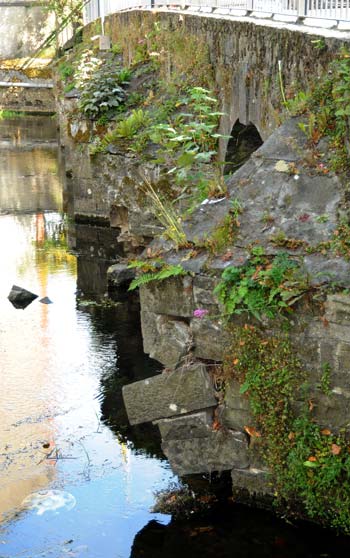 But as the poet, Billy Shakespeare, once said to me “When trouble comes they come not in single spies, but in battalions,” and true to form, now our strategic escape route, Thurles road bridge, is falling down. But as the poet, Billy Shakespeare, once said to me “When trouble comes they come not in single spies, but in battalions,” and true to form, now our strategic escape route, Thurles road bridge, is falling down.
The bridge’s problems are visible on the north west side facing Pheasant Island, where two dressed limestone triangular cutwater supports, protecting arch supports are now about to collapse.
I do not want to panic any of our residents, but I worry that the large numbers of unemployed workers, heading out of this forgotten town to experience adventure on the emigrant trail, could find themselves marooned, until after the rainy season.
(Click on image for larger photo.)
Barry’s Bridge, in Thurles, to give it it’s true title, has provided passage over the river Suir, since it was originally built circa 1650. It remained unchanged until circa 1820, when its upper, side protection walls were partially reconstructed, removing two semi circle areas, which had provided safety to pedestrians from splashes from high speeding coaches and galloping horses. In the twentieth century both of these walls were removed and replaced by steel railings and the bridge road surface also was widened with a pedestrian footpath added on the south side.
This original 17 century bridge was constructed using a combination of rubble and dressed limestone materials, and has provided textural variation and interest, which gave scenic value to the amenity areas to the south and north. (Well it did until certain individuals placed assorted pipes and wires across its seven beautiful arches.)
Only one Thurles Councillor, so far, has asked Co Council engineers to inspect the bridge, but he states “there is no cause for panic,” however to use the famous riposte spoken by Mandy Rice-Davies, a Welsh former model and showgirl, best known for her role in the Profumo affair, “Well, he would, wouldn’t he?”
Irish theologian, historian, and poet, Fr Geoffrey Keating (An tAthair Seathrún Céitinn) circa 1580-1644, ah yes now here is the tale of an Irish man, whose character and ability to speak truth, Ireland could benefit greatly from, at this present time.
In November 1603, he was one of forty students who sailed for Bordeaux to begin studies at the Irish College, under the charge of the Rev. Diarmaid MacCeallachan MacCarthy.
 About 1610 following his obtaining of a degree of Doctor of Divinity at the University, he returned to Ireland and was appointed to the ‘cure of souls,’ at Uachtar Achaidh (Translated from Irish ‘Upper Fields.’) in the parish of Knockraffan, near Cahir. It was here that he annoyed the wealthy, when he threw aside the then prevalent social abuse of delaying Mass until the neighbouring gentry could find time to make their appearance. About 1610 following his obtaining of a degree of Doctor of Divinity at the University, he returned to Ireland and was appointed to the ‘cure of souls,’ at Uachtar Achaidh (Translated from Irish ‘Upper Fields.’) in the parish of Knockraffan, near Cahir. It was here that he annoyed the wealthy, when he threw aside the then prevalent social abuse of delaying Mass until the neighbouring gentry could find time to make their appearance.
( Click on image for larger picture.)
This Jesuit preacher, it was decided, needed watching and a spy soon reported that there was “in the diocese of Lismore Father Geoffrey Keating, a preacher and Jesuit, resorting to all parts of the diocese.”
Fr Keating’s famous homilies on morality were soon to aroused the anger of a lady whom, shall we say, was considered to have rather loose morals, one Ellinor Laffan.
Having attended at one of his homilies, she felt that the eyes of the whole congregation were on her, and imagining that Fr Keating had preached that sermon especially for her benefit, to insult her, she made loud complaint to her relative, Donough O’Brien, Earl of Thomond, who was so enraged at her upset that he gave orders for Fr Keating to be apprehended, intending to punish him with all the vigour of the then law.
However, before the arresting soldiers reached his house, friends had warned him, and he was able to flee for safety, over the Galtee Mountains north of Tubrid, into the Glen of Aherlow, a place notorious for being the refuge of rebels and outlaws.
But enough about Fr Keating from me, except to say that I understand that his small silver chalice bearing the following inscription: “Dominus Galfridus Keatinge, Sacerd(os) Sacrae Theologiae Doctor me fieri fecit 23 February 1634“, is still preserved in the parish church of Cappoquin, in Co. Waterford.
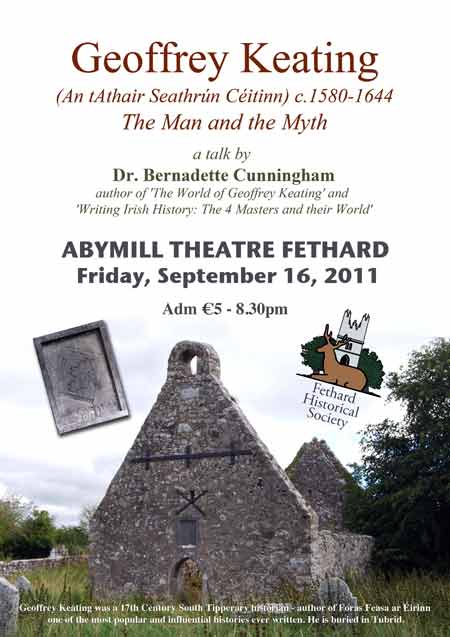
If you really want to know more about Fr Geoffrey Keating, The Man and The Myth, same will be the subject of a talk by Dr Bernadette Cunningham author of “The World of Geoffrey Keating” and “Writing Irish History: The Four Masters and their world.” at Abymill Theatre, Fethard, Co Tipperary on Friday, September 16th, 2011 at 8.30pm.
Admission: €5.
DNA research has confirmed that bones located in an axe box, in a disused Melbourne prison are those of the infamous Tipperary-Australian bushranger Ned Kelly, whose father, John Kelly, was transported from Moyglass, near Fethard, Thurles, Co Tipperary for stealing two pigs.
Edward “Ned,” Kelly (1854–80) was the last and most controversial of Victorian bushrangers. Pursued by police for robbery and murder, he was finally captured and hanged at the Melbourne Gaol, after a gun fight with police at Glenrowan in 1880.
Kelly survived a shootout with police in 1878 which saw himself, his brother Dan, and friends Joe Byrne and Steve Hart slapped with an £8,000 bounty, the largest reward ever offered in the British Empire, for anyone who found the gang dead or alive.
Considered by some as a cold-blooded killer, he became famous for wearing his home-made body armour. Kelly has also been described as a symbol of Irish-Australian resistance to the British ruling classes in Australia, during this period, taking on the might of the colonial authorities, at what he saw as corrupt police, injustice and greedy land barons.
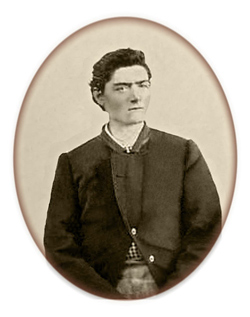 Portrait of Ned Kelly circa 1860 In a final gun battle at Glenrowan, three of the gang members died and Kelly, dressed in home-made plate metal armour and helmet, was later wounded and arrested. The captured Kelly spent his last days in the same Gaol as his mother who was also serving a sentence in the women’s wing. Kelly was eventually sentenced to death for murder, following his gang’s killing of three policemen, and he was hanged in Melbourne Gaol on November 11th 1880.
After his execution, Kelly, was originally buried in a mass grave at the Old Melbourne Gaol, however, his remains, together with 33 other prisoners, were reburied in Pentridge Prison in 1929. The mass grave was excavated again in 2009, and an almost complete skeleton was found in a wooden axe box at the prison site, thus beginning the quest to identify which bones belonged to Ned Kelly.
Twenty months of scientific examination, involving forensic scientists in Australia and Argentina, using a DNA sample provided by Melbourne art teacher Leigh Olver, latter Kelly’s sister Ellen’s great-grandson, have now confirmed that the bones are indeed the remains of the infamous bushranger.
The outlaw’s skull, which was stolen from a glass display case in 1978, still remains missing and reports that the Victorian government will consider putting the skeleton on display, has been greeted with anger by another relative. Anthony Griffiths, a great-grandson of Kelly’s sister Grace, believes that a public exhibition of Kelly’s bones would be macabre and disgusting.
Rolling Stone Mick Jagger played the lead role in the 1970 movie “Ned Kelly” while Heath Ledger starred as the bandit in a 2003 remake, that also featured Orlando Bloom and Geoffrey Rush.
Kelly has also been the inspiration for many books, most notably Peter Carey’s novel “True History of the Kelly Gang“, which won the 2001 Booker Prize.
|
Support Us Help keep Thurles.info online by donating below. Thank you.
Total Donated 2026: €300.00
Thank You!
Daily Thurles Mass Livestream
|



Recent Comments