|
|
 The Royal College of Physicians Ireland (RCPI) have launched a scathing attack on Arthur’s Day, organised by Diageo, latter to supposedly celebrate the anniversary of the Guinness brewing company. The Royal College of Physicians Ireland (RCPI) have launched a scathing attack on Arthur’s Day, organised by Diageo, latter to supposedly celebrate the anniversary of the Guinness brewing company.
To this end RCPI have organised a public discussion aimed at highlighting the dangerous side of alcohol and to further underscore their concerns that alcohol related illnesses in Ireland have now reached epidemic proportions.
Dr Stephen Stewart a Liver Disease Specialist, together with Child and Adolescent Psychiatrist Dr Bobby Smyth will speak at this event tomorrow evening, with the Chairperson of the RCPI’s policy group on alcohol, Professor Frank Murray opening the meeting.
The RCPI claim that deaths relating to cirrhosis of the liver have doubled between 1994 and 2008, and that hospital admissions for alcoholic liver disease has almost doubled between 1995 and 2007. The RCPI also claim that increasing numbers of young people are dying from alcohol related illnesses due to alcohol substances being more affordable than ever, being more acceptable than ever and being more available than ever. (A pint of Guinness in Dublin is €0.70 cheaper than in Thurles.)
The RCPI debate will take place at 6:00pm tomorrow Monday, at the college’s headquarters on Kildare Street, Dublin, and will wave the banner “Join the National Conversation on Alcohol: Who’s calling the shots.”
Diageo is not aware yet, but Guinness porter of course was first accidentally conceived in the early to mid 1700’s at the Palace of Archbishop Price, here in Cashel, Co Tipperary, now known as the Cashel Palace Hotel. Estate manager and Arthur’s father, Richard Guinness, was in charge of supervising the brewing of beer for the estates employees on the Archbishop Price estate. Supplying beer to employees at that time was considered part of their weekly entitlement. A servant was dispatched from the estate to purchase and convey the necessary beer making materials from Ryan’s brewery stores here in Main Street, Thurles, latter now known as Cathedral Street. (Time for Urban Councillors to erect another Memorial Plaque in St Mary’s Graveyard perhaps.)
In the brewing process, later back in Cashel, some of these ingredients, barley possibly, was accidentally over heated in error, in fact roasted until virtually black, thus giving that unique burnt flavour known to us today as porters ale or Guinness porter and described by the then Archbishop as being “a brew of a very palatable nature.”
It is not too long ago in Ireland that pregnant women were told to drink a glass of Guinness every day to fortify themselves and their baby. Indeed US scientists in the state of Wisconsinin in 2011 gave Guinness to dogs who had narrowed arteries. They found that Guinness worked as well as aspirin in preventing clots forming. They believe that antioxidant compounds in Guinness are responsible for these health benefits because they decrease harmful cholesterol gathering on artery walls. But then what do I know?
Still this National Conversation on Alcohol could now lead to the start of Fine Gael and Labour’s promised two year Dáil Reforms, with Mr Enda Kenny closing the Dáil Bar instead of the Senate. (Possible new Logo for those opposed to Irish Senate closure. “Close The Bar Not Our Senate.”)
(Just a thought, sure you never know, Mr Enda Kenny and Minister for Health Dr James Reilly could decide to lead by example, instead of their “Do as we say, not as we do,” current philosophy.)
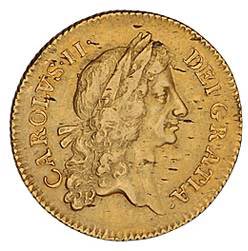 Charles II Gold Coin The 17th Century gold coin hoard found by workers during renovations to a building in Carrick-on-Suir Co Tipperary earlier this year, are back on South Tipperary soil for a one month-long exhibition.
The 81 coins (some 77 guineas and four half-guineas,) were found last January at Cooney’s Bar in the town and were identified as dating back from between 1664 (during the reign of King Charles II,) and 1701, (during the reign of William III).
The coins on loan from the National Museum of Ireland in Dublin, will now become part of an exhibition at the Tipperary County Museum in Clonmel, for just one month.
The exhibition will be officially launched at Tipperary County Museum tomorrow at 7.30pm during Culture Night at the Museum. Admission to the launch is free.
In comparison North Tipperary Co Council, aided by indifference from our current FG & Labour elected TDs, and without any public discussion, turned down a similar opportunity for a visit by the Derrynaflan Hoard last year, latter which would have created some 300 full time & part time jobs here in Thurles.
Despite ample security and a modern currently underutilised exhibition space being available in Thurles, this exhibition was shelved, despite the fact that same would have attracted for the first time, the lucrative Coach Tour business to Thurles, later currently totally neglected as a tourist destination in this the year of “The Gathering.”
Ireland may be officially out of recession however I suspect Co Tipperary may have been left out of recent CSO figures which show that Ireland’s economy grew slightly by 0.4% between April and June.
“And, as an hare whom hounds and horns pursue, Pants to the place from whence at first she flew,
I still had hopes, my long vexations past, Here to return – and die at home at last.”
Lines taken from “The Deserted Village,” by Oliver Goldsmith
Reading the inscriptions on headstones is now fast becoming a great contributor to our Irish tourism sector, both domestic and foreign, as more and more people have begun to trace their family’s history and now seek out the burial places of their long, often lost ancestors.
Most old headstone markers are difficult to read as they have become, through neglect, covered in decades of grime and various other surface lichens. Examine your grave marker therefore carefully at first to ascertain if it is indeed cleanable or if best left alone. If the stone shows signs of chipping, scaling, flaking or any other forms of obvious deterioration, do not clean. Your actions will do more harm than good and in most cases you will only further accelerate its future demise.
How Best To Read That Old Neglected Family Headstone
Before cleaning the discovered headstone, best to confirm that you have uncovered a marker that genuinely belongs to your family tree. Many grave markers turn out to be the long lost property of another family, so do try to decipher names and recorded death dates shown on the surface, before interfering.

To help clarify ownership to your satisfaction, for reading and later cleaning you will need in your possession a stiff bristled brush, (Either natural or nylon but never a wire brush), a supply of water, a spray can of well shaken shaving foam, (Gillette Regular shaving foam is best) and a stiff straight edged piece of cardboard or rubber edged window cleaning wiper. Spray the foam over the words inscribed on the headstones, making sure to press into the counter-relief or sunken script, before removing the excess shaving foam from the headstone with the edge of the stiff cardboard or rubber wiper. Some of the foam should now sit into the carved script, enabling you to read most of the written epitaph. [See picture above.]
In past times a product known as ‘Heelball,’ latter a wax, coloured with lampblack, latter once used to stain and polish the edges of the soles and heels of repaired shoes, was most often used to take rubbings of stone inscriptions successfully, but alas like many such products it has now become difficult to locate. A rub from green grass or dock leaves can also assist to highlight some worn lettering less successfully.
Cleaning Your Family Headstone
First remember that old headstones can never be made to appear totally brand new.
Up to the early 1970 all Roman Catholic graveyards throughout Ireland, usually before the end of July, held “Pattern Days.” These were days when people come together to perform a kind of pilgrimage, to the burial place of their dead relatives or simply to honour their local saint, latter who had often founded their local church. This is now somewhat of a fading tradition in many graveyards, but perhaps should again be resurrected. Relatives of deceased persons worked well to spruce up their cemetery for weeks beforehand, decorating many graves with fresh flowers and wreaths, scrubbing headstones and weeding burial plots.
Continue reading Tips On Reading & Cleaning Your Family Headstone
The Office of the Irish Attorney General has appointed a leading Senior Counsel to independently review the conviction of Tipperary farmer Harry Gleeson, 72 years after he was hanged. Justice Minister Alan Shatter has sanctioned a cold-case review following a request by Gleeson’s surviving relatives and friends, who have amassed what is believed to be new forensic evidence and which they believe will now clear Gleeson’s name.
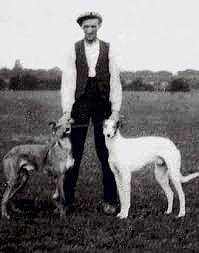 Harry Gleeson, a bachelor, whose favourite pastime was hare coursing, was found guilty of the murder of his neighbour, Mary (Moll) McCarthy, whose mutilated body he found on November 21st 1940, in a remote spot on his uncle’s farm near New Inn, Co Tipperary. Miss McCarthy had been shot twice, once in the face by her assailant or assailants . Harry Gleeson, a bachelor, whose favourite pastime was hare coursing, was found guilty of the murder of his neighbour, Mary (Moll) McCarthy, whose mutilated body he found on November 21st 1940, in a remote spot on his uncle’s farm near New Inn, Co Tipperary. Miss McCarthy had been shot twice, once in the face by her assailant or assailants .
A fresh pathologist’s report has been conducted which may undermine the prosecution’s case regarding the timing of the death of Miss McCarthy, who was decried from the altar by a local priest, because she was an unmarried mother.
The Justice for Harry Gleeson Group based at Dublin’s Griffith College, turned to the Irish Innocence Project, part of the global wrongful conviction organisation, to help strengthen its exoneration case. The Innocence Project, wrote to Mr Shatter last year seeking a pardon after reviewing Gleeson’s case.
Dean of Law at Griffith and director of the Irish Innocence Project Barrister David Langwallner stated that he believed the new evidence was now sufficient to establish that the Harry Gleeson case was a miscarriage of justice.
Previously this story was documented by the late broadcaster and journalist Cathal O’Shannon (1928 – 2011) in a TV series entitled “Thou Shalt Not Kill, ” back in 1995.
Henry “Harry” Gleeson was born in 1897 at the family homestead at Galbertstown Lower, Holycross, Thurles, Co. Tipperary. He was the ninth child of farmer Thomas Gleeson and Catherine (Maiden name Caesar). His parents were married in 1883 and had a family of 12 children. Harry went to work for his mother’s brother John Caesar, at Marlhill Farm, near New Inn. Harry’s younger brother Patrick would ultimately inherit Marlhill after John Caeser’s death, aged 83, in 1951.
According to a fictional Novel The Dead Eight by Carlo Gebler, Moll McCarthy’s story truly begins with her mother, who was reportedly a woman of ‘ill repute,’ and who sold sex to improve her impoverished lifestyle during a sojourn in Dublin city. Moll, her daughter, lived in a children’s home here in Thurles for the first sixteen years of life and was never acquainted with her actual father. Carlo Gebler paints Moll, like her mother, as somewhat of a promiscuous woman, even by the then standards of her time, having had numerous relationships with local men, both married and unmarried and also used these encounters to gain basic economic support, e.g. Unexplained Loads of Turf, Bags of Spuds, Groceries paid for at local shop etc..
“Foxy Moll’s” believed demise appears to have begun with a new discreet tryst with one Sergeant Anthony Daly, a married man, almost immediately upon his arrival to a new post at New Inn Garda station early in 1940. According to the novel Moll had been previously in a relationship with a local IRA activist, one Mr Johnny (JJ) Spink. He reportedly had possibly fathered her seventh and last child, latter who died as an infant and as with possibly previously relationships, this pregnancy appears to have ended her affair, due possibly to the scandal which almost certainly would have surrounded it.
Sergeant Daly’s then role in the Gardaí was to find and eradicate the remnants of the IRA who were still active in the Tipperary area. The Sergeant had been stationed at several locations over the course of his career and was notorious for the rough justice he had previously handed out. His now relationship with Moll presented a threat to Spink, who possibly feared that pillow talk might be passed on about the latter’s activities, thus this may have provided a motive for murder.
The novel suggests that Spink and two of his IRA associated brought Moll to a deserted house near Marlhill on the Wednesday evening, got her drunk, shot her and then planted her body where they knew Harry Gleeson would stumble on it the following morning. Spink then may have blackmailed Sergeant Daly, threatening to reveal his relationship with the deceased unless Sergeant Daly was prepared to frame Harry Gleeson. Sergeant Daly stands accused of coaching one of Moll’s sons to say that Harry Gleeson was the father of Moll’s last child and the whole case now pointed to Gleeson as having a motive for murder.
Early in 1941, Harry “Badger” Gleeson was convicted of Moll McCarthy’s murder. It appeared that justice had been done however everyone in New Inn was aware that Gleeson had never had a relationship with Moll McCarthy, they also knew that Moll McCarthy never had a child by him. Harry also had a cast iron alibi in the company of others. Her killer, as was also widely speculated on and was more than likely the father of her seventh child.
British Hangman Albert Pierrepoint (1905 – 1992) executed Harry Gleeson in Mountjoy jail in April 1941. Pierrepoint executed at least 433 men and 17 women during his time as a hangman.
A decision on a pardon, based on new believed evidence, is expected to be made within a matter of months.
Borrisoleigh Gathering Festival 2013 is all set to take place on October 4th, 5th & 6th 2013.
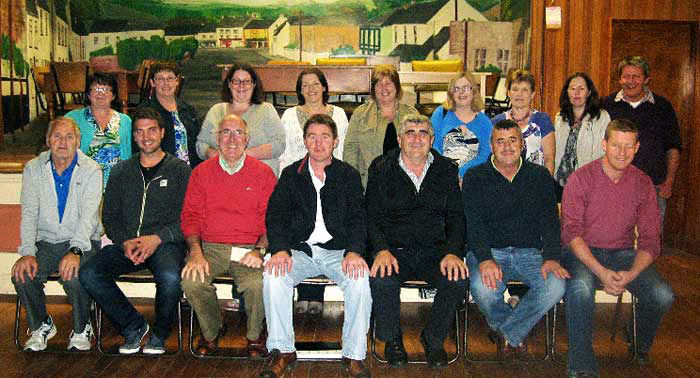
Borrisoleigh Festival Organising Committee Pictured Above
Back Row:- Nuala Ryan, Breda Ryan, Fiona Ryan (Joint Treasurers), Kathleen Scanlon, Fiona Max (Joint Secretary), Lisa Ryan, Phil Mason, Theresa Kiely, Derry O’Donnell (PRO).
Front Row:- Paddy Dolan (Joint Secretary), Declan Curtis, Michael Delaney, Joe Loughnane (Chairman), Sean Shanahan, Tony Murray, John Cummins.
Over the past several weeks a busy stream of volunteers have been beavering away on organising this annual festival which this year is sure to provide a wonderful opportunity for residents and visitors alike, while experiencing all that is great in Borrisoleigh, Thurles, Co.Tipperary.
Whether you are a current resident, a visitor from overseas or living in partial exile in another part of Ireland, you are guaranteed to have a fantastic time, while enjoying locally presented drama in the village hall, or music and dancing on the streets. Do bring the kids to the family fun day. Take a trip down memory lane with a historical walking tour of the town. Enjoy the wonderful views and fresh mountain air on a guided walk of the Devil’s Bit Mountain.
Meet Ireland’s Strongest Man – Test your ability to score a goal past Tipperary Goalkeeper Brendan Cummins – Try your hand at Sean Nós Dancing – View and purchase local craft products – Buy a large delicious sample of locally produced Tipperary food – Welcome back the hurling Team of 1963.
Events Calendar Over This October Borrisoleigh Weekend Festival
Friday 4th: – 8:00pm – Official opening of this festival by a very ‘special’ guest in Marian Hall.
followed by a Borrisoleigh Drama Group presentation – “Spreading the news” (A one-act truly comical play by Lady Gregory, which she first wrote for the opening night of the Abbey Theatre in Dublin, on December 27th 1904.)
Saturday 5th: – 11:00am – A three hour walk on the Devils Bit Loop (Beautiful Scenery) or also at 11:00am – A Sean Nós Dancing work shop.
12:00pm – Craft Fair in Square
2:30pm – “Down Memory Lane” – Historical walk around the streets of Borrisoleigh.
8:30pm – Variety Concert in Village Square.
Sunday 6th: – 12:00pm-4:00pm – Busking Competition.
(Note: Musicians entering the busking competition can still register their intent by logging onto the festival website by clicking Here.)
1:00pm – Family Fun Day including bubble soccer, score goals past Brendan Cummins, Ireland’s strongest man display, Tug of war, Sheaf toss, BBQ and lots, lots more.
Local entertainment in Square and celebration honouring the Juvenile North Hurling Champions of 1963
For more information do visit borrisoleighfestival.com or join them on Facebook and Twitter.
|
Support Us Help keep Thurles.info online by donating below. Thank you.
Total Donated 2026: €300.00
Thank You!
Daily Thurles Mass Livestream
|



Recent Comments