Archives

Raw Sewage Discharges-Wastewater Plants Poorly Managed.

  • Wastewater discharged from 59 per cent of Ireland’s existing treatment plants failed to consistently meet standards set in EPA licences to prevent pollution.
  • Nearly half of these failures are due to poor operational management at existing treatment plants.
  • Delays by Uisce Éireann in delivering improved infrastructure are prolonging risks to water quality.
  • EPA will continue to take enforcement action to bring existing wastewater treatment plants up to standard.

The Environmental Protection Agency’s (EPA) Urban Wastewater Treatment in 2024 report, released today, shows that investment at priority areas highlighted by the EPA is delivering improvements with the volume of raw sewage discharged daily halving since early 2024.

However, wastewater discharges continue to harm water quality in rivers, estuaries, lakes and coastal waters.

Effluent continues to flow into the River Suir in Thurles Town centre.
Pic: G. Willoughby

EPA licences set out the treatment standards necessary to prevent pollution and protect the environment. EPA assessment of wastewater discharges in this report highlights that over half (59%) of licensed treatment plants fail to consistently meet these standards. Failures range from occasional, short-term breaches to persistent discharges of poorly treated sewage. The main causes are inadequate infrastructure and poor operation and maintenance of treatment plants.

Operation and maintenance issues can and must be resolved as a matter of urgency. Addressing infrastructural deficits is a longer-term challenge that requires substantial and sustained investment. As it will take many years to complete all infrastructural upgrades, Uisce Éireann must give priority to the areas where improvements are most needed and will bring the greatest benefits. The EPA has identified 78 priority areas for improvements. Uisce Éireann has not yet started the works needed at half of these.

Effluent continues to flow into the River Suir in Thurlrs Town centre.
Pic: G. Willoughby

Launching the report, Mr Pat Byrne, Director of the EPA’s Office of Radiation Protection and Environmental Monitoring said: “Targeting improvements at priority areas identified by the EPA is delivering environmental benefits. The new treatment plants built to stop discharges of raw sewage from areas such as Arklow and Kilrush are clear examples of this progress. However, delays in designing and delivering infrastructural upgrades required at many more areas are prolonging negative impacts on water quality and the wider environment. Uisce Éireann must accelerate the pace of delivery of essential upgrades at priority areas to ensure cleaner rivers, estuaries, lakes and coastal waters and support a healthier environment for all.”

Treatment at fourteen large towns and cities failed to meet basic, European wide standards set in the Urban Wastewater Treatment Directive. Six of these met the standards in 2023, highlighting the need for Uisce Éireann to take action to prevent previously compliant treatment plants slipping into non-compliance.

Regarding the operation and maintenance of treatment plants, Mr Noel Byrne, EPA Programme Manager, said: “Too many wastewater treatment plants are failing to meet licence standards due to poor management and maintenance practices. This is simply not good enough. When treatment plants break down or are not managed properly, our environment pays the price. The EPA has prosecuted Uisce Éireann on 28 occasions for failing to treat wastewater properly. Poor operational performance will not be tolerated by the EPA. Uisce Éireann must take immediate action to improve the operation and management of treatment plants and implement effective maintenance programmes to prevent equipment breakdowns.”

The Urban Wastewater Treatment in 2024 report and the list of priority areas – including details of the environmental issues at each location and Uisce Éireann’s plans to address them – are available on the EPA website.

Urgent Safety Alert for 114,000 Tucson Heating Pumps.

CCPC Issues Urgent Safety Alert for 114,000 Tucson Heating Pumps Posing Electrocution Risk.

The Competition and Consumer Protection Commission (CCPC) has today issued an urgent safety alert concerning approximately 114,000 Tucson heating system pumps installed in Irish homes, which may present a serious risk of electrocution.

The affected models are Tucson 5m, 6m and 8m circulating pumps manufactured between 2017 and 2024.

TUCSON Circulating Pump.

An investigation by the CCPC, following a referral from the Health and Safety Authority (HSA), found that the mains cable on these pumps can be connected in reverse, allowing the live pin to connect to the earth pin. This electrical fault poses a significant risk of electric shock to anyone handling the unit.

This is one of the largest and most serious product safety alerts ever issued by the CCPC.

Consumers are advised that they may continue using their heating systems as normal but must not touch or attempt to service, disconnect, or adjust the affected pumps.

The manufacturer, Tucson Pumps, has launched a nationwide replacement programme. Consumers with affected products can have their pump replaced free of charge by an approved Tucson technician or service agent.

Mr Patrick Kenny of the CCPC urged all households and tradespeople to check heating systems installed or serviced within the last eight years.

“Check your heating system very carefully – do not touch the pump. Look for the Tucson brand, locate the serial number, and check it against the list on CCPC.ie,” Mr Kenny said.
“If your pump is affected, Tucson will replace it for free through an approved service technician.”

The CCPC is also appealing to retailers and tradespeople to take immediate action.

“Anyone working on heating systems must be fully aware of the serious risk posed by these pumps. Retailers should check their stock and cease the sale of affected units immediately,” the Commission stated.

Consumers can find the pump’s serial number on the front of the unit and verify it via CCPC.ie, tucsonpumps.ie, or by calling TEL: 01 842 6255.

Serial numbers beginning with any of the following indicate that the pump must be replaced:
S/N A, S/N B, S/N C, S/N D44 or earlier, S/N 2017, S/N 2018, S/N 2019, or S/N 2020.

Medicinal Product In Various Life Extension Food Supplements.

Medicinal product (melatonin) not permitted in food products present in various Life Extension food supplements.

Alert Summary dated Thursday October 2nd 2025

Category 1: For Action.
Alert Notification: 2025.53.
Product Identification: Please see table below.
Batch Code: All batch codes and all best before dates.

Message: The below Life Extension food supplements contain melatonin, a medicinal product which should only be taken when prescribed by a medical professional. In Ireland, melatonin is regulated as a medicinal product when authorised by the Health Products Regulatory Authority and it is not permitted in food supplements available on the Irish market.

Product.Pack size.
Fast-Acting Liquid Melatonin.59ml.
Melatonin IR/XR.60 capsules.
Melatonin 1 mg.60 capsules.
Melatonin 6 Hour Timed Release.60 vegetarian capsules.
Melatonin 3 mg. 60 vegetarian capsules.

Nature Of Danger: In Ireland, melatonin is a prescription medication, is not authorised in food and should only be taken under medical supervision. Use with caution if you have depression, bleeding disorders, high blood pressure, or seizure disorders. Common side effects can include drowsiness, headaches, vivid dreams and confusion. Avoid driving or operating machinery after taking melatonin
There remain concerns about its long-term effects when used by children.

Action Required: Manufacturers, Wholesalers, Distributors, Caterers & Retailers:


Retailers and Online Sellers: Same are requested to remove the implicated products from sale.

Consumers: Consumers are advised not to consume the implicated products.

Recall Of Ardagh Lighter Grated Mild Red & Mozzarella Cheese.

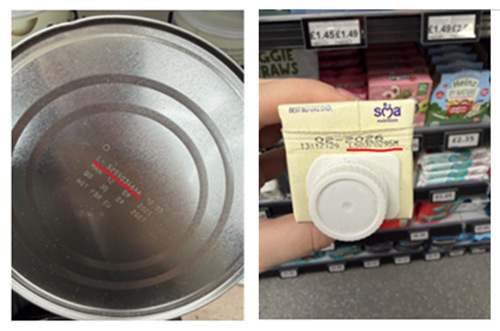
Food Safety Authority of Ireland recall a batch of Ardagh Lighter Grated Mild Red and Mozzarella cheese.

Alert Summary dated Thursday,October 2nd 2025.

Category 1: For Action
Alert Notification: 2025.54
Product Identification: Ardagh Lighter Grated Mild Red & Mozzarella cheese; pack size: 200 g; approval number: IE 1099 EC
Batch Code: Best before date: 30/11/2025 (A, B, C and D)
Country Of Origin: Ireland

Message: The above batch of Ardagh Lighter Grated Mild Red & Mozzarella cheese is being recalled due to the possible presence of Listeria monocytogenes.
Recall notices will be displayed at point-of-sale in Aldi stores.

Nature Of Danger: Symptoms of Listeria monocytogenes infection can include mild flu-like symptoms, or gastrointestinal symptoms such as nausea, vomiting and diarrhoea. In rare cases, the infection can be more severe, causing serious complications. Some people are more vulnerable to Listeria monocytogenes infections, including pregnant women, babies, and people with weakened immune systems, including the elderly. The incubation period (time between initial infection and first symptoms appearing) is on average 3 weeks but can range between 3 and 70 days.

Action Required: Manufacturers, Wholesalers, Distributors, Caterers & Retailers:
Retailers: Same are requested to remove the implicated batch from sale and display recall notices at point-of-sale.
Consumers: Consumers are advised not to eat the implicated batch.

The Broken Windows Of Our River – Tipperary’s Neglect & Silent Shame.

Criminologists talk of the Broken Windows Theory: leave a single pane shattered, a wall sprayed with graffiti, and the message spreads – this place is abandoned, rules don’t matter. Soon the small disorder becomes a flood of crime.

Look now to our River Suir. The same theory holds true, only here the broken windows are plastic and glass bottles bobbing downstream, slurry running through drains, domestic bags dumped along the river banks. And just as in streets, once the first act of neglect is ignored, worse inevitably follows. A trickle of pollution becomes a torrent.

Latest piece of unwanted rubbish dumped on the bank of the river Suir in Thurles town centre – the rear wheel of a bicycle complete with gear cogs.
Pic: G. Willoughby

Ireland’s Environmental Protection Agency (EPA) has warned again and again: almost half of our rivers are failing “good” ecological standards. Angling and environmental groups document salmon streams destroyed, trout waters suffocated, heritage fisheries reduced to open sewers. Yet still we tolerate the first offences the bags of rubbish, the secret pipes, the dead fish floating, until whole waterways are written off.

Supermarket trollies return to the riverbed again last Monday, following the last token cleanup by Thurles Municipal District Council.
Pic: G. Willoughby

Tipperary County Councils are quick to boast of their fight against “illegal dumping,” yet their record speaks otherwise. The fines exist on paper, but enforcement is rare. Too often, councillors look the other way when it is slurry or effluent from within their own patch. The public see it, the farmers see it, the children fishing off the river bank see it, and the message spreads: “pollute with impunity“.

This is Ireland’s broken window. And it is not just glass we are leaving unfixed—it is the very arteries of our countryside. Polluted rivers strip local people of pride, crush community guardianship, and invite still more damage. They tell residents: this place doesn’t matter.

We cannot rebuild pride in our environment, while allowing rivers to become open rubbish tips. Every plastic bag, every barrel of waste, every illegal pipe is a window smashed in the face of the community. Ignore it, and the damage multiplies. Confront it, and the message changes: this river matters, Thurles community matters.

The question is simple: will Tipperary County Council, and indeed Ireland as a whole, repair that first broken window – or will we stand by as the whole house falls down?