Tusla chief executive Ms Kate Duggan has warned that a levy on the agency’s 2027 budget could increase risks for vulnerable children and families by restricting services during rising demand. The Irish Times reports that officials informed Tusla of its inclusion in May.
The reason is a wider government savings policy. Departments have been instructed to deliver €446 million in efficiencies and reforms in 2027 to offset part of the previous year’s overspending. The Government has promised protection for some spending areas, including infrastructure, social protection and social housing supports.
The Department of Children faces a €42 million levy across its budget. Tusla’s individual contribution is not specified in the reporting.
Ms Duggan disputes the fairness of including the agency, saying it has controlled pay and staffing expenditure and already delivered savings. She described Tusla as being “penalised for overruns in other sectors”. The reporting does not establish that Tusla was selected because of financial mismanagement, or explain why it has not been exempted.
What services are at stake? Tusla’s responsibilities include:
Child protection and welfare, including responses to abuse and neglect.
Foster care, residential care, special care and aftercare.
Family support, early intervention, parenting support and counselling.
Above are examples of Tusla’s services, not a confirmed list of cuts. No specific service closures, staffing reductions or affected locations are identified in the earlier report.
The Department of Children says negotiations aim to achieve savings without cutting Tusla’s services and supports. Ms Duggan’s warning raises a clear question for Budget 2027; how will those protections be delivered while meeting the levy?
Fianna Fáil Senator Ms Imelda Goldsboro received €16,779 in travel and accommodation allowances in 2026 during an eight-month absence, through serious illness, according to an Irish Times report published today, 11th September 2026.
Ms Goldsboro said she continued working in Tipperary and while in hospital. Fianna Fáil subsequently said she was engaging with the Oireachtas to ensure her records and payments were accurate.
Ms Goldsboro’s political career includes serving on Tipperary County Council for the Carrick-on-Suir area from May 2014 until February 2025. She unsuccessfully contested the Tipperary constituency in the 2020 general election, Tipperary South in the 2024 general election, and the Agricultural Panel in the 2025 Seanad election. She also served on the South East Regional Drug and Alcohol Task Force. She became a senator in February 2025 last, following her nomination by An Taoiseach Mr Micheál Martin.
Following Ms Goldsboro’s appointment to the Seanad, her daughter Ms Amy Goldsboro, then 21 years of age, won a Fianna Fáil selection convention and was subsequently co-opted unto her mother’s vacant seat on Tipperary County Council, representing the Carrick-on-Suir area.
Travel and accommodation allowance payments continue automatically unless the member gives written instructions to stop them, according to an Irish Times report.
Oireachtas rules allow medically certified illness to be considered when assessing attendance requirements.
Recall of a specific batch of Supervalu Taco Mayonnaise, due to spoilage caused by fermentation.
Alert Summary dated Tuesday, September 8th 2026.
Category 1: For Action. Alert Notification: 2026.54. Product Identification: Supervalu Taco Mayonnaise; pack size: 420g. Batch Code: Best-before date: 18/04/2027. Country Of Origin: Ireland.
Message: The above batch of Supervalu Taco Mayonnaise is being recalled due to spoilage caused by fermentation. Recall notices will be displayed at point of sale.
Action Required:Manufacturers, Wholesalers, Distributors, Caterers and Retailers: Retailers: Same are requested to remove the implicated batch from sale and display recall notices at point-of-sale. Consumers: Consumers should not eat the implicated batch.
Congratulations to Thurles Councillor Mr Jim Ryan, who once again used Tipp FM local radio, this morning, to highlight the deplorable condition of the River Suir, as it passes through Thurles town centre.
Concerns about this important local waterway have reportedly been raised repeatedly since approximately November 2013. Yet, after almost 13 years, residents are still waiting for the sustained maintenance, environmental protection and accountability that the river urgently requires.
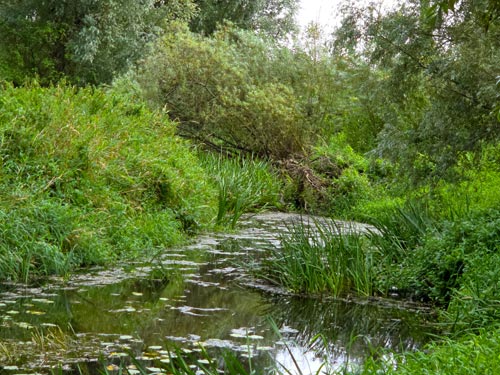
River Suir, for years, remains totally blocked by a fallen tree, reed and other vegetation.
Photographs and the short video hereunder, recorded yesterday, once again provide further evidence of the current situation. Shopping trolleys, bottles, discarded clothing and other litter, remain clearly visible, both in the riverbed and around affected sections of the river bank, totallydevoid of litter bins.
Years of excessive vegetation, severely restricted water flow and apparently uncontrolled effluent entering the river, provide stark evidence of prolonged and inexcusable neglect.
Short video hereunder, taken yesterday showing conditions recorded along the River Suir, with no action having taken place whatsoever, since contacted by EPA.
Thurles.Info has forwarded communications about the river to Tipperary County Council. The Environmental Protection Agency has also requested a written response from the said Council, outlining any action already taken or planned. According to the latest published update, that response remains awaited.
Despite the EPA’s intervention and continuing public complaints, no visible attempt had been made, up to yesterday, to remove the abandoned trolleys, bottles, clothing or other accumulated waste shown in the accompanying footage. This is not merely an appearance issue. The River Suir is an important natural habitat, public amenity and part of Thurles’s identity. Local people are entitled to know who is responsible, what work will be undertaken and when it will begin. Councillor Mr Jim Ryan deserves credit for continuing to raise the matter.
What Thurles now needs is a prompt, transparent and effective response from the responsible authorities.
Ms Maura Barrett, Reports Today From Cashel Library:
A welcoming space for individuals with memory loss and their caregivers to connect, share experiences, enjoy engaging activities and talks. This memory café offers support and conversation in a relaxed environment. No need to book just come along, leave us your name and number to be contacted each month when the café is taking place. This month we welcome guest speaker Joshua Dowling from ALONE.
You canlocate the Cashel Library building, situated on Friar Street, Lady’s Well, Cashel, Co. Tipperary, HERE. (G487+RX).
This website uses cookies to improve your experience. We'll assume you're ok with this, but you can opt-out if you wish.AcceptRead More
Privacy & Cookies Policy
Privacy Overview
This website uses cookies to improve your experience while you navigate through the website. Out of these, the cookies that are categorized as necessary are stored on your browser as they are essential for the working of basic functionalities of the website. We also use third-party cookies that help us analyze and understand how you use this website. These cookies will be stored in your browser only with your consent. You also have the option to opt-out of these cookies. But opting out of some of these cookies may affect your browsing experience.
Necessary cookies are absolutely essential for the website to function properly. This category only includes cookies that ensures basic functionalities and security features of the website. These cookies do not store any personal information.
Any cookies that may not be particularly necessary for the website to function and is used specifically to collect user personal data via analytics, ads, other embedded contents are termed as non-necessary cookies. It is mandatory to procure user consent prior to running these cookies on your website.







Recent Comments