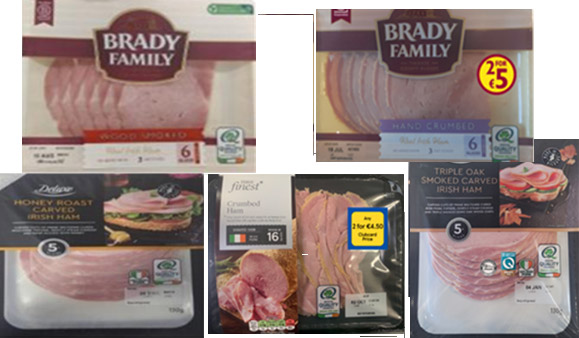
FSAI warn of recall of specific batches of various cooked ham products, due to the possible presence of Listeria monocytogenes.
Alert Summary datedTuesday, 30th June 2026.
Category 1: For Action Alert Notification: 2026.40 Product Identification: Please see table below for product details. Batch Code: Please see table below for batch codes and use-by dates. Country Of Origin: Ireland
Message: The below batches of cooked ham products are being recalled due to the possible presence of Listeria monocytogenes.
Recall notices will be displayed at point-of-sale.
Product name.
Pack size.
Batch code.
Use-by date.
Brady Family Wood Smoked Real Irish Ham, 6 Slices.
80g.
235417.
16/07/2026.
Brady Family Hand Crumbed Real Irish Ham 6 Slices.
80g.
235880 & 235765.
16/07/2026.
Deluxe Triple Oak Smoked Carved Irish Ham 5 Slices.
130g.
235461.
16/07/2026.
Deluxe Honey Roast Carved Irish Ham 5 Slices
130g.
235473.
16/07/2026.
Tesco Finest Crumbed Shaved Ham 16 Slices
120g.
235412.
16/07/2026 .
Nature Of Danger: Symptoms of Listeria monocytogenes infection can include mild flu-like symptoms, or gastrointestinal symptoms such as nausea, vomiting and diarrhoea. In rare cases, the infection can be more severe, causing serious complications. Some people are more vulnerable to Listeria monocytogenes infections, including pregnant women, babies, and people with weakened immune systems, including the elderly. The incubation period (time between initial infection and first symptoms appearing) is on average 3 weeks but can range between 3 and 70 days.
Retailers: Same are requested to remove the implicated batches from sale and display recall notices at point-of-sale. Consumers: Consumers are advised not to eat the implicated batches.
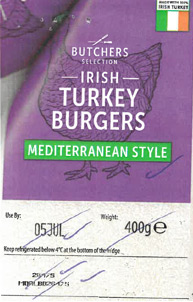
FSAI warn of recall of a specific batch of Butchers Selection Irish Turkey Burgers, Mediterranean Style.
Recall of a specific batch of Butchers Selection Irish Turkey Burgers, Mediterranean Style due to the presence of Salmonella.
Alert Summary Tuesday, 30th June 2026.
Category 1: For Action Alert Notification: 2026.39 Product Identification: Butchers Selection Irish Turkey Burgers, Mediterranean Style; pack size: 400g Batch Code Use-by Date: 05/07/2026 Country Of Origin: Ireland
Message: The above batch of Butchers Selection Irish Turkey Burgers Mediterranean Style is being recalled due to the presence of Salmonella. Recall notices will be displayed at point-of-sale.
Nature Of Danger: People infected with Salmonella typically develop symptoms between 12 and 36 hours after infection, but this can range between 6 and 72 hours. The most common symptom is diarrhoea, which can sometimes be bloody. Other symptoms may include fever, headache, and abdominal cramps. The illness usually lasts 4 to 7 days. Diarrhoea can occasionally be severe enough to require hospital admission. The elderly, infants, and those with impaired immune systems are more likely to have a severe illness.
Action Required:Manufacturers, Wholesalers, Distributors, Caterers & Retailers: Retailers: Same are requested to remove the implicated batch from sale and display recall notices at point-of-sale. Consumers: Consumers are advised not to eat the implicated batch.
A total of 9,882 complaints and queries were handled by the Food Safety Authority of Ireland’s (FSAI) Advice Line in 2025. Announcing details today of the complaints and queries last year, the FSAI stated that there were 6,135 complaints from consumers, with 33% of complaints relating to unfit food and 28% to poor hygiene standards.
Overall, the 6,135 consumer complaints in 2025 represented a 23% increase compared to the previous year with 4,996 complaints. The figures reflect an upward trend over the past decade. All complaints received by the FSAI in 2025 were followed up and investigated by food inspectors throughout the country.
Unfit food, which is food that is not safe to eat, was the most frequently reported complaint in 2025. Unfit food also includes contamination with a foreign object. Commonly reported foreign objects in food included: plastic, a battery, insects/caterpillar, slug, and fingernail. Examples of some of the complaints include: a fingernail found in a cake; a staple found in an Indian meal; a battery found in a pack of almonds; a fly floating in a milk bottle; a slug in a noodle dish and a live moth in a bag of salad.
The second most frequently reported category related to poor hygiene standards. Common complaints included rodents spotted in food businesses; staff not wearing appropriate clothing; poor personal hygiene with staff not changing gloves often enough; staff not washing hands; staff smoking in their aprons; and food not being stored correctly with fridges and freezers not cold enough.
The third most frequently reported category related to reports of suspected food poisoning making up 26% of the total complaints in 2025. This was a decrease from 29% in 2024.
The breakdown of all complaints are as follows: Unfit food: 2,030 Hygiene standards: 1,693 Suspect food poisoning: 1,570 Labelling: 656 Allergen Information: 150 Others: 36
Mr Greg Dempsey, (Chief Executive, FSAI), stressed the importance of making complaints to the FSAI, so that any food safety issues can be addressed. “Public reporting of food safety concerns plays a vital role in supporting the work of the food safety inspectorate and is an important part of how we protect public health. We greatly value the contribution of consumers in bringing potential issues to our attention, as these reports provide essential information that complements the work of Environmental Health Officers, veterinary and agricultural inspectors, sea-fisheries officers, and laboratory services. While routine inspections and food sampling programmes remain a core part of our regulatory activity, complaints allow us to quickly identify and respond to specific risks, ensuring that any potential threats to food safety are addressed without delay. The continued increase in engagement reflects growing consumer awareness and confidence in reporting issues, as well as a strong expectation that high standards of food safety and hygiene are consistently maintained across the food chain. In particular, we have seen a significant rise in complaints relating to unfit food and poor hygiene standards, and we would like to thank the public for their continued vigilance in helping us address these issues.”
The FSAI Advice Line also offers advice and information. During 2025, there were 3,747 queries from people working in the food industry, including caterers, food manufacturers, retailers, and others. Popular topics included: how to start a food business; food labelling information; best practice in food businesses; food safety training and several others.
The FSAI Advice Line is contactable through our online complaint form ‘makeitbetter’ or through our online query form. The FSAI Instagram,Facebook and LinkedIn pages are also resources with up-to-the-minute information in relation to food safety.
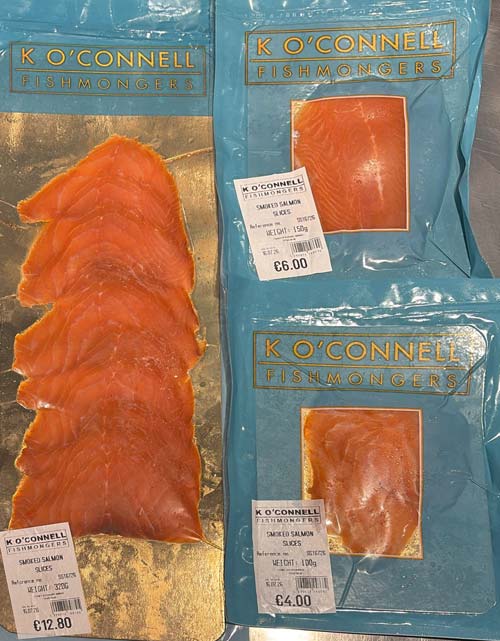
FSAI Warn of recall of batch of K O’Connell Fishmongers Smoked Salmon Slices due to the possible presence of Listeria monocytogenes.
Alert Summary dated Saturday, June 27th 2026.
Category 1: For Action Alert Notification: 2026.38 Product Identification: K O’Connell Fishmongers Smoked Salmon Slices; pack sizes: 100g, 150g & 320g Batch Code: SS16726; use by date: 16/07/2026
Message: The above batch of K O’Connell Fishmongers Smoked Salmon Slices is being recalled due to the possible presence of Listeria monocytogenes.
Recall notices will be displayed at point-of-sale.
Nature Of Danger: Symptoms of Listeria monocytogenes infection can include mild flu-like symptoms, or gastrointestinal symptoms such as nausea, vomiting and diarrhoea. In rare cases, the infection can be more severe, causing serious complications. Some people are more vulnerable to Listeria monocytogenes infections, including pregnant women, babies, and people with weakened immune systems, including the elderly. The incubation period (time between initial infection and first symptoms appearing) is on average 3 weeks but can range between 3 and 70 days.
Retailers: Same are requested to remove the implicated batch from sale and display recall notices at point-of-sale. Consumers: Consumers are advised not to eat the implicated batch.
People’s awareness levels of Radon and associated health risks is declining, says the EPA.
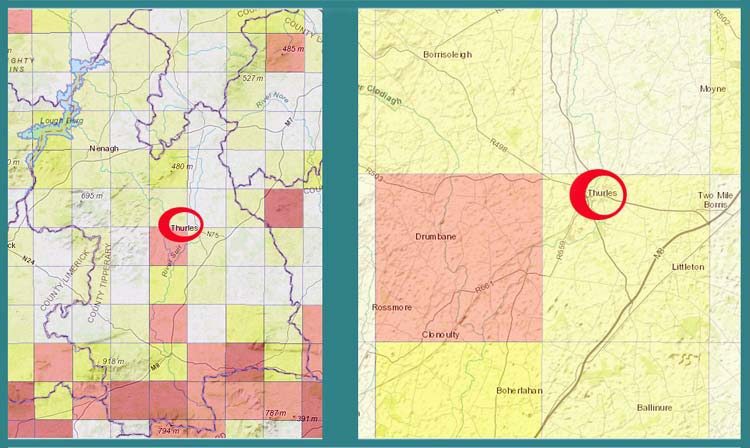
Radon gas is Ireland’s largest source of radiation exposure and is a leading cause of lung cancer.
A new EPA survey of attitudes toward radiation showed awareness of radon gas has dropped from 82% in 2020 to 71% in 2025.
More than half of respondents were unaware of the link between radon and lung cancer. Even when people are aware of radon gas, fewer than half are likely to test their homes.
The most significant sources of radiation exposure in Ireland arise from natural radiation in the environment, including radon, and medical exposures. However, people are more concerned about nuclear facilities abroad and damage to the environment.
The Environmental Protection Agency (EPA) today published the findings of a national survey on attitudes to radiation in Ireland. Over a thousand adults were surveyed, on behalf of the EPA, to understand public awareness of, and concerns about, radiation.
The survey indicates that only 31% of respondents are concerned about radiation. Worryingly, the findings revealed the level of awareness of radon had dropped from 82% in 2020 to 71% in 2025. Radon gas is Ireland’s leading source of radiation exposure. It accounts for more than half of the radiation dose received by the Irish population and is the leading cause of lung cancer, after smoking. Radon gas can enter your home from the ground through small cracks in floors and through gaps around pipes or cables.
The survey found most people are:- ► Not concerned about the health risk of radon. ► Unaware that radon exposure is linked to lung cancer. ► Unlikely to test their home for radon levels.
Commenting on the survey, Mr Patrick Byrne, (EPA Director of the Office of Radiation Protection and Environmental Monitoring), said: “The EPA is concerned to see a decline in radon awareness, and the continued reluctance among householders to test their homes. We found that many believe that their property is not affected. This is particularly worrying given that radon is our largest source of radiation exposure and a leading cause of lung cancer. Testing for radon in your home is simple and we urge all households to take this step to protect themselves and their families. It costs about €50 and the EPA website has a list of companies that supply the monitors. Reducing you and your family’s exposure to this harmful gas can be achieved using simple and effective methods.”
The survey found that one of the top radiation-related concerns was how nuclear facilities abroad affect Ireland. Dr Kevin Kelleher, (EPA Senior Scientific Officer), responded to this, noting: “Although our survey indicates public concern over such facilities, our research indicates that a nuclear emergency abroad would not have a significant radiological impact on Ireland. However, it is reassuring to see that the public would follow guidance from Government and expert bodies in the event of such an emergency.”
The National Radon Control Strategy which is led by the Department of the Climate, Energy and the Environment, brings together departments and state agencies to take action to reduce radon risk. The EPA will use the findings of this survey to strengthen its awareness work under the Strategy to drive testing and remediation to reduce radon risk to people’s health.
This website uses cookies to improve your experience. We'll assume you're ok with this, but you can opt-out if you wish.AcceptRead More
Privacy & Cookies Policy
Privacy Overview
This website uses cookies to improve your experience while you navigate through the website. Out of these, the cookies that are categorized as necessary are stored on your browser as they are essential for the working of basic functionalities of the website. We also use third-party cookies that help us analyze and understand how you use this website. These cookies will be stored in your browser only with your consent. You also have the option to opt-out of these cookies. But opting out of some of these cookies may affect your browsing experience.
Necessary cookies are absolutely essential for the website to function properly. This category only includes cookies that ensures basic functionalities and security features of the website. These cookies do not store any personal information.
Any cookies that may not be particularly necessary for the website to function and is used specifically to collect user personal data via analytics, ads, other embedded contents are termed as non-necessary cookies. It is mandatory to procure user consent prior to running these cookies on your website.



Recent Comments