According to the latest INMO figures, 91 admitted patients are waiting for a bed at University Hospital Limerick, the hospital serving communities across the Mid-West, including North Tipperary.
University Hospital Limerick.
Again, patients who are sick enough to be admitted are being left on trolleys, chairs, and in overcrowded hospital spaces, while waiting for basic dignity and proper care.
University Hospital Galway is the second most overcrowded hospital, with 51 patients waiting for a bed. In Tipperary University Hospital in Clonmel, 21 admitted patients are being cared for on chairs or trolleys while they wait for a bed.
Nationally, 516 patients are without a bed today. These are not just numbers. They are people; older people, vulnerable patients, families waiting anxiously, and frontline staff trying to deliver care in conditions that are simply not acceptable.
Again, we are seeing the same pattern. Again, warnings from nurses, doctors, patients, and communities are being ignored. Again, hospitals are being pushed beyond capacity while Government statements fail to match the reality on the ground. The Government cannot continue to treat this as a seasonal pressure or a temporary spike. This is a long-running failure of planning, capacity, staffing, and accountability. Communities in the Mid-West and across Tipperary deserve safe access to emergency care, timely admissions, and a hospital system that works when people need it most.
Frontline staff are doing everything they can, but they cannot fix a broken system on goodwill alone.
How many times must University Hospital Limerick top these overcrowding lists before real action is taken?
Again, patients are waiting. Again, staff are under pressure. Again, Government and Tipperary politicians must be held responsible.
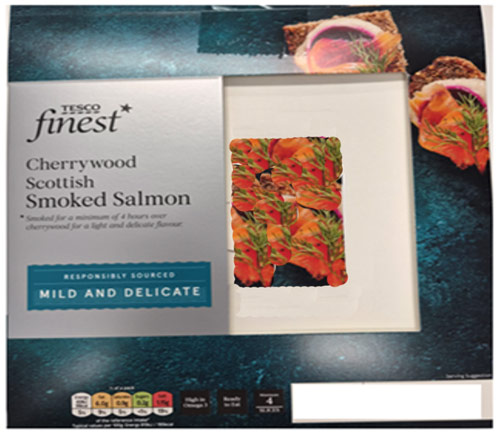
FSAI warn of Recall of Tesco Finest Scottish Cherrywood Smoked Salmon due to the presence of Listeria monocytogenes.
Alert Summary Dated Saturday, July 04th 2026.
Category 1: For Action. Alert Notification: 2024.42. Product Identification: Tesco Finest Scottish Cherrywood Smoked Salmon; pack size: 100g. Batch Code: Please see table below. Country Of Origin: Ireland.
Message: The below batches of Tesco Finest Scottish Cherrywood Smoked Salmon are being recalled due to the presence of Listeria monocytogenes. Recall notices will be displayed at point-of-sale in Tesco stores.
Nature Of Danger: In healthy people, symptoms of Listeria monocytogenes infection can include mild flu-like symptoms, or gastrointestinal symptoms such as nausea, vomiting, and diarrhoea. However, in people who are more vulnerable, the infection can be severe and can lead to serious complications. People who are more vulnerable to Listeria monocytogenes infections include pregnant women, infants, older adults, and people with weakened immune systems. The incubation period (time between initial infection and first symptoms appearing) is, on average, 3 weeks but can range between 3 and 70 days.
Retailers: Same are requested to remove the implicated batches from sale and display recall notices at point-of-sale. Consumers: Consumers are advised not to eat the implicated batches.
Dublin-born scientist Sir Adrian Hill (KBE) has been honoured with the European Inventor Award 2026 in the Research category for his role in developing R21/Matrix-M, a malaria vaccine now offering new hope in the fight against one of the world’s deadliest infectious diseases.
Professor Sir Adrian Hill, KBE.
Sir Adrian educated at Trinity College, Dublin, and director of Oxford University’s Jenner Institute, received the award from the European Patent Office in Berlin for work that has helped overcome a challenge scientists had pursued for more than a century. More than 150 malaria vaccine candidates entered human trials before recent breakthroughs finally succeeded. Hill’s team redesigned the vaccine to present key malaria-specific protein regions more effectively to the immune system, while removing elements that could weaken the response.
Clinical trials showed around 75–80 per cent protection, exceeding the World Health Organisation’s target for malaria vaccines. The vaccine can also be produced at large scale, costs less than €3 per dose, and remains stable for up to two years under standard refrigeration, making it especially valuable for countries where malaria remains endemic.
According to WHO, there were an estimated 282 million malaria cases and 610,000 deaths worldwide in 2024, with children under five accounting for about three-quarters of malaria deaths in the WHO African Region. R21/Matrix-M is now being integrated into routine immunisation programmes in more than 20 African countries.
As stated above, Hill studied medicine at Trinity College, Dublin, before completing a DPhil in human genetics at Oxford. He also contributed to the Oxford-AstraZeneca Covid-19 vaccine, adding to a career focused on vaccines with global impact.
His achievement follows a long line of Irish men who have helped shape medicine. Donegal-born William C. Campbell shared the 2015 Nobel Prize in Physiology or Medicine for work linked to avermectin, a discovery that transformed treatment for parasitic diseases such as river blindness and lymphatic filariasis. Dublin physicians William Stokes and Robert James Graves helped build the reputation of the Dublin School of Medicine, with their names still associated with major clinical conditions. Francis Rynd, a Dublin surgeon, was a pioneer of the hypodermic needle and injection.
Hill’s award therefore recognises not only one scientist’s breakthrough, but Ireland’s continuing contribution to medicine and global health.
FSAI issues guidance to food businesses as new EU regulations on control of Listeria in ready-to-eat foods come into effect.
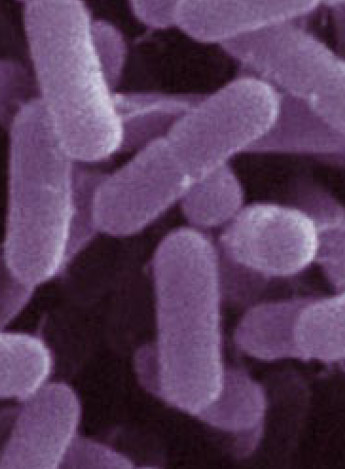
The Food Safety Authority of Ireland (FSAI) is issuing new guidance to food businesses on how to comply with stricter EU food safety legal limits for the control of Listeria monocytogenes in ready-to-eat foods placed on the market. Listeria monocytogenes is a bacterium that is primarily transmitted through contaminated food. It can lead to a serious illness in humans known as listeriosis.
Vulnerable populations, including pregnant women, infants, older adults, and people with weakened immune systems are at a higher risk of developing severe illness and associated complications from listeriosis.
The new rules, which apply from today, 1 July 2026, will oblige food businesses to have robust food safety controls in place to ensure compliance with the more stringent limit for Listeria monocytogenes. This limit applies to ready-to-eat foods able to support the growth of Listeria monocytogenes, when placed on the market and throughout their shelf life. Testing against the stricter limit requires the use of a more sensitive microbiological test method that is able to detect Listeria monocytogenes at low levels, should it be present in food.
This could mean that in the coming months consumers might see more food businesses recalling ready-to-eat foods due to the presence of Listeria monocytogenes. If that happens, then consumers will also see more food alerts through the FSAI food alert system informing them of the actions they need to take for those foods. This is more likely to occur if food businesses do not have robust procedures in place for effectively managing the risk of Listeria monocytogenes in the ready-to-eat foods they manufacture and place on the market.
Commenting today, Mr Greg Dempsey, (Chief Executive, FSAI), said that Listeria monocytogenes continues to be a significant concern across Europe, due to the severity of illness it can cause in vulnerable populations including pregnant women, infants, older adults, and people with weakened immune systems. “While the European Union, and Ireland as a Member State, operate one of the most robust food safety systems in the world, it remains vital to continuously improve food safety legislation to safeguard consumer health. Although the new rules continue to place a considerable responsibility on food manufacturers, it is critically important that they comply by implementing effective food safety management procedures to minimise the risk of Listeria monocytogenes. Consumer health protection is of paramount importance. The new rules will effectively raise the microbiological standards expected of food businesses and better protect public health,” said Mr Dempsey.
Thurles (Templetuohy Region) Named On EPA Drinking Water Remedial Action List Q4 Of 2025.
Five areas in Co. Tipperary appear on Remedial Action List; Thurles (Templetuohy); Kilcash; GalteeRegion; Clonmel Poulavanogue; Carraig-On-Suir.
The quality of drinking water from public supplies continues to be high, with 99.8% of samples compliant with standards.
The EPA’s list of ‘at-risk’ supplies has decreased from 45 supplies in 2024 to 35 supplies in 2025, serving 467,000 people.
The number of boil water notices and water restriction notices both increased during 2025, impacting almost 200,000 people.
The Environmental Protection Agency (EPA) today published its Drinking Water Quality in Public Supplies 2025 report, which shows that Ireland’s drinking water continues to meet high standards for over four million people. Compliance with microbiological limits reached 99.8%, while chemical standards were met in 99.7% of samples analysed, which means our public water is safe to drink.
Despite this good level of compliance, the EPA has identified a list of ‘at-risk’ supplies – the Remedial Action List (RAL) – where improvements are required to ensure a safe and secure drinking water supply for consumers. Ten ‘at-risk’ supplies were resolved during 2025, reflecting sustained progress by Uisce Éireann in upgrading their drinking water treatment infrastructure. However, 35 public water supplies still remain on the Remedial Action List at the end of 2025 and must be addressed as soon as possible.
Launching the report, Mr Patrick Byrne, EPA Director of the Office of Radiation Protection and Environmental Monitoring, said: “Public drinking water quality remains high, so people can be confident that the water supplied to their homes is safe to drink. While the EPA welcomes the reduction in the number of ‘at-risk’ supplies, EPA audits and enforcement continue to identify supplies which cannot guarantee safe and secure drinking water. Uisce Éireann must allocate necessary resources to complete the required upgrades at ‘at-risk’ supplies to ensure drinking water remains safe and public health is protected into the future.”
Water restrictions must be imposed by Uisce Eireann to protect human health when they cannot provide safe drinking water due to contamination or inadequate treatment. In 2025, 100 supplies affecting almost 200,000 consumers were impacted by boil water notices or water restriction notices, an increase from 84 supplies in 2024. Uisce Éireann must improve treatment plant resilience to respond to changing weather conditions, raw water quality or malfunctions in the treatment process, so that water restrictions are not needed in the first place.
Regarding water restrictions on drinking water supplies, Mr Noel Byrne, EPA Programme Manager, said: “It is worrying that almost 200,000 people were affected by water restrictions in 2025. While necessary to protect public health, they are a considerable inconvenience for consumers and point to a lack of resilience in water treatment. Uisce Éireann must make water treatment plants more robust, so they can withstand treatment challenges and continue to provide a safe water supply for consumers. Where restrictions are necessary, Uisce Éireann must respond quickly so that a compliant water supply is restored as soon as possible.”
The EPA’s report also highlights wider challenges across the supply network, including the level of leakage and the replacement of lead pipe work. Thirty six percent of treated water is lost daily through leakage, and people continue to be at risk from exposure to lead in drinking water due to lead in water pipes. More action is needed by Uisce Éireann and other stakeholders to address these issues in the supply network.
This website uses cookies to improve your experience. We'll assume you're ok with this, but you can opt-out if you wish.AcceptRead More
Privacy & Cookies Policy
Privacy Overview
This website uses cookies to improve your experience while you navigate through the website. Out of these, the cookies that are categorized as necessary are stored on your browser as they are essential for the working of basic functionalities of the website. We also use third-party cookies that help us analyze and understand how you use this website. These cookies will be stored in your browser only with your consent. You also have the option to opt-out of these cookies. But opting out of some of these cookies may affect your browsing experience.
Necessary cookies are absolutely essential for the website to function properly. This category only includes cookies that ensures basic functionalities and security features of the website. These cookies do not store any personal information.
Any cookies that may not be particularly necessary for the website to function and is used specifically to collect user personal data via analytics, ads, other embedded contents are termed as non-necessary cookies. It is mandatory to procure user consent prior to running these cookies on your website.





Recent Comments