Ireland’s ammonia emissions increased by 1% in 2021 as the impact of higher livestock numbers and fertiliser use outpaced the impact of emission reduction measures currently being implemented at farm level.
Ireland is non-compliant with our EU Emissions Reduction commitment in 2021 for Ammonia. Compliance with the 2030 Reduction Commitment is only possible with full implementation of all identified measures, such as low emissions slurry spreading, and widespread use of inhibited urea fertiliser products.
The use of coal and fuel oil in power generation trebled in 2021, leading to increases in emissions of Nitrogen Oxides (NOx), Particulate Matter (PM2.5) and Sulphur Dioxide (SO2), showing the direct link between fossil fuel use and air pollutant emissions.
Ireland was compliant in 2021 with EU emissions reduction commitments for the other key air pollutants; non-methane volatile organic compounds (NMVOCs), sulphur dioxide (SO2), nitrogen oxides (NOx) and fine particulate matter (PM2.5).
Additional actions are needed to reduce emissions of non-methane volatile organic compounds in the spirit production sector.
The Environmental Protection Agency (EPA) today published its 2021 assessment of five key air pollutants which impact air quality, health and the environment. The pollutants are:
ammonia,
non-methane volatile organic compounds
sulphur dioxide
nitrogen oxides
fine particulate matter
Ammonia emissions increased in 2021 by nearly 1%. Growth in livestock numbers, including a 3% increase in dairy cow numbers, led to an increase in total national ammonia emissions. Increased use of low emission slurry spreading to 48% was not sufficient to counteract the impact of the overall growth in livestock numbers. Ireland has not complied with EU National Emission Reduction Commitments for 9 of the past 10 years for ammonia emissions, which cause significant environmental damage to valuable ecosystems and can also impact local air quality and human health. Commenting on the report Dr Eimear Cotter, (Director of the EPA’s Office of Evidence and Assessment) said: “The EPA’s assessment shows that the impact of good practices that are currently being implemented at the farm level, such as low emission slurry spreading and the use of protected urea, are not enough to counteract the impact of increased livestock numbers and fertiliser use. More and faster uptake of known measures is needed. While compliance with the EU 2030 targets for ammonia is possible, it will be tight and is at risk should anything less than full implementation of all measures be delivered, or if the level of activity in the sector exceeds projections“.
The use of coal and fuel oil in power generation trebled in 2021, which led to increases in emissions of NOx, PM2.5 and SO2, illustrating the direct link between fossil fuel use and air pollutant emissions . Emissions of NOx increased by 3% overall, driven by increased fossil fuel use in power generation. These increases masked a decrease in NOx emissions from transport of almost 4% in 2021 reflecting a continued improvement in vehicle NOx abatement technologies.
Commenting on the findings Mr Stephen Treacy, (Senior Manager) said: “The data shows the direct link between fossil fuel use and air pollutant emissions, highlighting the importance of accelerating Ireland’s transition towards renewables for the generation of heat and electricity, which will benefit both the climate and air quality”. Emissions of non-methane volatile organic compounds (NMVOCs) increased by 2% in 2021, driven largely by increased activity in spirit production for beverages. While compliance with the NMVOC emission reduction commitment has been achieved, effective abatement measures for this source are needed if future emissions reduction targets are to be met. For further detail on these figures, see the EPA report Ireland’s Air Pollutant Emissions 1990-2030HERE. For further information contact: Ms Emily Williamson, EPA Media Relations Office TEL: 053-9170770 (24 hours) or media@epa.ie
The Government has accepted a Private Members Motion tabled in Dáil Éireann today, Wednesday, May 17th, 2023 by Clare TD Mr Michael McNamara and members of the Independent Group, seeking the implementation of a range of measures aimed at reducing pressure on overcrowded Hospital Emergency Departments across the country.
The Motion called for the expansion of Medical Assessment Units (MAU) and Local Injuries Units (LIU) at Tier 2 hospitals such as Nenagh, Co. Tipperary,Ennis, and St. John’s to 24-hours, 7-days-a-week; the delivery of an electronic health system to replace paper-based health records without further delay; and the appointment of designated medical officers in every nursing home thus ensuring that patients in nursing homes can access treatment by primary care teams.
The Government confirmed to the Dáil today it had accepted the Motion and looked forward to implementing the proposals.
Deputy McNamara said the basis for the Motion was the ongoing overcrowding in Irish hospitals, with 2022 seeing a record 121,000 patients being left without a bed, and the ongoing record overcrowding being experienced across the country during 2023.
The Co. Clare TD has welcomed the Government’s acceptance of the Motion and its commitment to implementing the proposal; to expand the LIUs and MAUs at Model 2 Hospitals, which he said would help to alleviate pressure on Emergency Departments.
“LIUs deliver efficient, expert treatment to tens of thousands of patients with minor injuries every year and have been of crucial assistance in relieving pressure on Emergency Departments during the pandemic,” he explained. “Furthermore, MAUs play an integral role in Emergency Department avoidance, providing a vital and timely service to GPs and patients. Approximately 10% of MAU cases may require admission to the hospital, and the majority will be discharged, with a follow-up review in the unit within 48 hours.”
Deputy McNamara also welcomed the Government’s commitment to procuring and rolling out a system of electronic health record keeping, across the country.
“Ireland remains a laggard in Europe for digitisation in the health system and the introduction of electronic health records. The use of such technology could significantly reduce triage times in Emergency Departments,” he stated.
The Clare TD said he hoped the Government would soon move to appoint designated medical officers in every nursing home and ensure that patients in nursing homes can access treatment by primary care teams.
“There remains a lack of a specific national structure or control for clinical oversight of the care of people admitted to nursing homes and they have difficulty accessing treatment by primary care teams. This lack of such oversight and care can result in unnecessary presentations at Emergency Departments,” he noted.
Responding to Deputy McNamara today, Health Minister Stephen Donnelly commented, “The Motion calls for measures to tackle overcrowding in our hospitals quite rightly. We know it’s a problem …The current situation in too many of our emergency departments on too many days of the week is simply not acceptable.”
He added, “The Independent Deputies who tabled this motion quite rightly point to Medical Assessment Units and Local Injury Units. The Urgent Care Plan is looking at these and is looking at expanding provision across these.”
Junior Minister Ms Mary Butler said, “The Motion tabled by the Independent Deputies calls for targeted investment in electronic health records nationally and I agree with that wholeheartedly. It calls for the expansion of MAUs and Local Injury Units at Tier 2 Hospitals. In doing so my Independent colleagues have acknowledged several areas where significant progress has been made, which is primarily as a result of an unprecedented expansion in our public healthcare capacity. This Government has invested in people, and we will continue to do so.”
Ms Butler continued, “We accept the motion from the Deputies, and we look forward to implementing what is in the motion. One area that we really need to make progress with quickly is in relation to e-health piece, especially in relation to homecare and CAMHS teams”.
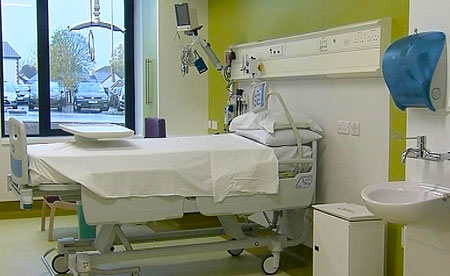
Visiting restrictions have once more been introduced at Nenagh Hospital, Nenagh, North Co. Tipperary, following a new outbreak of Covid-19.
The UL Hospitals Group latter made up of 6 hospital sites in the Midwest; have stated that they regret the inconvenience which this restriction will cause to inpatients and visiting loved ones, but same restrictions are indeed necessary to protect the health and safety of both patients and staff while keeping essential healthcare services open for patients.
Exceptions to the restrictions will be made on certain compassionate grounds i.e. patients critically ill or at end-of-life, and patients with dementia.
All appropriate infection control precautions, we are informed, are being followed to control the further spreading COVID-19 infection amongst the immediate and wider Nenagh community.
News of an increase of Covid cases in Thurles has also been confirmed, per local Knowledge.
Back in China, some three months past, same country experienced an unprecedented surge in cases that fuelling global concern over a newer Covid variant.
Leaked details from an internal NHC medical network meeting suggested that as many as 250 million people in China had been infected in early December, including 37 million persons in just a single day. Same news saw the response of countries, latter who clamped down restricting entry from Chinese travellers. Professor Daniel Lucey at the US Dartmouth Geisel Medical School of Medicine, has warned that the medical community should be on the lookout for what could become Pi, Rho or Sigma — a variant that’s potentially more immune-evasive and more virulent than current Covid strains.
Note: All Supermarket outlets, and Thurles Shopping centre, with the exception of Lidl Thurles, daily maintain the presence of hand sanitiser, despite some complaints made to Lidl’s head office’s Customer Care Service at Tel. No. 01 9203010; latter which failed to fully rectify the situation.
Best to hold on to those face masks, well for the time being at least.
Yesterday, Tuesday, April 11th, 2023, the Food Safety Authority of Ireland (FSAI) recalled a batch of Wrights of Howth Oak Smoked Irish Organic Salmon, detailed herewith, due to the presence of Listeria monocytogenes.
The product, whose country of origin is Ireland; refers to Wrights of Howth, Oak Smoked Irish Organic Salmon; pack sizes: 120g, 240g, 350g; approval number: IE DN0022 EC; with Batch Code P13; use by date: 15.04.2023.
Nature Of DangersAssociated:
Symptoms of Listeria monocytogenes infection can include mild flu-like symptoms, or gastrointestinal symptoms such as nausea, vomiting and diarrhoea. In rare cases, the infection can be more severe, causing serious complications. Some people are more vulnerable to Listeria monocytogenes infections, including pregnant women, babies, and people with weakened immune systems, including the elderly. The incubation period (time between initial infection and first symptoms appearing) is on average 3 weeks but can range between 3 and 70 days.
Manufacturers, wholesalers, distributors, caterers and retailers are requested to immediately remove the implicated batch from sale and to display recall notices at point-of-sale.
Consumers are strongly advised not to eat the implicated batch.
Food Safety Authority of Ireland warn of the possible presence of milk and hazelnuts in a batch of Tesco Free From Bran Flakes.
Product Identification:
Tesco Free From Bran Flakes; pack size: 300g. Best before date: 26th May 2024.
The batch of ‘Tesco Free From Bran Flakes’, [See Image left], may contain a small amount of another variant of cereal, latter which contains milk and hazelnuts.
These allergens are not declared on the label of Tesco Free From Bran Flakes. This may make the batch unsafe for consumers who are allergic to or intolerant of milk and/or nuts.
This website uses cookies to improve your experience. We'll assume you're ok with this, but you can opt-out if you wish.AcceptRead More
Privacy & Cookies Policy
Privacy Overview
This website uses cookies to improve your experience while you navigate through the website. Out of these, the cookies that are categorized as necessary are stored on your browser as they are essential for the working of basic functionalities of the website. We also use third-party cookies that help us analyze and understand how you use this website. These cookies will be stored in your browser only with your consent. You also have the option to opt-out of these cookies. But opting out of some of these cookies may affect your browsing experience.
Necessary cookies are absolutely essential for the website to function properly. This category only includes cookies that ensures basic functionalities and security features of the website. These cookies do not store any personal information.
Any cookies that may not be particularly necessary for the website to function and is used specifically to collect user personal data via analytics, ads, other embedded contents are termed as non-necessary cookies. It is mandatory to procure user consent prior to running these cookies on your website.








Recent Comments