|
|
Undeclared milk in specific batches of PUREPOWER Nutrition Chicken & Chorizo Paella.
Alert Summary dated Friday, January 9th, 2026.
Allergy Alert Notification: 2026.A01. Allergen: Milk. Product Identification: PUREPOWER Nutrition Chicken & Chorizo Paella; pack size: 400g. Batch Code: All use by dates up to and including 17/01/2026. Country Of Origin: Ireland.
Message: PUREPOWER Nutrition Chicken & Chorizo Paella contains milk which is not declared on the ingredients list on the affected batches. This may make the implicated batches unsafe for consumers who are allergic to or intolerant of milk.
The affected batches are being recalled.
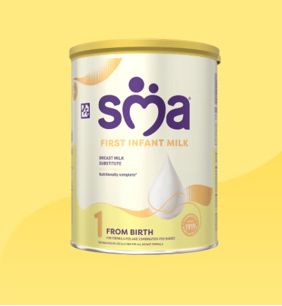
Alfamino infant formula added to list of SMA products, due to the possible presence of cereulide.
A Further update to recall of specific batches of SMA.
Alert Summary dated Wednesday, January 7th 2026.
Category 1: For Action Alert Notification: 2026.01 (Update 1) Product Identification: SMA Nutrition Alfamino infant formula; pack size 400g Batch Code 51210017Y1; expiry date: May-27 and 51700017Y1; expiry date: Jun-27
Message: Further to food alert 2026.01, batch 51700017Y1 of SMA Nutrition Alfamino infant formula is also subject to recall. Furthermore, the correct expiry date of batch 51210017Y1 is May-27.
Recall notices will be displayed at point-of-sale.
Questions and answers. Nestlé is advising its customers that have purchased any of these batches to contact them: via its online form, sharing a photo of the product and the batch code or by calling its careline Tel: 1800 931 832.
Nature Of Danger: Cereulide toxin is produced by the bacterium Bacillus cereus. The toxin may be pre-formed in a food and is extremely heat resistant. Consumption of foods containing cereulide toxin can lead to nausea and severe vomiting. Symptoms can appear within five hours. The duration of illness is usually 6 to 24 hours.
Action Required: Wholesalers/Distributors, Retailers. Retailers: Same are requested to remove the implicated batches from sale and display recall notices at point-of-sale. Wholesalers/Distributors: Same are requested to contact their affected customers and recall the implicated batches and provide a point-of-sale recall notice to their retailer customers. Consumers: Parents, guardians and caregivers are advised not to feed the implicated batches to infants or young children.
The Food Safety Authority of Ireland (FSAI) today advises that Nestlé is voluntarily recalling specific batches of its SMA infant formula and follow-on formula due to the potential presence of cereulide.
Cereulide is a toxin produced by some strains of the bacterium Bacillus cereus, which can cause food poisoning.
This recall is a precautionary measure being taken in the interest of public health, and there have been no reported cases of illness to date. The FSAI is advising parents, guardians and caregivers who may have the recalled products at home not to feed them to their infant or young child.
The products and batches being recalled are listed in the Food Alert Found HERE.
Batch codes can be found on the base of the tin or box for powdered formulas, or the base of the outer box and on the side / top of the container for ready-to-feed formulas.
The FSAI advises that cereulide toxin may be pre-formed in a food and is extremely heat resistant. Consumption of foods containing cereulide toxin can lead to nausea and severe vomiting. Symptoms can appear within five hours. The duration of illness is usually 6 to 24 hours.
The FSAI is advising parents, guardians and caregivers who may have the recalled products at home not to feed them to their infant or young child. If no symptoms are displayed, nothing further needs to be done. If a parent, guardian or caregiver is concerned about the health of their infant or young child, they should contact a healthcare professional.
Nestlé is advising its customers who have purchased any of these batches to contact:
- Via its online form, sharing a photo of the product and the batch code: https://www.nestle.co.uk/en-gb/getintouch.
- By calling its careline on 1800 931 832 (Ireland) or 0800 0 81 81 80(UK).
For more information, please see the Food Alert and Q&A.
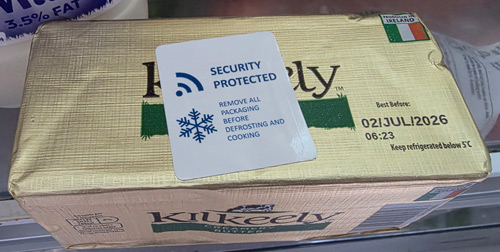
ALDI Ireland has confirmed it is reducing retail prices across its private label butter range, with immediate effect, with the new prices now available nationwide, including at the ALDI store on Kickham Street, Thurles (Eircode E41 YP28).
This move follows a series of recent price reductions by the retailer on key household staples across its range, including milk, bread, fresh fruit and vegetables, lunchbox essentials and meat.
New Kilkeely butter prices (effective immediately): Kilkeely Pure Irish Creamery Butter 454g – €3.39 (down from €3.99). Kilkeely Pure Irish Creamery Butter 227g – €2.09 (down from €2.39). Kilkeely Unsalted Irish Butter 227g – €2.09 (down from €2.39).
ALDI have confirmed it will continue to review the market daily, to ensure it remains the best value retailer on price, noting it has cut prices on hundreds of products over recent months.
Mr Niall O’Connor, (Country Managing Director of ALDI Ireland), said the retailer was focused on helping shoppers after a costly Christmas period and reiterated ALDI’s commitment to value across its range.
This price reduction on butter is the latest in a wider programme of cuts by the discounter on everyday essentials in recent months.
* PAN Europe reports Trifluoroacetic acid (TFA) was detected in 81.8% of 66 cereal-based food samples across 16 European countries, with a peak reported value of 360 μg/kg in Irish-purchased breakfast cereals. * No brand names are provided in the publicly available PAN Europe press materials with products described by category and country of purchase.
Read Full Report HERE
Trifluoroacetic acid (TFA-chemical formula CF3CO2H), a highly persistent “forever chemical” linked to the PFAS family, has been detected in a wide range of cereal-based foods purchased across Europe, according to findings published this month by Pesticide Action Network (PAN) Europe. Read Full Report.
These findings provide compelling evidence that TFA has become deeply embedded in the European diet, demanding urgent regulatory action, with PAN Europe calling for an immediate ban on PFAS pesticides, alongside a protective acceptable daily intake (ADI) that accounts for current toxicological uncertainties and vulnerable populations such as children, according to the precautionary principle. This should be complemented by EU-wide monitoring of TFA in food and the environment, as well as support for farmers to transition towards safer, non-synthetic crop protection methods.
PAN Europe said its investigation analysed 66 conventional cereal products bought in 16 European countries, including breakfast cereals, breads, pasta and flour. It reported TFA was detected in 81.8% (54/66) of samples, with an average concentration of 78.9 μg/kg and peak values up to 360 μg/kg.
Among the highest results cited by PAN Europe was 360 μg/kg in breakfast cereals purchased in Ireland, with other high readings reported in products such as Belgian wholemeal bread and French bakery items. Important clarification: no product or supermarket brands are named.
While the findings have prompted significant public concern, sadly the published PAN Europe materials coverage fails to identify any specific product names or supermarket brands; only to some wheat-based breakfast cereals bought in Irish supermarkets noting that TFA was not detected in a popular brand of Irish porridge oats, without naming any brand. PAN Europe’s press release similarly lists results by food type and country of purchase [for example, “breakfast cereals (purchased in Ireland)”] rather than naming retail products.
Regulatory debate and calls for monitoring. PAN Europe argues the findings highlight the need for routine monitoring of TFA in food and water, the setting of a more protective safety limit, and a move to end sources of contamination including PFAS-related pesticides.
CropLife Europe, representing the pesticide industry, has responded that available assessments indicate no toxicological concern “under realistic conditions of exposure”, and is calling for a risk-based approach while EU assessment processes continue.
Unlike tobacco, whose harms are long-established, TFA is still moving through the EU classification system, a hazard-based step that does not, by itself, determine consumer risk, which depends on exposure.
|
Support Us Help keep Thurles.info online by donating below. Thank you.
Total Donated 2026: €40.00
Thank You!
Daily Thurles Mass Livestream
|
Recent Comments