Today, Japan offers an example worth examining. VIEW HERE. Its school lunch approach brings together nutritionally balanced meals and shokuiku(Translated – Food Education). This connects what children learn about food with what they experience at mealtimes.
The lesson for our leaders is practical; make nourishing meals accessible and give children the knowledge to understand their food.
Delivering nutritious school meals and practical food education will require substantial investment in ingredients, facilities and trained staff. However, the potential returns extend well beyond the classroom. Research modelling stronger school meal standards suggests that healthier childhood diets could reduce diet-related illness and healthcare costs later in life. Over time, this could mean fewer avoidable hospital visits and admissions, less need for costly treatment and reduced pressure on our health service. These savings would take time and depend on the programme’s effectiveness, but investing in children’s nutrition today offers a valuable opportunity to prevent illness and its human and financial costs tomorrow.
We should work towards a school meal programme built around these priorities:
Nutritious, appealing meals: Support balanced menus developed with qualified nutrition professionals, with attention to children’s ages, allergies and dietary needs.
Access with dignity: Ensure that children from families facing financial hardship can participate without embarrassment or exclusion.
Practical food education: Help pupils learn about ingredients, cooking, food hygiene and reducing waste through activities suited to their age.
Support for local communities: Explore partnerships with local farmers and suppliers where these can meet quality, affordability and reliability requirements.
Resources and accountability: Give schools the funding, kitchen facilities and trained staff they need, then assess meal quality, participation, costs and food waste.
The lesson for our government leaders is practical; make nourishing meals accessible and give children the knowledge to understand the food they eat.
The purpose should be to nourish children and help them build a positive relationship with food. Success should include whether pupils enjoy their meals, have equitable access and gain useful knowledge.
Our political leaders can begin by bringing together educators, nutrition professionals, parents and pupils to design a practical pilot programme. Publish the findings, improve what needs work and expand what proves effective.
Finally, Ireland has shown before what determined political leadership can achieve for public health; from Dr Noel Browne’s leadership in the campaign against tuberculosis (TB) to Mr Micheál Martin’s introduction of the workplace smoking ban in 2004. Both demonstrate the importance of government taking responsibility for protecting people’s health. That same commitment should now inspire a sustained investment in nutritious school meals and practical food education. By making healthy food accessible to every child and teaching habits that can last a lifetime, today’s leaders have an opportunity to leave their own enduring legacy. Let us bring that ambition to our schools, giving every child a healthier start and a fairer chance to thrive.
Every school day offers an opportunity to invest in children’s wellbeing. Let us make the most of it; one nourishing meal and one useful lesson at a time.
Ireland’s free hot school meals programme is set for changes aimed at improving nutrition, offering more suitable portions and reducing the amount of food left uneaten.
Minister for Social Protection Mr Dara Calleary outlined the proposed reforms after Cabinet discussed two Government-commissioned reviews of the scheme. A cold lunch option, a standardised three-week menu and better provision for children with additional dietary needs are among the measures being considered. Discussions with schools and suppliers will now take place, with changes intended for the 2027/28 cycle.
Attention Turns From Expansion to Food Quality Following its nationwide extension in September 2025, the programme covers approximately 3,200 primary schools and more than 550,000 school children. Mr Calleary defended the scheme’s rapid growth and said it continues to provide valuable support to families. However, he acknowledged that improving the food itself must now become a central priority. The programme is estimated to save a household with two primary school children about €1,152 annually. An Taoiseach Mr Micheál Martin also recognised the scheme’s benefits while accepting that its quality and waste levels need attention.
Uneaten Meals Raise Difficult Questions The reviews indicate that roughly one in five meals supplied; approximately 100,000 a day, goes uneaten when pupil absences are taken into account, the proportion falls to 11.1%. Mr Calleary said his department takes food waste seriously, while noting that children being absent explains part of the problem. There are also questions about how waste is measured. Food Policy Ireland chief executive Ms Ruth Hegarty cited an estimated 6.3 million kilogrammes of food wasted over a school year, but questioned the basis for the reported uneaten-meal percentage because direct food waste audits had not been conducted in schools. The parent survey suggests that unfinished lunches predate the programme; almost half of respondents said their children previously brought food home uneaten.
Smaller Portions for Younger Pupils, More for Older Children A nutritional assessment examined 360 meals from 15 suppliers and included visits to 54 schools. It identified a problem with serving the same portion size across different age groups. Meals that may be sufficient for younger pupils can provide too few calories for older children. The review also found that children tended to select foods higher in fat, salt and sugar when those choices appeared alongside healthier alternatives. Proposed changes would introduce portions suited to different ages and a standardised menu rotating over three weeks. Menus would also be adapted for special schools, special classes and children with specific dietary requirements.
Parents Want Greater Lunch Flexibility A possible cold lunch option emerged as a strong theme in the feedback, with 84% of parents supporting its availability. The review recommends allowing children to choose a hot or cold meal on a given day, suggesting that greater flexibility could help reduce waste. The Ipsos/Behaviour & Attitudes research gathered responses from 86,637 parents and guardians, 6,884 children, 2,420 teachers and principals, and 47 suppliers, with 747 schools participating. Three-quarters of children said they ate at least some of their meal, while 63% of teachers and principals considered the programme’s overall impact positive. Meal ordering was strongest among younger children. Participation averaged 97% from Junior Infants to First Class, compared with 81% in Fifth and Sixth Class. The overall average was 85%.
The Government remains committed to extending the programme to secondary schools during its term. Mr Calleary has yet to announce a timetable for that expansion.
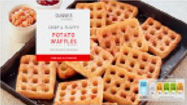
Recall of a batch of Dunnes Stores Potato Waffles 680g due to elevated levels of mineral oil aromatic hydrocarbons (MOAH)
Alert Summary dated Friday, 18th September 2026
Category 1: For Action. Alert Notification: 2026.59. Product Identification: Dunnes Stores Potato Waffles, pack size: 680g. Batch Code: Best before: July 2028.
Message: Dunnes Stores are recalling the above batch of Potato Waffles 680g due to elevated levels of mineral oil aromatic hydrocarbons (MOAH)
Recall notices will be displayed at point-of-sale in Dunnes stores.
Nature Of Danger: Mineral oil hydrocarbons comprise a wide range of chemical compounds obtained mainly from petroleum distillation and refining. They are categorised into two main groups referred to as mineral oil saturated hydrocarbons and mineral oil aromatic hydrocarbons. Mineral oil hydrocarbons can be present in food in many ways, such as through environmental contamination; use of lubricants for machinery during harvesting and food production; processing aids; food or feed additives; and migration from food contact materials. Some substances in the mineral oil aromatic hydrocarbons group are of possible health concern. Although the consumption of the contaminated product does not pose an immediate risk to health, continuous consumption over a long period of time may pose a potential risk to health. Therefore, exposure to mineral oil aromatic hydrocarbons needs to be minimised.
Action Required: Consumers: Consumers are advised not to eat the implicated batch.
Recall of specific batches of prepared Roast Chicken and Gravy Dinners due to the possible presence of Listeria monocytogenes
Alert Summary dated Friday, 18th September 2026
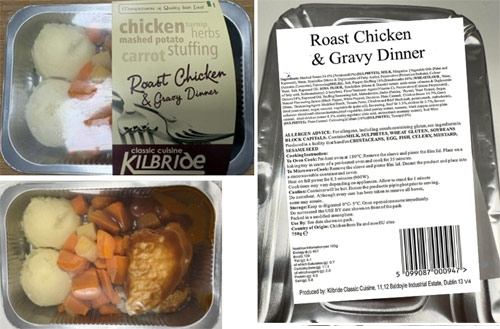
Category 1: For Action. Alert Notification: 2026.58. Product Identification: (1)Kilbride Classic Cuisine Roast Chicken & Gravy Dinner; pack size: 750g (2)Roast Chicken & Gravy Dinner (Produced by: Kilbride Classic Cuisine on back label); pack size: 750g Batch Code: Use by dates: 17/09/2026, 18/09/2026, 19/09/2026, 20/09/2026, 21/09/2026, 24/09/2026, 25/09/2026 and 26/09/2026. Country Of Origin: Ireland.
Message: The above batches of Roast Chicken and Gravy Dinners produced by Kilbride Classic Cuisine, are being recalled due to the possible presence of Listeria monocytogenes.
Please note that the Roast Chicken and Gravy Dinner is labelled as “Produced by: Kilbride Classic Cuisine” on the back of pack label and is labelled with information relating to the individual store where the product was purchased. The front of pack label varies from store to store. Consumers should check the back of pack label on these products to determine if they have the affected batches.
Recall notices will be displayed at point-of-sale.
Nature Of Danger: In healthy people, symptoms of Listeria monocytogenes infection can include mild flu-like symptoms, or gastrointestinal symptoms such as nausea, vomiting, and diarrhoea. However, in people who are more vulnerable, the infection can be severe and can lead to serious complications. People who are more vulnerable to Listeria monocytogenes infections include pregnant women, infants, older adults, and people with weakened immune systems. The incubation period (time between initial infection and first symptoms appearing) is, on average, 3 weeks but can range between 3 and 70 days.
Retailers: Same are requested to remove the implicated batches from sale and display recall notices at point-of-sale. Wholesalers/Distributors: Same are requested to contact their affected customers and recall the implicated batches and provide a point-of-sale recall notice to their retailer customers. Consumers: Consumers are advised not to eat the implicated batches.
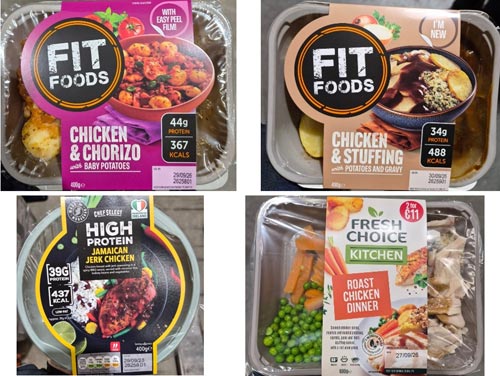
Recall of various branded prepared meals due to the possible presence of Listeria monocytogenes.
Alert Summary dated Friday, 18 September 2026.
Category 1: For Action Alert Notification: 2026.57 Product Identification: Please see table below. Approval number: IE 4025 EC Batch Code: Please see table below for batch codes and use-by dates. Country Of Origin: Ireland
Message: The below batches of various prepared meals are being recalled due to the possible presence of Listeria monocytogenes. Recall notices will be displayed at point-of-sale.
Product name.
Use-by dates.
Batch code.
Pack size.
Fit Foods Chicken & Chorizo with Baby Potatoes.
17/09/2026, 29/09/2026, 24/09/2026.
2624601, 2625301, 2625801.
400g.
Fit Foods Chicken & Stuffing with Potatoes and Gravy.
17/09/2026, 22/09/2026, 24/09/2026.
2624601 2625101 2625301
400g.
Chef Select High Protein Jamaican Jerk Chicken.
24/09/2026, 24/09/2026.
2624501 2625801
400g
Fresh Choice Kitchen Roast Chicken Dinner.
20/09/2026 23/09/2026 27/09/2026
2625101 2625301 2625801
600g
Nature Of Danger: In healthy people, symptoms of Listeria monocytogenes infection can include mild flu-like symptoms, or gastrointestinal symptoms such as nausea, vomiting, and diarrhoea. However, in people who are more vulnerable, the infection can be severe and can lead to serious complications. People who are more vulnerable to Listeria monocytogenes infections include pregnant women, infants, older adults, and people with weakened immune systems. The incubation period (time between initial infection and first symptoms appearing) is, on average, 3 weeks but can range between 3 and 70 days.
Retailers: Same are requested to remove the implicated batches from sale and display recall notices at point-of-sale. Wholesalers/Distributors: Same are requested to contact their affected customers and recall the implicated batches and provide a point-of-sale recall notice to their retailer customers. Consumers: Consumersare advised not to eat the implicated batches.
This website uses cookies to improve your experience. We'll assume you're ok with this, but you can opt-out if you wish.AcceptRead More
Privacy & Cookies Policy
Privacy Overview
This website uses cookies to improve your experience while you navigate through the website. Out of these, the cookies that are categorized as necessary are stored on your browser as they are essential for the working of basic functionalities of the website. We also use third-party cookies that help us analyze and understand how you use this website. These cookies will be stored in your browser only with your consent. You also have the option to opt-out of these cookies. But opting out of some of these cookies may affect your browsing experience.
Necessary cookies are absolutely essential for the website to function properly. This category only includes cookies that ensures basic functionalities and security features of the website. These cookies do not store any personal information.
Any cookies that may not be particularly necessary for the website to function and is used specifically to collect user personal data via analytics, ads, other embedded contents are termed as non-necessary cookies. It is mandatory to procure user consent prior to running these cookies on your website.




Recent Comments