A troubling controversy is developing around honey being sold in Ireland.
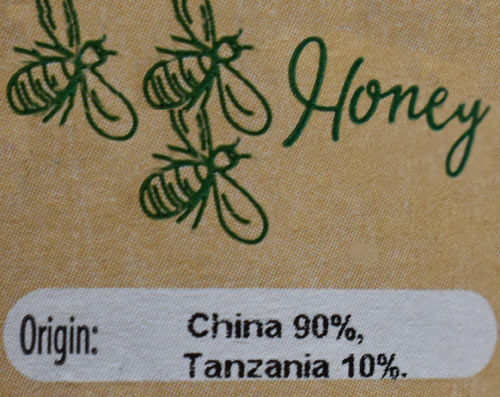
Many jars carry Irish-sounding names, familiar imagery or references to long-established Irish businesses. Yet the honey inside may be entirely imported. Until recently, labels could simply state “a blend of EU and non-EU honeys,” without identifying the countries involved or the proportions used.
Even more concerning is the possibility that some imported products are not pure honey at all.
A major European Commission investigation tested 320 consignments of honey entering the EU. It found that 147 or 46% of those tested, were suspected of containing added sugar syrups. Investigators also uncovered fraudulent practices involving additives and colourings, pollen removal and the falsification of information intended to conceal honey’s true origin.
This does not mean that 46% of every jar sold in Ireland is fake. The results concerned imported consignments tested during a particular investigation, and “suspected” adulteration is not automatically proof of fraud. Nevertheless, the findings expose a serious weakness in the honey supply chain.
Is adulterated honey dangerous?
It is important to be accurate about the risk. The European Commission considers the direct health risk from added sugar syrup to be very low, provided the syrup is food-grade and safe for human consumption. Honey is already naturally high in sugar, so adulteration with ordinary syrup does not normally make it acutely poisonous.
However, there are still legitimate concerns: If undeclared additives, colourings or other substances are used, consumers cannot know exactly what they are eating. False origin records and removed pollen weaken traceability, making it more difficult to identify suppliers or recall a product if contamination is discovered. Consumers with diabetes or those controlling their sugar intake may purchase honey believing it to be an authentic natural product when it could contain cheaper added syrups. All honey should, of course, be consumed carefully by anyone managing blood glucose. Adulterated products may not provide the composition, flavour or other qualities for which consumers deliberately choose genuine honey. Food fraud shows that someone in the supply chain is deliberately evading controls. Even where the adulterant itself is relatively harmless, that disregard for regulation damages confidence in the safety system.
There is also a separate safety warning applying to all honey, whether Irish or imported: it must never be given to a baby under 12 months old, because it can contain spores associated with infant botulism. Cooking or pasteurising honey does not provide a reliable safeguard for infants.
The danger to Irish beekeepers Ireland produces only a small proportion of the honey consumed in this country. Genuine Irish beekeepers face the impossible task of competing against extremely cheap imports, particularly when imported honey is packaged in a way that may leave shoppers believing they are supporting an Irish product. Foreign honey is not inherently unsafe or inferior, and importing it is entirely lawful. The problem is misleading presentation, concealed origins and the possibility of adulterated products being passed off as pure honey.
New EU labelling rules, effective from June 14th 2026, should improve transparency. Labels on newly produced blends must identify the countries of origin and their percentage shares, although older stock may remain on sale until exhausted.
Consumers should look beyond the brand name and imagery. Read the small print and look specifically for “Irish honey” or “100% Irish honey,” along with a clearly identified producer and place of origin. Remember, however, that consumers cannot reliably detect sophisticated adulteration by appearance, taste or whether the honey crystallises. Proper oversight and laboratory testing remain essential.
Irish consumers deserve honesty. Irish beekeepers deserve fair competition. And when a jar is sold as honey, its contents should be exactly that: genuine, traceable honey.
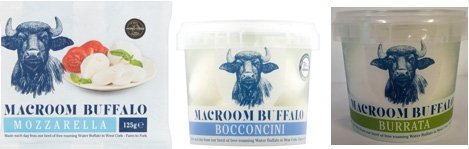
Message: Macroom Buffalo Cheese Products Ltd. is recalling the above batch of its Mozzarella, Bocconcini and Burrata products due to the presence of Listeria monocytogenes. Recall notices will be displayed at point-of-sale.
Nature Of Danger: In healthy people, symptoms of Listeria monocytogenes infection can include mild flu-like symptoms, or gastrointestinal symptoms such as nausea, vomiting, and diarrhoea. However, in people who are more vulnerable, the infection can be severe and can lead to serious complications. People who are more vulnerable to Listeria monocytogenes infections include pregnant women, infants, older adults, and people with weakened immune systems. The incubation period (time between initial infection and first symptoms appearing) is, on average, 3 weeks but can range between 3 and 70 days.
Wholesalers/Distributors: Same are requested to contact their affected customers and recall/withdraw the implicated batch and provide a point-of-sale recall notice to their retailer customers. Retailers: Same are requested to remove the implicated batch from sale and display recall notices at point-of-sale. Caterers: should not use the implicated batch. Consumers: Consumers are advised not to eat the implicated batch.
Government leaders are considering whether to recall the Dáil ahead of schedule as renewed instability in the Middle East raises concerns about fuel prices.
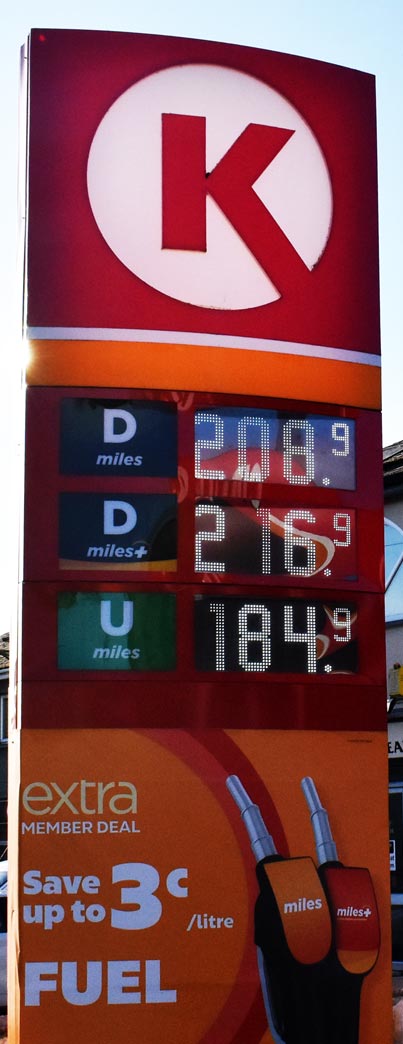
Temporary excise reductions introduced in April are due to be withdrawn gradually from September. The relief amounts to 32 cent per litre of diesel and 27 cent per litre of petrol and formed part of a €750 million package of business supports and cost-of-living measures.
Enterprise Minister Mr Peter Burke indicated that the timetable is being actively reassessed. The international outlook has worsened since the withdrawal schedule was agreed, with developments around the Strait of Hormuz contributing to uncertainty in global energy markets.
The Dáil is currently scheduled to return on September 16th next,. however, an earlier sitting may be required if the Government decides that legislation is needed to postpone the planned excise increases. Rising costs are already placing additional pressure on agriculture and the wider economy. The net price of marked gas oil, commonly known as green diesel, has increased from about 94 cent to €1.24 per litre, a rise of approximately 30%. Any extension of the fuel-tax relief would also have budgetary implications. The Government is preparing an overall Budget 2027 package worth more than €8 billion, including €1.5 billion for income-tax measures and an anticipated spending increase of around 6%.
Ministers are also examining ways to lower grocery prices by reducing transport, production and distribution costs. Because fuel expenses affect farming, manufacturing and the movement of goods, further increases could feed through to prices paid by consumers.
No final decision has been made on either the excise timetable or an early Dáil recall. Both options remain under consideration as the Government monitors international developments and prices at Irish fuel pumps.
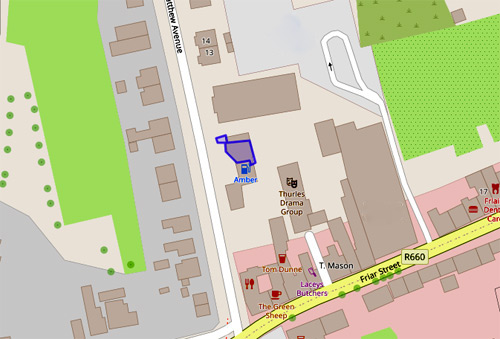
Rasbee Limited has applied to Tipperary County Council for permission to introduce an off-licence and pizza takeaway at the existing Inver service station on Mathew Avenue in Thurles.
The proposed development would occupy a 96-square-metre corner unit within the service station shop. Plans include a designated area for the sale of beer and spirits for consumption off the premises, along with an in-store pizza takeaway facility and associated site works.
Ten car-parking spaces are identified as serving the property, and the council recorded the application as received and validated on July 28th 2026 under Article 28 of the Planning and Development Regulations 2001. Its validity remains dependent on the site notice meeting the relevant regulatory requirements. A site inspection is due to take place during the statutory assessment period. Submissions or observations received up to and including August 31st will be considered, with a decision scheduled for September 21st.
Planning Application Location Outlined In Blue.
Application records can be checked through the Tipperary County CouncilHERE(File Number: 2660735)
Any new takeaway would enter a crowded Thurles food market. If approved, the proposed pizza facility would join an already substantial food-service sector in Thurles. Current online directories identify Thurles already has a sizeable selection of restaurants, cafés, hotels and Takeaway businesses. Online directories list several dozen food-serving establishments across the town itself and surrounding area, with at least eight businesses specifically listed as Takeaways.
While our figures are approximate, and some businesses appear in both categories. Nevertheless, they indicate that the proposed outlet would enter a competitive local market in which customers already have a broad range of dine-in, collection and delivery options. Whether the development would contribute to the closure of an existing business cannot be established from the planning application. Competition alone does not mean closures are inevitable, and the proposed facility may attract passing trade associated with the service station, rather than relying entirely on town-centre customers.
However, the possibility of further closures cannot be dismissed. The Restaurants Association of Ireland reported that 150 restaurants closed nationally during the first quarter of 2025, attributing the losses to rising operating costs. The association has identified labour, food, energy, insurance and taxation as significant pressures on food-led businesses. The Government subsequently restored the 9% VAT rate for food-led hospitality from July 2026, offering some relief to the sector.
Against that background, an additional takeaway could place further pressure on some established operators, particularly where businesses compete for the same evening pizza and fast-food trade. It would nevertheless be speculative and potentially unfair to suggest that any named Thurles restaurant or takeaway is likely to close without evidence from the businesses concerned.
We learn from press reports that Ireland’s tourism agencies have spent more than €1 million paying influencers to promote holiday destinations, since the beginning of 2025.
That is a substantial amount of public money and it deserves more than impressive claims about followers, views and “audience reach.” It deserves transparent evidence that these campaigns generated additional visitors, bookings and revenue. Tourism has certainly improved. Ireland welcomed more than 3.2 million overseas visitors during the first half of 2026; 15% more than in the same period of 2025. Their spending increased by 18% to €2.6 billion.
Those are encouraging figures, but they do not prove that influencer marketing produced the recovery. Tourism is affected by airline capacity, ferry connections, weather, exchange rates, prices, consumer confidence and many other forms of advertising. An influencer reaching millions of social-media accounts is not the same as delivering millions of tourists. A view is not a booking, a “like” is not a hotel stay, and a follower is not necessarily a prospective visitor.
This distinction is particularly important for Tipperary. The county’s tourism performance during 2025 was positive but mixed. Sixty per cent of tourism businesses reported growth and 14% remained stable, while 26% experienced a decline. Attractions and activity providers performed well, with 82% growing or maintaining attendance.
However, accommodation businesses had a more difficult experience: 34% reported a decline, while shorter stays and later bookings remained significant problems. Much of Tipperary’s strength also came from domestic residents and day-trippers. An impressive 94% of attractions maintained or increased their Ireland-based visitors.
That is good news, but it does not demonstrate that paid influencer visits generated significant additional tourism. In fact, favourable weather, local engagement, repeat visitors and domestic day trips were identified as important reasons for Tipperary’s performance.
Tipperary does has a tourism product that should be capable of selling itself internationally: the Rock of Cashel, Cahir Castle, Lough Derg, the Glen of Aherlow, the Galtee Mountains, Holycross Abbey and a rich combination of history, food, outdoor recreation and authentic rural communities. The county’s challenge is not simply attracting social-media attention. It is converting interest and day trips into overnight stays, encouraging visitors to explore beyond the best-known locations and ensuring that tourism spending reaches local accommodation providers, restaurants, shops and communities.
There is a legitimate place for digital creators in modern tourism promotion. Social media influences approximately 23 – 24% of potential visitors looking for holiday inspiration. However, recommendations and online searches are even more influential.
The biggest reason people choose Ireland is not celebrity endorsement. It is the country itself. Tourism Ireland’s research shows that scenery is the leading reason for choosing Ireland, cited by 33% of potential visitors. It is followed by Culture, Sightseeing and History. Historic Sites, Food and Drink, Walking, Hiking and Nature have exceptionally broad appeal. The public should therefore be asking whether enough money is being invested directly in the things visitors actually come to experience: heritage conservation, trails, public transport, visitor facilities, signage, accessibility, accommodation capacity and effective booking systems.
The strongest criticism is not that every influencer campaign is wasteful. We do not have the evidence to make that claim. The problem is that the agencies have not publicly demonstrated the opposite.
After spending more than €1 million, reporting enormous audience reach is inadequate. The agencies should now publish, for every major campaign: The total fee and associated travel costs. The audience and markets targeted. Engagement from relevant prospective visitors. Confirmed bookings or attributable visitor spending. Cost per booking and return on public investment. Honest regional results, including overnight stays generated in counties such as Tipperary. (Remembering no establishment likes to report decline.)
If those measurements show that influencer marketing works, the agencies will have a strong case for continuing it. If they cannot produce them, taxpayers are entitled to question whether public money is supporting tourism, or merely subsidising attractive trips and highly polished social-media content.
Ireland’s tourism recovery is welcome. Tipperary’s attractions are showing real resilience. But neither development gives tourism agencies a blank cheque.
Publicity is not performance. Reach is not revenue. Public money must produce measurable public value.
This website uses cookies to improve your experience. We'll assume you're ok with this, but you can opt-out if you wish.AcceptRead More
Privacy & Cookies Policy
Privacy Overview
This website uses cookies to improve your experience while you navigate through the website. Out of these, the cookies that are categorized as necessary are stored on your browser as they are essential for the working of basic functionalities of the website. We also use third-party cookies that help us analyze and understand how you use this website. These cookies will be stored in your browser only with your consent. You also have the option to opt-out of these cookies. But opting out of some of these cookies may affect your browsing experience.
Necessary cookies are absolutely essential for the website to function properly. This category only includes cookies that ensures basic functionalities and security features of the website. These cookies do not store any personal information.
Any cookies that may not be particularly necessary for the website to function and is used specifically to collect user personal data via analytics, ads, other embedded contents are termed as non-necessary cookies. It is mandatory to procure user consent prior to running these cookies on your website.




Recent Comments