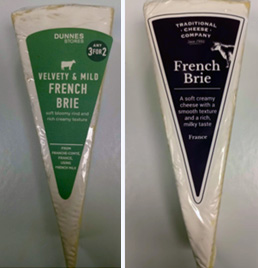
FSAI warn of recall of specific batches of various French Brie (Cheese) products due to the presence of Listeria monocytogenes.
Alert Summary dated Friday, June 19th 2026.
Category 1: For Action Alert Notification: 2026.34 Product Identification: Please see table below for product details. Batch Code: Please see table below for use-by dates.
Message: The below batches of Dunnes Stores Velvety & Mild French Brie and Traditional Cheese Company French Brie is being recalled due to the presence of Listeria monocytogenes.
Recall notices will be displayed at point-of-sale.
Product Name.
Pack Size.
Use-by dates.
Dunnes Stores Velvety & Mild French Brie.
170g.
10/07/2026. 16/07/2026. 17/07/2026.
Traditional Cheese Company French Brie.
160g.
17/07/2026.
Nature Of Danger: Symptoms of Listeria monocytogenes infection can include mild flu-like symptoms, or gastrointestinal symptoms such as nausea, vomiting and diarrhoea. In rare cases, the infection can be more severe, causing serious complications. Some people are more vulnerable to Listeria monocytogenes infections, including pregnant women, babies, and people with weakened immune systems, including the elderly. The incubation period (time between initial infection and first symptoms appearing) is on average 3 weeks but can range between 3 and 70 days.
Retailers: Same are requested to remove the implicated batches from sale and display recall notices at point-of-sale. Wholesalers / Distributors: Same are requested to contact their affected customers and recall the implicated batches and provide a point-of-sale recall notice to their retailer customers. Consumers: Consumers are advised not to eat the implicated batches.
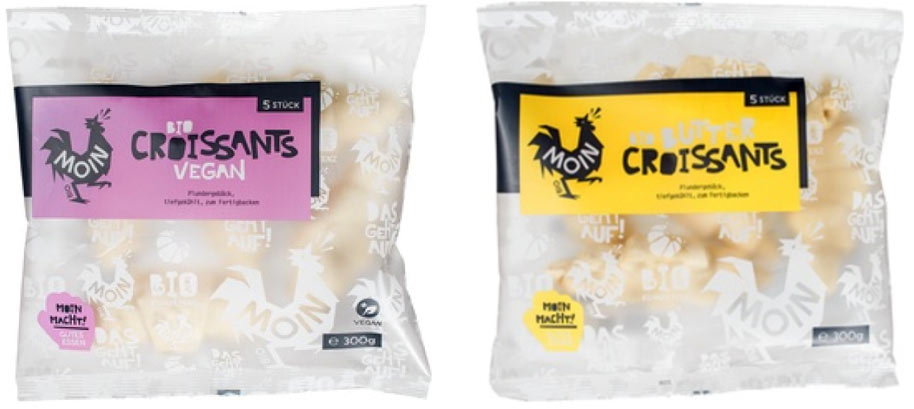
Undeclared allergens in batches of Moin Bio Croissants.
Alert Summary dated Thursday, June 18th 2026.
Allergy Alert Notification: 2026.A18. Allergens: Cereals containing gluten, milk, mustard, sesame seeds, nuts. Product Identification: Moin Bio Croissants Vegan; pack size: 300g (frozen) and Moin Bio Butter Croissants: pack size: 300g (frozen). Batch Code: All packs that are not labelled in English. Country Of Origin: Germany
Message: The list of ingredients of some packs of Moin Bio Croissants Vegan and Moin Bio Butter Croissants is not labelled in English. Both products contain cereals containing gluten, mustard and sesame seeds. In addition, Moin Bio Croissants Vegan contains nuts and Moin Bio Butter Croissants contains milk. This may make the implicated packs unsafe for consumers who are allergic to or intolerant of cereals containing gluten, mustard, sesame seeds, milk and/or nuts.
FSAI warn of recall of specific batches of Pettitt’s Kitchen products, due to the possible presence of Listeria monocytogenes.
Food Summary dated Wednesday, 17th June 2026.
Category 1: For Action Alert Notification: 2026.33 Product Identification: Please see list below. Batch Code: Please see list below for use by dates. Country Of Origin: Ireland
Message: The specific batches of Pettitt’s Kitchen products listed below are being recalled due to the possible presence of Listeria monocytogenes. Recall notices will be displayed at point-of-sale.
Nature Of Danger: Symptoms of Listeria monocytogenes infection can include mild flu-like symptoms, or gastrointestinal symptoms such as nausea, vomiting and diarrhoea. In rare cases, the infection can be more severe, causing serious complications. Some people are more vulnerable to Listeria monocytogenes infections, including pregnant women, babies, and people with weakened immune systems, including the elderly. The incubation period (time between initial infection and first symptoms appearing) is on average 3 weeks but can range between 3 and 70 days.
Action Required:Manufacturers, Wholesalers, Distributors, Caterers and Retailers: Retailers: Same are requested to remove the implicated batches from sale and display recall notices at point-of-sale. Consumers: Consumers are advised not to eat the implicated batches.
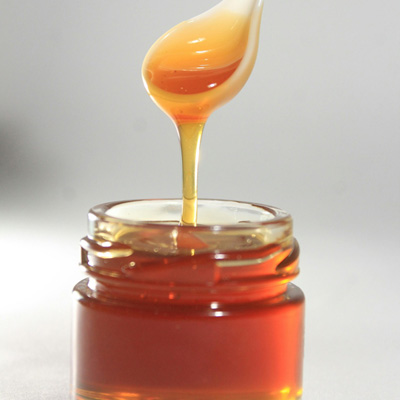
The Food Safety Authority of Ireland (FSAI) today welcomes the introduction of new EU labelling rules for honey, which came into effect on 14th June 2026.
The updated legislation introduces strengthened requirements for the labelling of honey in relation to the declaration of country of origin. Under the new rules, all countries of origin for blended honey must be clearly indicated on the label, in descending order of weight, along with the percentage contribution of each country. This information must be presented in the principal field of vision of the product, ensuring it is easily visible to consumers at the point of purchase.
Country of origin declaration applies to honey produced, packaged, labelled and for sale on the market after 14 June 2026. Before this date, origin declaration for honey had more general descriptions such as ‘a blend of EU honeys’ or ‘a blend of EU and non-EU honeys’, without further detail on the specific countries of origin. Honey produced, packaged, labelled and on the market on or before 14 June 2026, will legitimately remain on the market for several months with this previously acceptable origin declaration so it will therefore take some time before consumers see this change on the labels.
Welcoming the changes to the EU labelling rules for honey, Mr Greg Dempsey, (Chief Executive, FSAI), stated that improved origin labelling for honey will enhance transparency, support informed consumer choice and strengthen trust in honey products available on the Irish market. “The new EU labelling requirements for honey represent a positive development for both consumers and for food businesses. Providing clearer information on the country of origin of honey supports informed decision-making by consumers, while also promoting fairness and greater transparency across the supply chain. The new EU rules provide clarity for food businesses on how country of origin information must be declared on honey. All food businesses placing honey on the market after 14 June are required to ensure that their labelling complies with these new requirements.”
All food businesses involved in the production, packing, distribution or sale of honey must ensure that their labels are fully compliant with the new EU requirements. The FSAI will continue to work with official agencies and food businesses to support compliance with the legislation and to ensure that consumers are provided with accurate and clear information about the food they purchase.
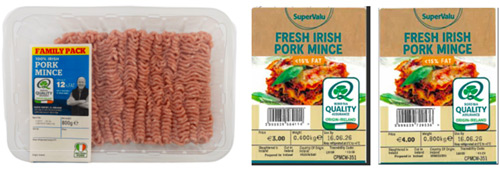
FSAI warn of recall of specific batches of pork mince products due to the presence of Salmonella.
Alert Summary dated Friday, June 12th 2026.
Category 1: For Action. Alert Notification: 2026.32. Product Identification: Please see table below. Batch Code: Please see table below for batch numbers and use by dates. Country Of Origin: Ireland.
Pork Products.
Message:Kepak is recalling the below batches of pork mince products due to the presence of Salmonella. Recall notices will be displayed at points of sale.
Product.
Pack size.
Use by date.
Batch number.
Approval number.
Lidl Family Pack 100% Irish Pork Mince.
800g.
16/06/2026.
L5159.
IE 329 EC.
SuperValu Fresh Irish Pork Mince.
400g.
16/06/2026.
L5159.
IE 329 EC.
SuperValu Fresh Irish Pork Mince.
800g.
16/06/2026.
L6159.
IE 329 EC.
Nature Of Danger: People infected with Salmonella typically develop symptoms between 12 and 36 hours after infection, but this can range between 6 and 72 hours. The most common symptom is diarrhoea, which can sometimes be bloody. Other symptoms may include fever, headache, and abdominal cramps. The illness usually lasts 4 to 7 days. Diarrhoea can occasionally be severe enough to require hospital admission. The elderly, infants, and those with impaired immune systems are more likely to have a severe illness.
Action Required:Manufacturers, Wholesalers, Distributors, Caterers & Retailers: Retailers: Same are requested to remove the implicated batches from sale and display recall notices at point-of-sale. Consumers: Consumers are advised not to eat the implicated batches.
This website uses cookies to improve your experience. We'll assume you're ok with this, but you can opt-out if you wish.AcceptRead More
Privacy & Cookies Policy
Privacy Overview
This website uses cookies to improve your experience while you navigate through the website. Out of these, the cookies that are categorized as necessary are stored on your browser as they are essential for the working of basic functionalities of the website. We also use third-party cookies that help us analyze and understand how you use this website. These cookies will be stored in your browser only with your consent. You also have the option to opt-out of these cookies. But opting out of some of these cookies may affect your browsing experience.
Necessary cookies are absolutely essential for the website to function properly. This category only includes cookies that ensures basic functionalities and security features of the website. These cookies do not store any personal information.
Any cookies that may not be particularly necessary for the website to function and is used specifically to collect user personal data via analytics, ads, other embedded contents are termed as non-necessary cookies. It is mandatory to procure user consent prior to running these cookies on your website.



Recent Comments