Searches in Tipperary have brought a European investigation into suspected horse trafficking into focus, raising questions about animal identification, cross-border trading and the possible movement of unsuitable horses into the food chain.
The Irish searches formed part of coordinated action across Europe. According to press reports, eight searches took place in Ireland, covering counties Tipperary, Galway, Kilkenny, Kildare, Dublin and Donegal. Across Europe, authorities conducted 25 searches. Gardaí said seized evidence was being analysed and investigations remain ongoing.
While the initial Irish statement offered limited information about the suspected network, European reporting provided further context. Press sources report that police raided farms in four European Union countries as part of an investigation into possible horse trafficking. Authorities suspected that some animals might have been illegally sold for meat.
We understand the investigation involved Ireland, Belgium, France and the Netherlands, with Belgian authorities leading the inquiry. Traders have allegedly used falsified documents and manipulated microchips to present horses, latter excluded from human consumption, as suitable for slaughter. The report referred to thousands of potentially affected horses, including former racehorses, and three arrests in Belgium.
These allegations point to a central concern; whether an animal’s recorded identity accurately reflects its history. If identification records are deliberately altered, the information used to assess a horse’s suitability for slaughter could become unreliable. That possibility makes the suspected document manipulation a significant part of the investigation.
However, substantial gaps remain in the publicly available information. The Irish statement does not name the suspected network, identify its leaders or specify the Tipperary premises that have been searched. It also has announced no arrests or charges in Ireland. The material reviewed does not establish who, if anyone, will ultimately face prosecution here.
A search is an investigative step, and allegations must be distinguished from proven offences. It would therefore be premature to associate any unnamed local owner, trainer, dealer or business with criminal conduct, simply because searches occurred in their county.
For Tipperary readers, the clearest confirmed development is the county’s inclusion in a wider European inquiry. The questions now concern what the seized evidence establishes, how the suspected trading arrangements operated and whether investigators can substantiate the alleged identification fraud.
Further official updates will be needed before the network’s membership, the precise role of Irish locations and the full extent of any wrongdoing can be described with confidence. Until then, the investigation remains ongoing.
Older people across Ireland could be missing out on valuable help with household bills through the Household Benefits Package.
The package provides approximately €420 a year towards electricity or gas, plus a free television licence worth €160—a combined annual value of around €580. People aged 70 or over qualify without a means test, but an application is still required. Read more about the scheme.
You must be fully resident in Ireland, and only one person per household can receive the package. Some people under 70 can also qualify through specified pensions, disability payments or Carer’s Allowance, or through a means test where applicable.
Recent reporting suggests that as many as 116,000 households with someone aged 70 or over may be missing out. However, the Department of Social Protection cautions that this estimate may be too high because some households already receive the benefit through another member.
Your electricity MPRN or gas GPRN, found on your utility bill.
Your TV licence reference, if applicable.
Your household and relationship details.
Your bank account details or preferred post office account details, for payment.
If you need a paper application or help applying, please contact the Department of Social Protection on Tel: 071 915 7100 and ask about form HB1.
If you have an older relative, friend or neighbour, consider helping them check whether their household already receives this support. A conversation could help someone access assistance they are correctly entitled to claim.
“Paper never refused ink,” as the old saying goes. Publication alone does not establish accuracy; public statements should be supported by clear information and visible results. I refer of course to a press release by Refresh Thurles Tidy Towns and published HERE by the Tipperary Star local newspaper.
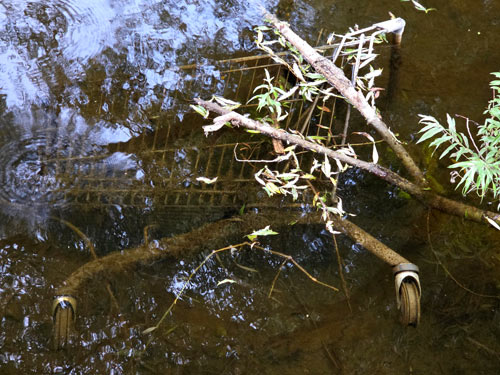
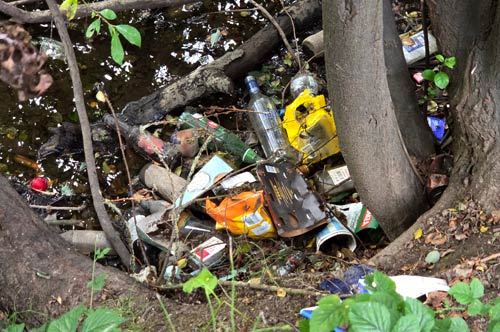
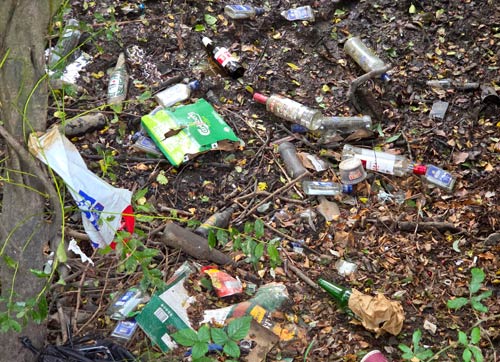
Refresh Thurles Tidy Towns’ concern about the River Suir is, at last, indeed to be welcomed. However, the accompanying photographs show substantial litter; numerous discarded drinks bottles, food wrappers, cartons and other rubbish among the trees and along the bank, together with shopping trolleys submerged beneath branches; today evidenced remaining untouched for almost 2 years.
One supermarket trolley overlooked in River Suir since 2025.
These currently submerged trolleys present another practical question; when were they first reported, who is responsible for arranging their safe removal, and when will that happen? Despite the water being shallow, nobody should expect volunteers to enter the river to retrieve them, but residents deserve a clear answer about who will act.
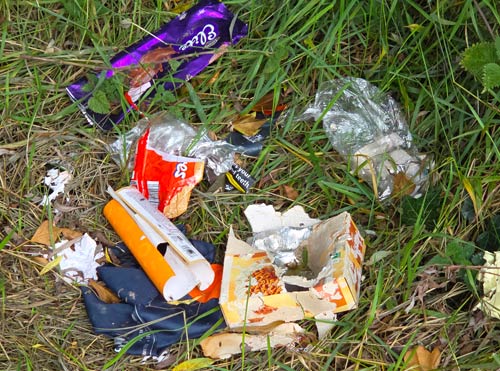
Litter overlooked in Thurles town park since 2025
The group reports regular litter picks and the recent collection of eight bags of rubbish. That work deserves acknowledgement. Nevertheless, the conditions pictured raise a fair question: when were these particular areas last cleaned, and are they included in the regular litter-picking route?
There is also a question about the photograph accompanying this week recent Tipperary Star report. [See HERE] My understanding is that it previously appeared on Refresh Thurles’ Facebook page on 25th April 2026. If it is an older photograph, its date should be made clear, so readers of local press do not mistake it for evidence of this current week’s activity.
Uncollected litter dumped between 2025/26, due to absence of litter bins.
My concern is that litter problems here, have persisted since the 2025 music festival. These photographs can prove that no cleaning has occurred since then, and they do show places that need immediate attention. If access or safety difficulties prevent volunteers from collecting this rubbish, have those locations been reported to the council, and what response has been received?
The timing of the press statement also merits clarification. Has Refresh Thurles previously raised these concerns publicly or in writing with the relevant authorities? If so, when, and with what outcome?
Please do take the time to fully view the video hereunder, to fully understand what must be observed as Ireland’s shame.
Why Ireland’s Rivers Are Dying?
Finally, the published statement’s reference to installing wildlife information boards needs clarification. My understanding is that Thurles Municipal District Council installed the signage. Could the respective roles in commissioning, funding, designing and installing the boards be explained, so everyone’s contribution is accurately acknowledged?
Uncollected riverbank litter since August 12th, 2026, still visible this wet morning.
These are reasonable questions, not a dismissal of voluntary effort. Those who discard rubbish bear responsibility for their behaviour, and volunteers deserve thanks for the work they do.
But appreciation and accountability can and must sit together. What matters now is an accurate account of the work completed, a clear allocation of responsibility and dates for addressing the problems shown in above accompanying pictures shown here and with no remedial action taken for months.
Some newspapers are happy to publish public relations (PR) material from politicians and other organisations, without verifying the facts. The favourable accounts they present are often far removed from the truth.
Paper may never refuse ink. The River Suir, at this stage, needs more than words.
Congratulations to Thurles Councillor Mr Jim Ryan, who once again used Tipp FM local radio, this morning, to highlight the deplorable condition of the River Suir, as it passes through Thurles town centre.
Concerns about this important local waterway have reportedly been raised repeatedly since approximately November 2013. Yet, after almost 13 years, residents are still waiting for the sustained maintenance, environmental protection and accountability that the river urgently requires.
River Suir, for years, remains totally blocked by a fallen tree, reed and other vegetation.
Photographs and the short video hereunder, recorded yesterday, once again provide further evidence of the current situation. Shopping trolleys, bottles, discarded clothing and other litter, remain clearly visible, both in the riverbed and around affected sections of the river bank, totallydevoid of litter bins.
Years of excessive vegetation, severely restricted water flow and apparently uncontrolled effluent entering the river, provide stark evidence of prolonged and inexcusable neglect.
Short video hereunder, taken yesterday showing conditions recorded along the River Suir, with no action having taken place whatsoever, since contacted by EPA.
Thurles.Info has forwarded communications about the river to Tipperary County Council. The Environmental Protection Agency has also requested a written response from the said Council, outlining any action already taken or planned. According to the latest published update, that response remains awaited.
Despite the EPA’s intervention and continuing public complaints, no visible attempt had been made, up to yesterday, to remove the abandoned trolleys, bottles, clothing or other accumulated waste shown in the accompanying footage. This is not merely an appearance issue. The River Suir is an important natural habitat, public amenity and part of Thurles’s identity. Local people are entitled to know who is responsible, what work will be undertaken and when it will begin. Councillor Mr Jim Ryan deserves credit for continuing to raise the matter.
What Thurles now needs is a prompt, transparent and effective response from the responsible authorities.
We learned last week that the Data Protection Commission (DPC) has fined the HSE €645,000, following serious failures in the care of confidential medical records.
The investigation began after two data breaches were reported in 2023. People had gained unauthorised access to paper medical records stored in the disused St Loman’s psychiatric hospital in Mullingar and St Conal’s Hospital in Letterkenny. Videos of the records were subsequently posted on social media.
When inspectors examined 12 HSE storage sites, they found records in appalling conditions. Documents were stored in disused bathrooms, cubicles, a shipping container inside a turf shed and derelict buildings. Some records were damaged by mould, water, rubble and animal droppings. The DPC also found that records had been retained longer than necessary and that some breaches had not been reported promptly to either the regulator or the people/patients affected.
The DPC imposed four fines totalling €645,000 and ordered the HSE to audit its storage facilities, remove records from unsuitable locations and introduce a proper system for tracking and managing paper records. The HSE’s previous similar data-protection failures were treated as an aggravating factor.
But who will really pay this fine? The HSE is funded mainly with public money. Therefore, the €645,000 will not come from the pockets of the officials responsible. It will come from resources that could otherwise have been used for patients, staff and health services. Once the fine has been confirmed by a court and collected, the DPC must transfer the money to the Government’s Central Fund, namely the Irish Exchequer. It does not go to the patients whose records were mishandled, and it does not remain with the DPC. The result is that one taxpayer-funded public body pays another part of the State. The money leaves the HSE’s budget and returns to the general Exchequer.
The HSE will then find itself €645,000 short in its future dealings with patients and support services, unless it can absorb the loss elsewhere. If it seeks additional funding, that money will again have to come from the taxpayer. The HSE cannot simply demand the fine back, but future governments may provide it with increased funding through the normal budget process.
Is this not ridiculous? The HSE must certainly be held accountable for the disgraceful treatment of sensitive medical records. Strong corrective action, public accountability and consequences for those responsible are entirely justified. However, taking money from the health service, placing it in the Exchequer and potentially providing more taxpayers’ money to the HSE later looks like public money being moved in a circle.
Meanwhile, patients may face the real cost through reduced resources or delayed services, although they did nothing wrong. The people directly responsible may suffer no personal financial consequence, while taxpayers effectively pay the penalty.
The fine sends a public message, but it raises a serious question; is moving €645,000 of taxpayers’ money from one State account to another really the best way to hold a public body accountable?
Meaningful accountability should correct the failures without making patients and ordinary taxpayers pay for the same institutional mistakes again.
This website uses cookies to improve your experience. We'll assume you're ok with this, but you can opt-out if you wish.AcceptRead More
Privacy & Cookies Policy
Privacy Overview
This website uses cookies to improve your experience while you navigate through the website. Out of these, the cookies that are categorized as necessary are stored on your browser as they are essential for the working of basic functionalities of the website. We also use third-party cookies that help us analyze and understand how you use this website. These cookies will be stored in your browser only with your consent. You also have the option to opt-out of these cookies. But opting out of some of these cookies may affect your browsing experience.
Necessary cookies are absolutely essential for the website to function properly. This category only includes cookies that ensures basic functionalities and security features of the website. These cookies do not store any personal information.
Any cookies that may not be particularly necessary for the website to function and is used specifically to collect user personal data via analytics, ads, other embedded contents are termed as non-necessary cookies. It is mandatory to procure user consent prior to running these cookies on your website.







Recent Comments