On 21st August 2026, Tipp FM reported Councillor Mr Jim Ryan’s warning that lives were being put at risk after a lifebuoy was thrown into the River Suir, behind the shopping centre in Thurles.
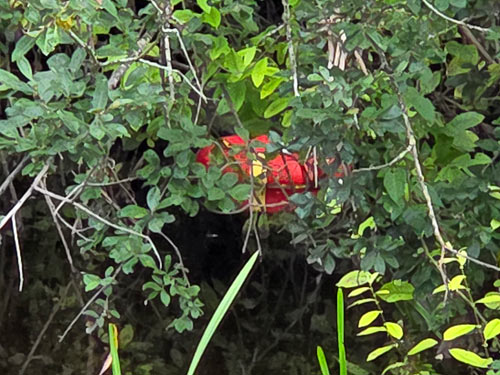
Sixteen days later following a report on August 21st 2026, the stollifebuoy remains floating in River Suir in Thurles town centre. The waste of taxpayers money by Municipal District Council officials continues. Pic: G. Willoughby.
Despite a new buoy being replaced, there appears to have been no successful effort to recover this vital piece of lifesaving equipment. If action has been taken, the public deserves to know why the buoy is still in the river and unavailable for use in an emergency.
Each lifebuoy reportedly costs approximately €55.00, with the rope adding further expense. More importantly, its absence from its proper station could have had life-or-death consequences.
Tipperary County Council has previously warned that damaging or taking a ring buoy is a criminal offence and has urged the public to report missing or damaged equipment to the council or Water Safety Ireland.
Condemning vandalism is not enough. This lifebuoy must now be recovered or replaced, the location made safe, and responsibility taken for ensuring that essential rescue equipment along the Thurles river walk is inspected and maintained.
Ireland’s First-Home Divide: A Six-Figure Salary Is Now Required in Three Irish Counties.
A single first-time buyer now needs to earn more than €100,000 a year to buy a typical home in Dublin, Wicklow or Kildare, according to new research from Chill Insurance. Last year, Dublin was the only county where a six-figure salary was needed.
The estimated salary required is €108,000 in Dublin, €101,250 in Wicklow and €100,238 in Kildare. Yet the current national median salary is only €44,816. Even in Longford, the country’s most affordable county, a single buyer would need to earn €48,375.
The figures assume that buyers have a 10% deposit and can borrow four times their annual income; the usual Central Bank limit. They are estimates and do not include personal debts, household bills or other circumstances.
There is no easy answer to this problem. State schemes can help some people with their deposit or the gap between their mortgage and the purchase price. However, Ireland also needs many more affordable homes, including smaller homes and apartments for people buying alone.
Simply allowing people to borrow more could push prices even higher. Research from the OECD’s Economic Survey suggested in 2025, that the lasting solution is to build more homes by speeding up planning, making serviced land available, lowering construction costs and building more suitable housing near/close to places of employment and public transport.
The real warning is clear: an average single worker can no longer today afford a typical first home in any Irish county. Home ownership is increasingly limited to couples, high earners or people who can get financial help from their families or the Irish State.
Most of Cabragh Road in Thurles was resurfaced over the past week, following the deterioration and collapse of sections of the road surface after water-service works were carried out some years ago.
Much of the new surface appears to have been finished to a good standard. However, several sections near homes and businesses; including the area entrance to O’Meara Oil, now appear to be incomplete and potentially hazardous.
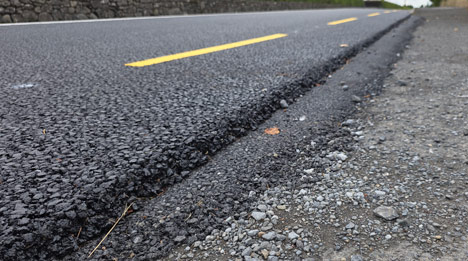
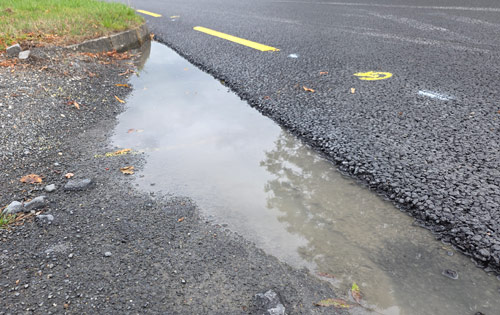
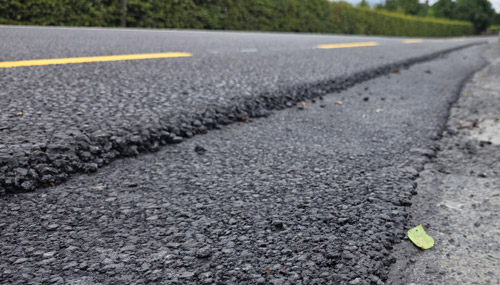
As our photographs show, the newly laid asphalt ends in a rough, abrupt and raised edge beside an uneven pedestrian margin. Anyone walking out from town may suddenly encounter a section where the resurfacing covers only part of the available roadside space.
Pic: G. Willoughby.
This presents particular difficulties for:
► wheelchair and mobility-scooter users; ► parents pushing children in buggies; ► people using walking aids; ► older pedestrians and those with impaired balance; ► cyclists moving close to the road edge; and ► residents entering or leaving adjoining properties.
Small wheelchair castors or buggy wheels could catch against the raised lip or loose stone. A pedestrian attempting to avoid the uneven surface could also be forced closer to moving traffic.
Pic: G. Willoughby.
The unfinished edge may create further problems if it is not corrected promptly. Water could collect along the change in level instead of draining freely, increasing the risk of puddles, splashing and deterioration. Water entering an unsealed pavement edge can weaken it, while passing traffic may loosen the exposed aggregate and cause the asphalt to ravel or break away progressively.
The resulting loose stones could become an additional slipping or skidding hazard. Repeated vehicle loading may also widen the damaged edge, leaving potholes, crumbling margins and an even greater difference in level.
Pic: G. Willoughby.
Serious questions therefore arise: Why were these sections left at a different level? Was pedestrian and wheelchair access assessed before the work was accepted? Were drainage and connections to entrances properly examined? Has the resurfacing received a final inspection? Is the contractor expected to return and complete the margins?
Fresh road markings and a new running surface do not make a project complete if unsafe edges remain beside homes, businesses and pedestrian routes.
These locations should now be inspected urgently by Tipperary County Council, made safe without delay and brought to a properly finished, accessible and well-drained standard. The council provides an official service for reporting damaged roads and footpaths, including an online “Fix-it”facility, [which today same consultation portal, despite every attempt, refused access].
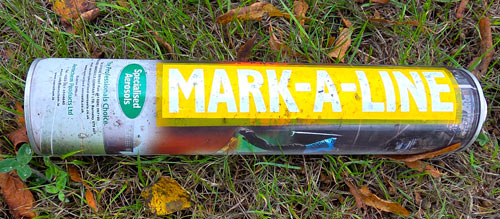
Which begs another question; Where have “Refresh Thurles” members vanished to? Note: Refresh Thurles members have failed to note that those working on this re-surfacing project, forgot to take their litter with them.
The public should not have to wait until somebody falls, a wheelchair becomes trapped or the newly laid surface begins to disintegrate before action is taken.
According to local radio, Mr Michael Lowry TD has rejected suggestions that the Garda Training College in Templemore is now under threat.
Mr Lowry says he secured a commitment during negotiations on the Programme for Government that Templemore would remain the primary national Garda training centre. He also says a recent review endorsed maximising Templemore’s capacity and prioritising investment there and also at an outreach facility in Tallaght. The Government previously denied making a deal with Mr Michael Lowry, however Mr Lowry nevertheless now says he secured a commitment on Templemore, during government-formation negotiations.
Templemore clearly remains Ireland’s principalGarda college and is receiving further investment. However, the wording “primary” does not mean “exclusive”.
The published Programme for Government commits to considering a second Garda training college and allowing trainees to complete parts of their training elsewhere. It does not guarantee that every existing course will remain in Templemore, Co. Tipperary. Mr Lowry’s stronger assurance appears to arise from government-formation negotiations, however no published agreement, letter or memorandum setting out its precise terms can be located.
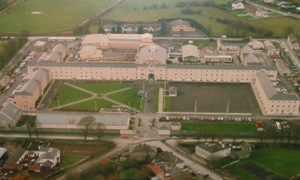
Garda Training College, Templemore, Co. Tipperary.
The Training Review A Garda Training Review Group examined how to increase training capacity, including: ► maximising Templemore’s throughput; ► establishing a second college; ► using other institutions or locations; ► providing outreach training.
Mr Lowry says the review protects Templemore’s status but concluded that developing Dromard would require unjustifiable investment. However, the complete final report, Dromard assessment and comparative costings do not appear to have been published. Until they are released, those conclusions remain Mr Lowry’s account of the review rather than independently verifiable findings.
Dromard Farm Dromard Farm at Clonmore is approximately six kilometres from Templemore and comprises about 256 acres: 160 acres of grazing land and 96 acres of woodland, together with a uninhabited period house and sheds. The OPW purchased it in 2006, at the Department of Justice’s request, for a proposed Garda Centre of Excellence. Planned uses included public-order, firearms, detective, surveillance, dog, mounted and water-unit training, together with off-road motorcycle, four-wheel-drive and other driver training. It is therefore reasonable to say that Dromard was bought partly for advanced Garda driver training. It was not purchased solely as a high-speed pursuit track. A tactical training building was constructed in 2008, while part of the woodland was used for off-road vehicle and motorcycle exercises. The notion of introducing a larger Centre of Excellence was abandoned following Ireland’s financial crisis.
What Did It Cost? The strongest contemporaneous records give Dromard’s purchase price as €4.3 million. Some recent political statements, by Mr Alan Kelly TD, use a figure of €5.5 million, but no public breakdown supporting that amount can we locate. It possibly could include fees, taxes or subsequent expenditure, but the OPW should now clarify this. Until then, €4.3 million is the best-supported purchase price. At approximately €16,800 per acre, Dromard’s €4.3 million purchase price was below reported national and regional farmland averages during the 2006 property boom. It cannot therefore be described as a clear market overpayment on the available figures. However, the property contained substantial woodland and an uninhabitable house, and the State may have purchased a much larger and more expensive estate than Garda requirements justified. The later failure to develop or fully use it turned a potentially market-priced acquisition into questionable value for the taxpayer.
Then came the Rent Controversy Between 2009 and 2013, Garda College administration rented Dromard land to local farmers, even though the OPW was its legal owner. The OPW could find no documented agreement authorising the Garda College to take over the letting. An internal audit initially identified €124,903 in rent. Instead of being paid to the OPW, the money had been lodged into the Garda College Restaurant Account. The final verified amount was €131,260.80. An Garda Síochána then repaid that money to the OPW on July 6th 2017. This same €131,260.80 was repaid to the OPW from the “Garda Vote”, latter An Garda Síochána’s taxpayer-funded annual budget. This meant that public money intended for Garda services was used to replace rent that had previously been placed in the Garda College Restaurant Account.” The Public Accounts Committee report found a serious failure to monitor and control State property and finances, but no public outrage was observed.
Was It A Cover-Up? There is strong evidence that the wider Templemore financial problems were kept from effective scrutiny for years. The Public Accounts Committee found that: ► financial problems had been identified as early as 2006; ► recommendations from earlier reports were not implemented; ► senior management had numerous opportunities to address the problems; ► internal auditors did not receive adequate support or cooperation; ► disclosure to oversight bodies was unacceptably delayed; ► a significant number of senior personnel knew about the irregularities.
Mr John Barrett, then Garda Executive Director of Human Resources, alleged that senior figures tried to prevent the issues from “breaking cover”. Evidence also emerged of communications suggesting auditors should be kept “at bay”. It is therefore reasonable in ordinary language to describe the wider affair as prolonged institutional concealment or obstruction of oversight. However, no court finding located establishes that named individuals entered into a criminal conspiracy specifically to conceal or steal the Dromard rent. Therefore it is reasonable to conclude that there is strong evidence of prolonged institutional concealment and avoidance of proper oversight concerning the wider Templemore finances. Whether this constituted a criminal cover-up of the Dromard rent specifically has not been established in a court of law. GSOC completed a six-year criminal investigation into the wider financial irregularities and sent a file to the Director of Public Prosecutions in 2023. No reliable public confirmation of a prosecution concerning the Dromard rent can be located.
Questions Still Requiring Answers Before Dromard is sold, the Government and OPW should now publish:
The final Garda Training Review report.
The complete Dromard technical and cost assessment.
Its present valuation, use and rental income.
An explanation of the €4.3 million and €5.5 million figures.
Any formal decision authorising its disposal.
The comparison between investing in Dromard, Templemore, Tallaght or a second college.
Templemore is not facing closure, but political assurances are not a substitute for published evidence. Given Dromard’s history, the public deserves complete transparency before a valuable State training asset is disposed of.
A multi-million-euro investment has been sanctioned for Coláiste Mhuire Co-Ed in Thurles, delivering a significant improvement in facilities for its growing school community.
The project was advanced by the school and its patron and managing authority, Tipperary Education and Training Board. Funding has been sanctioned by the Department of Education, while Tipperary County Council is responsible for the relevant local planning decisions.
This development will provide 11 classrooms, including three additional general classrooms and new specialist facilities for Home Economics, Design and Communication Graphics, and Science.
Five prefabricated classrooms that have been in place for more than 35 years will now be replaced. A purpose-built ASD classroom with a dedicated sensory space will also be provided, supporting a more modern and inclusive learning environment.
In addition to the new accommodation, the existing school building will undergo a comprehensive roof retrofit.
This substantial public investment represents an important milestone for Coláiste Mhuire Co-Ed and will provide improved facilities for students, staff and the wider Thurles community for many years to come.
This website uses cookies to improve your experience. We'll assume you're ok with this, but you can opt-out if you wish.AcceptRead More
Privacy & Cookies Policy
Privacy Overview
This website uses cookies to improve your experience while you navigate through the website. Out of these, the cookies that are categorized as necessary are stored on your browser as they are essential for the working of basic functionalities of the website. We also use third-party cookies that help us analyze and understand how you use this website. These cookies will be stored in your browser only with your consent. You also have the option to opt-out of these cookies. But opting out of some of these cookies may affect your browsing experience.
Necessary cookies are absolutely essential for the website to function properly. This category only includes cookies that ensures basic functionalities and security features of the website. These cookies do not store any personal information.
Any cookies that may not be particularly necessary for the website to function and is used specifically to collect user personal data via analytics, ads, other embedded contents are termed as non-necessary cookies. It is mandatory to procure user consent prior to running these cookies on your website.





Recent Comments