Tipperary parking shake-up to go to consultation in early 2026, with Thurles calls growing to scrap charges.
A countywide overhaul of parking charges and permits across Tipperary’s nine pay-parking towns is due to go to public consultation in early 2026, after councillors examined proposals at a series of workshops aimed at “harmonising” how parking is managed from town to town.
The characterisation of Thurles town centre as “just a drive through area” reflects ongoing public concerns about traffic congestion and the impact of traffic management schemes on the town’s future vitality.
The nine towns currently within the Council’s eParking/pay-parking system are Thurles, Cahir, Carrick-on-Suir, Cashel, Clonmel, Nenagh, Roscrea, Templemore and Tipperary Town.
What’s in the proposals (as currently outlined)? Three-tier classification: the nine towns would be grouped into Tier 1, Tier 2 or Tier 3, with a different pricing structure depending on classification. First 20 minutes free: the plan would introduce a formal 20-minute free-parking period in each town when implemented (reported for September 2026). Charging hours: parking charges are proposed to apply 8.30am–6.30pm, every day except Sunday. Permit overhaul: reforms are proposed for the full range of permits, including categories such as residential and visitor permits, alongside other permit types. Off-street incentives and local “return” of revenue: the outline includes lower charges for off-street parking and a new approach to how parking income is used locally (with towns retaining a share of additional revenue above an agreed baseline). Submissions urged: the public are being encouraged to make submissions, seeking calls for one hour duration in free parking, rather than 20 minutes.
Why Thurles is central to the debate.
Despite Tipperary County Council initiatives framed as boosting Thurles town-centre trade and footfall (including measures such as time-limited free parking promotions), local retailers have long argued the centre cannot compete with shopping centres offering easier/free parking. They say that, following recent town-centre parking changes and the loss/uncertainty around key capacity, shopper activity has increasingly gravitated towards Thurles Shopping Centre and LIDL on Slievenamon Road, to the detriment of town-centre shops, because sufficient convenient parking has not been maintained with recent upgrading.
In Thurles, the conversation is being shaped by a series of recent town-centre parking and traffic changes, including:
A push to increase short-stay turnover in central areas, following concerns that all-day parking by workers was squeezing out shoppers.
Ongoing controversy around plans linked to Liberty Square, where parking spaces have been a recurring flashpoint.
The introduction of updated local rules under Thurles Municipal District Parking Bye-Laws 2025, adopted by elected members and brought into effect in April 2025.
Pressure on supply from the loss/closure of key town-centre parking, including the Munster Hotel car park closure, Market Area and The Source closures, alongside other long-term reductions referenced locally (reported as over 100 spaces).
“Abolish charges altogether” – the emerging Thurles position. Against that backdrop, the argument being made by some in Thurles is straightforward: because the town centre has already absorbed significant disruption and a tightening of parking availability, parking charges should be abolished altogether rather than “rebalanced.” There is precedent for this stance in the Liberty Square context, with calls previously made for parking charges to be suspended in Thurles during major works to help protect footfall.
What happens next ? The Council is expected to publish consultation details in early 2026, allowing residents, traders and commuters to lodge submissions on:
the tiering model,
the free-parking period,
charging hours and enforcement,
permit eligibility and pricing,
how parking income should be reinvested locally.
Tipperary County Council already uses its online portal to run formal public consultations on matters of upgrading and parking bye-law proposals, however, the petty exercise of same authority, by minor officials is perceived only as a “tick box” exercise, rather than a meaningful tool for future public consultative policy development.
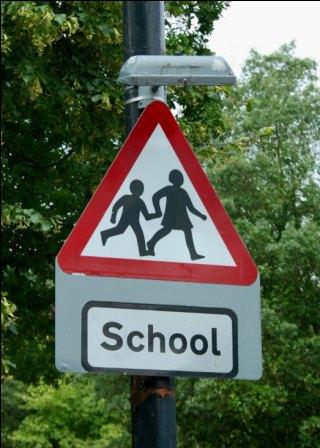
Alleged School Bus Tender Collusion Case Hears Claims of ‘Loaded Dice’ in Tipperary and Surrounding Counties.
The Central Criminal Court has heard allegations that five school bus operators attempted to “load the dice” in their favour by distorting competition in the tender process for school transport services across five counties.
Five Tipperary men are being prosecuted by the Competition Authority in connection with the provision of school transport services. All five deny the charges.
The accused are: Mr Andrew Walsh aged 62, Derrymore, Roscrea, Co. Tipperary. Mr Raymond Heney aged 54, Camas, Cashel, Co. Tipperary. Mr Noel Browne aged 77, Bansha, Co. Tipperary. Mr Larry Hickey aged 73, Ardmayle, Cashel, Co. Tipperary. Mr Anthony Flynn aged 51, Golden Road, Cashel, Co. Tipperary.
Each man faces a single charge under the Competition Act 2002. It is alleged that, between 1st November 2014 and 31st December 2016, they engaged in a concerted practice which had as its object or effect the prevention, restriction or distortion of competition in trade in the provision of school transport services.
The trial has heard that all of the accused were involved in bidding for tenders to provide school bus routes during the period in question. It is alleged that, rather than competing independently, the men colluded in how they would bid.
The jury was told that one of the accused arranged meetings with other bus operators, ostensibly to assist with administrative processes. At these meetings, it is alleged that operators discussed the allocation and pricing of school bus routes and agreed to bid for tenders in a coordinated manner.
Counsel for the prosecution, Dominic McGinn SC, said that parties in a tender process cannot lawfully discuss who is bidding for what, or at what price. He told the jury that there was a “degree of coordination” between the parties so that tender prices would end up higher than they would be in a genuinely competitive process.
Mr McGinn explained that competition law exists to protect consumers and taxpayers by ensuring value for money and preventing manipulation of markets. He told the jury that: “Agreements or understandings not to charge below a certain amount, amounted to price fixing and provided no benefit to consumers. Market sharing”, where competitors agree among themselves to allocate specific areas or routes so that there is effectively only one provider, is also prohibited. Any manipulation of that or distortion of that is unfair to us,” he said, noting that, as this case concerns public contracts, the people ultimately affected are taxpayers.
Mr McGinn said the alleged conduct did not require a formal written agreement, but involved collusion, an exchange of information and coordination that led to “the disappearance of competition” in the relevant tenders.
He told the jury that the case was not about the importance of school transport for children in Tipperary, nor about the fact that the accused men are approaching retirement and are alleged to have committed the offences late in their careers. Rather, he said, the case concerns whether the five men, and possibly others, attempted to “load the dice” to distort competition in the school transport market.
All five accused have pleaded not guilty. The trial continues today, Thursday, before Mr Justice David Keane and a jury of seven men and four women.
Irish, Spanish, Dutch and Slovenian public broadcasters withdraw from Eurovision Song Contest 2026, joining widespread condemnation of violence against journalists.
Four major public-service broadcasters, RTÉ (Ireland), RTVE (Spain), AVROTROS (Netherlands), and RTVSLO (Slovenia), all have announced they will not participate in or broadcast the Eurovision Song Contest 2026, following the decision by the European Broadcasting Union (EBU) to allow participation of Israel.
Simultaneously, mounting concerns about the safety and dignity of journalists reporting from Gaza, including contested claims by the Israel Defense Forces (IDF) and strong criticism from international press-freedom organisations, further underscore the gravity of the situation.
Broadcasters — Statements of Principle. RTÉ (Ireland): RTÉ has described continuing to broadcast or participate under these circumstances as “unconscionable,” citing the humanitarian crisis in Gaza and targeted attacks on journalists and civilians.
AVROTROS(Netherlands), RTVE(Spain), RTVSLO(Slovenia): These broadcasters have similarly cited ethical considerations and concerns about legitimacy and fairness in announcing their withdrawal from Eurovision 2026.
Journalists in Gaza – Context & Contested Claims. On 24 March 2025, two Palestinian journalists, Hossam Shabat and Mohammed Mansour, were killed in Gaza by Israeli airstrikes. The IDF later claimed they were operatives of militant groups (Hamas and Islamic Jihad), asserting Shabat had served as a “sniper” for a Hamas battalion. Press-freedom organisations, including Reporters Without Borders (RSF) and Committee to Protect Journalists (CPJ), have rejected these claims.
The public funding package for RTÉ amounts to about €725 million over three years, drawn from both TV-licence fees and direct Exchequer support.
The funding model for RTÉ was meant to ensure stability and allow RTÉ to deliver “public service programming and content across television, radio and online services.” Critics might say that Eurovision is (or should be) an entertainment / cultural event, not a political theatre. They may argue taxpayers fund RTÉ, so it can deliver neutral public-service output, not pick international political sides when it comes to entertainment contests.
There remain the risk of alienating parts of the public and undermining “public service” trust. In a diverse society, taxpayers hold a range of views. If RTÉ uses public money to take a politically or ethically loaded position, those who disagree (or who believe Eurovision should remain apolitical fun) may feel their money is being used in ways they don’t agree with. That could erode trust in RTÉ’s neutrality.
Potential precedent creates a slippery slope, when politicising cultural events. If RTÉ withdraws from Eurovision on the basis of foreign policy or humanitarian concerns, what stops future withdrawals or boycotts of other cultural events, when public opinion becomes divided?
Using public money to make those decisions could become contentious. The bailout was, in part, meant to restore RTÉ’s viability, not fund activism. As RTÉ itself argued, the multi-annual funding is “…not a reward for the series of mistakes the organisation has made.” Same funding was pitched as a way to stabilise the broadcaster financially, not to empower political moralising.
In short:Public subsidy doesn’t necessarily mean public mandate for every political stance. Many could argue that Eurovision is outside the remit of core “public service” obligations.
Public opinion in Ireland is likely divided, some will support RTÉ’s stand, others will feel their TV licence money should be used impartially or that Eurovision should remain separate from geopolitics. The withdrawal risks politicising what many see as a cultural, apolitical event, and may alienate those who would prefer RTÉ to remain neutral.
Anyway, one thing that everyone will surely agree; RTE’s TV quality and content has greatly declined.
A newly married couple have withdrawn a joint €120,000 personal injuries claim after their own honeymoon photos undermined their case.
Mr Arthur McInerney, aged 22 years, of Highfield Meadows, Portlaoise, Co. Laois, and Ms MaryMarie McCarthy, aged 21 years, of Cabra Grove, Holycross Road, Thurles, Co. Tipperary, had alleged they were injured when a Bentley limousine taking them from a wedding to Dublin Airport, was struck on a roundabout near Swords.
According to their claim, Mr McInerney suffered a back injury, while Ms McCarthy claimed she struck her forehead against a rear side window.
However, during cross-examination, their defence barrister produced photos of the couple apparently enjoying activities such as water-slides and a jeep safari, during their honeymoon in Santa Cruz de Tenerife, just hours after the collision. On seeing these images, both individuals withdrew their respective €60,000 compensation claims.
Under questioning, the couple admitted they had taken over-the-counter painkillers to “make the best of the holiday,” and conceded they had not sought medical treatment for up to two months after returning to Ireland.
When Justice, Mr James O’Donohoe, noted there was no visible mark on Ms McCarthy’s forehead in a photo taken on the first night of the honeymoon, she stated that she had covered it with fake tan. The court was told of further photos, including one showing Mr McInerney climbing Croagh Patrick, posted online after their return, which also damaged the couples claim.
Following a brief adjournment, both parties informed the court that their claims were being withdrawn and could be struck out. The defendant’s insurers did not seek legal costs.
Christmas Bonus Arrives As Inflation Bites For Households This Winter.
As consumer prices in Ireland rise steeply, the annual Christmas Bonus is arriving for long-term social welfare recipients, offering timely relief for many households under pressure.
The latest figures from the Central Statistics Office (CSO) show that inflation, measured by the Harmonised Index of Consumer Prices (HICP), increased by 3.2 % in the 12 months to November 2025.
Prices for food rose by approximately 4.2 % over the past year, while energy costs climbed about 3.3 %, placing considerable strain on household budgets.
Recognising the challenge posed by rising costs, especially for essentials such as food and heating, the Department of Social Protection has initiated payment of the 2025 Christmas Bonus. Some 1.5 million long-term welfare recipients, including pensioners, carers, people with disabilities, lone parents and others on qualifying social welfare schemes, will receive a one-off bonus equal to 100 % of their typical weekly payment. The total value of the payments is estimated at €370 million.
The Bonus will be paid automatically on the same day recipients normally receive their weekly welfare payment, ensuring immediate support without additional paperwork.
While the Christmas Bonus cannot erase the full impact of elevated inflation, it does represents a significant short-term boost as households contend with higher costs during the winter and holiday season. In this context, the payment helps ease the burden on those most vulnerable to rising living costs.
This website uses cookies to improve your experience. We'll assume you're ok with this, but you can opt-out if you wish.AcceptRead More
Privacy & Cookies Policy
Privacy Overview
This website uses cookies to improve your experience while you navigate through the website. Out of these, the cookies that are categorized as necessary are stored on your browser as they are essential for the working of basic functionalities of the website. We also use third-party cookies that help us analyze and understand how you use this website. These cookies will be stored in your browser only with your consent. You also have the option to opt-out of these cookies. But opting out of some of these cookies may affect your browsing experience.
Necessary cookies are absolutely essential for the website to function properly. This category only includes cookies that ensures basic functionalities and security features of the website. These cookies do not store any personal information.
Any cookies that may not be particularly necessary for the website to function and is used specifically to collect user personal data via analytics, ads, other embedded contents are termed as non-necessary cookies. It is mandatory to procure user consent prior to running these cookies on your website.









Recent Comments