Today, Japan offers an example worth examining. VIEW HERE. Its school lunch approach brings together nutritionally balanced meals and shokuiku(Translated – Food Education). This connects what children learn about food with what they experience at mealtimes.
The lesson for our leaders is practical; make nourishing meals accessible and give children the knowledge to understand their food.
Delivering nutritious school meals and practical food education will require substantial investment in ingredients, facilities and trained staff. However, the potential returns extend well beyond the classroom. Research modelling stronger school meal standards suggests that healthier childhood diets could reduce diet-related illness and healthcare costs later in life. Over time, this could mean fewer avoidable hospital visits and admissions, less need for costly treatment and reduced pressure on our health service. These savings would take time and depend on the programme’s effectiveness, but investing in children’s nutrition today offers a valuable opportunity to prevent illness and its human and financial costs tomorrow.
We should work towards a school meal programme built around these priorities:
Nutritious, appealing meals: Support balanced menus developed with qualified nutrition professionals, with attention to children’s ages, allergies and dietary needs.
Access with dignity: Ensure that children from families facing financial hardship can participate without embarrassment or exclusion.
Practical food education: Help pupils learn about ingredients, cooking, food hygiene and reducing waste through activities suited to their age.
Support for local communities: Explore partnerships with local farmers and suppliers where these can meet quality, affordability and reliability requirements.
Resources and accountability: Give schools the funding, kitchen facilities and trained staff they need, then assess meal quality, participation, costs and food waste.
The lesson for our government leaders is practical; make nourishing meals accessible and give children the knowledge to understand the food they eat.
The purpose should be to nourish children and help them build a positive relationship with food. Success should include whether pupils enjoy their meals, have equitable access and gain useful knowledge.
Our political leaders can begin by bringing together educators, nutrition professionals, parents and pupils to design a practical pilot programme. Publish the findings, improve what needs work and expand what proves effective.
Finally, Ireland has shown before what determined political leadership can achieve for public health; from Dr Noel Browne’s leadership in the campaign against tuberculosis (TB) to Mr Micheál Martin’s introduction of the workplace smoking ban in 2004. Both demonstrate the importance of government taking responsibility for protecting people’s health. That same commitment should now inspire a sustained investment in nutritious school meals and practical food education. By making healthy food accessible to every child and teaching habits that can last a lifetime, today’s leaders have an opportunity to leave their own enduring legacy. Let us bring that ambition to our schools, giving every child a healthier start and a fairer chance to thrive.
Every school day offers an opportunity to invest in children’s wellbeing. Let us make the most of it; one nourishing meal and one useful lesson at a time.
A Possible Budget Leak – With Questions Still Unanswered.
Reports ahead of Ireland’s Budget 2027 suggest that all 16-year-olds could receive a €100 voucher for arts and cultural activities, with a possible extension to 17-year-olds in Budget 2028. The estimated first-year cost is €7.5 million. This remains a reported proposal, rather than a confirmed entitlement. Whether the announcement has emerged through a deliberate leak has not been established.
Helping young people experience culture most certainly is a worthwhile ambition. But taxpayers are entitled to ask what this particular measure would achieve, and whether another approach would achieve much more.
Cultural Spending on those aged 16 year does not automatically mean education A play, concert or creative workshop can spark an interest that can last a lifetime. Enjoyment and shared experiences have value also. However, redeeming a voucher does not prove that someone has learned something new or discovered an activity they would otherwise have missed.
France’s experience offers a warning. Its national auditors found that the ‘Culture Pass’ mainly reinforced established cultural habits, while its ability to broaden participation remained limited. Ireland should learn from that experience, before assuming a voucher will overcome barriers to culture. The test is whether the Government sets clear objectives, publishes the costs and commissions an independent evaluation. Success should mean reaching young people who currently miss out, not simply announcing how many vouchers were spent.
Could It Free Money For Alcohol or Drug Abuse? If a teenager already planned to buy a concert ticket, a voucher could leave their own money available for something else. But it would be unfair to assume that the money would go towards alcohol or drugs. It might pay for transport, food or savings. There is no evidence presented here establishing that this proposal would increase substance use. Will Ticket Prices Rise And Who Gets the Money? Extra purchasing power could put upward pressure on prices where popular events already sell out. At venues with empty seats, it could instead increase attendance without raising prices. Most popular bands on Tour entering Ireland already cost well over €100 Some spending could benefit wealthy performers, major promoters and ticketing platforms. Other spending could support local theatres, musicians and cultural organisations which command much less cost. The Government should monitor prices and publish where the money goes. Public subsidy deserves scrutiny even when the product being sold is culture.
Could €7.5 Million Expected Spend Achieve More Elsewhere? A comparison might be sustained music tuition, youth clubs, instrument lending, school cultural visits and transport for disadvantaged or rural teenagers. A voucher cannot solve the problem of having no accessible venue or no way to get there. Supporting participation may require people, facilities and transport as well as purchasing power. Poorer children deserve cultural opportunities too. The question is which approach gives them the most meaningful access.
“For Ye Have the Poor Always With You” The moral question remains relevant for Christians; does this prospective spending meaningfully help those excluded, or mainly subsidise those already well able to participate? Matthew 26:11 should be read in context; Jesus defends a woman’s anointing of him, with expensive perfumed oil, which he connects with his burial. We should not interpret it as permission to neglect poverty. Deuteronomy 15:11 (Second Law) acknowledges that poverty persists while calling for generosity towards those in need.
My Own Personal View: Let’s Test this Before Expanding It. I would support a limited, independently evaluated pilot, with extra support for disadvantaged teenagers and opportunities to take part in local creative activities. France’s experience shows why this matters. Its national auditors found weaker participation among young people from less advantaged backgrounds and questioned how far a primarily financial scheme could overcome existing inequalities.
Create Opportunities to Make and Perform To my mind the pilot should offer opportunities to learn an instrument, join a drama group, make a short film, try photography or attend a series of creative workshops. Taking part in an activity over several weeks offers a much better chance to develop skills,friendships and confidence. The pilot should test both approaches, while preserving young people’s choice. Here in Thurles Co. Tipperary, as in many other Irish communities, we already have organisations that could greatly inform this work. Music Generation, for example, supports local access to vocal and instrumental tuition for children and young people. Partnership opportunities should be explored, with funding for any additional places and teaching required.
Measure What Changes Because of the Support. The independent evaluation should ask:
Did teenagers start activities they would otherwise have missed?
Did the scheme reach those with the greatest barriers?
Did participation continue six or twelve months later?
What did participants learn, enjoy or find difficult?
What was the full cost, including administration, transport and additional support?
Did spending support local provision, and were there changes in prices or fees?
Researchers should record participation before any pilot and use a fair comparison, such as a phased rollout, to help distinguish the scheme’s effects from changes that would have happened anyway. They should also speak to teenagers who never used the offer or stopped attending. If the results are strong, expansion would have a credible foundation. If benefits mainly go to teenagers already participating, the scheme should be redesigned. Support would rest on a clear purpose; giving young people a fair chance to discover, enjoy and develop their creativity and showing that public money greatly helped make that possible.
Before expansion, the Government should demonstrate new participation, fair access and reasonable value for money.
The Heritage Council is pleased to announce that “Expressions of Interest” for the Community Heritage Grant Scheme 2027 are now open.
The scheme supports community and voluntary groups and non-governmental organisations undertaking projects that protect, conserve, celebrate, understand and share Ireland’s heritage. New for 2027, the scheme introduces a two-stage application process designed to make it easier for groups to apply. At Stage 1, applicants submit a short Expression of Interest outlining their project idea. Shortlisted projects will then be invited to submit a full application.
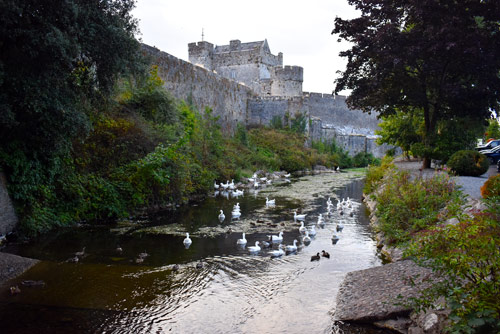
Cahir Castle, Co. Tipperary.
The Expression of Interest stage allows applicants to submit an outline of their project idea without the need to prepare detailed budgets, quotations or supporting documentation at the outset. This helps groups explore project ideas and receive feedback before investing time in a full application.
Funding is available for projects under five themes:
Heritage at Risk
Biodiversity and Nature Restoration
Traditional Skills & Conservation
Digital Heritage, Access and Storytelling
Diversity, Equity & Inclusion
Funding available:
Minimum grant: €800
Maximum grant: €25,000
Key Dates Expression of Interest Deadline:16th October 2026 at 5.00pm. Stage 1 Results:Early November 2026. Full Application Deadline (shortlisted applicants only): 15th January 2027 at 5.00pm
Minister for Finance Mr Simon Harris’s statement, today, that he has no plans to change stamp duty, raises a question; could targeted relief for people over 50 years, buying a smaller home and selling their larger family home, help ease housing pressures?
Ireland should perhaps consider removing stamp duty for people over 50 years old, who choose to buy a smaller home and sell their larger family home.
In 2025, total Stamp Duty receipts collected by the Irish Exchequer amounted to approximately €1.695 billion, representing only about 2% of the total net tax receipts for the year.
Some economists believe that this suggestion could make a useful contribution to easing housing pressures, including here in Co. Tipperary. It would help some homeowners move into accommodation that better suits their needs, while bringing larger homes into the market place, for families who need more space. While it would not solve the housing crisis on its own, it could be a practical proposal worth examining and testing.
When the family home becomes larger than needed For some parents, life changes considerably once their children grow up and move away. A house that once felt crowded can become much larger than they need. There may be several spare bedrooms, a garden that takes considerable work, and more space to heat, clean and maintain. Some parents indeed would welcome a smaller, more manageable home, particularly if they could remain close to friends, family and familiar services.
Selling a larger house and buying a less expensive property could also release money for retirement or other needs. Yes, moving also comes with costs. Solicitors’ fees, estate agents’ fees, removal expenses and stamp duty can all reduce future financial benefit, however removing stamp duty would take away one of those expected costs.
What difference could the saving make? Under Ireland’s standard residential stamp-duty rates, the first €1 million of the purchase price is taxed at 1%. For an ordinary purchase of an existing smaller home, this means:
A €200,000 home carries €2,000 in stamp duty. A €250,000 home carries €2,500 in stamp duty. A €300,000 home carries €3,000 in stamp duty, A new-build home priced at €300,000 costs €2,595 because Stamp Duty is charged on the price minus the VAT.
These above examples assume no special relief applies. A saving of a few thousand euro will not persuade everyone to move. But it could make a difference to someone already considering down-sizing, especially when added to the other expenses involved. For example, a couple selling their larger house and buying an existing smaller home for €250,000 would save approximately €2,500 under a full exemption. That money could help pay for removals, legal costs or changes needed in their replacement home. This is a proposal for a new relief, rather than a description of an existing general entitlement for people over 50.
How could it help other families seeking homes? When a homeowner down-sizes and sells their larger house, that property then becomes available to another household. A family living in a smaller home might buy it, potentially putting their own property up for sale. A first-time buyer might then have an opportunity to purchase that smaller property. The precise chain will vary, but one move can allow several households to find homes that suit them better. There is an important limit: down-sizing does not, by itself, create an extra dwelling. The person selling the larger home still needs somewhere to live. The benefit is that existing homes can become better matched to the households occupying them. That is useful, but it should not be confused with increasing the total number of homes.
How should the proposed relief work? Economists would support a scheme with clear conditions linking the tax saving to a genuine move: ►The larger property must have been the applicant’s main home. ►The smaller replacement property must become their main home. ►The former home must be sold within a reasonable, clearly stated period. ►There should be a limit on the relief and rules preventing repeated claims or abuse. ►The scheme should accommodate people who need to buy before completing the sale of their previous home.
Putting the larger house on the market would start the process. Final entitlement should normally depend on completing the sale, with sensible provisions for genuine delays. Relief could be provided through a refund after the sale, or conditionally at purchase with repayment required if the conditions are not met. An upfront arrangement would offer more immediate help, although it would need careful administration. The meaning of “smaller” would also need a clear definition. A home with less floor space may cost more if it is newer, accessible or in a convenient location. Price alone would not be a reliable measure. An over-50 threshold could be considered, but the Government should explain why that age is appropriate. Household needs differ, and similar support may also be justified for some younger people whose circumstances have changed.
Suitable smaller homes must be available. The biggest practical question is where people would move? A homeowner may be willing to down-size but unable to find a suitable property nearby. A tax saving will achieve little if the available homes are unaffordable, difficult to access or far from the person’s community.
For Tipperary and other counties, economists appear to recommend combining the proposed relief with: ► More accessible smaller houses and apartments near shops, healthcare and transport. ► Renovation of vacant and derelict properties that can become safe, comfortable homes. ► Practical moving advice and limited help with essential costs for households with low incomes. ► More social, affordable and rental housing, alongside the infrastructure needed to support construction.
The aim should be to make a wanted move easier. Parents may still need space for visiting children, grandchildren or care arrangements.
Would it be a solution to the housing crisis? This could be one useful measure within a wider housing programme. It has a clear purpose; reducing a moving cost for people willing to release a larger home for sale. However, the scale of the benefit is uncertain. Some recipients would have moved without the relief. More buyers seeking smaller properties could increase competition for those homes, and sellers could capture part of the tax saving through higher prices. A time-limited pilot would help establish whether the scheme encourages additional moves and represents good value for public money. Its success should be measured by completed moves, larger homes released for sale and the cost of achieving those results.
People would welcome a serious examination of this proposal. Helping people move into homes that suit their changing lives could benefit both the sellers and the families who buy their former homes, while Ireland continues the essential work of building and restoring more housing.
Primary school teachers represented by the Irish National Teachers’ Organisation (INTO) are set to begin industrial action on October 5th, amid delays in securing a new public sector pay agreement.
The action will begin with a work-to-rule, with members also due to join other public sector workers in a proposed nationwide strike on Wednesday, October 14th next.
According to the INTO, members in primary and special schools will restrict their work to contracted daily teaching hours. They will withdraw co-operation with additional hours, including those introduced under the Croke Park Agreement, until further notice.
The decision follows a ballot in which 99.5% of participating members supported industrial action. Turnout stood at 57.5%. INTO General Secretary Mr John Boyle said the result demonstrated a strong mandate from teachers facing financial pressures. He said uncertainty over salaries, alongside the cost-of-living crisis, was fuelling members’ frustration. The INTO is the latest public sector union to support industrial action, accusing the Government of failing to put forward a meaningful pay offer.
The previous public sector pay agreement expired on June 30th, and formal negotiations on a replacement have yet to begin. Responding to the announcement, the Department of Public Expenditure expressed disappointment that unions had not taken opportunities to engage in recent weeks.
A spokesperson urged both sides to return to negotiations, saying progress towards a new agreement would require constructive, sustained engagement without preconditions.
This website uses cookies to improve your experience. We'll assume you're ok with this, but you can opt-out if you wish.AcceptRead More
Privacy & Cookies Policy
Privacy Overview
This website uses cookies to improve your experience while you navigate through the website. Out of these, the cookies that are categorized as necessary are stored on your browser as they are essential for the working of basic functionalities of the website. We also use third-party cookies that help us analyze and understand how you use this website. These cookies will be stored in your browser only with your consent. You also have the option to opt-out of these cookies. But opting out of some of these cookies may affect your browsing experience.
Necessary cookies are absolutely essential for the website to function properly. This category only includes cookies that ensures basic functionalities and security features of the website. These cookies do not store any personal information.
Any cookies that may not be particularly necessary for the website to function and is used specifically to collect user personal data via analytics, ads, other embedded contents are termed as non-necessary cookies. It is mandatory to procure user consent prior to running these cookies on your website.






Recent Comments