|
|
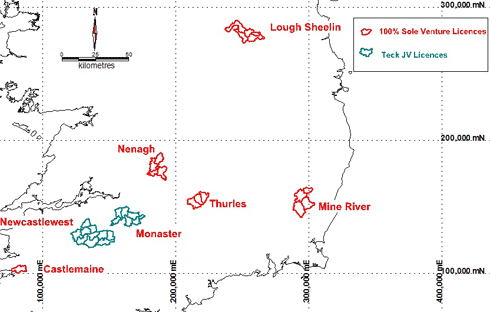 Connemara Sole Venture Licences Irish zinc explorer Connemara Mining stated this morning that it had begun drilling on its three-licenced Thurles block, near the existing Lisheen mine near Moyne, Thurles, in County Tipperary.
The initial programme is for three 300 metre holes, the locations of which have been selected following region
al and detailed geophysics and geological modeling. The holes will be drilled on the northern hanging wall of faults, along the floors of the Littleton Inlier. The future target is a Lisheen style zinc and lead discovery project.
The company’s chairman Mr John Teeling said: “Zinc in Ireland is a good story. Our discovery at Stonepark, that of Xstrata and Minco beside us, and reported extensions at the Navan and Lisheen zinc mines combine well, with a strong demand and prices to produce an industry in good health. Our exploration ground in the Thurles area is sharing many of the characteristics of the nearby Lisheen mine. We have reviewed all existing data on the licences and conducted detailed geophysics. As a result we have identified three targets. This is high risk early stage exploration, but the potential is good.”
Connemara Mining Company plc, owner of the Stonepark zinc-lead project near Limerick, was established in 2006, by veterans of the Irish zinc industry, to exploit zinc opportunities in Ireland and currently holds 38 prospecting licences in central and south-west Ireland. Connemara’s licences are for some or all of the base metals (Bm), barite (b), gold (g), silver (s), and platinum group elements (PGE). The Connemara exploration philosophy is trendology and closeology – follow the mineralised trends and obtain ground as close as possible to existing or former zinc/lead mines.
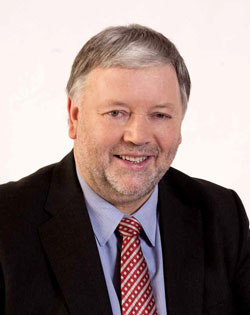 Deputy Noel Coonan Speaking to Thurles Information this morning, Deputy Noel Coonan said that Fine Gael’s job creation plan ‘Working for our Future’ launched last week by Enda Kenny TD and Jobs and Economic Planning spokesman Richard Bruton TD ” will get Ireland working again.”
The Deputy stated: “The aim of Fine Gael’s jobs policy is to achieve three goals. Getting people back to work; making Ireland a better place to do business; and getting more Irish business to look beyond our borders and to sell on a global scale. Unlike the Labour Party and others we will not increase direct taxes on jobs and enterprise to promote job creation and investment. Youth unemployment is endemic in this recession. To stop our young talent leaving Ireland, Fine Gael is proposing over 45,000 placements in a range of new training, job placement and educational opportunities.
Our National Internship Programme will provide 23,000 placements in the public and private sector for unemployed graduates; 17,000 additional second chance education places will be provided for those who left school early. There will be a temporary increase in the number of community unemployment places to provide real on the job experience in our communities. We will halve the jobs tax on the lowest paid. Fianna Fail made the indefensible decision to slash the minimum wage. Instead Fine Gael will cut in half employers PRSI on the lowest paid to protect their jobs and to encourage new jobs,’’continued the Fine Gael General Election candidate.
The document, ‘Working for our Future,’ proposes investing €7 billion in water infrastructure, broadband and energy. This would be funded by money from the National Pension Reserve Fund and by selling off €4 billion in State assets, including Bord Gais and the ESB power generation arm. We will reduce the cost of Government-imposed red tape on business by €500 million, in part by streamlining business inspections under a Business Inspection and Licensing Authority and a single Food Inspectorate.
Fine Gael will radically increase Irish Exports. A new ‘Home to Export’ programme will be established to share the expertise of exporting companies with firms currently reliant on declining domestic markets. A ‘Source Ireland’ portal will be developed to market Irish goods and services abroad. Service companies that export more than 90% of their output will be allowed become VAT exempt, improving their cash-flows and cutting down on red tape.
We will develop Ireland as a ‘digital island’ and first-mover when it comes to information technology. We will put in place specific strategies to support high-potential growth sectors, such as international education, digital gaming, financial services and tourism. Fine Gael policies will get this country back on track.” concluded Deputy Coonan.
Ministerial Cars
Presently in our State there are 27 Ministerial cars driven by 54 armed Garda drivers, defending both our retired and current elected public representatives over the past two years, from one egg and one container of red paint.
Now with only one arrest, it is time to take a look at the costs of this protection, which Mary Harney will confirm was far from adequate, when related to the overall outgoing costs.
Garda Driver Salary Costs: In 2008 €4.6 million. In 2009 €4.2 million. — TOTAL = €8.8 million.
Motor Fuel Costs: In 2008 €218,677. In 2009 €183,493. ———————– TOTAL =€286,941.
Depreciation Costs: In 2008 €331,142. In 2009 €541,045. ——————— TOTAL = €872,187.
Replacement car Costs:In 2008 €509,675.85. In 2009 nil. ——————– TOTAL = €509,675.85.
Total Cost to the taxpayer : €10.9 million.
As far as I am aware not one revolver was upholstered during that two year period, to protect a minister and police are still looking for the individual who tossed the eggs at Mary Harney at the gates of Nenagh Hospital. (Or is it looking for the tosser who threw the individual egg – not sure.)
The Government Jets
Still, while we are discussing the subject of Ministerial travel, lets have a peep at the use of the Government jets, (Yes there are two of them) or to give them their proper title “The Tax Payers Jets”
 Have you ever seen your Lear Jet? Take Note: Direct flying costs per hour for the Gulfstream are €4,050 and €1,270 for the Learjet, which over a three year period cost €2.25 million in maintenance for both machines.
In 2009 the Gulfstream landed six times and the Learjet landed 11 times in Cork with Mr Micheál Martin on board, while the Gulfstream landed twice and the Learjet landed four times at Knock with Ms Mary Coughlan on board. You understand Derry and Knock airports are closest to Ms Coughlan home in wild Co Donegal.
In 2010 the Gulfstream jet passed over my house here in Thurles and landed in Cork eight times to facilitate Foreign Affairs Minister Micheál Martin and once for Enterprise Minister Batt O’Keeffe, while the Learjet landed four times in Cork to facilitate Mr Micheál Martin and twice in Derry for Tanaiste Mary Coughlan.
Continue reading Cost Of Irish Ministerial Cars And Taxpayers Jets
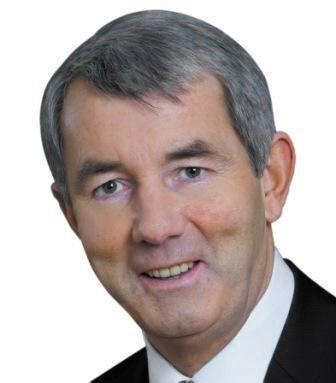 North Tipperary Independent TD Michael Lowry Judge Margaret Heneghan has refused, Independent TD Mr Michael Lowry, a declaration that he was defamed by journalist and broadcaster Mr Sam Smyth on TV3’s ‘Tonight with Vincent Browne‘ programme and in a newspaper article.
Mr Lowry TD, Holy Cross, Thurles, Co Tipperary, had sought the declaration under the 2009 Defamation Act, which allows for a legal short-cut by way of summary judgment on the contention that Mr Smyth had no possible defence to the politician’s claims.
Judge Heneghan, in a reserved judgment today in the Circuit Civil Court, said she was satisfied Mr Lowry had not established that Mr Smyth had no defence to the allegations of defamation.
Mr Lowry’s claim may now go to a full hearing before another judge. The case to date has been dealt with on the basis of sworn statements by both Mr Lowry and Mr Smyth and today’s decision has no significance in any eventual overall outcome.
The case centres on comments made by Mr Smyth concerning the Mc Cracken and Moriarty Tribunals and their inquiries into matters relating to Mr Lowry’s finances. Mr Lowry alleges that Smyth made false and defamatory remarks about him in an Irish Independent article and again on the TV3 current affairs show.
Mr Lowry claims that the newspaper article and a comment by Mr Smyth on television, that Mr Lowry had been “caught with his hand in the till ” were false and malicious and remarks that he was a thief, a corrupt politician, dishonest, untrustworthy and unfit to be a Minister or a TD.
Mr Lowry had sought a declaration that he had been defamed, asking for a court order directing publication of clarifying statements and an order prohibiting further publication of the alleged defamatory remarks.
Mr Smyth, The Gasworks, Barrow Street, Dublin, has stood over his comments and argues that they were true and based on his honest opinion and constituted both fair and reasonable publication in matters of public interest.
The journalist has been covering matters concerning Mr Lowry since the mid-1990’s and his story in November 1996 about Mr Lowry’s home having been renovated paid for by Dunnes Stores, led to Mr Lowry’s resignation as Minister for Communications.
Mr Lowry claimed the Irish Independent article under the heading “Tribunal will reveal findings on money trail to ex-minister” was about a matter yet to be adjudicated on by the Moriarty Tribunal, which was looking into whether any payments were made to him while he was a Minister.
Mr Smyth, in the newspaper article, had stated regarding English property transactions in Cheadle, Mansfield and Doncaster that “the total value of all of the property transactions involving Mr Lowry was around £5m.”
This, Mr Lowry claimed, meant by way of innuendo he had unlawfully benefited from the transactions by awarding, as Minister for Communications, the Esat Digifone mobile phone licence to Irish and Malta businessman Denis O’Brien.
Barrister Eoin Mc Cullough, S.C., who appeared for Mr Smyth, applied for an order for costs against Mr Lowry, but the matter was adjourned on the application of Martin Giblin S.C., for Mr Lowry, to allow both sides “reflect” on the court’s judgment.
Deputy Noel Coonan In 2011, the Department of Social Protection is to undertake a review of the current redundancy claims processing procedures as part of their development of a new computer system, which will be integrated into the Department’s service delivery modernisation programme.
Local North Tipperary Fine Gael Deputy Noel Coonan said this is a welcome move and if necessary, staff must also be re-allocated, to lessen waiting times.
Deputy Coonan speaking to Thurles Information today stated: “This Government is ‘punishing’ people who have lost their jobs by making them wait more than half a year for their redundancy payment. Redundancy claims dating from June 2010 are currently being processed. It is shameful that this Government has consistently failed to tackle the excessive backlog. I am calling on the Government to redeploy staff to the redundancy section to reduce the burden; for example the plethora of inspectors based in the Department of Agriculture would be better placed, speeding up the time it takes to issue redundancy payments. At the end of 2010, there was a shocking 25,167 claims waiting to be processed nationally. Claims dating from June 2010 are currently being processed and this backlog is hugely unacceptable at a time when people who have lost their jobs are struggling to get by on a weekly basis. People are suffering unduly because this inefficient Government, and those who support it in North Tipperary, continue to run our country into the ground. I am aware that in some instances the processing of claims can be delayed until necessary supporting documentation are provided, but these extensive waiting times have been an ongoing problem over the last year, if not longer, and this defunct Government has yet to resolve the issue despite promises to do so. This backlog is also unacceptable bearing in mind the Universal Social Charge which was introduced in last month’s Budget.”
The USC flat-rate tax replaced the old health and income levies and is designed to bring more lower income earners into the tax net. Most taxpayers pay 2pc USC on the first €10,036 of income, 4pc on the next €5,980 and 7pc on everything over that. This new universal charge is designed to hits people on the minimum wage, even if they are outside the tax net.
|
Support Us Help keep Thurles.info online by donating below. Thank you.
Total Donated 2026: €300.00
Thank You!
Daily Thurles Mass Livestream
|



Recent Comments