Motorists travelling through County Tipperary in early October should plan ahead for two proposed overnight closures on the M8 motorway to facilitate road resurfacing.
Tipperary County Council’s proposal affects the section between Junction 6 at Horse and Jockey and Junction 7 at Cashel North, with each direction scheduled to close on a different night.
The southbound closure is planned from 9:00pm on October 5th until 5:00am on October 6th, 2026. Traffic will be diverted through Horse and Jockey and along the R639 before rejoining the motorway at Junction 7, Cashel North.
The northbound closure is planned from 9:00pm on October 6th until 5:00am on October 7th, 2026. Drivers will leave at Junction 7 and follow the R639 towards Horse and Jockey, rejoining the M8 at Junction 6. Both proposed closures are scheduled to last some eight hours.
Anyone travelling during these hours should allow extra journey time, follow diversion signs and check for updated traffic notices before setting off.
“A society grows great when old men plant trees in whose shade they shall never sit” Above quote by the late American theologian and Quaker Elton Trueblood, (1900 – 1994). [From his 1951 book “The Life We Prize”].
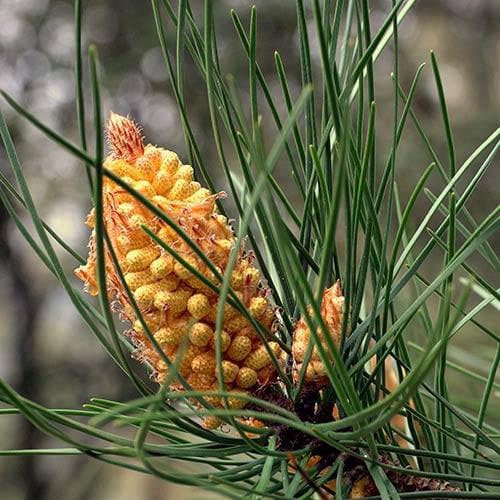
Scots Pine(Pinus sylvestris).
“Planting for the Planet,”
Primary schools across County Tipperary are being encouraged to get outdoors and get planting as National Tree Day returns on Thursday, October 1st 2026.
Organised by the Tree Council of Ireland and supported by Glennon Brothers, the initiative is making 2,000 free Scots Pine saplings available to primary schools nationwide, giving pupils throughout the Premier County an opportunity to take part.
This year’s theme, “Planting for the Planet,” highlights the contribution trees make to our environment. From storing carbon and protecting soil to providing food and shelter for wildlife, trees play an essential role in the world around us.
Schools can mark the occasion with tree planting, nature walks, tree identification and classroom activities. It is a chance for children to explore their surroundings, discover local wildlife and learn why caring for trees matters.
The Scots Pine (Pinus sylvestris) offers plenty for young nature enthusiasts to discover. An evergreen with distinctive needles and cones, it provides seeds for red squirrels and shelter for birds and insects. Planting a sapling can also create an ongoing learning opportunity as pupils watch their tree develop through the seasons.
Teachers and school leaders can request a free sapling through the online form HERE. Trees are available on a first-come, first-served basis, and the organisers advise that a similar variety may be substituted if demand requires it.
Get your school involved and help a new generation in Tipperary discover the value of planting, protecting and caring for trees.
Autumn in Thurles Co. Tipperary brings golden leaves, cooler mornings and shiny brown conkers found beneath horse-chestnut trees.
For many, they recall the childhood game; a conker threaded onto a string, swung against an opponent’s until one cracked. These familiar seeds also have an unexpected connection to the First World War, a story linking plant starch, bacteria and soap-making to the production of ammunition.
The story begins with starch. Conkers store starch to support a developing seedling. During WWI, that starch attracted interest as a possible raw material for producing acetone, a solvent needed in British cordite manufacture.
Chemist Dr Chaim Weizmann♦(Wife Dr Vera Khatzmann MD), developed a process that used bacteria to turn starchy materials into useful industrial solvents. In broad terms, bacterial enzymes broke down starch into smaller sugars, which the bacteria then metabolised. The resulting fermentation produced acetone alongside alcohols, particularly butanol. Latter butanol is a permitted artificial flavour used in butter, cream, fruit, rum, whiskey, ice ices, candy, baked goods and cordials. Distillation separated the useful liquids from the fermented mixture by exploiting differences in their volatility. Dr Weizmann’s patent describes this combination of fermentation and separation HERE.
As wartime shortages put pressure on maize supplies, Britain looked for other sources of starch to produce acetone. In autumn 1917, schoolchildren, Scouts and other volunteers collected conkers in the hope that horse chestnuts could replace some of the grain being used in the process. Despite enthusiastic collecting, transport and processing difficulties hampering the scheme, many such conkers went unused.
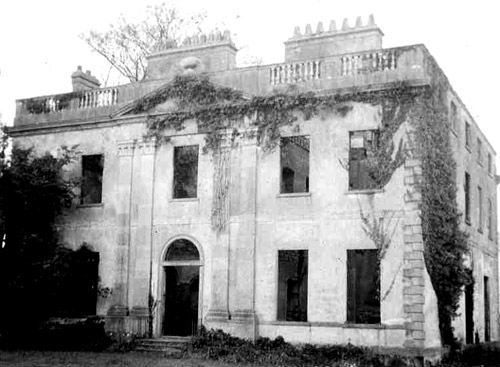
♦ Same Dr Chaim Weizmann was an Israeli statesman, biochemist, and Zionist leader who served as the first president of Israel. His elder son, Mr Benjamin (Benjie) Weizmann (1907–1980), with wife Minnie “Madeline”(Mady) Pomerantz, would later settled here in Ireland, following his service in the British Royal Artillery during World War II, settling just across the west Tipperary border in ‘Doonass House’, Clonlara, Co. Clare, just 62km (38.5 miles) from Thurles; becoming a dairy farmer, before selling out and moving to retire in Jerseyin the Channel Islands.
Doonass House, Clonlara, Clare, whichtoday is a burnt out ruin.
Where did cordite come in? Cordite was a smokeless propellant; its burning generated gases that drove a bullet or shell along a gun barrel. Its principal energetic ingredients included nitrocellulose, also called guncotton, and nitroglycerine. For cordite formulations using acetone, the solvent helped turn the ingredients into a workable material that could be shaped into cords. It was subsequently removed during drying, with factories recovering solvent for reuse. Acetone’s role was therefore in processing the propellant.
Soap-making supplied another part of the story. In traditional soap manufacture, fats or oils react with an alkali in a process called saponification. This produces soap and glycerine, also known as glycerol. Manufacturers could recover that glycerine and supply it to the munitions industry, where it became a raw material for nitroglycerine.
Conkers have a further washing connection of their own. They contain saponin, naturally occurring compounds with detergent-like properties. These molecules have both water-attracting and water-repelling parts, helping explain their ability to foam and assist cleaning. This is a different chemical story from either starch fermentation or conventional soap manufacture.
A conker beneath a Tipperary tree can prompt questions reaching far beyond childhood games, into plant biology, industrial fermentation and the demands that war places on everyday materials.
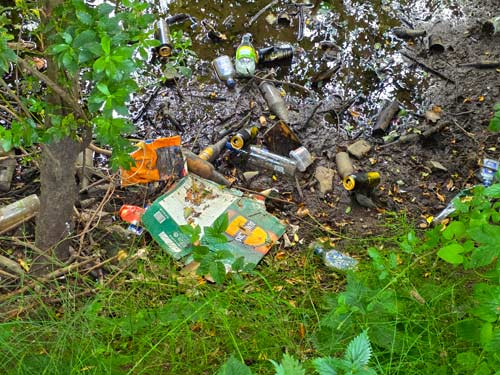
The summer foliage is dying back, unveiling more of the uncollected rubbish along the banks and in the River Suir in central Thurles. Bottles, cans, flower pots and other litter remain, while fallen trees and uncontrolled shrubbery continue to obstruct the river, as the stench persists.
After more than 13 year, the problems remain unresolved. Certainly over the past six weeks, despite my contact with the Environmental Protection Agency and Tipperary County Council, there have been no meaningful progress on the continuing litter, obstructions and overall pollution. The installation of litter bins also still remains unaddressed.
Two Years On – Bed Of River Suir At Low Tide.
Dear Mr Willoughby, Further to previous correspondence and responding to your concerns, the EPA wrote to Tipperary County Council seeking a written response from them on actions taken or planned on this matter. The Council responded to the EPA on 15/09/2026. However, the response did not provide sufficient information. The EPA has therefore requested further information from the Council. We will provide you with an update in three weeks. In the interim, we recommend you continue to report any further issues relating to this matter to the Council. Please use the reference number above in any further communication with the EPA regarding this matter. Trusting this is of assistance to you. Kind regards, Signed:Ms Shelly Laffan (Complaints Unit | Office of Environmental Enforcement) (Aonad Gearán na hOifige Forfheidhmithe i leith cúrsaí Comhshaoil)
Now, a response to my initial complaint from Ms Shelly Laffan, of the EPA’s Complaints Unit, Office of Environmental Enforcement, raises further questions about the Council’s handling of this matter.
The EPA confirms that it sought a written response (See above) from Tipperary County Council on actions taken or planned. The Council replied on September 15th 2026, but the EPA states: “However, the response did not provide sufficient information.”
The EPA has now requested further information and says it will update me in three weeks. In the meantime, it advises me to continue reporting further issues to the Council and to use my complaint reference [Ref: COM021813], in future correspondence with the EPA.
Thurles residents deserve to know what action if any is being actually taken, and when visible work will begin.
The Stench Continues. Where Is the Public Accountability?
The accompanying video hereunder records what appears to be effluent entering the river. It also shows a flat flagstone positioned over one pipe outlet, raising questions about whether the discharge is being obscured. Who placed it there, and why, requires investigation. The discharge itself needs to be identified and its source established.
I have also received reports of fish found floating near ‘The Willows’ housing estate in the recent past. The account relayed to me attributes this to an accidental chemical spill washed into the Suir through a connected surface-water drainage pipe. That explanation remains unconfirmed. The relevant authorities should establish what happened and publish their findings, including any available sampling results.
These concerns have a history. Local reporting in May described dumped shopping trolleys, plastic debris and suspected effluent along this same town-centre river.
Despite a political promotional video, 13 years too late, same highlighting the river’s condition, no subsequent update has come from same hand holding politicians, with the sole exception of local councillor Mr Jim Ryan who has taken up the cause. His communication on local radio over past months is acknowledged. Others,, if any, who have publicly expressed concern should explain what further follow-up they have undertaken.
Tipperary County Council should also now publish a dated programme for litter removal, for required bin provisions and assessment of the fallen-tree obstructions. The relevant authorities must investigate the discharges, explain their findings and identify who is responsible for each next step. Every further week of delay leaves the rubbish, the smell and the unanswered questions with the people of Thurles.
A copy of today’s updated report has been forwarded to all those responsible for this crime of neglect.
The River Suir deserves urgent care, sustained maintenance and public accountability. When will that work become visible?
Uisce Éireann has lifted the hosepipe ban with immediate effect, across 13 counties, following increased rainfall, improved water availability and public efforts to conserve supplies.
The decision affects Tipperary, Carlow, Cork, Dublin, Kildare, Kilkenny, Laois, Limerick, Meath, Offaly, Tipperary, Waterford, Wexford and Wicklow.
The Water Conservation Order was introduced in July after prolonged dry weather and exceptionally high demand put pressure on water supplies.
Uisce Éireann thanked households, businesses, farms and communities for reducing non-essential water use throughout the summer. Asset Strategy Senior Manager Ms Mairéad Conlon said their contribution helped maintain supplies for homes, hospitals, farms, vulnerable customers and essential services.
However, despite the improvement, some water sources are still recovering. Parts of the Greater Dublin Area, Wexford and South Tipperary remain below the levels normally expected at this time of year.
People are encouraged to continue using water carefully to help local supplies recover in the weeks ahead.
This website uses cookies to improve your experience. We'll assume you're ok with this, but you can opt-out if you wish.AcceptRead More
Privacy & Cookies Policy
Privacy Overview
This website uses cookies to improve your experience while you navigate through the website. Out of these, the cookies that are categorized as necessary are stored on your browser as they are essential for the working of basic functionalities of the website. We also use third-party cookies that help us analyze and understand how you use this website. These cookies will be stored in your browser only with your consent. You also have the option to opt-out of these cookies. But opting out of some of these cookies may affect your browsing experience.
Necessary cookies are absolutely essential for the website to function properly. This category only includes cookies that ensures basic functionalities and security features of the website. These cookies do not store any personal information.
Any cookies that may not be particularly necessary for the website to function and is used specifically to collect user personal data via analytics, ads, other embedded contents are termed as non-necessary cookies. It is mandatory to procure user consent prior to running these cookies on your website.






Recent Comments