“ Behold the fowls of the air: for they sow not, neither do they reap, nor gather into barns; yet your heavenly Father feedeth them.” (St. Matthew, Chapter 6)
Planet earth is the only planet, known to date, that presently supports life of many varieties. The word ‘nature,’ comes from the Latin word, ‘natura,‘ meaning ‘birth,’ and we use this word almost exclusively to refer to earth’s geology and wildlife.
In everyday conversations we often personify nature and its meaning, rightly therefore, as being female, as in Mother Nature renewing life. Our often descriptive reference to nature as ‘Mother Nature,’ therefore must also be considered as the very source and guiding force of our belief that our small planet earth and the life contained thereon, originate from a divine creator.
Regrettably because of Ireland’s current financial situation, many of us, today, are forced to go about our daily lives with thoughts clearly focused on basic day to day survival and Mother Nature is being placed much further down the line, on our daily list of priorities.
However, it takes just one skilled photographer, linked to an area of wetland habitat, latter supported by a group of forward thinking benefactors, who working together remind us of the true beauty that Mother Nature has to offer each and every one of us. The wetland habitat is Cabragh Wetlands, Thurles and the skilled photographer is Eamon Brennan, himself a native of Thurles, Co Tipperary.
Eamon Brennan
Eamon, by occupation, is a photographic printer and photographic technician. As a long standing member of Thurles Camera Club, Eamon holds a Licentiate from the Irish Photographic Federation (IPF) and is recognised as being in the top three of Irish wildlife portraiture photographers, winning numerous medals, trophies and certificates in both open and closed, local and national competitions. Eamon came in 2nd place, in 2012; in the IPF all Ireland Nature Competition and some of his photographic work this year will represent Ireland in Europe.
Rural dwellers & the farming community in particular, here in Co Tipperary, will welcome the launch today, by the Environmental Protection Agency (EPA), of their new iPhone Application Software (APP), “See it? Say it!”
This App is designed to assist in reporting existing environmental pollution in and around our towns and villages & to make it easy for people to report a pollution incident the first moment it is observed.
Using the App observers can now take a photograph of the pollution incident, input the Global Positioning System (GPS) location coordinates, add a summary description of what you personally wish to convey, your contact details and this will now be automatically sent to your relevant local authority, to be dealt up.
This APP compliments the 24 hour nationwide environmental complaints phone line – Tel: 1850 365 121 – which is already in place. Persons can now report issues such as the backyard burning of rubbish, fly-tipping (Latter the dumping of waste illegally instead of in an authorised rubbish dump,), water pollution, odours and unnecessary littering,(e.g. such as dog fouling on pedestrian walkways, Minister Phil Hogan’s golf buddies & Thurles Town Council make note on agendas of upcoming meetings.) simply by using this new iPhone APP or by phoning the complaints phone line, above stated.
To Download: You can download the APP now from the iTunes APP Store (Search iTunes for: ‘See it Say it’) or visit http://goo.gl/gOJMa. Then, if you spot any environmental pollution or dumping, simply:
Open the App,
Take a photograph,
Add a few simple details including a contact number,
Submit the complaint.
This APP details will send the complaint to the relevant Local Authority and will make it easy for those investigating to quickly locate the problem.
Remember to keep Thurles & Tipperary looking beautiful.
Sweet Auburn, loveliest village of the plain, Where health and plenty cheer’d the labouring swain, Where smiling spring its earliest visit paid, And parting summer’s lingering blooms delayed, Dear lovely bowers of innocence and ease, Seats of my youth, when every sport could please, How often have I loitered o’er thy green, Where humble happiness endeared each scene!
Before setting off on his 2500k, three month walk next April, beginning from Holycross, Thurles, Co.Tipperary, to eventually end up in Santiago de Compostella Galicia in Spain, Michael Walsh (Retd & former aide de camp to H.E. the President of Ireland), has planned another fund raising event, the total proceeds going to TÚS NUA, the Autism Residential & Resource Centre here in Thurles.
This time Michael is inviting as many people as possible to join him on the now renowned 8km Eamon An Chnoic Loop walk, situated near Upperchurch Village, Thurles.
At this time of the year, this wild, rural, yet highly attractive walkway area in Upperchurch, will be exhibiting its new season’s collection of “Spring Glad Rags.” For rural walk lovers it is a time to renew & experience the warmth of the sunlight, smell the clean fresh air & observe at first hand ‘Mother Nature’s,’ renewing four-way seasonal cycle. So do come listen to the bleating of young lambs in the surrounding hilly fields, observe at first hand the fresh clean buds on surrounding trees & the examine the magic that is brown fern turning again to pale green, on the surrounding landscape.
This walk will take place on Saturday February 23rd next, beginning at 11.30am and the registration fee for walkers is just €10.00, all for this very worthy cause.
Note: Registration Fee does include complementary refreshments and for all further details please contact Mobile No: 087-2755445.
Two cases of Chalara die-back, caused by a fungus named Chalara fraxinea, have now been confirmed as affecting ash trees growing here in Co Tipperary. In recent months, the first confirmed case in Ireland was found in Co Leitrim. The young trees from this site which had tested positive for the disease, were immediately destroyed.
Latest sites, however, confirmed as having the disease include two here in County Tipperary, a site in County Galway and one site in County Meath.
Recent ash wood import restrictions introduced by the Department of Agriculture to prevent the spread of this disease have raised concerns particularly among makers of our traditional ‘camán,’ or hurley.
The disease is known to affect ash trees of any age and can be fatal, particularly to younger trees. The wide range of symptoms associated with ash die back includes:- Necrotic lesions and cankers along the bark, branches or main stem. Signs of foliage wilt or discolouration. Wilting of shoots, twigs or main stems.
Ash trees suffering from C. fraxinea have been found widely across mainland Europe, with Denmark reporting that the disease has infected about 90% of its ash tree population. Experts believe that if the disease becomes fully established, then it could have a similar impact on the landscape, as did Dutch elm disease in the 1970s.
All of the ash trees affected are understood to have been imported as saplings from continental Europe three years ago and all have now been destroyed.
What I find difficult to understand is why in God’s name, was Ireland importing ash saplings?
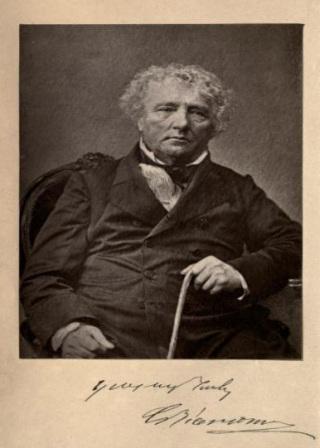
Thurles native, and always a welcome contributor to Thurles.Info, Mr Proinsias Barrett reflects romantically on Thurles, Tipperary, a changing Irish landscape and the life & times of Carlo (Charles) Bianconi (1786 – 1875).
Proinsias writes; “The Thurles connection with Charles Bianconi is interesting because I was aware that a late 19th century ancestor of Brodericks ‘of The Ragg,’ also provided a service similar, albeit on a smaller scale, to Bianconi. We were often told growing up that Martin Broderick, whose father Patrick moved from the Horse & Jockey area of Tipperary circa 1850, had business dealings with Charles Bianconi and went on to develop a respectable hackney service himself. Family business dealings with Bianconi may have been in the form of taking over some routes once used by the Bianconi operation and the development of contacts along these various routes, where teams of horses could be changed and collected on long haul trips. In fact Martin Broderick often went from Thurles as far as Galway with customers.
This tradition of horses and stables continues to this day with Martin’s Grandson Austin Broderick and Austin’s son Gregory and sister Cheryl, both developing horses not for drawing carriages but for prize racing and show-jumping at Ballapatrick Stables.
But Martin Broderick of the Ragg was an exception at the time and I have often wondered why Irish men had not already established hackney services throughout Tipperary before Bianconi. If we look at the times then and the predisposition of the majority of Irish people we might find some answer to that question.
As the story reads Bianconi arrived in Ireland in 1802, hardly four years after the 1798 Rebellion and the terrible counter insurgency measures conducted throughout Tipperary by the then ‘High Sherrif,’ one Thomas Judkin Fitzgerald (Fitzgerald being a surname he took in order to lay claim to a will, his real name was Tomas Judkin Unicke.). Known as ‘The Flogger Fitzgerald,’ he conducted his free-hand ‘interrogations,’ without bias towards sex or age, assisted by local Landlords and Yeomanry commanders like the Carden’s or Otway’s or Armstrong’s.
Robert Emmet the Dublin Barrister had also attempted rebellion in 1801. Penal Law, which had largely been relaxed during the 1760’s was once again enforced. Catholics, or native Irish for example, could not own land, own a horse worth more than £5, or have any formal education in Ireland. Without these how could one access credit or show collateral. Bianconi in 1801 had entered a country where 90% of the population had few or no rights. Some Catholics did succeed in business, being fortunate enough to have received an education in France, but the general atmosphere of business and politics in Ireland at that time favoured those of the ascendancy class.
I wonder if the same laws would have applied to Carlo Bianconi, being Italian we must presume that he was a Roman Catholic.
Religion and politics aside, I recently came across some interesting descriptions of conditions in Ireland for the weary traveller during the 18th & 19th century, pertaining in particular to the weather and the roads.
A German called Henrich Boll who travelled Ireland during the early 19th century noted that ‘the rain here is absolute, magnificent and frightening, to call this rain bad weather is as inappropriate as to call scorching sunshine fine weather.‘ Two centuries earlier an English Soldier called Fynes Moryson wrote after a night watch before the battle of Kinsale: ‘It groweth now about 4 o’clock in the morning as colde as stone and as darke as pitche, and I pray, sir, whether this is a life that I much delight in.’
Another called Thomas Stafford wrote of the wind coming off the snow covered mountains of Munster which ‘tested the strong bodies, whereby many turned sick, and some unable to endure the extremity, died standing sentinel.’
The English traveller Twiss wrote in 1755 ‘the climate of Ireland is more moist than that of any other part of Europe, it generally rains for four or five days in the week for a few hours at a time; one can see a marvellous rainbow almost daily.’
From ancient times a system of roadways around Ireland later used by Normans and Elizabethans contained many important landmarks and areas of archaeological antiquity, most nowadays are forgotten or replaced or by-passed. The late 18th early 19th century Scottish traveller, Lithgow, described the discomfort of travelling in Ireland using these ‘toghers,’ or causeways, particularly during winter when every day his horse constantly sank to its girths in the boggy road, complaining that his saddle bags were destroyed. He often had to cross streams by swimming his horses; during a period of five months six of them died or were drowned. In the end he felt as worn out as any of his steeds.
Finally Peter Sommervill-Large who in 1973 took the walk from Bantry Bay in Cork to Leitrim in wintertime retracing the lamentable steps of Donal Cam O’Sullivan Beare, Lord of Beare and Bantry, who in December 1602 marched the 300 or so miles to the territory of the O’Rourke’s in Leitrim with a thousand followers, arriving 15 days later with just 35 followers remaining.
Sommervill-Large describes the countryside he passes through on the walk in 1973 with admirable endearment and his subsequent book was very well researched. After crossing the Shannon at Portumna, through Eyrecourt, Aughrim and Ballygar in the direction of Glinsk, he mentions something I found interesting; ‘[The landscape] soon changed into numerous little hills and hollows with farms tucked into their sides, linked by a system of un-tarred country lanes.’
When I took one at random, I found that walking through the mud and the long narrow puddles in the deep ruts was an unexpected pleasure. The old dirt road has an intimacy, an ageless sense of belonging to the scene, and nothing changes the whole tenor of rural life more quickly than a coating of tarmac.
All the wild places are coveted now and are becoming trimmed and neatened, and the smell of petrol and diesel drifts over the country; there are few roads left like those Synge used to walk along. It seems unnecessary to tie down every remote section of the countryside with these bands of iron. I suppose one day when about five or six un-tarred roads are left, they will be preserved as national monuments.”
This website uses cookies to improve your experience. We'll assume you're ok with this, but you can opt-out if you wish.AcceptRead More
Privacy & Cookies Policy
Privacy Overview
This website uses cookies to improve your experience while you navigate through the website. Out of these, the cookies that are categorized as necessary are stored on your browser as they are essential for the working of basic functionalities of the website. We also use third-party cookies that help us analyze and understand how you use this website. These cookies will be stored in your browser only with your consent. You also have the option to opt-out of these cookies. But opting out of some of these cookies may affect your browsing experience.
Necessary cookies are absolutely essential for the website to function properly. This category only includes cookies that ensures basic functionalities and security features of the website. These cookies do not store any personal information.
Any cookies that may not be particularly necessary for the website to function and is used specifically to collect user personal data via analytics, ads, other embedded contents are termed as non-necessary cookies. It is mandatory to procure user consent prior to running these cookies on your website.






Recent Comments