|
|
“To give up one’s very self; to think only of others and to learn how to bring the greatest happiness to others, yes here is the true meaning of Christmas.”
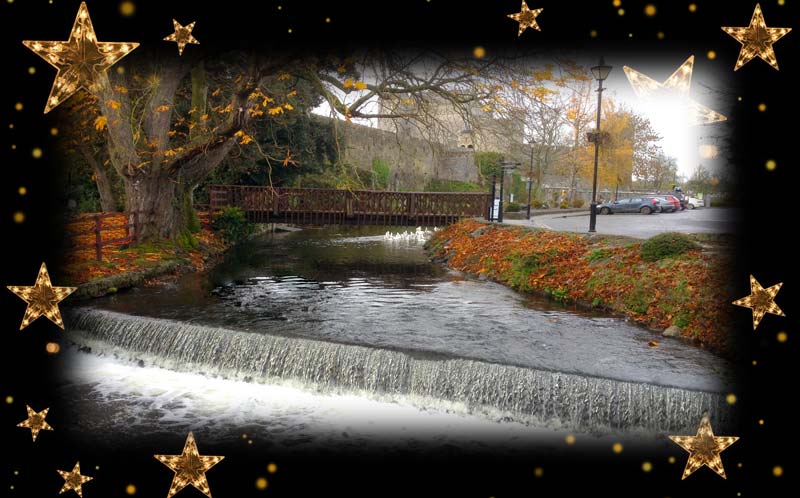 The town of Cahir, on the River Suir, in Co. Tipperary. The town of Cahir here in Co Tipperary, boasts that one-in-three of its local residents are non-Irish born. With this in mind the townsfolk intend to use the upcoming Christmas festival as a way of celebrating their multiculturalism.
According to the 2016 Census, Cahir embraces Ireland’s eighth highest percentage of non-Irish born resident, latter drawn from some 40 countries, e.g. Poland, Germany and Lithuania; and from Africa to Brazil.
With the support of the not-for-profit charity “Together Ireland”, this new “Cahir Reaches Out” concept will host a special event for over 1,000 non-Irish born people, on December 8th next, in an effort to welcome and celebrate all the cultural contributions now being created in our modern Ireland.
The main event taking place will include:- (A) – A world bake off, celebrating culinary arts from all different countries; (B) – An international 5km Santa Run; (C) – Street music performances including carol singing in different languages, e.g. English, Irish, Spanish, Polish and Lithuanian and finally (D) – A special parade of flags through Cahir’s main thoroughfare – all intended to further underline and demonstrate just how proudly cosmopolitan this small Tipperary town has actually become in recent years.
All of these events will take place before a formal switching on of Cahir Town’s Christmas lights; latter which yesterday saw a workforce busily beginning to erect.
Yes, here surely is the true meaning of Christmas at work.
“Duilleoga deasa, deasa, duilleoga deasa, buí.
Duilleoga deasa, deasa, ar thalamh ina luí”.
[Irish language Translation:- “Nice, nice leaves, nice yellow leaves. Nice, nice leaves on the ground, lying”.]
The town of Thurles is always extremely colourful at this time of year, courtesy of Mother Nature.
Here in the town, despite recent strong winds, the thickly matted autumn leaves, generated during last spring, are now only beginning to loosen their grip, to flutter down to earth. This same action now allows the numerous bright beams of yellow sunshine to penetrate through to the pavements and the rural mossy previous shaded grassy floors.
Here, in the coldish 12°C sunlight being experienced in Thurles in Co. Tipperary presently, a myriad of these Autumn leaves, today lie mainly underfoot, thus forming a rich carpet of yellows, golds, reds and browns. Some can be also observed performing their final dance, encouraged by a light south westerly breeze, before eventually loosing themselves in that river of earlier leaves that have fallen in love with the surface of the ground.
For all mankind, autumn is seen as that period for storing up our annual harvest, but for Mother Nature, it is that time for also undertaking the setting of seed, thus ensuring that after a brief sleep, next year’s plants are replenished.
An American judge Suzanne Bolanos has denied Monsanto’s request for a new trial and has further upheld a jury verdict against the Bayer subsidiary Monsanto in a case regarding the cancer danger of some of its weed killer products. A jury in the case found the company’s glyphosate-based[1] weed-killers, including RoundUp, (widely used here in Ireland), responsible for a man’s terminal cancer.
Earlier this year the first study of exposure in adults to glyphosate, the most commonly used pesticide in Ireland, had found that the general population is being subjected to low exposure from this chemical, but “within acceptable EU safety limits”. Roundup has continued to be licensed for use in Ireland in spite of the earlier US courts decision to award a school groundsman who claimed it contributed to his terminal cancer.
[1]Glyphosate is a broad-spectrum systemic herbicide used to kill weeds, especially annual broadleaf weeds and grasses that compete with crops.
 In 2015, the cancer unit of the World Health Organisation classified glyphosate as “probably carcinogenic to humans.” However, later in 2017, the US Environmental Protection Agency concluded that a decades-long assessment of the risks associated with the use of glyphosate, was not carcinogenic in humans.
This evaluation will now influences decisions in the case of some 8,000 other such upcoming lawsuits in the USA.
Monsanto, in denying the allegations, had previously asked Judge Bolanos to throw out the entire previous verdict or to order a new trial. The Judge, in her ruling, did cut the previous $289 million (€253m), punitive damages award by $200 million; back to $78 million to comply with the law regarding how such damage awards must be calculated.
Bayer, a German company, which had purchased Monsanto recently for $63 billion, is adamant that decades of scientific studies have concluded that glyphosate is safe for human use, and in a statement said. “The courts decision to reduce the punitive damage award by more than $200 million is a step in the right direction, but we continue to believe that the liability verdict and damage awards are not supported by the evidence at trial or the law and plan to file an appeal with the California Court of Appeal”.
Our failure to treat waste water properly is seriously damaging our rivers and coastal waters
 Waste water treatment at 28 of Ireland’s 179 large towns and cities has failed to meet standards set to prevent pollution and protect public health.
Waste water from 57 areas caused significant impacts on our rivers, lakes and coastal waters. Discharges of raw sewage from six urban areas have ceased. However, raw sewage from the equivalent of 88,000 people in 38 towns and villages is still flowing into the environment today.
Though we have seen some improvements, Ireland is not investing quickly enough to provide the infrastructure needed to treat our waste water, highlights the EPA report on Urban Waste Water Treatment in 2017; released today. Deficiencies exist in many treatment plants and public sewers, due to a legacy of underinvestment, and waste water is still entering the environment without receiving sufficient treatment.
Commenting on the report Dr Tom Ryan, Director of the EPA’s Office of Environmental Enforcement stated, “Ireland is not addressing the deficiencies in its waste water treatment infrastructure at a fast-enough pace. It is unacceptable that, 13 years after the final deadline to comply with treatment standards, there are still 28 large towns and cities discharging inadequately treated sewage that fails to meet these standards. This is putting our health at risk and is having an impact on our rivers, lakes and coastal waters.”
Environmental priorities
It is not possible to fix all the issues with Ireland’s waste water treatment systems in the short term and a long-term strategy is now required to address shortcomings. It is therefore essential that the resources that are available are targeted efficiently in the right areas, to deliver improvements where they are most needed. The EPA identifies the following as the priority areas for improvements.
- 28 large towns and cities where waste water treatment failed to meet mandatory standards. These account for over half of the sewage collected in our public sewers. The final deadline to comply with the standards was 2005 and Ireland is before the EU Court of Justice for breaching these requirements.
- 38 towns and villages discharging raw sewage. The EPA has prosecuted Irish Water for delays in providing treatment plants at six of these areas.
- 57 areas where waste water discharges are the sole environmental threat to rivers, lakes and coastal waters at risk of pollution.
- Areas where upgrade works are needed to protect 4 beaches with poor quality bathing water. These affected beaches are Merrion Strand, Clifden, Loughshinny and Sandymount Strand.
- 15 areas where improvements are needed to protect critically endangered freshwater pearl mussels or to safeguard shellfish habitats.
- 13 priority waste water collection networks (sewers) that need to be upgraded.
Mr Darragh Page, Programme Manager of the EPA’s Office of Environmental Enforcement stated, “Investment in waste water infrastructure has brought environmental benefits in 2017, and we welcome the elimination of discharges of raw sewage from the equivalent of over 50,000 people. However, a substantial increase in the rate of investment is necessary to provide the infrastructure needed to treat our waste water. Irish Water also needs to improve its understanding of the condition and performance of sewers, to help focus sewer upgrade works where they are most urgently needed.”
Independent Deputy Michael Lowry welcomes funding totalling €913,266 for projects in Tipperary through the Town & Village Renewal Scheme 2018.
 Deputy Michael Lowry is delighted to announce that funding totalling €913,266 has been allocated to 8 projects in Tipperary through the Town & Village Renewal Scheme 2018. This year the Town & Village Renewal Scheme focuses on projects, which can help to enhance rural towns and villages, with a particular emphasis on stimulating economic development.
Deputy Lowry stated: “Our towns and villages are the heart of our rural communities. This years Town and Village Renewal Scheme is designed to help breath life back into our rural towns and villages, I’m delighted that this funding was allocated to eight projects in Tipperary”.
Funding Allocations:
Tipperary Co Council Aglish Install footpath, street lighting, linking village, the park and village hall – €78,400.
Tipperary Co Council Carrick on Suir Upgrade existing Heritage Centre – €174,362.
Tipperary Co Council Cashel Public realm improvements – €200,000.
Tipperary Co Council Cloughjordan Extension of local woodland walking trail – €21,600.
Tipperary Co Council Nenagh Public realm improvements – €100,000.
Tipperary Co Council Puckane Village enhancements – €116,904.
Tipperary Co Council Terryglass Public Realm Improvements – €152,000.
Tipperary Co Council Thurles Production of 10 year integrated renewal strategy for town centre – €70,000.
Total Funding = €913,266
|
Support Us Help keep Thurles.info online by donating below. Thank you.
Total Donated 2026: €300.00
Thank You!
Daily Thurles Mass Livestream
|



Recent Comments