Firefighters in County Tipperary are continuing efforts to bring a series of wildfires on Slievenamon under control, with emergency crews now working at the scene for a sixth consecutive day.
Tipperary Fire and Rescue Service described conditions on the mountain yesterday evening as particularly difficult, as several previously extinguished areas reignited and required further attention. Crews faced repeated flare-ups across the affected ground, adding to the challenge of containing the blaze.
Acting Senior Assistant Chief Fire Officer Ms Carol Kennedy said firefighters had succeeded in extinguishing or controlling a number of sections, but some of these areas later caught fire again.
Emergency teams are carrying out a fresh assessment of the mountain this morning to identify remaining hotspots and determine where resources are most urgently needed. Ms Kennedy said the overnight change in weather had provided some assistance. Lower temperatures, fog and cloud cover helped reduce the intensity of the fires and calm some of the most active areas. Additional personnel are being deployed on the ground today, while aerial support is also expected to resume. Aircraft have been assisting crews by targeting parts of the mountain that are difficult or unsafe to reach on foot.
Despite the ongoing operation, the fire service has said there is currently no immediate threat to nearby homes or other property. However, residents and members of the public are being urged to remain cautious and follow official safety advice. People are being asked to stay away from Slievenamon wherever possible and to avoid non-essential travel in the surrounding area. Keeping roads and access routes clear is considered vital, as fire engines and other emergency vehicles need to move quickly and safely.
Residents who can see or smell smoke near their homes should keep windows and doors closed to reduce indoor exposure. Those living downwind of the fire are being advised to take particular care, as shifting winds may carry smoke towards nearby communities. Children, older people, pregnant women and anyone with respiratory or heart conditions are being encouraged to minimise their exposure. People are also being asked to check on neighbours, relatives or others who may be vulnerable or need assistance. Farmers and animal owners should continue monitoring livestock for signs of distress. Where it is safe and practical, animals should be moved away from areas affected by heavy smoke.
The fire service, supported by Civil Defence personnel, has carried out a house-to-house information campaign in nearby communities. Leaflets have been distributed, and residents have been given an opportunity to raise concerns and ask questions about the developing situation. Officials have stressed that emergency personnel remain available to provide guidance to people living close to the affected area. Although weather conditions have offered some relief, the operation remains active and demanding. Crews will continue monitoring sections that have already been treated, as dry ground and hidden heat can cause fires to restart.
The cause of the fire remains unknown and has not been officially determined.
The public has again been urged not to approach the mountain, both for personal safety and to avoid interfering with emergency operations.
Minister for Rural and Community Development and the Gaeltacht, Mr Dara Calleary TD, will visit Tipperary and Clare on Friday, 24 July, for a full programme highlighting newly completed community, recreational and biodiversity projects.
The Minister’s visit begins at 9:00am with the official opening of Thurles Market Quarter, Town Parks, Thurles. He will then open Loughtagalla Biodiversity Play Park, Thurles at 10.30am, followed by Carrig Community Park, Carrig, Co. Tipperary, at 11.50am.
At 12.35pm, Minister Calleary will travel to Lorrha to view the renovated St Ruadhan’s Hall and visit the SCEAL Community Shop and Café, two facilities supporting local services and community life.
The afternoon programme moves to County Clare, beginning in Bunratty at 3.15pm, where the Minister will launch a new boat for Bunratty Search and Rescue Service.At 5.15pm, he will officially open the upgraded Lahinch Playground and launch the Clare Outdoor Recreation Plan on the town’s promenade. The day will conclude at 6.45pm with the opening of Corofin Community Centre.
This series of engagements will recognise the work of local volunteers, community organisations and public bodies involved in bringing the projects to completion.
Together, the developments provide improved parks, play areas, rescue resources, meeting spaces and community services for residents and visitors. They also demonstrate the important role locally led projects can play in strengthening rural towns and villages, supporting wellbeing, protecting biodiversity and creating welcoming public spaces for people of all ages.
Where else in Ireland would a crossroads, latter situated on a blind hill, be allowed to have traffic approaching and exiting at 100 km/h?
Well this remains the case at Turtulla Cross, Thurles, Co. Tipperary. The proposed replacement of Turtulla Cross with a roundabout has been welcomed by local councillors as a major step forward. Nobody disputes that this junction has a serious safety problem. It has been associated with one pedestrian fatality, numerous collisions and long-standing concern among residents, motorists and public representatives.
Turtulla Cross, Thurles, Co. Tipperary, showing blind hill, which, despite previous TII intervention, remains flooded for 10 months of the year. Pic: G. Willoughby.
The present 100 km/h limit is a maximum permitted speed, not an instruction to drive at that speed. Nevertheless, allowing traffic to approach a known hazardous junction under a 100 km/h limit sends entirely the wrong message. Drivers travelling at or near that speed have less time to recognise danger, react to another vehicle and stop safely.
However, welcoming action should not mean giving Transport Infrastructure Ireland and Tipperary County Council a blank cheque. Before large sums of public money are committed to constructing a roundabout, the authorities must explain why a significantly cheaper and quicker safety measure has not been properly trialled; namely reducing the speed limit on the approach and exit to Turtulla Cross from 100 km/h to 50 or 60 km/h.
A roundabout would inevitably force approaching vehicles to slow considerably. That raises an obvious question: why not introduce lower approach speeds now and assess the results before committing to an expensive construction project?
The Government’s own Speed Limit Review recommended lower limits, including a proposed reduction of the default limit on national secondary roads from 100 km/h to 80 km/h. Official guidance also recognises 60 km/h transition zones on national and other significant roads entering areas where traffic conditions become more complex.
A properly designed trial could include a 60 km/h transition zone, a further 50 km/h limit immediately approaching the junction, prominent warning signs, refreshed road markings, flashing speed indicators, improved lighting and targeted Garda enforcement. The trial should be supported by speed surveys and collision-risk assessments, with the results published openly. A few hundred metres closer to Thurles town such signs exist, so just grab a screwdriver or pliers and move them.
According to Tipperary County Council’s May 2026 management report, preliminary design has commenced for a safety scheme involving a roundabout. The project is expected to enter the Part 8 planning process in 2026, with construction anticipated in 2027, or 2028 or maybe 2030.
That timetable provides an opportunity to test lower-cost interventions before construction begins. Public money must be treated with respect. A roundabout may ultimately prove necessary, particularly if the junction’s layout, visibility or traffic movements cannot be made acceptably safe through speed management alone. But that conclusion should be demonstrated through real evidence, not just simply assumed by councillors wishing to take advantage of a video opportunity.
TII and Tipperary County Council should publish the up-to-date collision history, traffic speeds, projected construction cost, alternatives considered and the reasons those alternatives were rejected.
Spending millions without first testing an enforceable speed reduction would be a failure of common sense and responsible public administration. Safety must come first, but value for money, transparency and evidence must come with it.
Most of Ireland’s Local Authorities Strengthen Environmental Enforcement in 2025.
Ireland’s local authorities delivered a strong environmental enforcement performance in 2025, with 83% of assessments under the National Enforcement Priorities rated Strong or Excellent. The EPA’s latest performance report shows that environmental teams across the country carried out more than 252,000 inspections, responded to 85,500 complaints, took 23,550 enforcement actions and initiated 386 prosecutions during the year.
Dún Laoghaire-Rathdown County Council, Galway City Council and South Dublin County Council achieved the required standard across every National Enforcement Priority. All 31 local authorities also met the required standard for tackling illegal waste. Despite the positive overall results, the EPA identified areas where enforcement must improve. Seventeen per cent of assessments fell below the required standard, while Leitrim County Council and Sligo County Council did not meet the required standard across several priority areas. Particular attention is now needed in relation to waste segregation, discharges to water and transport noise. The EPA has called on local authorities to maintain momentum, allocate sufficient resources and ensure that enforcement is consistent across the country.
Tipperary County Council. While Tipperary County Council recorded positive results across several environmental enforcement priorities in 2025, the EPA assessment indicates that improvement is needed in two important areas.
The council received yellow ratings for its performance under the Environmental Noise Directive and for discharge licences and Misconnections. These ratings indicate that the work carried out did not reach the required Strong or Excellent standard.
The Environmental Noise Directive requires local authorities to identify harmful transport-noise exposure, prepare action plans and demonstrate that appropriate measures are being implemented. Tipperary County Council should clarify what actions are planned, when they will be completed and how progress will be measured.
The rating for Discharge Licences and Misconnections is also a concern. Incorrect wastewater connections and poorly controlled discharges can result in pollution entering surface-water drains, rivers and streams. Stronger inspections, licence reviews, investigations and enforcement follow-up may be required to protect water quality.
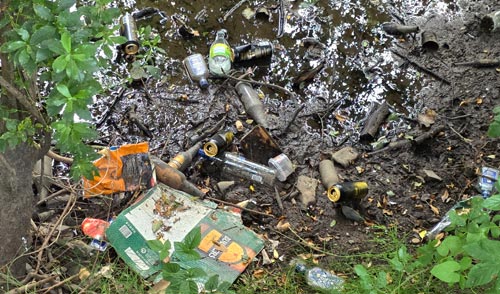
Visual Confirmation:State of the Suir River setin the heart of Thurles today; left uncleared since the recent Liberty Music Festival, which was held on Saturday July 4th and Sunday 5th, 2026 last.
These findings do not suggest failure across the council’s entire environmental programme. They do, however, show that enforcement must be consistent across every priority area. Tipperary County Council should respond by publishing clear corrective actions, measurable targets and realistic timelines for improvement. The report also highlights targeted work carried out in Tipperary’s firewood sector. Eleven firewood producers were contacted and provided with information on their obligations under solid-fuel legislation, including EPA registration and certification requirements. Following this engagement, three producers registered with the EPA and six began working towards certification through the Wood Fuel Quality Assurance Scheme. Two newly identified producers remain subject to further follow-up.
The Tipperary initiative demonstrates how inspections, education and sustained engagement can improve compliance. It also shows that continued oversight is necessary to ensure firewood meets the required quality and moisture standards, protects air quality and supports responsible producers.
The EPA will continue to monitor local-authority performance and work with councils to improve environmental outcomes for communities throughout Ireland.
A nationwide hosepipe ban will take effect at 12.01am on Friday, 24th July, as Ireland’s continuing warm and dry weather places increasing pressure on public drinking water supplies. Uisce Éireann has extended the existing Water Conservation Order to every county including Tipperary. The restrictions will remain in force until Wednesday, 26th August, although the duration may be reviewed depending on weather conditions and the availability of water.
The order previously applied to the Greater Dublin Area, south Tipperary and parts of Kildare, Meath, Wexford and Wicklow. Its expansion means households throughout the country must now avoid using hosepipes or similar equipment for non-essential purposes.
Prohibited activities include watering gardens, washing private cars or leisure boats, filling domestic swimming pools and paddling pools, and operating ornamental fountains or garden ponds. Commercial uses that require water as part of a business activity are exempt from certain restrictions.
The measure follows an extended period of high temperatures and increased water consumption. Several groundwater sources are experiencing reduced yields, while demand in some regions has exceeded the amount of treated water that can be produced locally. Targeted overnight restrictions have also been introduced in a number of areas to allow reservoirs to recover and maintain daytime supplies for homes and businesses.
Uisce Éireann is asking the public to limit unnecessary water use by taking shorter showers, repairing leaking taps and toilets, turning off taps while brushing teeth, and running washing machines and dishwashers only when full. A garden hose or sprinkler can use a substantial amount of water in a single hour.
Met Éireann forecasts indicate that temperatures are expected to remain above seasonal averages overall, increasing the importance of conserving supplies for households, hospitals, farms, businesses and other essential services.
This website uses cookies to improve your experience. We'll assume you're ok with this, but you can opt-out if you wish.AcceptRead More
Privacy & Cookies Policy
Privacy Overview
This website uses cookies to improve your experience while you navigate through the website. Out of these, the cookies that are categorized as necessary are stored on your browser as they are essential for the working of basic functionalities of the website. We also use third-party cookies that help us analyze and understand how you use this website. These cookies will be stored in your browser only with your consent. You also have the option to opt-out of these cookies. But opting out of some of these cookies may affect your browsing experience.
Necessary cookies are absolutely essential for the website to function properly. This category only includes cookies that ensures basic functionalities and security features of the website. These cookies do not store any personal information.
Any cookies that may not be particularly necessary for the website to function and is used specifically to collect user personal data via analytics, ads, other embedded contents are termed as non-necessary cookies. It is mandatory to procure user consent prior to running these cookies on your website.









Recent Comments