Cashel Craft Circle Join the Cashel Craft Circle every Wednesday from 10am-12pm for their social gathering. Bring along your own project to work on, share ideas, patterns and enjoy a chat and cuppa with others. No need to book for this event, just come along.
Practice your Cúpla Focal. “Bain triail as do chúpla focal sa leabharlann Chaiseal Mumhan. Tá fáilte roimh gach duine”. [“Try your hand at a few words (Irish Language) in the Cashel Munster library. Everyone is welcome”] See poster above for further details.
LEGO Free Play in Cashel Library! Join us for creative fun on Fridays: Jan 23rd, Feb 20th, Mar 20th & Apr 24th from 3:30 pm – 4:15 pm. Build, play, and let your imagination soar! Children must be 7+ to take part. Booking required: Tel: 062-63825. _______________________________________
Meanwhile, also join us once a month on Fridays, [Jan 23rd, Feb 20th, Mar 20th, Apr 24th,] from 10:00am to 10:30am for a fun and cozy story time. Enjoy the magic of books and quality time together! See poster above. To book your spot or learn more call Tel. No 062-63825.
Thurles student Ms Caitlin Tierney has been crowned Lions Clubs Ireland “Young Ambassador of the 21st Century”
Ms Tierney, a student studying at the Ursuline Secondary School, in Thurles has been named Lions Clubs Ireland Young Ambassador of the 21st Century, following the national finals held last weekend.
Photo L-R:Ms Mary Slattery (Thurles Lions Club Vice President), Ms Caitlin Tierney and Mr William McDonagh (Thurles Lions Club).
Ms Tierney, who had been selected just before Christmas to represent Thurles Lions Club, was announced as the overall national winner, an achievement that recognises exceptional community involvement and a strong connection to the values and service work carried out by Lions Clubs.
As Ireland’s new ‘Young Ambassador’, Ms Tierney will now go forward to represent Ireland at the European stage of the competition, latter to be held in Germany.
The award also includes a €1,000 bursary, to be donated to a charity of her choice or used to support a community project, along with a three-week international exchange in a country of her choice, to take place this summer or next. Ms Tierney will also participate in the UK finals as part of the wider programme experience.
The Young Ambassador of the 21st Century initiative is a Lions Youth Programme, run across Europe, which highlights young people, aged 15–19, for community service, leadership and communication skills, while encouraging volunteering as a key part of leadership.
Low-income families are increasingly anxious that the next electricity bill will be the one they simply can’t meet, as everyday usage becomes a choice between heat, light and other essentials.
Official figures show that 7.4% of people went without heating at some stage in the past year, due to lack of money, while 4.5% said they were unable to keep their home adequately warm, a stark measure of energy deprivation even before the worst winter pressures bite.
At the same time, the energy regulator’s arrears updates show a significant share of domestic electricity accounts currently remain in arrears, with large numbers in longer-term debt (90+ days), underlining how quickly “a tough month” can become a lasting burden.
Anti-poverty groups, including SVP, warn that once-off supports have faded while costs remain punishing, leaving families fearful of disconnection, mounting repayment plans, and cold homes becoming normal.
However, there is a small glimmer of light at the end of this winter tunnel for people in receipt of Child Support Payments or getting a qualifying social protection payment or taking part in an approved employment, education or training support scheme, so do hang-in there.
Keep in mind that applications will open on June 1st for Back to School Clothing and Footwear Allowance eligibility for 2026. Families who qualify for the Back to School Clothing and Footwear Allowance (BSCFA) can apply from June 1st to 30th September each year, with the Department of Social Protection confirming the scheme window and advising that the 2026 scheme will open in June 2026.
The once-off, means-tested payment is designed to help with the cost of children’s clothing and footwear ahead of the return to school each autumn.
Payment rates. The allowance is paid per eligible child, at two rates: €160 for children aged 4–11. €285 for children aged 12–22 (where eligible). Children aged 18–22 must be returning to second-level education to qualify.
Key change for 2026: extension to children aged 2 and 3. As part of Budget 2026, the Department has confirmed that the €160 rate will be extended to children aged 2 and 3 who qualify, a change that will apply for the 2026 Back to School Clothing and Footwear Allowance BSCFA.
Who qualifies. To be eligible, applicants must meet a number of conditions, including:
Be getting a qualifying social protection payment or taking part in an approved employment, education or training support scheme.
Be getting Child Support Payment (previously Increase for a Qualified Child) for each child claimed (with some exceptions).
Satisfy the household income limit (means test) and be resident in the State, as must each child claimed.
Operational guidelines set out weekly income limits (for 2025, for example: €694 for one child, €756 for two, €818 for three and €880 for four, with an additional €62 for each extra child).
How to apply and who gets paid automatically. The Department says many families will be paid automatically through a data-matching process, with award notices issued to a person’s MyWelfare account or by post in June. However, if you have not received an award notice by the end of June, and you meet the conditions, you will need to apply, even if you were paid automatically in previous years.
Applications are made online via MyWelfare.ie, which requires a verified MyGovID account.
Closing date. The deadline to apply is September 30thof the scheme year.
From Ultra-Processed Foods To Hormone Residues: Food Safety, Public Health & Corporate Accountability Collide.
A landmark lawsuit filed by the City of San Francisco against major food and drink manufacturers has signalled a new phase in public health enforcement, one that treats diet-related harm not as an individual failing, but as a market and regulatory failure demanding immediate accountability.
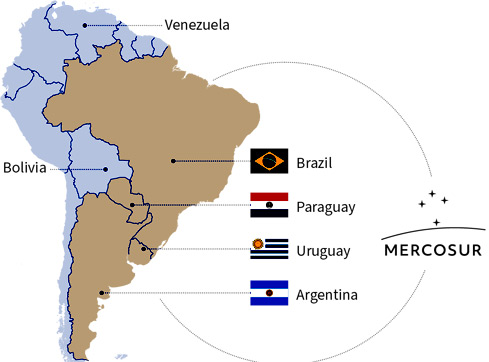
San Francisco alleges that ultra-processed foods were engineered and marketed in ways that encourage over-consumption, especially among children, and that the public ultimately pays the price through higher rates of chronic disease and spiralling healthcare costs. While that case will be tested in court, its wider message is already echoing across the Atlantic: Europe is facing its own “trust test” over what we allow into our food chain, particularly under the EU–Mercosur trade agreement.
Why this matters in Europe now: On 9 January 2026, EU member states greenlit the signature of the EU–Mercosur agreements, with the European Parliament’s consent still required before conclusion.
The European Commission states that EU rules apply equally to domestic and imported food, and that the agreement “upholds” EU food safety and animal/plant health standards.
However, confidence in “standards on paper” depends on something more basic: verifiable controls and traceability in practice.
Banned substances are not theoretical: recent Irish and EU recalls. The EU prohibits the use of hormones for growth promotion in farm animals. EFSA has also noted that ractopamine, a beta-agonist, is banned for use in food-producing animals in the EU and that the ban applies to meat produced in the EU and imported from third countries. Against that backdrop, Irish and EU reporting in recent weeks has documented the recall of Brazilian beef products after banned hormone residues were detected, including confirmation that a quantity entered the Irish market and was subject to official recall and follow-up.
The enforcement gap: what the EU’s own audit found. A 2024 European Commission DG SANTE audit of Brazil’s residue controls concluded that while many aspects of residue control plans were broadly consistent with EU principles, arrangements to guarantee that cattle destined for the EU market had never been treated with oestradiol 17β were “ineffective”. The audit stated the competent authority could not guarantee the reliability of operators’ sworn statements on non-use, and was not in a position to reliably attest to compliance with the relevant EU health certificate section.
This is the crux of the Mercosur anxiety: not whether Europe has rules, but whether Europe can consistently verify compliance, when supply chains are long, oversight differs, and commercial incentives are strong.
Ultra-processed foods and “addictive design”: the parallel problem. The San Francisco case centres on claims of deceptive marketing and products engineered to drive consumption. Meanwhile, the health evidence base around UPFs continues to expand. A major BMJ umbrella review reported that greater UPF exposure is associated with higher risk of adverse health outcomes, particularly cardiometabolic outcomes, across many studies. Controlled research has also shown that ultra-processed diets can increase calorie intake and weight gain compared with minimally processed diets under tightly controlled conditions.
The common thread is accountability: when products (or supply chains) are designed to maximise throughput and profit, public health cannot rely on consumer vigilance alone.
Calls to action Tipperary is now calling for a joined-up response that protects consumers, supports credible producers, and restores trust in our food chain: (1) A tougher “trust-but-verify” regime on imports). Full use of the EU’s Official Controls framework to ensure import compliance is proven through audits, sampling, and enforceable consequences, not assurances alone. (2)Mandatory transparency on audit findings and corrective action plans. Where EU audits identify weaknesses in residue controls or traceability, the public must see timelines, milestones and proof of remediation. (3)Stronger protections for children in the food environment. Restrictions on marketing tactics that normalise high-sugar, high-salt, heavily engineered foods to children—mirroring the direction of the San Francisco action. (4)Clearer front-of-pack information and health claims enforcement. Consumers should not need a chemistry degree to understand what they are buying, or whether “healthy” claims stand up. (5)A level playing field for farmers and processors meeting EU rules. Irish and EU producers operating under strict bans and controls must not be undercut by imports where verification is demonstrably weaker.
San Francisco has drawn a line under the era of ‘hands off’ regulation when public health harms are foreseeable and widespread. Europe is now at a similar crossroads. The EU–Mercosur debate cannot be reduced to tariffs and quotas: it is also about trust, enforcement and the credibility of our bans on hormones and other restricted substances. Public health must not be negotiated away, nor should consumers be asked to carry the risk.
With Tipperary named by Lonely Planet as one of the world’s top places to visit in 2026, the county’s lesser-known heritage sites deserve renewed attention and care. An example of same should include a small, enclosed burial ground, where a scattering of largely forgotten eighteenth and nineteenth century headstones still survives at the edge of Thurles town.
Carved stones from a lost church, mounted on a pillar. Pic: G. Willoughby.
St Bridgid’s graveyard (Eircode E41 AC91), the remnant of a former medieval parish church site, lies just west of Ardán Bhríde (Bridgid’s Terrace), directly opposite Thurles train station and running parallel to what was once named Garryvicleheen Road, now better known as Abbey Road.
Trailing Ivy now protects Thurles history. Pic: G. Willoughby.
What makes this modest graveyard particularly significant, however, is a limestone pillar beside the entrance to this enclosure, where architectural fragments and carved stones, wisely salvaged from the lost church, have been gathered and mounted for safekeeping.
A pillar of fragments and a warning in stone. On the south face of the pillar, four carved stones are now just about visible. At the top sits a rectangular corner stone bearing a carved seated cat, traditionally said to have once had two tails. Severe weathering has already softened key details, and the carving is now so worn that it may not survive intact for another generation. The cat’s face is described as V-shaped, with what appears to be a mouse held in its jaws. Locally, the workmanship has been associated with the trademark craft of An Gobán Saor (Gobban the Builder),the legendary seventh-century master mason, though the cat itself appears stylistically later, likely of eighteenth or nineteenth-century date.
To the right of the cat is a square stone depicting a lion, set within a circular frame. Same may also have British Royal Family connections. A surviving window fragment, same a rare prominent, ornate window arch, with S-shaped curves (ogee) and decorative carved panels (spandrels) is yet another striking historic piece. Finally, a rectangular limestone block carved with what appears to be a bald individual in a long robe and tunic, the clothing suggesting a cleric, (could it represent St Bridgid/ Bridget). The individual holds a cross in their right hand and a circular string of beads, most likely a paternoster♦, in their left. Beneath the figure, the names Patrick Kennedy and James Bulter have been crudely cut, later interventions that now form part of the stone’s layered story.
♦Paternoster: The paternoster was used to count prayers, typically 150 recitations of the “Our Father”. These beads often formed a loop, sometimes with a cross, reliquary (a container for holy relics), or pomander (latter worn or carried in a case as a protection against infection in times of pestilence or merely as a useful article to mask bad smells), as its end. This style eventually evolved into the modern rosary beads used today. Wearing the paternoster openly served as a devotional act, identifying the wearer as a Christian and displaying their religiosity. Depending on the materials used, serve as a display of wealth.
The west side of the pillar carries a single, highly recognisable carving, now unseen while protected by ivy: a limestone block showing a unicorn and lion rearing on their hind legs, (See immediately hereunder) beneath a crown, framed within a recess with a semi-circular head and straight sides. This scene represents the Royal Coat of Arms of the United Kingdom; Thurles being the ancestral Home of current reigning King Charles III. The window head and the heraldic carving are considered older than the cat, with a provisional seventeenth-century date proposed for the lion and unicorn, (See picture hereunder).
A simple, yet urgent message: Please Protect What Remains!
Behind the ivy, the Royal Coat of Arms of the United Kingdom. Pic: G. Willoughby.
The carvings at St Bridgid’s/Bridget’s gaveyard site are not museum pieces behind glass; they sit in the open air, exposed year-round. Weathering is now actively destroying this history, softening edges, flattening relief work, and erasing the very features that allow the stones to be read, dated and understood.
Once those details are gone, they are gone for good. There is now a clear need for immediate, practical conservation at this site which must include protective covering to reduce direct rainfall and frost damage.
A practical way to safeguard this valuable heritage would be to enlist the services of Mr James Slattery, Slattery Monumental Works, Fianna Road, Thurles, Co. Tipperary (Tel: +353 86 2430213) to oversee the careful, professional removal of the carved stones and their placement in more secure, sheltered conditions.
It is suggested that the four limestone relief blocks, depicting (1) cat, (2)lion, and (3) unicorn and lion, be taken in hand and sympathetically installed within the Thurles Library area of ‘The Source’, in Cathedral Street, Thurles, where they could be properly interpreted and enjoyed by the public and visitors, in a controlled environment.
In addition, the limestone block carved with the (a) cleric figure shown in a long robe and tunic, and the (b) window fragment, could be respectfully mounted on a pedestal within the nearby Church of St Joseph & St Brigid, in Thurles, ensuring, again, both protection and an appropriate setting.
In both instances, these measures would not only secure all the fragments for future generations, but would also create safe, welcoming and attractive points of interest for visitors and history-minded tourists to Thurles.
While St Bridgid’s graveyard maybe a quiet corner of Thurles; these stones, gathered loosely on the top of that pillar, carry centuries of craft, belief, power, memory and identity. If they are left fully exposed, the weather will finish what time has already begun, erasing an important and irreplaceable chapter of Thurles history in plain sight.
This post has been sent to officials at Tipperary Co. Council, marked for the attention of Ms Sinead Carr, (sinead.carr@tipperarycoco.ie).
♦ Note: At no stage should an attempt to remove these historic fragments out of Thurles town, be undertaken, and any efforts to do so should be vehemently and firmly resisted.
This website uses cookies to improve your experience. We'll assume you're ok with this, but you can opt-out if you wish.AcceptRead More
Privacy & Cookies Policy
Privacy Overview
This website uses cookies to improve your experience while you navigate through the website. Out of these, the cookies that are categorized as necessary are stored on your browser as they are essential for the working of basic functionalities of the website. We also use third-party cookies that help us analyze and understand how you use this website. These cookies will be stored in your browser only with your consent. You also have the option to opt-out of these cookies. But opting out of some of these cookies may affect your browsing experience.
Necessary cookies are absolutely essential for the website to function properly. This category only includes cookies that ensures basic functionalities and security features of the website. These cookies do not store any personal information.
Any cookies that may not be particularly necessary for the website to function and is used specifically to collect user personal data via analytics, ads, other embedded contents are termed as non-necessary cookies. It is mandatory to procure user consent prior to running these cookies on your website.











Recent Comments