|
|
“The Power of Words”
“Silence is the first thing after hate, that is dangerous, because silence indicates approval”.
[The words of Sonia K, a Holocaust survivor, forced to reside first in the Warsaw Ghetto, before being transported to four concentration camps; namely Majdanek on the outskirts of the city of Lublin, Poland; Auschwitz, 37 miles west of Krakow, Poland; Ravensbruck, 56 mls north of Berlin, Germany; and finally, Malchow, Mecklenburg, Northern Germany.]
Every year, on the last Sunday in January, closest to the date of the liberation of Auschwitz-Birkenau concentration camp in Poland, by Russian troops (January 27th 1945); this same date across the world, has been dedicated as Holocaust Memorial Day.
During the existence of Auschwitz-Birkenau concentration camp, the Schutzstaffe (SS) camp authorities murdered nearly one million Jews from across Europe, together with other victims, which included approximately 74,000 Poles, some 21,000 Roma (Gypsies), and approximately 15,000 Soviet prisoners of war.
Today, January 28th 2018, this year’s theme is ‘The Power of Words’; yes, debate can make a difference today, both for good but alas also for evil. Nevertheless, this gathering of people is to remember that over six million Jews were brutally massacred by mad men, through being forced to live in Ghetto’s; in Concentration Camps; through the use of Carbon Monoxide Gas Wagons, and the deliberate use of Zyklon B Pellets, introduced into gas chambers designed to look like shower rooms, between 1942 and 1945.
These people the majority of which were Jewish, had been brought into numerous Concentration Camps from across Europe by train and cattle truck, the sole purpose, to enslave and annihilate.
Here in Ireland a Memorial Ceremony has been held in Dublin this evening, marking National Holocaust Memorial Day, organised by the Holocaust Education Trust Ireland. include readings, survivors’ recollections, and music.
The event was held in the Mansion House, and included readings, survivors’ recollections, music and the lighting of six candles to symbolise the six million Jewish people who lost their lives. Over 100 school children from across Ireland took part in the ceremony, reading from the Scroll of Names of Irish people living here in Ireland, whose next of kin died during the Holocaust.
The ceremony was attended by Taoiseach Mr Leo Varadkar, Minister for Justice, Mr Charlie Flanagan, Lord Mayor of Dublin, Mr Mícheál Mac Donncha, together with other dignitaries.
“We Remember”.
 The Garda Press Office has confirmed that a male, understood to be aged in his early 30’s, received stab wounds at an address in Lower Limerick Street, Roscrea, Co. Tipperary, last night, at approximately 8.30pm.
The stabbing is understood to have been as a result of a domestic dispute.
A female understood to be in her late 20’s was arrested at the scene, and is expected to appear at a special sitting of Nenagh District Court this afternoon.
The victim was taken overnight to University Hospital Limerick, as a result of his injuries, and has since been discharged.
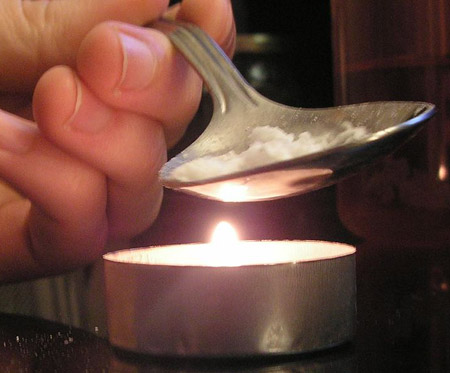 Nenagh Gardaí are investigating the discovery of what is understood to be a consignment of cocaine (subject to confirmation by analysis) with an estimated street value of over €70,000 in Co. Tipperary.
The consignment first came to the attention of Gardaí on Wednesday last January 17th, resulting in the drugs being seized at Nenagh Fire Station, Limerick Road in Nenagh.
A man in his 30s was arrested on Thursday and detained for questioning at Nenagh Garda Station before being released without charge.
A file will now be prepared for the Director of Public Prosecutions and the investigation is ongoing.
Tipperary County Council have made no comment in relation to the seizure, however they confirmed they are co-operating with the Garda investigation.
Cocaine has become the second most trafficked illegal drug in the world and no longer the drug of choice for just wealthy people. Today it has the reputation of being a most dangerous and highly addictive drug, strongly linked to poverty, serious crime and death.
We all know we should be reading more, so it is still not too late to include it in our 2018 list of New Year’s resolutions. To this end, for the year 2018, Thurles.Info (Deo volente) will be recommending for each month, January through to December, a ‘Book of the Month’ blog.
Our first recommendation for this year has to be “Holding” by Graham Norton. You may not be aware, but Graham Norton, the Irish born and much-loved presenter of the BBC’s “The Graham Norton Show”, has written his first fiction novel and it will come as no surprise to fans that same is nothing short of brilliant.
Set in the small west Cork town of Duneen, “Holding” introduces you to a cast of characters whose ordinary lives are irrevocably changed when the body of a young man is found buried on a local building site.
The plot of “Holding” may come as a surprise to readers when one considers Graham Norton’s genius reputation for comedy on ‘Fr. Ted’ and as a T.V. presenter, but “Holding” reveals yet another side to our Mr Graham Norton. His debut novel is a sensitive story of love, loss and hope, punctuated throughout with witty and shrewd observations of life, still to be found, so much in abundance, here in rural Ireland.
A central character in “Holding” is the rotund and often underestimated Garda Sgt. P.J. Collins. In Chapter 5, when a little of Sgt. Collins’ back story is revealed, we discover that our own much-loved Irish town of Thurles, Co. Tipperary gets a mention and plays a part in bringing Garda Sgt. Collins to the remote town of Duneen, quote, “After Graduating from Templemore, he had been stationed in Thurles. He liked the job well enough… In Thurles he worked longer hours than anyone else and was always the first to volunteer for the shifts that nobody else wanted”.
“Holding” by Graham Norton is published by Hodder & Stoughton and is available to purchase at Bookworm Liberty Square, Thurles or online from Amazon.
“Judge not, that ye be not judged. For with what judgement ye judge, ye shall be judged: and with what measure ye mete, it shall be measured to you again.
And why beholdest thou the mote that is in thy brother’s eye, but considerest not the beam that is in thine own eye?”
Gospel of St. Matthew Ch. 7: V. 1-3 (King James Version)
It is highly unlikely that due to religious staunchness, over 12,000 people failed to appear for ‘Jury Duty’ in Ireland this year, however not so much as one person has been fined in respect of this breach of municipal duty in the past three years, under the 2008 updated rules and regulations.
 Figures provided to the Irish Sun newspaper under the Freedom of Information Act, found that of some 120,010 people called for jury duty in 2017, over 10 %, or some 12,214 persons failed to make an appearance. This is despite the fact that Government strengthened the Juries Act of 1976, in 2008, by increasing the fine for those failing to attend on such duties to €500. (The full text of these offences are set down in Part V of the Juries Act, 1976 as amended by Part 6 Civil Law (Miscellaneous Provisions) Act 2008.)
Some 62% of persons called to attend on Jury Duty in 2017 here in the Premier County (Tipperary) failed to turn up; representing more than three times the rate for any other county in Ireland.
Limerick came in second, after Co. Tipperary, with 18%, followed closely by Co. Louth in third place with 16%. It was Co. Sligo who showed up best with an attendance record where just 3.3% of individuals summoned failing to show.
So What is the Reason for this Neglect of Duty?
Firstly, many of those called come under the heading of “Those who are excused as of right”, from Jury Service; e.g. Persons aged 65 and over. Those who provide an important community service including practising doctors, nurses, midwives, dentists, vets and chemists. If you are self-employed and your attendance at jury service can mean you cannot earn a living, you may qualify for excusal from Jury Service, at the discretion of the County Registrar.
Secondly, in many cases people have to travel, and if, for example, residents of Thurles are called to attend at Nenagh Courthouse it is an all round 77km (or 49 mile) journey, making it difficult for people who don’t have secondary transportation or indeed any transportation whatsoever.
Thirdly, since the Department of Transport have greatly curtailed rural bus services, such depleted services do not take into account the opening hours of Courts throughout Tipperary for those without personal transport.
Fourthly, Unlike England, who even provide 9.6pence (Sterling) per mile to those who use a bicycle to attend court; Ireland on the other hand grant no payment whatsoever for Jury Service and travelling expenses are not permitted.
In Ireland, the only reward is that if you are serving as a Juror, lunch will be provided on any day that a trial is being heard. If you are in employment, Section 29 of the Juries Act, 1976, places a duty on all employers to allow you attend for Jury Service. The law also states that the time spent on Jury Service is to be treated as if the employee were actually employed. In other words, if you are in employment and are attending for jury service, you are entitled to be paid while you are away from work.
Also there should be no loss of any other employment rights, while you serve on a Jury, while the County Registrar is required to provide a certificate of attendance on request for employers who may seek confirmation through their employee.
As one resident stated to me today, quote “Why would I give the state €10.00 worth of petrol, plus the wear & tear on my car on potholed roads, to attend Jury Service; first to end up not being chosen, and secondly, if chosen, to watch as hardened criminals found guilty, receive light sentences from our justice system. Sure the State can’t afford to grant truly deserved jail sentences any more, so repeat offenders are permitted to roam free”.
|
Support Us Help keep Thurles.info online by donating below. Thank you.
Total Donated 2026: €300.00
Thank You!
Daily Thurles Mass Livestream
|



Recent Comments