Archives

Benefits Of New Deposit Return Scheme

Deposit Return Scheme goes live from today.

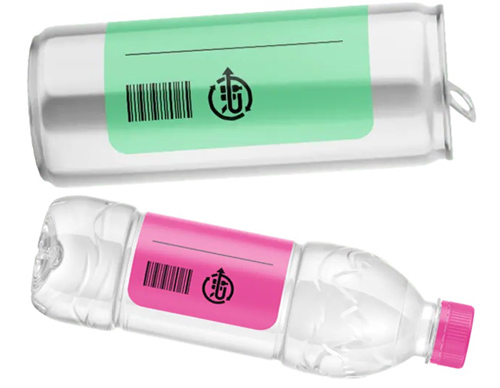
New Re-turn logo
  1. Protect our Environment.
  2. Reduce Litter and Waste.
  3. Circular Economy Initiative.
  4. Achieve EU Recycling Targets.

From today, drinks sporting the new Re-turn logo (See Image) should start to appear in shops and supermarkets across Ireland. (Do check containers for Re-turn logo.)

Purchased containers will be required to pay a deposit in addition to the price of the drink product. The empty and undamaged container can then be returned to any participating shop or supermarket in order to obtain your initial deposit back.

A deposit of 15 cents will apply to every container from 150ml to 500mls inclusive, while a deposit of 25 cents will be required for containers over 500ml up to 3 litres.

Anything over 3 litres will not attract a charge, thus it is believed it is possible that the new scheme could spell an end to 2 litre bottles with drink manufacturing companies moving to larger 3 litre bottles. Since the deposit applies to all bottles and cans between 150ml and 3 litres per each container, the sales of large multipack minerals (slabs), same now generating an extra cost of €3.00 per 20 container pack, may also dissipate.

Any dairy drinks products in plastic containers or cartons, such as milk or yogurt drinks, are excluded from this new scheme.

Remember: Refunds can be used against any store-bought purchase or issued in cash.

Undeclared Milk In Batch Of Oishi Wheat Cheese Flavoured Crackers From China.

Food Safety Authority of Ireland warning.

Alert Summary Dated Thursday, 01 February 2024.
Allergy Alert Notification: 2024.03.
Allergen: Milk.
Product Identification: OISHI wheat crackers with cheese flavour.
Batch Code Best before: 17/07/2024.

Message:
The above batch of OISHI wheat crackers with cheese flavour are being recalled as it contains milk which is not declared in the list of ingredients.
This may make the batch unsafe for consumers who are allergic to or intolerant of milk.

Waste By Tipperary Co. Council Officials Continues.

Three men arrived on Kickham Street, Thurles on Monday January 9th last, their target to fill craters caused by one miserable shower of rain. It was the second visit by Co. Council employees to the street in just 15 days.
On Monday last they came armed with a new piece of machinery, namely a pickaxe.
I fool you not, the purpose of the pickaxe was to try out a new modern engineering technique, same never before used on a busy 3 year old disintegrating road surface.

Filling the potholes on Kickham Street, Thurles, for the second time in 15 days.

The technique involved on Monday last was to make the existing road craters deeper, using the new pickaxe to loosen the area lying below the non existing road surface, before filling the craters, once again, with cold tarmac.

Our forensic team here at Thurles.Info have spent two days debating the logic behind this new technique being used by the gentleman featured in the centre of the picture above.

Questions being asked include:-

  1. Is this technique being used to allow the vast puddles of rain water, permanently lodged in these craters, to escape into the hard stony subsoil?
  2. Was the pickaxe operator working under the instruction of Ms S. Scully (Thurles District Administrator) or Mr Tomas Duffy (District Engineer) or Mr M. O’Connor (Director of Services Roads and Transportation), or maybe Mr J. MacGrath (CE Tipperary Co. Council) or indeed all of the afore named?
  3. Some of our forensic team are of the opinion that it may have been a gold digging operation. [Remember the lyrics of the song “Mountains of Mourne”, They don’t sow potatoes nor barley nor wheat, but there’s gangs of them diggin’ for gold in the street”.
  4. Where is Tipperary County Council’s new Velocity Patcher equipment, purchased in November 2023? I am sure I read somewhere under a photo of Mr MacGrath (Chief Executive of Tipperary County Council) stating: “Our continuous advancement towards modernising our works programme delivery is greatly benefited by the purchase of these new vehicles over the past three years”.

These Velocity Patcher machines certainly haven’t been engaged in physical activity on Kickham Street, Thurles, Co. Tipperary, latter the now forgotten rural Tipperary town, boasting two resident TD’s, both supporting the present Irish government.

EPA’s Review 2023 Showcases Work To Address Environmental Challenges.

  • Carried out over 1,200 inspections of industrial and waste facilities, along with 205 urban waste water and 154 drinking water site inspections.
  • Obtained 19 convictions for environmental offences.
  • Monitored more than 2,500 waterbodies – with data showing no significant improvement in water quality – largely caused by high nutrient levels.
  • Provided real time data at 113 air quality monitoring stations– with particulate matter from solid fuel combustion and nitrogen dioxide from traffic causing poor air quality.
  • Launched new maps with up to 3 days forecast of Air Quality Index for Health.

In its 2023 Highlights the Environmental Protection Agency (EPA) showcases its work in addressing environmental challenges across Ireland.

Publishing the review, EPA Director General, Ms Laura Burke said: “2023 marked the thirtieth anniversary of the EPA’s establishment. While our remit has grown, the core of what we do remains the same – we regulate activities that have the potential for significant pollution. We produce timely, reliable, trustworthy data on Ireland’s environment. And we work with others to protect and preserve our environment”.

EPA highlights of 2023 include:

Regulation

Since its establishment 30 years ago, the EPA has assessed thousands of licence applications and each year performs more than a thousand inspections of licensed sites. While the majority have operated well and in accordance with their licence, a small number have not and in those cases the EPA has exercised its full range of enforcement powers, with 19 convictions in 2023 alone. In 2023, the EPA also launched LEAP online, enabling the public to access licence, inspection, and licensee information like never before.

Knowledge

The EPA provides independent scientific evidence to inform decision making. On water quality, the EPA has monitored Ireland’s rivers, lakes and estuaries for decades, with our latest data showing no significant improvement nationally in the biological quality of rivers and lakes, which is largely attributable to excess nitrogen and phosphorous.

New forecast maps launched in 2023 predict air quality for up to three days ahead, using real-time data from 113 ambient air quality monitoring stations nationwide. While air quality in Ireland is generally good, there are concerning localised issues from particulate matter due to burning solid fuel, and nitrogen dioxide from traffic.

Waste generation continues to rise, and recycling rates are not keeping pace. Ireland remains overly reliant on unpredictable export markets for significant quantities of waste sent abroad.

EPA research shows the Irish public overwhelmingly believe climate change is already affecting Ireland, and they support climate action. While our data shows a small reduction in greenhouse gas emissions in 2022, emissions aren’t declining fast enough to meet Ireland’s commitments for 2030 and beyond.

Working with others

In 2023 the EPA partnered with a range of organisations to support the protection of Ireland’s environment. Collaborations with An Taisce and the city councils of Cork and Galway helped grow citizen science initiatives aiming to improve air quality. And coinciding with its 30th anniversary, the EPA kicked off a novel partnership with the National Library of Ireland to creatively document Ireland’s environment.

Concluding, Ms Burke said: “Three decades on from its establishment, the EPA’s role to protect, improve and restore Ireland’s environment, through regulation, scientific knowledge and working with others, is more relevant than ever”.

Further information is available in the EPA’s Review 2023, HERE
Put Out Your Bratóg Bríde Tonight For A Year of Better Health.

Have you ever heard of the Brat Bríde or Bratóg Bríde (roughly translating from Irish as Brigid’s Rag)?

It’s an old Irish tradition in honour of St Brigid. Long ago it was the custom to tie a small piece of cloth to a bush on January 31st, the eve of St Brigid’s Day, February 1st.

Bratóg Bríde (Brigid’s Rag)

Overnight it was believed that the cloth would be blessed by St Brigid and conferred with healing properties. It was then worn under clothing to protect against sickness, relieve headaches and cure toothaches.

It was particularly important for pregnant women and breastfeeding mothers, because it was said to help women to produce enough nourishing milk to feed their babies.

This fascinating ancient tradition is currently being highlighted by the “Monasterevin Women’s Collective in Honour of St Brigid” and is among a host of initiatives and activities taking place across Ireland as part of Brigid 1500 celebrations this year, 2024.