Thurles, Co. Tipperary did not decline overnight. It has been weakened over decades by the loss of major employers, the failure to replace them at scale, and town-centre decisions that have made Liberty Square less convenient for the very businesses it is supposed to support.
Over the past 50 years, Thurles, has lost some of the employers that once gave the town real economic strength. The Sugar Factory closure remains one of the deepest blows in local memory. Later came further losses: GMX, BSN Medical, Erin Foods and others. In the Seanad in 2007, the pattern was described clearly; since the loss of the Sugar Factory, Thurles had suffered repeated job losses in Barlow, BSN Medical, GMX and Erin Foods.
These were not minor losses. BSN Medical announced in 2006 that it would cease manufacturing in Thurles, with 80 jobs to go. Erin Foods, which had operated in Thurles for 46 years, was then marked for closure with the loss of 95 jobs. The closure of GMX / Moulinex had already removed around 230 jobs from the town. When these losses are added to the Sugar Factory and smaller vanished industries, the picture is obvious: Thurles lost a serious employment base and never got it back.
Yes, there have been minor replacements announced and some investment. Dew Valley Foods, Lidl, smaller enterprise supports, the university presence and the ThurlesShopping Centre have all brought activity. But they have not replaced the scale or quality of what was lost. A town cannot lose major factories and long-standing employers and then be told that scattered retail jobs, short-term construction work and small-scale schemes are the same thing. They are not.
[Song hereunder ,“Rust & Rain”, is AI-generated entirely by Dallas Ray Little(operating under the label Crusty Records)]
Even An Taoiseach Mr Micheál Martin appeared to acknowledge this failure in Dáil Éireann on June 10th 2026, when he said he had “often thought Thurles would have done better because of its location” and noted that not everywhere near the motorway had received the same degree of foreign direct investment. That single comment says a great deal. For decades, Thurles was told that its central location, rail access and proximity to major routes should be an advantage. Yet the town watched major employers disappear, while replacement investment went elsewhere. If even the Taoiseach is surprised that Thurles has not benefited properly from its location, then local people are entitled to ask why successive governments, state agencies and elected representatives allowed that failure to continue for so long.
Tipperary County Council’s own Thurles Local Area Plan confirms the weakness of the employment base. It states that Thurles has a relatively low jobs ratio of 1.01 compared with Clonmel at 1.39 and Nenagh at 1.22. It also records that just under half of resident workers are employed in Thurles, while many others work elsewhere in Tipperary or outside the county. That is not the profile of a town that has been properly protected or rebuilt after decades of industrial loss.
The same plan says Thurles is a “Key Town” and speaks of supporting employment, prosperity, regeneration and revitalisation. But people in Thurles have heard plans, strategies and promises for years. What they can see with their own eyes is different; empty premises, weakened footfall, businesses struggling, and employment lands that have not delivered the kind of jobs once provided by the town’s former industrial base.
Liberty Square is the clearest example of the problem. Tipperary County Council’s Phase 2 public realm proposal includes wider footpaths, raised crossings, road-layout changes, a one-way system on Cuchulain Road, and the relocation of 12 parking bays from the central island car park. The Council presents this as enhancement. Many traders see it differently. For a rural market town, convenient short-stay parking is not a luxury; it is part of how the town trades.
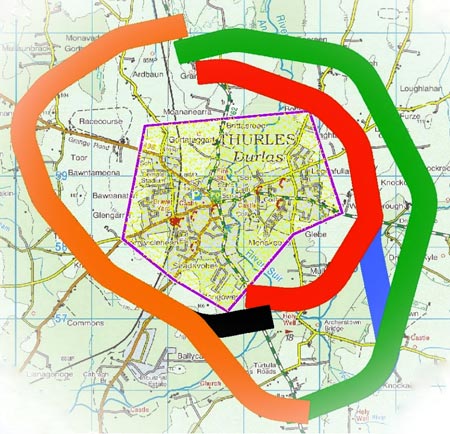
The long-awaited Thurles bypass is another example of how the town has been pushed down the road for decades. The need is obvious; heavy traffic and HGVs continue to pass through the heart of Thurles, including Liberty Square, while the town centre is simultaneously expected to become a more attractive public realm. Those two aims are in conflict. Press reported in November 2025 that the “long awaited and badly needed” bypass was back on the Government agenda, noting that it would ease congestion in the heart of the town where heavy goods vehicles regularly clog Liberty Square. Yet Tipperary County Council’s own 2026 budget material stated that while a route had been selected and a reserved corridor was in place, the Council would continue lobbying for the project to be included in the National Development Plan. By March 2026, the project had only received a €50,000 allocation to progress early design work with TII. After so many years, that is not delivery; it is another promise pushed into the future.
Long awaited Thurles bypass selected route/reserved corridor still only receives early-stage funding/progression in 2026
A town centre like Thurles depends on easy access. People call in to collect prescriptions, go to the post office, visit the butcher, chemist, café, solicitor, barber, newsagent or bank, and then move on. If parking is removed, made awkward, pushed away, or controlled in a way that does not suit shoppers, people change habits. They go where parking is free, plentiful and easy. In Thurles, that increasingly means the shopping centre or edge-of-town retail or indeed another nearby town.
The pull of the shopping centre is not imaginary. Thurles Shopping Centre is marketed as having more than 55,000 visitors per week and 550 free multi-storey parking spaces. That is a huge advantage over Liberty Square with its parking charges. When the Council reduces or reconfigures central parking while the shopping centre offers hundreds of free spaces, it should surprise nobody that trade drifts away from the historic core.
Parking charges resulted in the relocation of the post office, seen as yet another major blow. In 2019, An Post moved from Liberty Square to Thurles Shopping Centre. Local concern at the time was that the move would reduce footfall in the town centre. An Post said the old building was not viable and that the new location would provide improved services, but the result for Liberty Square was still the loss of a key daily footfall generator.
This is the core issue; decisions may be justified one by one, but their combined effect has damaged the heart of Thurles. One decision removes jobs, while another fails to replace them. Another moves a key service while another reduces convenient parking and then another produces a plan promising regeneration at some later date. Over time, the town centre is weakened not by one single act, but by a long chain of decisions that fail to protect how a real town works.
It would be unfair to claim that every closure was caused by councillors, the Council or TII. Companies close for many reasons: restructuring, costs, competition, building condition, online shopping and changing consumer behaviour. But it is entirely fair to say that successive politicians, councillors, agencies and planners have failed to secure a proper replacement employment base for Thurles and have failed to protect Liberty Square as a practical commercial centre.
The people of Thurles do not need more glossy language about regeneration. They need jobs, occupied buildings, realistic parking, fair access, active streets and a town centre that serves local traders as well as public-realm theory. A square can look tidier on a drawing and still fail commercially. A plan can sound modern and still damage small businesses. A town can be called a “Key Town” in official documents and still be treated like an afterthought in practice.
Thurles deserves better than managed decline. It deserves leadership that understands the town’s history, its losses, its trading patterns and its people. After 50 years of industrial closures, weak replacement employment and the hollowing-out of Liberty Square, the question is not whether Thurles has been let down. The question is who is finally going to take responsibility for reversing the damage.
A total of 9,882 complaints and queries were handled by the Food Safety Authority of Ireland’s (FSAI) Advice Line in 2025. Announcing details today of the complaints and queries last year, the FSAI stated that there were 6,135 complaints from consumers, with 33% of complaints relating to unfit food and 28% to poor hygiene standards.
Overall, the 6,135 consumer complaints in 2025 represented a 23% increase compared to the previous year with 4,996 complaints. The figures reflect an upward trend over the past decade. All complaints received by the FSAI in 2025 were followed up and investigated by food inspectors throughout the country.
Unfit food, which is food that is not safe to eat, was the most frequently reported complaint in 2025. Unfit food also includes contamination with a foreign object. Commonly reported foreign objects in food included: plastic, a battery, insects/caterpillar, slug, and fingernail. Examples of some of the complaints include: a fingernail found in a cake; a staple found in an Indian meal; a battery found in a pack of almonds; a fly floating in a milk bottle; a slug in a noodle dish and a live moth in a bag of salad.
The second most frequently reported category related to poor hygiene standards. Common complaints included rodents spotted in food businesses; staff not wearing appropriate clothing; poor personal hygiene with staff not changing gloves often enough; staff not washing hands; staff smoking in their aprons; and food not being stored correctly with fridges and freezers not cold enough.
The third most frequently reported category related to reports of suspected food poisoning making up 26% of the total complaints in 2025. This was a decrease from 29% in 2024.
The breakdown of all complaints are as follows: Unfit food: 2,030 Hygiene standards: 1,693 Suspect food poisoning: 1,570 Labelling: 656 Allergen Information: 150 Others: 36
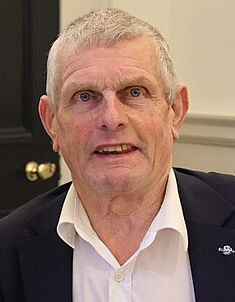
Mr Greg Dempsey, (Chief Executive, FSAI), stressed the importance of making complaints to the FSAI, so that any food safety issues can be addressed. “Public reporting of food safety concerns plays a vital role in supporting the work of the food safety inspectorate and is an important part of how we protect public health. We greatly value the contribution of consumers in bringing potential issues to our attention, as these reports provide essential information that complements the work of Environmental Health Officers, veterinary and agricultural inspectors, sea-fisheries officers, and laboratory services. While routine inspections and food sampling programmes remain a core part of our regulatory activity, complaints allow us to quickly identify and respond to specific risks, ensuring that any potential threats to food safety are addressed without delay. The continued increase in engagement reflects growing consumer awareness and confidence in reporting issues, as well as a strong expectation that high standards of food safety and hygiene are consistently maintained across the food chain. In particular, we have seen a significant rise in complaints relating to unfit food and poor hygiene standards, and we would like to thank the public for their continued vigilance in helping us address these issues.”
The FSAI Advice Line also offers advice and information. During 2025, there were 3,747 queries from people working in the food industry, including caterers, food manufacturers, retailers, and others. Popular topics included: how to start a food business; food labelling information; best practice in food businesses; food safety training and several others.
The FSAI Advice Line is contactable through our online complaint form ‘makeitbetter’ or through our online query form. The FSAI Instagram,Facebook and LinkedIn pages are also resources with up-to-the-minute information in relation to food safety.
Fine Gael TD for Co. Clare, Mr Joe Cooney has received confirmation from Minister for Enterprise, Tourism and Employment Mr Peter Burke, that a leading Irish company is expected to announce a significant investment in Shannon this summer.
Raising the issue the Dáil during a Topical Issue debate on industrial development and employment opportunities in the Mid-West region, (latter which covers three counties: Tipperary, Clare and Limerick, with a population of 473,269 or about 9.94% of Ireland’s total population), Deputy Joe Cooney said the expected announcement would be a strong boost for the region.
Deputy Cooney said the development would be a key step in strengthening the region as a counterbalance to Dublin’s economic concentration. He stated, “The over concentration of development in Dublin is not just a Dublin issue, it is a national planning challenge. The Mid-West, and Shannon in particular, can and should act as a counterbalance, providing space, capacity and opportunity for sustainable economic growth.” He further stated that Shannon has the infrastructure and capacity to support major investment, “Shannon offers what Dublin increasingly cannot, including space for enterprise, aviation development, space for housing, and space within the planning system to move with speed and ambition. That is why it is ideally placed to support Ireland’s next phase of balanced regional development.”
Minister Burke told the Dáil that the Mid-West region was “uniquely positioned” for enterprise growth and confirmed that a major announcement was expected later this summer.
He continued, “There will be a very significant announcement during the summer by a leading Irish-born company in relation to Shannon. This will be a strong testament to the work of Government in providing key infrastructure and supporting a highly skilled workforce.”
The Minister added that Government policy was focused on “unlocking the full economic potential of all regions”, highlighting Shannon Airport, Foynes Port and strong links with third-level institutions in the Mid-West. Deputy Cooney said the region must continue to be developed as a genuine alternative economic hub, “Balanced regional development cannot just be a policy aspiration. It has to be delivered in practice. Shannon has the assets, the talent and the ambition to play a central role in delivering that balance.”
He said he would continue to work with Government, agencies and local stakeholders to secure further investment and employment opportunities in the region.
The details of the investment are expected to be announced later this summer.
The recent dispute involving the Rotunda Hospital in Dublin has raised important questions about public healthcare, private maternity care and the obligations of consultants working under public-only contracts.
At the centre of the controversy is the Public-Only Consultant Contract. This contract was introduced as part of efforts to reduce private care within Irish public hospitals and strengthen the public health system. Consultants who sign it receive public salaries on the understanding that they will not carry out private practice in public hospital settings, except where specific rules allow it.
The issue arose because some consultants at Dublin’s Rotunda hospital, who were on public-only contracts, were still treating private maternity patients on the hospital campus. This led to a clash between the hospital, the HSE and the Minister for Health, Ms Jennifer Carroll MacNeill.
The Rotunda initially defended its position, saying it believed women should have choice in maternity care and continuity with a consultant during pregnancy and birth. However, the HSE and the Minister said the arrangement was not in line with the terms of the public-only contract or the hospital’s agreement with the State. The pressure on the hospital increased when the HSE warned that continued non-compliance could lead to consequences under its service arrangement, including the possible withholding of funding. The Rotunda has now agreed that consultants on public-only contracts will no longer treat private patients in the hospital.
A further question now concerns women who paid for private or semi-private care from consultants who were, at the same time, employed under public-only contracts. The Minister suggested that women who paid for such care in 2026 may be entitled to refunds. The Rotunda, however, has said that whether refunds are owed is an issue between the consultant and the private patient.
That distinction matters. The hospital appears to be saying that the private fee arrangement was not necessarily with the hospital itself, but with individual consultants. However, the wider public concern remains; if a consultant was being paid by the State to provide public-only care, should patients also have been charged privately for treatment in the same public hospital setting? This row is not just about one hospital. It goes to the heart of a wider debate in Irish healthcare; how to balance patient choice, continuity of care, consultant contracts and equality of access. Many women value private maternity care because it can offer reassurance and continuity. But public hospitals are heavily funded by taxpayers, and the State’s policy is to ensure that public resources are not used in ways that give paying patients unfair priority.
The Rotunda is one of Ireland’s busiest and best-known maternity hospitals. The dispute has therefore become a test case for how strictly the public-only consultant contract will be enforced across the health service.
For affected patients, the immediate concern is clarity; who was paid, what service was promised, and whether any refund is due.
For the public, the bigger issue is whether Ireland is serious about separating public and private care in public hospitals, or whether exceptions will continue to blur the line.
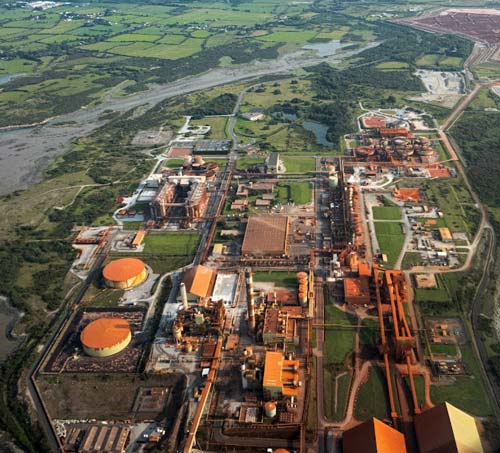
Russian-owned refinery, Aughinish, County Limerick.
Ireland says it stands with Ukraine. Our politicians speak about democracy, freedom, sovereignty, and the right of a nation to defend itself against invasion. But there is now a deeply uncomfortable question Ireland can no longer avoid; why is a Russian-owned refinery on the west coast of Ireland still sending alumina to Russia?
The refinery at Aughinish, County Limerick, is one of Europe’s largest alumina plants. Alumina is not a harmless by-product. It is the key raw material used to make aluminium, latter a metal that is essential across modern industry, including military production.
Recent investigations have raised serious concerns that alumina exported from Ireland is entering Russian supply chains connected to arms manufacturers. The evidence does not allow us to say that Irish alumina has been directly identified inside a specific missile or drone. But it does point to something almost as alarming; Irish-refined alumina appears to be feeding a Russian aluminium system linked to companies supplying Russia’s war industry.
That distinction matters, but it does not make the situation acceptable. There is also an unavoidable comparison with Ireland’s attitude towards Israel. Irish politicians have often been outspoken in condemning Israel’s actions in Gaza, calling for accountability, sanctions, and a tougher international response. Many of those criticisms may be justified on humanitarian grounds. But that only makes the silence around Russia-linked alumina exports more striking. If Ireland is willing to take a strong moral position on one conflict, it must be prepared to apply the same standard to another. Selective outrage weakens Ireland’s credibility. Human rights, civilian protection, and international law cannot depend on which country is easier to criticise.
Russia’s war is not sustained by tanks and soldiers alone. It is sustained by finance, logistics, raw materials, shipping routes, shell companies, legal structures and loopholes. Every supply chain that keeps Russian industry moving deserves scrutiny, especially when that industry is connected to the weapons used against Ukrainian civilians.
The Irish Government argues that sanctioning alumina could hurt Europe. That may be a real concern. Jobs matter. Energy security matters. Industrial supply chains matter. But so does moral consistency.
Ireland cannot claim to stand with Ukraine while allowing a Russian-owned company here to continue exporting a critical raw material into Russia without the highest level of public scrutiny.
The question is not whether workers in Limerick should be protected. They should be. The question is whether protecting jobs should mean protecting a supply chain that may benefit Russia’s war economy. If the Government believes these exports are safe, then it should show the evidence. Where exactly is the alumina going? Which smelters receive it? Who buys the aluminium produced from it? What due diligence has been done to ensure it does not reach sanctioned arms manufacturers? And why has it taken so long for Irish politics to confront this issue openly?
Neutrality should never mean looking away. Ireland’s position should be clear; no Irish-based industry should help sustain Russia’s capacity to wage war on Ukraine. If this trade cannot be proven clean, it should not continue.
This website uses cookies to improve your experience. We'll assume you're ok with this, but you can opt-out if you wish.AcceptRead More
Privacy & Cookies Policy
Privacy Overview
This website uses cookies to improve your experience while you navigate through the website. Out of these, the cookies that are categorized as necessary are stored on your browser as they are essential for the working of basic functionalities of the website. We also use third-party cookies that help us analyze and understand how you use this website. These cookies will be stored in your browser only with your consent. You also have the option to opt-out of these cookies. But opting out of some of these cookies may affect your browsing experience.
Necessary cookies are absolutely essential for the website to function properly. This category only includes cookies that ensures basic functionalities and security features of the website. These cookies do not store any personal information.
Any cookies that may not be particularly necessary for the website to function and is used specifically to collect user personal data via analytics, ads, other embedded contents are termed as non-necessary cookies. It is mandatory to procure user consent prior to running these cookies on your website.






Recent Comments