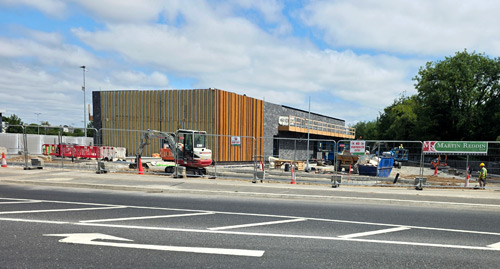
McDonald’s has confirmed that its new drive-thru restaurant in Thurles, Co. Tipperary, is scheduled to open on Wednesday, August 19th, 2026.
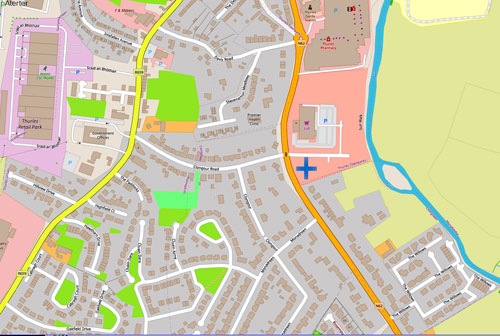
The opening will come almost one year after An Coimisiún Pleanála issued its final approval for the controversial development, bringing a lengthy planning process and months of local debate to an end. The new restaurant is being constructed on a former industrial site at the junction of Slievenamon Road and the now once again delayed “Thurles Relief Road“, close to the Lidl supermarket and approximately 700 metres from Thurles town centre.
Plans provide for a single-storey restaurant measuring almost 479 square metres, together with a drive-thru lane, customer-ordering points, digital menu boards, car parking, accessible spaces, electric-vehicle charging bays and bicycle parking. The development will also include outdoor seating, landscaping, lighting, signage, an electricity substation and changes to the existing vehicle entrance from the relief road.
Recruitment Begins Ahead of August Launch. McDonald’s has begun recruiting full-time and part-time staff members for the new Thurles restaurant. The recruitment advertisement confirms the August 19th opening date and states that successful applicants will receive paid training at other nearby McDonald’s restaurants during the weeks leading up to the launch. Advertised hourly pay for some adult employees is up to €14.25, depending on age and the terms of the new positions. The recruitment drive is expected to create a significant number of new low paid hospitality jobs in the Thurles area, although the company has not publicly confirmed the restaurant’s total anticipated workforce.
Plans Attracted More Than 20 Objections. McDonald’s Restaurants of Ireland submitted its planning application for the Thurles development in September 2024. The proposal proved controversial from the beginning, attracting more than 20 objections from residents and other interested parties. Concerns raised during the initial planning process included the location of the outlet, traffic levels, road safety, litter, noise, opening hours and the proximity of the proposed restaurant to residential properties and childcare facilities. Some objectors also raised public-health concerns relating to fast food and childhood obesity. The development was originally intended to operate around the clock. However, permission ultimately restricted its opening hours to between 6am and 10pm, meaning the Thurles restaurant will not be permitted to trade on a 24-hour basis.
Tipperary County Council initially sought additional information from the applicant, including further details concerning traffic and the proposed operation of the development. Documents submitted during that stage included an analysis indicating that the site would have space for a queue of approximately 32 vehicles, before waiting traffic would potentially reach the adjoining public road.
Council Permission Was Appealed Tipperary County Council granted permission for the restaurant, subject to conditions, on April 9th, 2025. That decision was subsequently appealed to the national planning authority by a third party, while a number of additional observations were submitted for consideration. An Coimisiún Pleanála examined issues including traffic and pedestrian safety, flood risk, residential amenity, visual impact, town-centre development and the site’s proximity to the River Suir and the Lower River Suir Special Area of Conservation. The Commission issued its decision on August 26th, 2025, upholding the council’s decision and granting permission with revised conditions. In its formal order, the planning body determined that the development would not seriously damage the amenities of nearby properties or create unacceptable risks in relation to public health, flooding, traffic, pedestrian safety or visual amenity. It also considered the mixed-use zoning of the former industrial land, Thurles’s status as a key regional town and the planning policies applying to the area.
Construction Work Underway Site-clearance activity began in early 2026, allowing construction of the restaurant and associated infrastructure to proceed. Information published locally indicated that the principal works were expected to take place between February and July, leaving several weeks for completion, staff training and final preparations before the planned August opening. The development represents the latest chapter in efforts to bring a McDonald’s outlet to the former Erin Foods lands. A previous application connected to a proposed drive-thru restaurant at the wider site was submitted as far back as 2020 but was deemed incomplete shortly afterwards.
While the current project has continued to divide opinion locally, the August opening will introduce one of the world’s largest fast-food brands to Thurles and hopefully provide new employment opportunities for the town For supporters, the development represents investment, additional consumer choice and the productive reuse of former industrial land. For critics, concerns about traffic, litter, public health, late-evening activity and the effect of drive-thru development on the character of the area remain.
Barring any construction or operational delays, the first customers are expected to be welcomed through the doors of the new Thurles McDonald’s on August 19th.
€17 Million To Maintain Seized Drug Ship – Handed Over for $1 – Irish Taxpayers Deserve Answers.
The seizure of the MV Matthew was an extraordinary success for Ireland’s law-enforcement and Defence Forces. It prevented approximately 2.2 tonnes of cocaine, valued at more than €157 million, from reaching the streets and dealt a serious blow to international organised crime. The members of Revenue, An Garda Síochána, the Naval Service, Air Corps and Army Ranger Wing involved deserve recognition for an exceptionally difficult and dangerous operation.
But praising that operation does not mean taxpayers must remain silent about what happened afterwards. Revenue has now confirmed that safely managing and maintaining the MV Matthew cost the State approximately €17 million. After almost three years in Cork Harbour, the vessel was transferred to an international shipping company for the nominal consideration of just one US dollar.
Cocaine.
That outcome is extremely difficult for ordinary taxpayers to accept. The issue is not that Revenue seized the ship. It was entirely right to seize a vessel being used for international drug smuggling. Nor can we pretend that the ship could simply have been abandoned, ignored or immediately sold. It was evidence in major criminal proceedings, and the State had obligations relating to security, maintenance, ownership, maritime registration, safety and environmental protection. However, €17 million is an enormous amount of public money. At one point, the vessel was reportedly costing around €120,000 every week to manage and maintain. When expenditure reaches that level, the public is entitled to ask whether every reasonable step was taken to reduce the cost.
Why was Ireland apparently unprepared for the financial consequences of seizing a large commercial vessel? Why was there no established procedure allowing the State to secure the necessary evidence digitally and physically, resolve ownership rapidly and seek an earlier sale, scrappage arrangement or cost-sharing agreement? ►Could international partners, insurers, port authorities or maritime agencies have helped reduce the burden? ► Were alternative berthing, crewing and maintenance arrangements properly examined? ► Who monitored the accumulating expenditure, and at what point was ministerial intervention sought?
These questions do not undermine the criminal investigation. Accountability strengthens public confidence in such operations. Revenue has explained that the disposal process was complicated because the ship had been used for international drug smuggling, nobody claimed ownership, and legal and regulatory requirements had to be resolved with international authorities. Those explanations must be considered fairly. Nevertheless, describing the case as “unprecedented” cannot become a complete answer for every euro spent. Public bodies must be prepared for unprecedented events. Once weekly costs began running into six figures, an urgent cross-government task force should have been examining every lawful option to protect the taxpayer.
The State ultimately spent approximately €17 million maintaining an asset from which it recovered a nominal $1. Although the true benefit of the seizure cannot be measured merely by the ship’s sale price, the cocaine was removed, criminals were imprisoned and organised crime was disrupted; the financial outcome still exposes a serious weakness in how seized maritime assets are handled.
The Government should now publish a transparent breakdown of the expenditure, including berthing, crewing, repairs, insurance, security, legal work and professional fees. The Comptroller and Auditor General and the Public Accounts Committee should examine whether the spending represented value for money and whether delays could have been avoided. Most importantly, Ireland needs a permanent protocol for future seizures of ships, aircraft and other high-cost assets. It should establish clear deadlines, ministerial oversight, spending controls, international cooperation arrangements and options for rapid disposal once evidential requirements have been satisfied.
Taxpayers support robust action against drug traffickers. They understand that major operations cost money. What they should not be expected to accept is an open-ended bill without detailed scrutiny. The seizure of the MV Matthew was a victory against organised crime. The €17 million aftermath must now become a lesson in accountability, preparedness and respect for taxpayers’ money; not another example of enormous public expenditure being explained only after the money is gone.
Sam Neill remembered – From Omagh to Hollywood, with a memorable Tipperary visit.
Sir Sam Neill, the acclaimed actor whose career moved effortlessly between Hollywood blockbusters, unsettling psychological dramas and warm-hearted comedies, has died at the age of 78. His family said that Mr Neill died in Sydney on Monday, July 13th 2026, surrounded by loved ones. His death was described as sudden and unexpected. Although he had previously been treated for a rare form of blood cancer, his family confirmed that he remained cancer-free at the time of his passing.
For millions of cinema-goers, Neill will always be Dr Alan Grant, the practical and quietly courageous palaeontologist who found himself pursued by dinosaurs in Steven Spielberg’s Jurassic Park. Released in 1993, the film transformed Neill into an international star. He later returned to the role in ‘Jurassic Park III‘ and ‘Jurassic World Dominion‘, introducing the character to new generations of viewers. However, concentrating solely on dinosaurs would overlook the remarkable range of an acting career that lasted for more than five decades.
The Late Sam Neill – In ár gcroíthe go deo.
Mr Neill could be charming, threatening, romantic, vulnerable or wonderfully dry. He appeared opposite Meryl Streep in ‘A Cry in the Dark‘; playing a Soviet submarine officer in ‘The Hunt for Red October’ and delivered one of his most disturbing performances in the cult horror film ‘Possession’. In the same year that Jurassic Park reached cinemas; Mr Neill appeared in Jane Campion’s ‘The Piano’. He later earned another generation of admirers through ‘Hunt for the Wilderpeople’, directed by fellow New Zealander Mr Taika Waititi. His television work was equally memorable. In ‘Peaky Blinders’, he played the ruthless Major Chester Campbell, a Belfast police officer, determined to destroy Tommy Shelby and his criminal organisation.
Mr Neill was born Nigel John Dermot Neill, in Omagh, County Tyrone, in 1947. His father, a New Zealander serving with the British Army, was stationed in Northern Ireland at the time. The family later lived in County Armagh before moving to New Zealand when Sam was seven. Although New Zealand became his home and the foundation of his professional life, Neill retained a strong affection for Ireland. He held an Irish passport and spoke warmly about the country’s literature, history and culture. He once described himself as quietly proud of his Irish connections, while rejecting the exaggerated stereotypes often associated with Irish-ness.
Was There a Tipperary Connection? There was, nevertheless, a real and memorable Tipperary connection. In November 2012, Mr Neill travelled to Cork and to Co. Tipperary to promote wines from ‘Two Paddocks‘, the vineyard he established in Central Otago, New Zealand. During the visit, he discussed his Irish identity, his love of wine and his preference for an ordinary life away from the excesses of celebrity. Wine was far more than a commercial sideline for Mr Neill. He took enormous pride in his vineyard, its Pinot Noir and the animals living on the property. ‘Two Paddocks’ offered him a retreat from filming and a connection with the land that appeared to matter deeply to him.
His visit to Tipperary may have been brief, but it provides the county with its own small place in the story of an actor whose life stretched from Northern Ireland to New Zealand, Australia and the great film studios of the world. Mr Neill became internationally famous relatively late. By the arrival of Jurassic Park, he had already spent years building a respected career in New Zealand, Australia and Britain. That experience gave his performances a grounded quality. Even when surrounded by computer-generated dinosaurs, supernatural forces or larger-than-life characters, he rarely appeared overwhelmed by the spectacle. He remained believable, restrained and entirely human.
Following his death, New Zealand Prime Minister Mr Christopher Luxon described Mr Neill as “one of the greats” and credited him with helping bring New Zealand stories and film-making talent to international audiences. That is perhaps the most fitting way to remember him. Mr Sam Neill was the star of one of the biggest films ever made, but he was never defined by a single role. He was an Irish-born New Zealander, an actor, writer, farmer and winemaker, whose curiosity and understated humour remained evident throughout his life. Mr Neill is survived by children; Andrew, Tim, Elena, Maiko, and several grandchildren.
Tipperary sadly cannot claim him as one of its own, but it can recall the occasion when one of cinema’s most distinctive gentlemen came to this county, raised a glass and spoke proudly of his enduring Irish connection.
Ireland may be about to create an entirely new residential construction market, but the opportunity is being misunderstood.
In April, the Irish Government announced proposed planning exemptions that would allow a detached auxiliary dwelling of between 32 m² and 45 m² to be built behind an existing home and connected to the main house’s services. The detailed conditions have not yet been finalised, and the regulations still require environmental assessment and Oireachtas approval.
That distinction matters. This is not simply permission to place a larger garden room beside the patio. It is a proposal to create a new home without the conventional planning process.
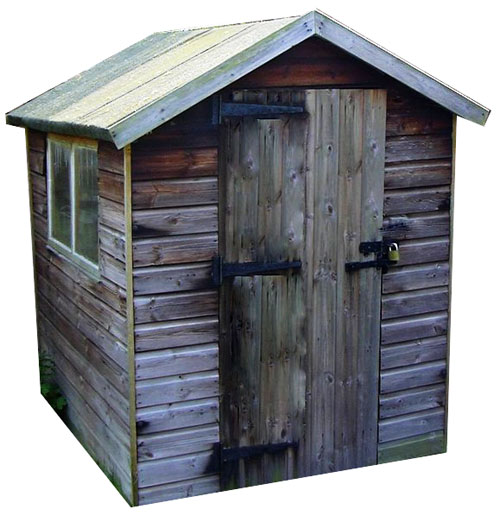
Homenot a shed!
And a home is not a shed with better finishes. The Government has explicitly stated that all relevant Building Regulations, Building Control requirements and fire-safety rules will continue to apply. Removing planning permission does not remove the obligation to design, construct and certify a safe, energy-efficient dwelling.
That is where the real market disruption begins. Ireland already has a capable garden-room sector supplying offices, gyms, studios and leisure spaces. Many of those companies deliver attractive buildings quickly and efficiently. But a structure intended for occasional use is fundamentally different from a dwelling occupied every day and night. A compliant home must address structure, insulation, ventilation, airtightness, energy performance, drainage, fire safety, radon protection, access and long-term durability. Depending on the final regulatory route, it may also require professional design input, a commencement notice, inspection documentation, energy assessment and completion certification. These obligations are not administrative extras. They are the product.
The commercial risk is obvious. Homeowners may compare two buildings that appear almost identical online: one offered as an inexpensive “garden pod” and another priced as a fully designed and certified dwelling. The cheaper option may win at the kitchen table because the most important differences are hidden inside the floor, walls, roof, ventilation system and compliance file. Those differences may only become visible years later — during a sale, an insurance claim, a mortgage application or an investigation following a fire or structural failure.
That creates four urgent challenges for the industry. ► First, design must become repeatable. The strongest providers will develop standardised systems that can be engineered, energy-modelled and documented once, then adapted responsibly for each site. ► Second, buyers need meaningful protection. A marketing promise or company guarantee is not the same as independent certification, professional indemnity cover and a credible structural warranty. ► Third, contractors need a clear delivery process. Responsibility for design, assigned roles, inspections, testing and handover documentation must be established before work begins — not assembled retrospectively when a customer asks for proof. ► Fourth, the public needs better information. “Planning exempt” must never be allowed to become shorthand for “unregulated.”
There is also confusion around tax. Revenue currently allows up to €14,000 of qualifying Rent-a-Room income to be exempt from Income Tax, PRSI and USC. However, current guidance says a detached self-contained unit does not qualify. The Government has only committed to considering how auxiliary dwellings might interact with the relief. The opportunity remains substantial. Families need flexible accommodation. Adult children need routes to independence. Older homeowners need options. Ireland needs additional housing capacity.
But the winners will not be the businesses that manufacture the cheapest box. They will be the contractors and partners that can deliver a genuine home: designed correctly, built safely, tested properly, certified transparently and supported long after handover. That is the standard serious builders should establish before the first advertising campaign begins.
In this market, compliance will not slow the sale. Compliance will be the sale.
Ireland’s latest greenhouse gas figures bring a welcome headline: emissions fell again in 2025. But behind that progress lies a much harder truth. The country is still nowhere near the pace of change required to meet its legally binding climate targets, and the next few years are likely to be far more difficult than the last few.
The Environmental Protection Agency’s provisional figures show that Ireland’s greenhouse gas emissions decreased by 2.2% in 2025, equivalent to 1.2 million tonnes of carbon dioxide equivalent. It was the fourth year in a row that emissions fell. Reductions were recorded across all main sectors, with the biggest falls in energy industries, buildings, industry and transport.
That is encouraging. It shows that emissions can fall while Ireland’s economy and population continue to grow. It also suggests that policy, investment and cleaner technology are beginning to have an effect.
But the scale of the challenge remains stark. Ireland’s national climate law requires a 51% reduction in greenhouse gas emissions by 2030 compared with 2018 levels. By 2025, emissions had fallen by only 14.5% when land use, land-use change and forestry are included. The EPA has warned that emissions must now fall by more than 10% every year to 2030 if Ireland is to meet its national climate target.
That is the central difficulty. A 2.2% annual fall is progress, but it is not enough. Ireland is moving in the right direction, yet not nearly fast enough. The easier gains may also be running out. The energy sector has delivered major reductions, helped by renewable electricity, less fossil-fuel generation and changes in the power system. Emissions from power generation and large industrial companies fell by 5.5% in 2025, according to the EPA. But future reductions will increasingly depend on harder-to-change parts of daily life: how people travel, how homes are heated, how farms produce food, how industry uses energy, and how quickly infrastructure can be built.
Transport is one of the biggest warning signs. Emissions fell in 2025, helped by more biofuel use and rising electricity consumption in road transport. But transport still exceeded its sectoral ceiling. This points to a deeper problem: Ireland is making improvements, but car dependency, slow public transport delivery, rising travel demand and freight emissions continue to make transport one of the most difficult sectors to decarbonise.
Industry faces similar pressure. Industrial emissions fell in 2025, but the sector still overshot its ceiling. Some reductions can come from fuel switching or lower fossil-fuel use, but long-term progress will require deeper changes in manufacturing, cement production, industrial heat and investment in cleaner processes. That will not be simple, cheap or quick.
Agriculture remains perhaps the most politically sensitive challenge. The 2025 fall in agricultural emissions was very small. Lower cattle numbers helped, but this was offset by increased fertiliser use and higher milk production. Agriculture is central to rural Ireland and the national economy, but it is also a major source of methane and nitrous oxide. Reducing these emissions at the speed required will involve difficult choices about land use, herd size, fertiliser, food production and farm incomes.
Buildings offer another mixed picture. Emissions fell in 2025, helped by a warmer winter and reduced fossil-fuel use. Residential emissions are now much lower than in previous decades. But warmer weather is not a climate policy. Lasting reductions will require faster retrofitting, more heat pumps, improved energy efficiency, skilled workers and financial supports that make upgrades realistic for households and businesses.
Ireland also faces a serious EU compliance challenge. Under the EU Effort Sharing Regulation, Ireland must reduce emissions in sectors such as agriculture, transport, buildings, waste and smaller industry by 42% by 2030compared with 2005. The EPA says Ireland is projected to miss that target, with a maximum projected reduction of 23% by 2030 even under a scenario with additional measures.
The cost of missing targets could be significant. Reuters reported that Ireland’s fiscal and climate watchdogs warned the State could face EU compliance costs ranging from €8 billion to €26 billion by 2030, if emissions-reduction plans are not delivered. That means failure would not simply be environmental. It could become a major financial burden on the public purse. There is a risk that one positive year creates a false sense of security. Falling emissions are welcome, but climate targets are not judged by headlines. They are judged by cumulative reductions, carbon budgets and legally binding limits. Ireland may be provisionally under its first carbon budget, but future budgets will be tighter and harder to meet.
The real test now is delivery. Targets have been set. Carbon budgets have been agreed. Sectoral ceilings have been created. The legal framework is in place. What Ireland needs next is faster implementation; more renewable power, stronger grids, cleaner transport, warmer homes, lower-emission farming, industrial investment and public policies that make low-carbon choices affordable and practical.
Ireland’s emissions are falling. That matters. But the road to 2030 is getting steeper, not easier.The 2025 figures should be welcomed, but they should not be mistaken for success. They are a reminder that progress has begun, and that the hardest work is still ahead.
This website uses cookies to improve your experience. We'll assume you're ok with this, but you can opt-out if you wish.AcceptRead More
Privacy & Cookies Policy
Privacy Overview
This website uses cookies to improve your experience while you navigate through the website. Out of these, the cookies that are categorized as necessary are stored on your browser as they are essential for the working of basic functionalities of the website. We also use third-party cookies that help us analyze and understand how you use this website. These cookies will be stored in your browser only with your consent. You also have the option to opt-out of these cookies. But opting out of some of these cookies may affect your browsing experience.
Necessary cookies are absolutely essential for the website to function properly. This category only includes cookies that ensures basic functionalities and security features of the website. These cookies do not store any personal information.
Any cookies that may not be particularly necessary for the website to function and is used specifically to collect user personal data via analytics, ads, other embedded contents are termed as non-necessary cookies. It is mandatory to procure user consent prior to running these cookies on your website.








Recent Comments