We learn from press reports that Ireland’s tourism agencies have spent more than €1 million paying influencers to promote holiday destinations, since the beginning of 2025.
That is a substantial amount of public money and it deserves more than impressive claims about followers, views and “audience reach.” It deserves transparent evidence that these campaigns generated additional visitors, bookings and revenue. Tourism has certainly improved. Ireland welcomed more than 3.2 million overseas visitors during the first half of 2026; 15% more than in the same period of 2025. Their spending increased by 18% to €2.6 billion.
Those are encouraging figures, but they do not prove that influencer marketing produced the recovery. Tourism is affected by airline capacity, ferry connections, weather, exchange rates, prices, consumer confidence and many other forms of advertising. An influencer reaching millions of social-media accounts is not the same as delivering millions of tourists. A view is not a booking, a “like” is not a hotel stay, and a follower is not necessarily a prospective visitor.
This distinction is particularly important for Tipperary. The county’s tourism performance during 2025 was positive but mixed. Sixty per cent of tourism businesses reported growth and 14% remained stable, while 26% experienced a decline. Attractions and activity providers performed well, with 82% growing or maintaining attendance.
However, accommodation businesses had a more difficult experience: 34% reported a decline, while shorter stays and later bookings remained significant problems. Much of Tipperary’s strength also came from domestic residents and day-trippers. An impressive 94% of attractions maintained or increased their Ireland-based visitors.
That is good news, but it does not demonstrate that paid influencer visits generated significant additional tourism. In fact, favourable weather, local engagement, repeat visitors and domestic day trips were identified as important reasons for Tipperary’s performance.
Tipperary does has a tourism product that should be capable of selling itself internationally: the Rock of Cashel, Cahir Castle, Lough Derg, the Glen of Aherlow, the Galtee Mountains, Holycross Abbey and a rich combination of history, food, outdoor recreation and authentic rural communities. The county’s challenge is not simply attracting social-media attention. It is converting interest and day trips into overnight stays, encouraging visitors to explore beyond the best-known locations and ensuring that tourism spending reaches local accommodation providers, restaurants, shops and communities.
There is a legitimate place for digital creators in modern tourism promotion. Social media influences approximately 23 – 24% of potential visitors looking for holiday inspiration. However, recommendations and online searches are even more influential.
The biggest reason people choose Ireland is not celebrity endorsement. It is the country itself. Tourism Ireland’s research shows that scenery is the leading reason for choosing Ireland, cited by 33% of potential visitors. It is followed by Culture, Sightseeing and History. Historic Sites, Food and Drink, Walking, Hiking and Nature have exceptionally broad appeal. The public should therefore be asking whether enough money is being invested directly in the things visitors actually come to experience: heritage conservation, trails, public transport, visitor facilities, signage, accessibility, accommodation capacity and effective booking systems.
The strongest criticism is not that every influencer campaign is wasteful. We do not have the evidence to make that claim. The problem is that the agencies have not publicly demonstrated the opposite.
After spending more than €1 million, reporting enormous audience reach is inadequate. The agencies should now publish, for every major campaign: The total fee and associated travel costs. The audience and markets targeted. Engagement from relevant prospective visitors. Confirmed bookings or attributable visitor spending. Cost per booking and return on public investment. Honest regional results, including overnight stays generated in counties such as Tipperary. (Remembering no establishment likes to report decline.)
If those measurements show that influencer marketing works, the agencies will have a strong case for continuing it. If they cannot produce them, taxpayers are entitled to question whether public money is supporting tourism, or merely subsidising attractive trips and highly polished social-media content.
Ireland’s tourism recovery is welcome. Tipperary’s attractions are showing real resilience. But neither development gives tourism agencies a blank cheque.
Publicity is not performance. Reach is not revenue. Public money must produce measurable public value.
The Born Clothing Group, Including Former Thurles Outlet, now at Centre of €1m Thai Villas High Court Claim.
The collapsed Born Clothing group, which previously operated a store in Thurles Shopping Centre, County Tipperary, is at the centre of High Court proceedings concerning the alleged use of almost €1 million in company funds to purchase two luxury villas in Thailand. The retail group operated 15 shops around Ireland before entering liquidation with reported debts of €7.82 million. This included approximately €2.2 million owed to the Irish Revenue Commissioners.
Thurles Shopping Centre, Thurles, Co. Tipperary.
The allegations have been made by the company’s joint liquidators, Mr David O’Connor and Mr Ian Barrett. They claim that Mr John Curley, whom they describe as the group’s de facto managing director and “controlling mind”, used company money to acquire the Thai properties for his personal benefit, while the businesses were experiencing serious financial difficulties. Mr Curley strongly disputes the liquidators’ account. He maintains that the properties were purchased under a voluntary co-investment arrangement with the company. He claims that he contributed €220,000 and was entitled to a 30 per cent interest in the villas, although the properties were registered solely in his name.
The liquidators allege that various payments totalling close to €1 million were transferred from the company between April 2022 and November 2024 to fund the purchases. One of the properties is reportedly believed to have generated rental income of approximately €3,505 per month through the Kamala Falls Residential Resort.
Mr Curley has said that he was an employee of an associated company, Elland Distributors Ltd, earning €24,000 annually, and that he acted under the instructions of those controlling the business. However, the liquidators claim that he exercised substantial influence over Born Clothing’s daily operations. They say this included dealing with staff, negotiating with landlords and providing personal guarantees connected with company financing. Mr Curley had previously served as a company director before resigning in 2011.
The court was also told that he had the use of a BMW 7 Series company car reportedly worth approximately €110,000. The liquidators believe the vehicle remains in his possession. Born Clothing’s sole registered director at the time of liquidation was Joan Lynch. According to the liquidators, Ms Lynch has said that she knew nothing about the alleged co-investment arrangement involving the Thai villas.
At a one-sided preliminary hearing on Friday, Judge Brian Cregan permitted the liquidators to serve proceedings at short notice. They are seeking injunctions preventing Mr Curley from selling or otherwise disposing of the villas, along with declarations that he holds the properties on trust for the company. No final findings have been made against Mr Curley, and the allegations remain strongly contested.
The matter is due to return before a vacation sitting of the High Court on August 12th 2026.
The case will be of particular local interest in Thurles and across County Tipperary, where Born Clothing formerly operated from Thurles Shopping Centre before the nationwide closure of the retail group.
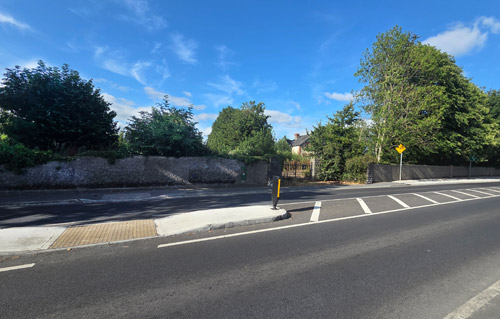
A significant new residential development has been proposed for Kickham Street in Thurles, potentially providing 42 homes close to the town centre.
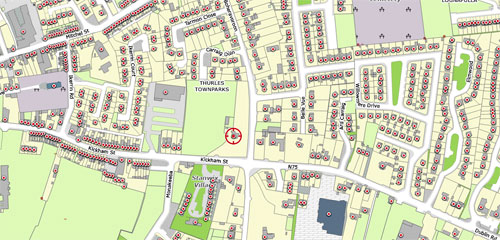
Coolross Homes Ltd has submitted a planning application to Tipperary County Council for the development on lands at Innisfail, Kickham Street, Thurles, (Eircode E41 P8X8). The proposed scheme would offer a varied selection of houses and apartments intended to accommodate individuals, couples and families with different housing requirements.
Plans for the site include two-storey semi-detached houses containing two, three and four bedrooms. A two-storey terraced building incorporating one-bedroom and two-bedroom apartments is also included in the application.
The mixture of property sizes is one of the most notable elements of the proposal. Smaller apartments could provide options for single occupants, couples, older residents or people hoping to establish their first independent home. Meanwhile, the larger houses would be more suitable for families requiring additional bedrooms and living space.
The proposed location could also prove attractive because of its proximity to the centre of Thurles. Residents would potentially be within convenient reach of shops, schools, sporting facilities, public services and other local amenities. Developing homes within or close to an established urban area may also help support local businesses while reducing dependence on longer journeys for everyday needs.
View Identifying Map.
Thurles has experienced continued demand for additional housing, with several public and private residential projects progressing through planning, design or construction in recent years. Recent developments in the town have included homes of different sizes and tenures, demonstrating the need for a broad range of accommodation rather than a single type of property.
However, the submission of an application does not mean that construction has been approved. Tipperary County Council must examine the proposal in detail, including matters such as access, traffic, drainage, public services, residential amenity, landscaping and the development’s relationship with neighbouring properties.
Given the continued failure of local politicians to deliver meaningful progress on either the proposed Inner Relief Road or the long-awaited Outer Ring Road, traffic congestion must now become a central and decisive consideration in the assessment of every future planning application in Thurles. Any further permissions granted, without first addressing the town’s already serious traffic problems, risk placing an intolerable additional burden on an increasingly overstretched road network.
Members of the public will also have an opportunity to examine the planning documents and make observations within the statutory consultation period.
The council’s eventual decision will determine whether the 42-home development can proceed as submitted, requires amendments or is refused permission.
One Council Restores History While Another Erases It – The Loss of Thurles’s Famine Double Ditch.
The decision by Dún Laoghaire-Rathdown County Council to spend approximately €660,000plus VAT restoring a historic ha-ha wall in Marlay Park (latter a sunken landscape boundary that uses a hidden trench and a vertical retaining wall), has understandably generated debate. The 197-metre structure, believed to date from the early nineteenth century, was designed to separate landscaped gardens from grazing animals without interrupting views across the estate. Much of its original locally sourced granite survived beneath vegetation, but the wall had fallen into disrepair. Restoration required specialist conservation work, dismantling and rebuilding sections of dry-stone wall, repairing the ditch and incorporating drainage infrastructure. The original contract was valued at €625,398 excluding VAT, with the final estimate rising to €660,374 following delays, unsuitable ground material, severe weather and difficulties obtaining appropriate stone.
Local construction professionals and taxpayers are entitled to question whether that represents value for money. Public bodies must explain how costs are calculated, why projects exceed their initial budgets and whether procurement arrangements adequately protect the public purse. Dún Laoghaire-Rathdown County Council has already faced criticism over the €753,528 cost of works at an entrance to Deerpark in Mount Merrion. That project is frequently described as the construction of “14 steps”, although the council says it also included a wheelchair-accessible ramp, retaining walls, granite paving, seating, landscaping, pedestrian crossings, road resurfacing, drainage, traffic-signal equipment and other public-realm works. The criticism of these costs is legitimate. Nevertheless, one important fact should not be forgotten: Dún Laoghaire-Rathdown County Council recognised that an historic structure was worth preserving.
That approach stands in painful contrast to what happened in Thurles.
The Thurles Great Famine Double Ditch was regarded locally as a rare surviving famine-era landscape feature. Local historical accounts date its construction accurately to 1846 and associate it with relief work provided to men and boys during the Great Famine. Rather than representing the landscaped elegance of a wealthy Dublin estate, this Double Ditch recalled hunger, poverty and the desperate struggle of local families to survive. It was not simply an old embankment. It was a physical connection with one of the darkest periods in Irish history. For generations, the route was also described locally as a public walkway and Mass path. Campaigners argued that it formed part of the social history of Thurles and should have been incorporated into a protected heritage trail.
Despite repeated warnings, the entire section of the Double Ditch was cleared in March 2022 supported by local councillors, as part of works connected with as yet a non existent, only proposed Thurles inner relief road. Contemporary photographs and local reporting showed mature vegetation being removed and the historic landscape feature being levelled by machinery.
Historic Thurles Double Ditch Eradicated in 2022. Pic. G.Willoughby.
Once such a structure is destroyed, it cannot truly be recreated. A replica might reproduce its approximate appearance, but it cannot restore the original stones, soil, boundaries and physical connection with the people who constructed it during the Great Famine.
This is the real loss suffered by Thurles. Tipperary County Council regularly speaks about protecting heritage and connecting communities with their past. Yet the treatment of the Double Ditch demonstrates the gulf that can exist between heritage policies and decisions taken on the ground. Roads and development are necessary, but heritage protection does not require a complete rejection of progress. It requires imagination, consultation and a willingness to examine alternative designs before destruction becomes inevitable.
The contrast between the two councils is striking. In Dublin, hundreds of thousands of euro are being spent restoring an aristocratic landscape feature. In Thurles, a structure associated with ordinary people surviving the Great Famine was treated as totally expendable. The Marlay Park bill deserves detailed scrutiny. So does every major publicly funded project. But the principle of conserving historic structures should be welcomed.
Led by the denials of elected councillors; mainly Mr Michaél Lowry (Non Party), Mr Sean Ryan (FF) and Mr Seamus Hanafin (FF), together with senior council officials, through wilful ignorance, self-deception, blind persistence and despite knowing better oversaw this reckless destruction. Thus the tragedy in Thurles is that the debate never reached the question of restoration costs.
The Double Ditch was not protected long enough for restoration to become an option. Dún Laoghaire–Rathdown County Council may reasonably be criticised for excessive costs. Tipperary County Council should be criticised for allowing irreplaceable local history to be destroyed.
One council appears willing to spend too much preserving history. The other did too little before all of that history was totally eradicated and lost forever.
Neither approach represents good stewardship of public money or public heritage, and the waste continues without the consent of the Irish taxpayer.
County Tipperary Chamber is calling on every business in Thurles and the surrounding area to complete the Thurles Bypass Business Impact Survey before Friday, 7 August 2026.
For decades, the people and businesses of Thurles have heard proposals, commitments and political assurances regarding essential road infrastructure. However, the town is still waiting for the completed Inner Relief Road and the long-promised Outer Ring Road or Thurles Bypass.
As recently highlighted by Thurles.info, announcements and expressions of political support are not the same as approved funding, a binding construction programme or a completed road.
Thurles businesses need delivery, certainty and measurable progress. Traffic congestion is not merely an inconvenience. It imposes real and continuing costs on local employers. It delays deliveries, wastes staff time, disrupts logistics, restricts customer access and makes it more difficult for businesses to plan, invest and expand. Every delayed journey affects productivity. Every customer discouraged by congestion represents a potential loss to the local economy. Every infrastructure project that remains uncertain can influence future investment and employment decisions.
This aforementioned survey provides businesses with an opportunity to transform those daily experiences into clear, credible and representative evidence. County Tipperary Chamber recently welcomed Thurles native Mr John O’Shaughnessy CDir MBA LL.B (Hons) Dip IOD, Managing Director of Clancy, as its new President. Mr O’Shaughnessy has taken on the presidency at a critical time for business confidence and regional competitiveness. His focus on delivery, effective advocacy and ensuring that the voice of Tipperary business is heard consistently at local and national level is particularly relevant to the infrastructure challenges facing Thurles.
Under his leadership, the Chamber is determined to ensure that the concerns of local businesses are supported by strong evidence and presented directly to Government and other decision-makers.
That effort now requires the support of the Thurles business community. Whether you operate a retail shop, hospitality venue, professional practice, manufacturing company, transport business or family enterprise, your experience matters.
The survey is open to Chamber members and non-members and to businesses of every size and sector.
Government departments require more than general expressions of concern. They require evidence showing how congestion affects operating costs, staffing, deliveries, customer access, competitiveness, investment and future growth.
The greater the response, the stronger the Chamber’s case will be.
This is not about creating another report that sits on a shelf. It is about establishing a compelling business case for action and demonstrating that Thurles cannot continue to compete effectively without modern, dependable transport infrastructure.
A sincere thanks to every business that has already participated. Your time and first-hand knowledge are all helping to build the evidence needed to secure meaningful progress. To those who have not yet responded, please do not assume that another business will speak for you. Every completed survey adds weight, credibility and urgency to this campaign.
Thurles deserves roads, investment and delivery, not more uncertainty or political promises.
This website uses cookies to improve your experience. We'll assume you're ok with this, but you can opt-out if you wish.AcceptRead More
Privacy & Cookies Policy
Privacy Overview
This website uses cookies to improve your experience while you navigate through the website. Out of these, the cookies that are categorized as necessary are stored on your browser as they are essential for the working of basic functionalities of the website. We also use third-party cookies that help us analyze and understand how you use this website. These cookies will be stored in your browser only with your consent. You also have the option to opt-out of these cookies. But opting out of some of these cookies may affect your browsing experience.
Necessary cookies are absolutely essential for the website to function properly. This category only includes cookies that ensures basic functionalities and security features of the website. These cookies do not store any personal information.
Any cookies that may not be particularly necessary for the website to function and is used specifically to collect user personal data via analytics, ads, other embedded contents are termed as non-necessary cookies. It is mandatory to procure user consent prior to running these cookies on your website.









Recent Comments