|
|
Th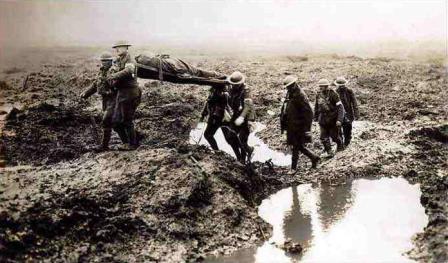 urles author Tom Burnell colaberates with his brother Seamus Burnell to produce his second book entitled The Wicklow War Dead. urles author Tom Burnell colaberates with his brother Seamus Burnell to produce his second book entitled The Wicklow War Dead.
This new book contains a full record, for the first time, of some 840 soldiers, officers, sailors, airmen, nursing sisters from County Wicklow, 752 from WW1, together with the names of casualties who listed their next of kin as residents of Co.Wicklow. Casualties named, died during WW1 and WW2 while in the service of the British Army, the Australian Army, the NewZealand Army, the American Army, the Indian Army, the Nursing Service, the Canadian Army, Queen Mary’s Army Auxiliary Corps, Queen Alexandra’s Imperial Military Nursing Service, the South African Army, the Royal Navy and lastly the Mercantile Marine.
There were seven children born to Patrick (Pakie) and Peggy (Margaret) Burnell in Finglas, Dublin during the 1950s. Margaret, Paddy, Tom, Seamus, Paul, Greg and Michelle and four of the lads served in the Irish Defence Forces here at home, on the South Armagh, Monaghan, Cavan, and Louth borders, during the ‘troubles’ and overseas with the United Nations on peace keeping duties. Their relations have fought in World War 1 and World War 2 and two of them died during the Irish Civil War. It is therefore no mystery that the author and his brother still hold an interest in all things military.
Like most Dublin families at least one of their parents came from outside The Pale, so it was not surprising that every one of Pakie Burnell’s children moved out of Dublin to the countryside to enjoy a more peaceful and a slower pace of life. Some things are taken for granted by people who reside in rural areas, not least of which is that they are surrounded by history and solitude.
This new book contains not only all the casualties of two World Wars buried in County Wicklow but also includes those who were not native to Irish soil. The disproportionate amount of Wicklow casualties sent to watery graves by German torpedoes, mostly men from Arklow in Co.Wicklow, were one of the major surprises in this research, as were the number of unfortunate airmen who came to rest here in the Garden of Ireland from places far afield. Wicklow men were involved in every action of both wars on land, sea and in the air. Some of them died of their wounds in England after receiving a ‘blighty wound’. However the majority of them died on varying battlefields. A surprising amount of these have no known graves and remain just a name on a cold stone memorial.
If no one-else remembers these unfortunate men and women, their sacrifice will at least be recorded thanks to this little book ‘ The Wicklow War Dead’.
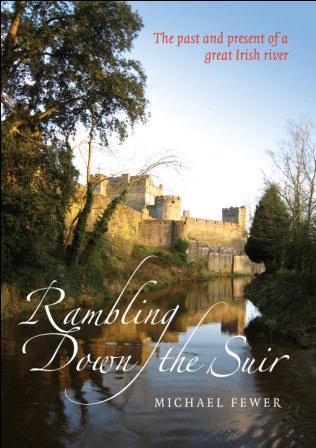 Unlike the rivers of England, Ireland’s great watercourses have been almost ignored in literature, and Michael Fewer has set out to address this lack in regard to the majestic river Suir. At 114 miles from its source in the Devil’s Bit Mountains in Co.Tipperary, to the sea, it is one of Ireland’s greatest rivers, and reckoned by many to be the second longest after the Shannon. Unlike the rivers of England, Ireland’s great watercourses have been almost ignored in literature, and Michael Fewer has set out to address this lack in regard to the majestic river Suir. At 114 miles from its source in the Devil’s Bit Mountains in Co.Tipperary, to the sea, it is one of Ireland’s greatest rivers, and reckoned by many to be the second longest after the Shannon.
“Rambling Down the Suir” is an account of Michael Fewer’s exploration of the Suir, by aircraft, by boat, by car and on foot, as he follows the river’s course through space and time, meeting the people who populate its valley and its towns, examining its present and opening windows onto its past. A social, historical and photographic survey of of an Irish river of this sort has not been undertaken before, and therefore this work has a unique quality, although the tone and content is similar to the classic “Goodly Barrow: A Voyage on an Irish River” by T. F. O’Sullivan, first published in 1983, but re-printed a number of times since.
This publication is richly illustrated with colour photography and maps. The Suir played a critical and unique role in the colonisation the country, first by the Vikings in the 9th century, and a few centuries later by the Normans, who from their strongholds in riverine cities such as Waterford were to change the face of Ireland. The river continued to play a major role in the history of the country in every century since more English monarchs entered or left Ireland by way of the Suir and Waterford than by any other route.
The coming of the railways and modern road transport from the 19th century onwards moved economic emphasis away from rivers. The importance of the Suir as a water supply, as a main trading route connecting the hinterland with the seaport of Waterford, as an abundant source of fish, and as a source of waterpower is now a thing of the past, and in places its waters and banks have merged into the surrounding landscape, overgrown and almost forgotten. Along these stretches, relatively undeveloped and undisturbed by man, the flora and fauna of our increasingly intensely cultivated countryside have found asylum; species survive and thrive that are no longer common elsewhere. The sheer abundance of extant evidence of the Suir’s former importance is remarkable: the river valley has an impressive density of prehistoric monuments, earthworks, castles, abbeys and ruined churches, all quietly co-existing today with the 21st century agricultural busyness of some of the finest farmland in Ireland.
MICHAEL FEWER has been writing about leisure walking, travel, the countryside and environmental matters for two decades. He lives in Dublin, but these days spends an increasing amount of time in his native County Waterford. His previous book with Ashfield Press is The Wicklow Military Road, History and Topography (2007).
This book is a wine to be savoured at just €25 in paperback from Bookworm.
Those of us who have tried to trace personnel killed, missing or injured during World War One will have found this task difficult, to say the least. However, now, for those of you searching for information on Tipperary soldiers the task has become much easier, due to the publication of a new book entitled “Tipperary Casualties of the Great War”
The author, Dublin born Tom Burnell, now resident in Holycross, Thurles, Co.Tipperary, has penned a remarkable factual history of all the Tipperary men who died during World War One or just after, while in the service of the British, Australian, New Zealand, American, Indian, Canadian, South African armies. Details of those Tipperary men linked with the Royal Navy and the British Mercantile Marine are also detailed.
This book, painstakingly and accurately brings to light, for the first time, information previously held on dusty shelves in forgotten archives and reminds us of the true meaning of sacrifice.
In an interview with Thurles.Info the author Tom Burnell speaks about his early life and times and what inspired this much needed and very readable publication.
“I consider myself, indeed, blessed to live here in the most beautiful rural village of Holycross, County Tipperary, one of Irelands most holy places. This village is a peaceful location and so remote from the many wartime locations, now household names, found in Europe.

Yet even in this peaceful place, there are the ‘graves of the fallen‘ from the Great War of 1914 -1918. Indeed, there are few places in Ireland that do not contain the resting-place of at least one such serviceman. Some came home wounded and died here, while others may have died in England of wounds received in France, the Dardanelles or Flanders. Over 400 of the 1400 Tipperary men who fell in this conflict have no graves at all and their commemorations remain as small inscriptions on Memorials to the Missing in foreign lands. They fell while in the service of the British, the Canadian, the Australian Imperial Force (A. I. F.), the South African, the Indian, the New Zealand and the American Armies. Some were sailors serving in one of several navies including the British Mercantile marine.
I was born in Finglas in the 1950s, long after the Great War had ended. Like most Dubliners, I was the offspring of a Dublin mother and a father, latter from far outside the Pale and known in Dublin as a ‘Culchie’. My father originated from a little place called Camas, in County Galway, close to Meelick, Eyrecourt.
In the late 1940s, after the Second World War, he gave up the drudgery of farming life. At that time our family was farming and also selling turf cut from the Meelick bogs and sent by canal barge to Dublin. It was here they obtained the best price. In the summer of ‘49 he left his plough stuck in a furrow and with a fiver in his pocket headed off for the Capital City, Dublin. Here there was a chance of some future, more work and more music. My father was a talented musician and soon formed the Galway Rovers Céili Band with the world famous Joe Cooley. He also got a job with the Lucan Dairies and afterwards with Kennedy’s Bread in Parnell Street opposite the ‘Hill’ Saturday morning market.
In the 1950s Finglas was still rural and surrounded by farms and fields and lots and lots of places for a kid to explore. The village was a small place with one shop, a post office, a bank, a church, a few pubs, a dentist and a few other shops, the details of which now escape my memory. However I do remember playing music in The Duck Inn opposite The Drake Inn and I played here years afterwards with the music I had inherited from my Dad.
In those days it was customary for Roman Catholic families like ourselves to kneel down each evening and say the Rosary and as my father had a special devotion to the Blessed Virgin Mary this was included in our nightly devotions. It’s well I remember the whole family, my parents, four brothers and two sisters, kneeling down in front of high backed wooden chairs, saying the decades of the Rosary just before bedtime. The coal fire burned bright in the corporation tiled fireplace grate, burning our backs as we studied our shadows on the wall and counting each decade on our fingers.
At the end of it all my father would invite each of us to add our own special dedication of three Hail Mary’s to anything we liked. I don’t remember any of my siblings particular dedications, but what still remains vivid in my mind is the special dedication of three prayers that I specifically wanted to be said. Indeed, I was most insistent I wanted three Hail Mary’s said for all the soldiers who died in battle (no matter where that battle was or which side they were on) who had no-one to say a prayer for them when they took their last breath. As a child I could not understand why a soldier about to die, without a priest to say the final absolution or the last rites, could not die ‘proper’. Did that mean that men who died on the battlefield without the last rites would never see heaven?
I remember my Father initially staying silent for a short while absorbing my request. I am sure he remembered his Granny sticking the long handled fire shovel into the roasting coal cinders “lest the ‘Black and Tans‘ called” and as she would confirm she “would sort them out”. Anyway, my father agreed, “Three Hail Marys for all the soldiers who died with no-one to pray for them” he said.
We all said the three Hail Marys and I was satisfied. I must have been about 8 years old or so at that time. My special dedication would now be done many times. My father was a special man and very tolerant. After a few years, the feeling of the lost and forgotten souls began to dig deeper and I decided to amass the largest collection of “War Dead” databases, currently available in Ireland, so that I could assist those searching for information on their kinsfolk and acquaintances.
The idea of some brave soldier dying in a foreign field, his people not knowing where he had died, where he had been buried or why he had been buried in that particular place, to me, did nothing to validate well earned respect. It was during the summer of 2005 and 2006 my wife, Ruth and I decided to visit all the Tipperary cemeteries and record the Great War graves contained in them.
If no-one else cares to remembers them at least they will be remembered here in this book –” Tipperary Casualties of the Great War“.
This book is currently available from “Bookworm” email – info@bookworm.ie
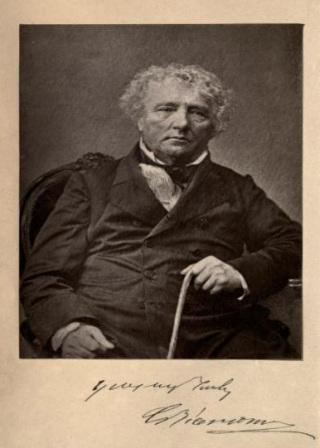 Carlo (Charles) Bianconi was born in Tregolo, in the Lombard Highlands, near Como, Italy on September 24th. 1786. A wild youth and showing no real talent at school, his father paid for him to be sent on an eighteen month apprenticeship to art dealer Andrea Faroni. Faroni with Bianconi and three other apprentice boys in tow, Giuseppe Castelli, Girolamo Camagni and his friend Giuseppe Ribaldi crossed the French Alps and France on foot in 1801, eventually arriving in Dublin in 1802. Carlo (Charles) Bianconi was born in Tregolo, in the Lombard Highlands, near Como, Italy on September 24th. 1786. A wild youth and showing no real talent at school, his father paid for him to be sent on an eighteen month apprenticeship to art dealer Andrea Faroni. Faroni with Bianconi and three other apprentice boys in tow, Giuseppe Castelli, Girolamo Camagni and his friend Giuseppe Ribaldi crossed the French Alps and France on foot in 1801, eventually arriving in Dublin in 1802.
They set up shop near Essex Street Bridge in the now Temple Bar area of Dublin and the young Bianconi continued to serve his apprenticeship as a street picture-seller equipped with just one word of the English language, the word “buy“. The price of his wares he demonstrated by holding up his fingers to prospective clients, one finger represented one penny.
Later the same year he was sent, weekly, with four pence to cover his expenses, down into rural Ireland. Leaving Dublin on a Monday morning with his pictures he travelled on foot through Munster and Leinster selling his wares and organising his route, thus ensuring to be back in Dublin, to his employer, by late Saturday night. From actual records, we know he was arrested in Passage East, Co Waterford and held in jail, over night, for selling pictures of, the then British number one enemy, Napoleon Bonaparte.
In 1804, on the termination of his eighteen month apprenticeship, he decided not to return home but took to the road selling pictures and frames for himself, carrying his wares in a large box, strapped to his shoulders. The box according to Bianconi himself weighed approximately thirty pounds in weight.
He set up his own shop two years later in Carrick in 1806, but later transferred this business to Waterford and later still to Clonmel Co. Tipperary, where in 1809 he opened at No.1 Gladstone Street as a first class “Carver and Guilder”.
He was a frequent visitor to the Ursuline Convent in Thurles where he admits to being well fed by Reverend Mother Tobin.It was during his travels he met the first love of his life and with the permission of her father sent her to be educated in the Ursuline Convent, Thurles. This love however was never to fully blossom, as his student fell in love with another and Bianconi sadly was forced to give up all pretensions to ever making her his wife.
It is said that ‘necessity is the mother of invention‘ and surely Bianconi is evidence of this fact. Travelling on foot around Ireland, carrying his heavy materials, and often walking twenty to thirty miles each day in the course of this work, quickly demonstrated to Bianconi the great need for a cheap and reliable integrated transport system. It therefore came as no surprise that in July 6th 1815 the first Bianconi two-wheel horse drawn cart, carrying three or four passengers went into commission from Clonmel to Cahir, thus introducing the beginnings of the first ever integrated transport system, into Ireland.
 Travel on one of these “Bians” as they were to become known, cost one-penny farthing a mile. Such demand was there for his transport that over the next 30 years a huge network of communications were established, with Clonmel, Co. Tipperary as its hub. Huge employment was also now created from this growing transport business. The year 1833 saw the “long car” go into production from his coach building premises in Clonmel which enabled him to carry up to twenty passengers, plus cargo and mail deliveries for both British and Irish Post Offices. Here in Thurles, his depot was situated in O`Shea`s Hotel which today trades as McLoughneys, a ladies clothing boutique. The stables where he fed and changed his horses between journeys still exists, relatively unchanged, to this very day and are situated at the rear of Ryan’s Jewellers shop, Liberty Square, Thurles, Co. Tipperary. Travel on one of these “Bians” as they were to become known, cost one-penny farthing a mile. Such demand was there for his transport that over the next 30 years a huge network of communications were established, with Clonmel, Co. Tipperary as its hub. Huge employment was also now created from this growing transport business. The year 1833 saw the “long car” go into production from his coach building premises in Clonmel which enabled him to carry up to twenty passengers, plus cargo and mail deliveries for both British and Irish Post Offices. Here in Thurles, his depot was situated in O`Shea`s Hotel which today trades as McLoughneys, a ladies clothing boutique. The stables where he fed and changed his horses between journeys still exists, relatively unchanged, to this very day and are situated at the rear of Ryan’s Jewellers shop, Liberty Square, Thurles, Co. Tipperary.
In 1832 Charles Bianconi married Eliza Hayes the daughter of a wealthy Dublin stockbroker. They begot one son, Charles and two daughters Kate and Mary Anne. Kate died in 1854 and her brother Charles ten years later in 1864. The other surviving daughter Mary married Morgan John O`Connell. In 1864 Morgan O’Connell, nephew of Daniel O`Connell (The Liberator), had succeeded to his mother’s property in Clare known as the McMahon Estate. On February 21st. 1865 he married Mary Anne Bianconi, then aged twenty five (died 1908). Mary Anne, in her own right, was the authoress and compiler of several books including the life story of her father (Charles Bianconi, A Biography). Her new husband Morgan was a regular companion of William M.Thackeray, both, indeed, were members of the “Old Fielding’s Club” as was Charles Dickens.
The advent of railway in 1834 brought home to Bianconi the realisation that his coaching business had now only a limited future. He immediately began to buy shares in the different rail lines as they were being built. He began to sell his coaches and long carts to his employees who had worked for him. He, himself, became a director in Daniel O`Connell`s newly founded National Bank and between 1843 and 1846, he became a Councillor and was twice elected Mayor of Clonmel, Co. Tipperary.
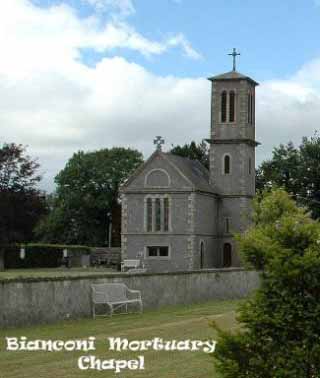
It was at this time, also, he purchased the one thousand acre property known then and now as Longfield House, in the parish of Boherlahan, Cashel, Co. Tipperary, where he resided for twenty nine years and died in 1875 aged 89, a millionaire. He is buried in the family mortuary chapel in Boherlahan, Cashel, which he designed and partially constructed himself.
Legend states that as he breathed his last breath a phantom coach and horses were heard coming up the drive of his much loved Longfield House.
 Thurles man Tom Noone is the 2008 winner of the Tipp Reads/Premier Short Story Competition and was presented recently with his prize by best selling author Frank Delaney. Thurles man Tom Noone is the 2008 winner of the Tipp Reads/Premier Short Story Competition and was presented recently with his prize by best selling author Frank Delaney.
His short story entitled ‘The Boy Who Knew Things‘ draws its readers, possibly, back to the late 1950 or early sixties in rural Ireland.
In this remarkable story, Tom demonstrates his ability, using few words, to paint detailed pictures, worthy of Ruisdael, Gainsborough and Turner, using the inward eye as his canvas. Each movement in his story is recorded with the accuracy of a video camera. Using his eyes as a lenses and his brain as some sort of electronic capturing device, Tom has managed to capture more than the normal 120 frames per second, to bring us a high definition video, using only words, each carefully chosen to emanate maximum emotion.
Tom, a former training manager, admits to an intense interest in people and places. He gains enormous expression by his involvements in numerous local social and community organisations.
Many people will recognise Tom, from his days as project leader, for the indexation of church registers in many Cashel and Emly parishes. This latter excellent work now forms an invaluable database, as those involved in any form of genealogical research will attest.
Tom in the past has published local history papers, a number of selected poems and is a regular contributor to our Thurles local newspaper ‘The Tipperary Star’. He is probably best known through his strong links with Thurles Credit Union.
Those of you who would like to read this fine piece of writing can do so by linking to www.tipperarylibraries.ie
Can we expect a small anthology of short stories from Tom in the near future? I can not answer this question, but this I forecast, that much will be lost to the world of imaginary tale, should he neglects this, his very rare story telling ability.
|
Support Us Help keep Thurles.info online by donating below. Thank you.
Total Donated 2026: €40.00
Thank You!
Daily Thurles Mass Livestream
|





Recent Comments