The above words are placed so beautifully and appropriately that it would be difficult to imagine a better setting.
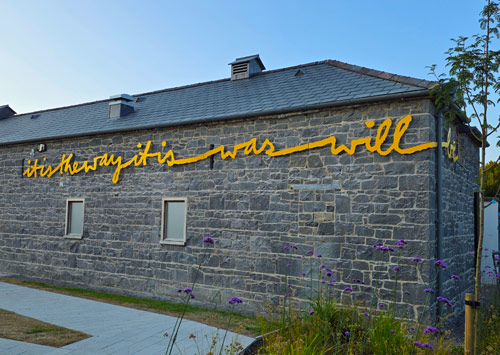
Written in glowing golden script across the weathered limestone, the inscription seems almost to float upon the old walls; not merely as a sign, but as a quiet conversation between what has been, what is now and what is still to come. This striking artwork adorns the carefully restored 1849 stone old farm building in what is now Thurles Market Quarter. Once a modest agricultural shed, shaped by work, weather and generations of local life, it has now been lovingly reborn as ONE19 Coffee House & Restaurant.
West side of “One19 Restaurant”, Cathedral Street,Thurles, Co. Tipperary.
Its transformation has thankfully not erased its past. Instead, the old stone, the traditional form of the building and the marks of age have been allowed to remain, lending great warmth and authenticity to its new life. What was once a place of labour has become a place of welcome; a setting for coffee, food, conversation, friendship and new memories.
Its location gives the inscription an even deeper resonance. The building stands between two other landmarks, both woven into the spiritual and educational heritage of Thurles: the Cathedral of the Assumption and the former St Patrick’s College, now part of Mary Immaculate College. In such surroundings, the words/phrase naturally carry an almost sacred rhythm. They are not a direct quotation from Scripture, yet they gently recall the ancient Christian doxology:-“As it was in the beginning, is now, and ever shall be, world without end.” They also echo the language of the Book of Revelation, which describes God as the one “who is and who was and who is to come.”
Yet the sentiment has travelled beyond religious tradition and into popular culture. A closely related line, “That’s the way it is, was and will be”, introduces the established order of Sneetch society in the 2017 musical adaptation of Dr. Seuss’s “The Sneetches”. Dr. Seuss’s original 1961 story, later adapted for television in 1973, ultimately challenges the belief that society must always remain as it has been. The ‘Sneetches’ learn that inherited divisions are neither natural nor permanent and that even “the way it was”, can be changed.
The wording also appears with a more playful and satirical flavour in the 1974 comedy film “The Groove Tube”, where a fictional television newscaster signs off: “And that’s the way it is, was, and will be.” There, the phrase humorously imitates the certainty and authority of traditional television news.
Placed upon this restored building, however, the words take on a gentler and more romantic meaning. The stone remembers farm carts, tools, harvests and working hands. Today, those same walls shelter laughter, conversation and the aroma of freshly brewed coffee and hastily produced food. Tomorrow, they will hold stories belonging to generations not yet born.
The way it was: A humble building serving the life of the land. The way it is: A beautifully renewed gathering place in the heart of Thurles. The way it will be: A cherished part of Thurles town’s story for many years to come.
At dusk, when the golden lettering shines against the cool grey stone, it feels as though the building itself is speaking. Not mourning what has passed. Not resisting what has changed. Simply acknowledging that the past, present and future can inhabit the same place beautifully. An old building saved rather than forgotten. A historic quarter renewed rather than replaced unlike the towns Great Famine “Double Ditch“. A little philosophy, faith and humour written in golden light.
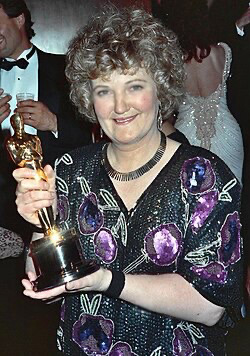
Ms Brenda Fricker, the acclaimed Irish actress whose powerful and deeply human performances touched audiences around the world, has died at the age of 81 years.
Her agent confirmed that she passed away in Dublin following a period of ill health. Over a career spanning six decades, Ms Fricker became one of Ireland’s most respected performers and left an enduring mark on cinema and television.
Ms Brenda Fricker, R.I.P.
Born in Dublin on February 17, 1945, Ms Fricker initially hoped to become a journalist and worked as an assistant in the art department of The Irish Times newspaper. However, acting soon became her calling. She began appearing on stage and television during the 1960s, gradually establishing herself as a gifted character actress capable of bringing warmth, honesty and emotional depth to every role.
British television audiences came to know her particularly well through the BBC medical drama Casualty. Ms Fricker played Megan Roach, a compassionate and memorable nurse who became one of the programme’s most familiar early characters. Her television work helped establish her reputation, but it was her performance in Jim Sheridan’s 1989 film “My Left Foot”, that brought her international recognition.
In the film, Fricker portrayed Bridget Fagan Brown, the determined mother of Irish writer and artist Christy Brown, who was born with cerebral palsy. Her restrained yet emotionally powerful performance earned her the Academy Award for Best Supporting Actress in 1990. The victory made her the first Irish woman to win an acting Oscar and represented an important moment for Irish cinema on the international stage. Mr Daniel Day-Lewis, who played Christy Brown, also won the Academy Award for Best Actor.
Although “My Left Foot” remained one of her most celebrated achievements, Ms Fricker’s career extended far beyond that single performance. She appeared in Jim Sheridan’s “The Field” and later took supporting roles in several prominent American films, including; “So I Married an Axe Murderer”, “Angels in the Outfield” and the courtroom drama “A Time to Kill”.
For many viewers, however, she will always be remembered as the kindly Pigeon Lady in “Home Alone 2: Lost in New York”. Initially presented as a mysterious and lonely figure living in Central Park, the character forms an unlikely friendship with Kevin McCallister, played by Mr Macaulay Culkin. Fricker brought tenderness and dignity to the role, helping to create some of the film’s most heartfelt moments.
Her other notable credits included Veronica Guerin, Inside I’m Dancing, Omagh, Albert Nobbs and Cloudburst. Even when appearing in supporting roles, she had an exceptional ability to make her characters feel authentic and unforgettable.
Behind her professional accomplishments, Ms Fricker spoke candidly about periods of depression, loneliness, personal loss and poor health. Her willingness to discuss difficult experiences added another dimension to the public’s appreciation of her resilience. In 2025, she published the memoir She Died Young: A Life in Fragments, reflecting on her life, career and the hardships she had survived.
Tributes following her death have celebrated not only her remarkable talent but also her humour, honesty and forceful personality. Director Mr Jim Sheridan described her as an extraordinary actress and a strong, memorable character.
Ms Brenda Fricker helped open doors for Irish performers, while demonstrating that quiet, compassionate acting could carry enormous emotional power. From her historic Oscar victory to her beloved appearance in Home Alone 2, her work will continue to be discovered and cherished by future generations.
Her death marks the loss of a true pioneer of Irish screen acting, but her extraordinary legacy will endure.
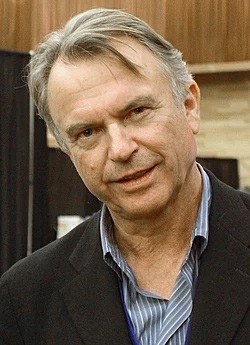
Sam Neill remembered – From Omagh to Hollywood, with a memorable Tipperary visit.
Sir Sam Neill, the acclaimed actor whose career moved effortlessly between Hollywood blockbusters, unsettling psychological dramas and warm-hearted comedies, has died at the age of 78. His family said that Mr Neill died in Sydney on Monday, July 13th 2026, surrounded by loved ones. His death was described as sudden and unexpected. Although he had previously been treated for a rare form of blood cancer, his family confirmed that he remained cancer-free at the time of his passing.
For millions of cinema-goers, Neill will always be Dr Alan Grant, the practical and quietly courageous palaeontologist who found himself pursued by dinosaurs in Steven Spielberg’s Jurassic Park. Released in 1993, the film transformed Neill into an international star. He later returned to the role in ‘Jurassic Park III‘ and ‘Jurassic World Dominion‘, introducing the character to new generations of viewers. However, concentrating solely on dinosaurs would overlook the remarkable range of an acting career that lasted for more than five decades.
The Late Sam Neill – In ár gcroíthe go deo.
Mr Neill could be charming, threatening, romantic, vulnerable or wonderfully dry. He appeared opposite Meryl Streep in ‘A Cry in the Dark‘; playing a Soviet submarine officer in ‘The Hunt for Red October’ and delivered one of his most disturbing performances in the cult horror film ‘Possession’. In the same year that Jurassic Park reached cinemas; Mr Neill appeared in Jane Campion’s ‘The Piano’. He later earned another generation of admirers through ‘Hunt for the Wilderpeople’, directed by fellow New Zealander Mr Taika Waititi. His television work was equally memorable. In ‘Peaky Blinders’, he played the ruthless Major Chester Campbell, a Belfast police officer, determined to destroy Tommy Shelby and his criminal organisation.
Mr Neill was born Nigel John Dermot Neill, in Omagh, County Tyrone, in 1947. His father, a New Zealander serving with the British Army, was stationed in Northern Ireland at the time. The family later lived in County Armagh before moving to New Zealand when Sam was seven. Although New Zealand became his home and the foundation of his professional life, Neill retained a strong affection for Ireland. He held an Irish passport and spoke warmly about the country’s literature, history and culture. He once described himself as quietly proud of his Irish connections, while rejecting the exaggerated stereotypes often associated with Irish-ness.
Was There a Tipperary Connection? There was, nevertheless, a real and memorable Tipperary connection. In November 2012, Mr Neill travelled to Cork and to Co. Tipperary to promote wines from ‘Two Paddocks‘, the vineyard he established in Central Otago, New Zealand. During the visit, he discussed his Irish identity, his love of wine and his preference for an ordinary life away from the excesses of celebrity. Wine was far more than a commercial sideline for Mr Neill. He took enormous pride in his vineyard, its Pinot Noir and the animals living on the property. ‘Two Paddocks’ offered him a retreat from filming and a connection with the land that appeared to matter deeply to him.
His visit to Tipperary may have been brief, but it provides the county with its own small place in the story of an actor whose life stretched from Northern Ireland to New Zealand, Australia and the great film studios of the world. Mr Neill became internationally famous relatively late. By the arrival of Jurassic Park, he had already spent years building a respected career in New Zealand, Australia and Britain. That experience gave his performances a grounded quality. Even when surrounded by computer-generated dinosaurs, supernatural forces or larger-than-life characters, he rarely appeared overwhelmed by the spectacle. He remained believable, restrained and entirely human.
Following his death, New Zealand Prime Minister Mr Christopher Luxon described Mr Neill as “one of the greats” and credited him with helping bring New Zealand stories and film-making talent to international audiences. That is perhaps the most fitting way to remember him. Mr Sam Neill was the star of one of the biggest films ever made, but he was never defined by a single role. He was an Irish-born New Zealander, an actor, writer, farmer and winemaker, whose curiosity and understated humour remained evident throughout his life. Mr Neill is survived by children; Andrew, Tim, Elena, Maiko, and several grandchildren.
Tipperary sadly cannot claim him as one of its own, but it can recall the occasion when one of cinema’s most distinctive gentlemen came to this county, raised a glass and spoke proudly of his enduring Irish connection.
Lyrics: American country music specialist, record producer and songwriter Allen Reynolds Vocals: American country music singer, songwriter, and 2010 inductee into the Country Music Hall of Fame, the late Donald Ray Williams.
Late Don William (1939 – 2017).
The song hereunder is a lovely country classic made famous by the late Don Williams, still one of the most gentle and respected voices in country music. Don Williams had a way of singing that felt simple, honest, and straight from the heart. His songs often spoke about love, memories, tenderness, and the quiet emotions we sometimes find hard to put into words. The song “We Should Be Together.” It is a beautiful song about two people who share a special connection and the feeling that, no matter what has happened or how life has turned out, they truly belong with one another. It carries that warm Don Williams style: calm, sincere, and full of feeling and we hope the song brings back good memories for some of our readers.
We Should Be Together.
We Should Be Together.
I think about you, When I don’t want to, Dream about your smiling face, And I keep trying not to love you, But I love you anyway. We should be together, together, We should be walking side by side, We should be together, together, Keeping each other satisfied. I have thought to come to know you, I’ve come to need your company, What will I do if I can’t have you, If I can’t have you, What will I do. We should be together, together, We should be walking side by side, We should be together, together, Keeping each other satisfied. We should be together, together, We should be walking side by side, We should be together, together, Keeping each other satisfied.
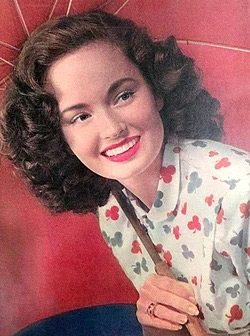
Ann (Anne) Marie Blyth, the singer and Oscar-nominated actress remembered for her unforgettable performance as Veda Pierce in the 1945 classic Mildred Pierce, has died at the age of 98.
Ann Blyth (1927–2026). R.I.P.
The Hollywood Golden Age star died of natural causes on Wednesday, according to US media reports.
Blyth became widely known as Joan Crawford’s spoiled and scheming on-screen daughter in Mildred Pierce, a role she played as a teenager. Her performance earned her an Academy Award nomination for Best Supporting Actress and helped make her one of the standout young stars of the era.
The film also brought Crawford the only Oscar of her career, for Best Actress, and remains one of the defining melodramas of 1940s Hollywood.
Born Ann Marie Blyth in Mount Kisco, New York, on 16 August 1928, Blyth began performing at a young age, first as a singer and stage performer before moving into films. Her soprano voice later helped her move naturally into musical roles.
Across the 1940s and 1950s, she appeared in a wide range of films, including Brute Force, Mr Peabody and the Mermaid, The Great Caruso, One Minute to Zero, The World in His Arms, The Student Prince, Kismet and The Helen Morgan Story.
Her career was briefly halted after she suffered a serious back injury in a toboggan accident, but she later returned to the screen and continued to work in film, theatre and television.
After stepping away from cinema in the late 1950s, Blyth made occasional television appearances, including roles in The Twilight Zone and Murder, She Wrote. Her final screen appearance came in a 1985 episode of Murder, She Wrote.
Blyth was married to James McNulty from 1953 until his death in 2007. The couple had five children. In 1973, she and her husband, both Roman Catholics were accorded the honorific rank of Lady and Knight of the Holy Sepulchre in a ceremony presided over by Cardinal Cooke.
She now leaves behind her a legacy as one of the last stars of Hollywood’s Golden Age, remembered for her grace, versatility and a chilling performance in Mildred Pierce that remains a landmark of classic American cinema.
This website uses cookies to improve your experience. We'll assume you're ok with this, but you can opt-out if you wish.AcceptRead More
Privacy & Cookies Policy
Privacy Overview
This website uses cookies to improve your experience while you navigate through the website. Out of these, the cookies that are categorized as necessary are stored on your browser as they are essential for the working of basic functionalities of the website. We also use third-party cookies that help us analyze and understand how you use this website. These cookies will be stored in your browser only with your consent. You also have the option to opt-out of these cookies. But opting out of some of these cookies may affect your browsing experience.
Necessary cookies are absolutely essential for the website to function properly. This category only includes cookies that ensures basic functionalities and security features of the website. These cookies do not store any personal information.
Any cookies that may not be particularly necessary for the website to function and is used specifically to collect user personal data via analytics, ads, other embedded contents are termed as non-necessary cookies. It is mandatory to procure user consent prior to running these cookies on your website.




Recent Comments