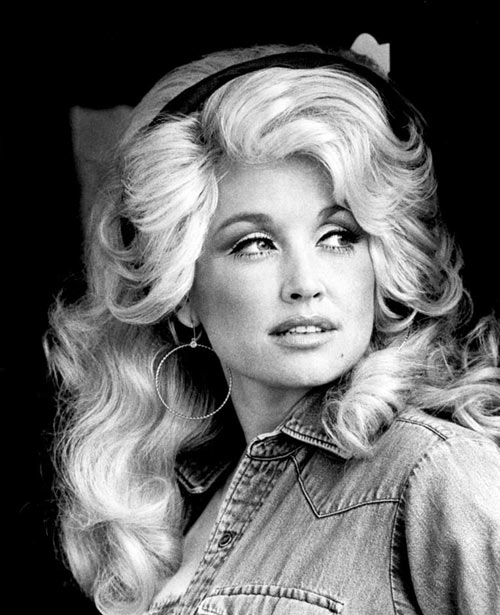
Lyricsand Vocals: American singer-songwriter, actress, and businesswoman, the late great Dolly Rebecca Parton Dean (née Parton)[1946 – 2026].
Late Dolly Rebecca Parton.
Listening to Dolly Parton’s “Daddy Come and Get Me” today, I find myself thinking of Ireland’s unmarried mothers and their children. While, Dolly’s lyrics tell a slightly different story, its plea for someone to come, to listen, to bring a frightened woman home has a painful resonance here. I think of women who needed kindness and support, and instead encountered shame and separation. I think of mothers whose children were taken for adoption, some sent across the sea. I think of the years spent wondering, searching and grieving for someone still alive. Survivor testimony gathered by the Clann Project asks us to face that suffering with honesty.
“Daddy Come and Get Me”
“Daddy Come and Get Me”
In this mental institution, lookin’ out through these iron bars, How could he put me in here, how could he go that far. Yes I need help but not this kind, he didn’t love me from the start, But it’s not my mind that’s broken, it’s my heart. Oh Daddy come and get me and take me home with you. I’m depending on you Daddy, there’s nothing I can do, And you said that I could come to you if I ever was in need, But Daddy I can’t come to you, you’ll have to come to me. When he said he loved another, I was crazy with jealousy, That’s ’cause I was crazy over him and I couldn’t stand to set him free, And I couldn’t stand to lose him and I cried and cried for days, And he said that I was crazy, but he just put me in here to get me out of his way. Daddy come and get me, Oh Daddy come and get me, and take me home with you. I’m depending on you Daddy ’cause there’s nothing else I can do, And you said that I could come to you if I ever was in need, But Daddy I can’t come to you, you’ll have to come to me. Oh Daddy, come and get me.
END.
I think also today, of the children in the protestant orphanage “The Bird’s Nest”, also the children in “St Patrick’s” on the Navan Road, “Madonna House” and “Cottage Home” who were included, indeed used, in vaccine trials. Their participation is well documented; while profound questions about consent still remain. Behind those institutional names were small children, entirely dependent on the adults entrusted with their care. Their documented history deserves to be forever remembered.
There is something especially sorrowful about hearing this song on a Sunday, a day associated with faith, family and belonging, while remembering those who were denied the compassion that should have accompanied their plight.. Church and State had responsibilities towards them. So did the communities around them.
I am deeply sorry for the cruelty they endured, for the protection that failed them, and for every year in which their voices went unheard. No expression of regret can restore a childhood or return the years a mother and child lost together. However remembrance must include listening, granting access to the truth and total accountability.
Today, I share the above song with tenderness towards those mothers, the children they lost, and the adults those children eventually became.
They deserved to be heard. They deserved protection. They deserved to know that they mattered.
On the morning of September 11, 2001, (25 years ago today), two hijacked passenger planes struck the Twin Towers of New York’s World Trade Center. Both towers collapsed.
Together with the attacks at the Pentagon and the crash of another hijacked aircraft in Pennsylvania, that day claimed nearly 3,000 lives, leaving families and communities grieving across the world.
For Cappawhite, County Tipperary, that loss had a familiar name: Mr Martin Coughlan.
Mr Coughlan was 53 years old, a carpenter working in the South Tower. He had made his home in Queens with his wife, Catherine, and their four daughters. During the unfolding tragedy, he called his wife, Catherine to tell her that something terrible was happening and that he was trying to get out. He never came home.
Those who knew Mr Coughlan remembered his pride in his craft and the long hours he worked to support his family. He had spoken of perhaps returning to Ireland. In Cappawhite, Co. Tipperary, more than 1,000 people attended a memorial Mass in his memory; a community gathering to mourn one of its own.
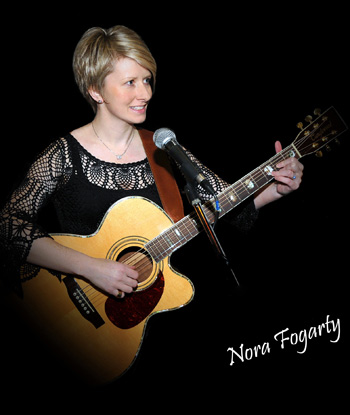
TalentedKilkenny singer and guitarist Ms Nora Fogarty, in the video hereunder, remembers the USA Terrorist Attack On 11th September 2001.
“Shattered Dreams”
(Lyrics written by Co. Kilkenny poet Kathleen Blanchfield).
As we remember that terrible day, let us hold Mr Coughlan’s family in our thoughts, alongside all those whose loved ones were lost. Behind every name is a life full of relationships, ordinary joys and plans left unfinished. Remembering Mr Coughlan means making room for that life, as well as mourning its ending.
May Mr Coughlan’s memory be held with love in Cappawhite, in New York, and wherever your story is told.
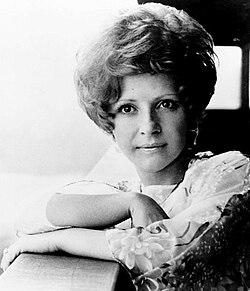
Lyrics: Song adapted it into English by American songwriter, the late Mann Curtis(1911-1984), originally born Emanuel Kurtz. Vocals: American singer Brenda Mae Tarpley known professionally as Brenda Lee.
Brenda Lee.
The song was originally written in French by Gilbert Bécaud and Pierre Delanoë, it became an English-language standard before Brenda Lee brought her own warmth and emotional power to it. With its simple plea for devotion and Lee’s unmistakably expressive voice. This timeless ballad speaks straight from the heart.
Let It Be Me.
Let It Be Me.
I bless the day I found you. I wanna stay around you, And so I beg you let it be me. Don’t take this heaven from one, If you must cling to someone, Now and forever, Let it be me. Each time we meet love, I find complete love. Without your sweet love, What would life be? So never leave me lonely. Tell me you love me only, And that you’ll always, Let it be me. And so I beg you, Let it be me. Each time we meet love, I find complete love. Without your sweet love, What would life be? Never leave me lonely. Tell me you love me only, And so I beg you, Let it be me. Let it be me.
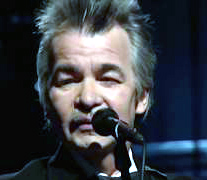
Lyrics and Vocals: The late, great American singer-songwriter of country-folk music, John Edward Prine (1946–2020)
Late John Prine.
With his trademark blend of wit and heartache, John Prine turns an unhappy relationship into a wonderfully funny escape act. Same was featured as a live bonus track on his Grammy-winning 2005 album “Fair & Square”.
Other Side of Town.
Other Side of Town.
Why must you always seem to criticise me. Seems like everything I do just turns out wrong. Why don’t you come on out and despise me, So I could pack my bag and baby I’d be gone.
Remember when you used to call me honey. Well I’d turn around and call you honey too. You might think it’s a joke, but it ain’t funny, To hurt someone who’s so in love with you.
Chorus.
A clown puts his makeup on upside down, So, he wears a smile even when he wears a frown. You might think I’m here when you put me down, But actually I’m on the other side of town.
My body’s in this room with you just catching hell, While my soul is drinking beer down the road a spell. You might think I’m listening to your grocery list, But I’m leaning on the jukebox and I’m about half … way there.
Repeat Chorus.
I’m sittin’ on a chair just behind my ear, Playing dominoes and drinking some ice cold beer. When you get done talking, I’ll come back downstairs, And assume the body of the person you presume who cares.
Repeat Chorus.
I’m across the river on the other side of town. And in my mind I’m going to the dog-racing side of town.
Lyrics and Vocals: American singer, songwriter, actress, philanthropist, and business woman, the late, great Ms Dolly Rebecca Parton Dean(née Parton), [1946–2026].
The late Ms Dolly Parton.
A song for all you dog lovers everywhere; the late Dolly Parton’s “Cracker Jack” is a tender tribute to the scruffy stray she once befriended as a child and remembered as her loyal playmate and best friend. Recorded in 1973 but unreleased until the 2007 reissue of “Jolene”, this bittersweet country story celebrates the unconditional love of a cherished pet and the memories that endure after they are gone.
Cracker Jack.
Cracker Jack.
Once I had a little dog, I called him Cracker Jack. He had a spot around one eye that looked just like a patch. His legs were way too long and he was awkward as could be. He wasn’t much to look at but he looked alright to me. I found him by the river bank just wandering about. He was cold and hungry and his ribs were sticking out. I snapped my fingers, whistled, when he came, I picked him up. I was just a kid and Cracker Jack was just a pup. I took him home and fed him ’til he couldn’t eat no more. I took him to my room and put a blanket on the floor. After that beside my bed is where he’d always sleep. Each night in my prayers I’d pray the lord his soul to keep.
Chorus.
Cracker Jack, The best friend that I ever had was Cracker Jack, But he was more than that, A playmate, a companion, He was love and understanding, That was Cracker Jack. The best friend that I ever had was Cracker Jack, But he was more than that, Everything a kid could want I had in Cracker Jack.
Cracker Jack would run to meet me after school each day. He’d jump and wag his tail and look at me as if to say, “I love you and I’ve missed you and I’m glad you’re home again”. I knew just how he felt ’cause me and Cracker Jack was friends. Through the woods and fields we would often roam about, And when we got in trouble we would help each other out. I could run almost as fast as Cracker Jack could run, We had a lot in common and we had a lot of fun. He was always with me when I was growing up. We shared each other’s good times and we shared each other’s love. He only lives in memories now but often I think back, To the days of childhood, the days of Cracker Jack.
This website uses cookies to improve your experience. We'll assume you're ok with this, but you can opt-out if you wish.AcceptRead More
Privacy & Cookies Policy
Privacy Overview
This website uses cookies to improve your experience while you navigate through the website. Out of these, the cookies that are categorized as necessary are stored on your browser as they are essential for the working of basic functionalities of the website. We also use third-party cookies that help us analyze and understand how you use this website. These cookies will be stored in your browser only with your consent. You also have the option to opt-out of these cookies. But opting out of some of these cookies may affect your browsing experience.
Necessary cookies are absolutely essential for the website to function properly. This category only includes cookies that ensures basic functionalities and security features of the website. These cookies do not store any personal information.
Any cookies that may not be particularly necessary for the website to function and is used specifically to collect user personal data via analytics, ads, other embedded contents are termed as non-necessary cookies. It is mandatory to procure user consent prior to running these cookies on your website.



Recent Comments