At what point do individual controversies over public spending stop looking like isolated incidents and start raising a much bigger question about governance, oversight, accountability and value for taxpayers’ money?
Consider what we now know.
€4.38 Million – And Not A Single Student Bed Delivered
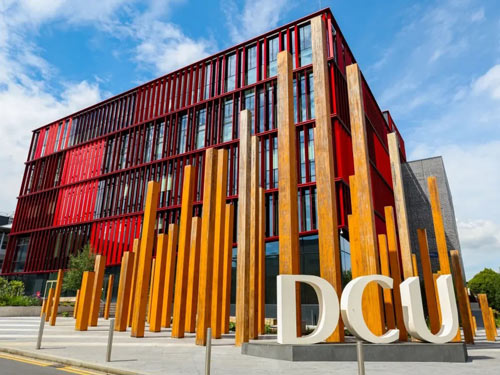
Dublin City University has written off €4.38 million in professional fees connected with a proposed student accommodation development.
Planning permission had originally been secured for 1,235 student beds at DCU.
A first phase involving 405 beds received approval in principle for Government support, but following tendering, escalating construction costs raised value-for-money concerns and the development did not proceed.
DCU says the €4.38 million included architectural and planning fees, two tender processes and redesign work required to comply with updated building regulations.
Planning permission remains valid until 2029 and DCU is continuing to seek a viable funding solution, meaning the provision could potentially be reversed if the project ultimately proceeds.
But the position today remains stark; €4.38 million spent – and no additional student accommodation delivered.
At a time when students are struggling to find somewhere affordable to live, that deserves serious scrutiny.
The National Children’s Hospital — From €987 Million To About €2.24 Billion
Then there is the National Children’s Hospital. Construction began in 2016 and the project has experienced repeated delays and escalating costs.
The estimated project cost has risen from approximately €987 million to €2.24 billion.
As recently as September 2026, contractor BAM had submitted claims amounting to €983 million in disputed additional costs. These are claims, not established additional liabilities, and there remain substantial contractual disagreements between BAM and the National Paediatric Hospital Development Board.
Whatever the eventual outcome of those disputes, the public is entitled to ask how one of the most important infrastructure projects in the history of the Irish State became so expensive and so delayed.
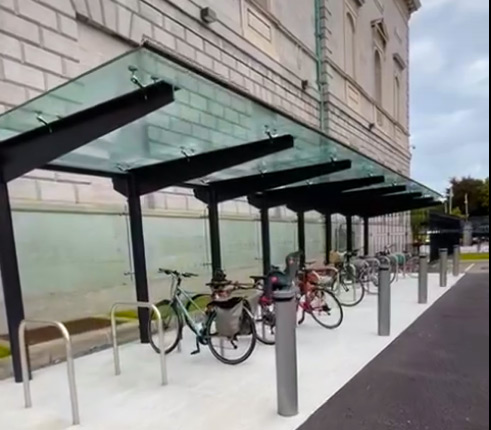
A Bicycle Shelter At Leinster House, €336,000.
Then came the €336,000 bicycle shelter at Leinster House. This was not simply a case of members of the public deciding that something looked expensive.
A subsequent Deloitte audit found an “absence of some fundamental good practices”, including the absence of a value-for-money assessment before the project proceeded.
The audit found that when the decision was taken to proceed in 2021, project costs were neither presented nor discussed.
That is precisely the type of governance issue taxpayers should be concerned about.
If nobody properly establishes whether a project represents value for money before approving it, how can taxpayers have confidence that their money is being protected?
A Security Pavilion, €1.429 Million
A separate security pavilion at the Leinster House/Government Buildings complex cost €1.429 million. It is important to acknowledge that this was considerably more than a simple “security hut”.
The OPW said the development followed a Garda security review and incorporated extensive security, communications, CCTV, anti-ram protection, mechanical and electrical systems, underground works and the re-routing of existing services.
The OPW also stated that the work went through an open competitive tender process.
Nevertheless, €1.429 million remains an extraordinary amount of public money for a relatively small structure, and its cost understandably became another focus of questions over value for money in public construction.
Up To €3.9 Million In EV Grant Overpayments – Only About €109,000 Recovered
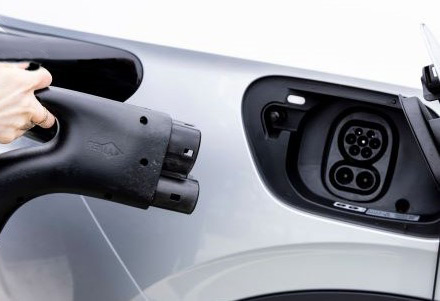
Now here we have another troubling example. The Comptroller and Auditor General has examined overpayments under the State scheme supporting electric vehicle purchases.
When the scheme was extended to demonstration vehicles purchased by dealerships, EU State-aid limits applied.
But the administration of the scheme relied heavily on self-declaration to establish whether individual dealerships were connected to larger dealership groups for the purposes of those limits.
- That system failed to identify all of the relevant linked businesses.
- The potential overpayments were subsequently estimated at up to €3.9 million.
- As of September 2026, only approximately €109,000 had been recovered.
- Some dealerships are contesting SEAI’s assessment, so it would be wrong to imply that every disputed euro has definitively been improperly retained.
- But the Comptroller and Auditor General’s findings raise a fundamental governance question:- Why were sufficiently robust verification controls not in place before millions of euro in public money were paid out?
See also previous post:- “€20m Armoured Vehicle Fleet Raises Serious Questions Over Value For Money”. View HERE.
The Common Thread: Governance Before Spending
These projects and schemes are very different. They involve different organisations, different circumstances and different explanations.
It would therefore be unfair to suggest that every euro involved represents “waste”. But taken together, they raise legitimate and serious questions about how the Irish State protects taxpayers’ money:-
- €4.38 million in professional fees on student accommodation that has yet to produce a bed.
- €336,000 for the Leinster House bicycle shelter, followed by an audit identifying shortcomings in fundamental project practices.
- €1.429 million for a security pavilion.
- Up to €3.9 million in disputed EV grant overpayments, with only about €109,000 recovered so far.
- A National Children’s Hospital now estimated at about €2.24 billion, following years of delays and substantial contractual disputes.
The common issue is not whether Ireland should build hospitals, provide student accommodation, improve security, install bicycle facilities or encourage electric vehicles. Of course we should invest in public services and infrastructure.
The question is whether we consistently demand the same discipline when spending taxpayers’ money that families and businesses are expected to exercise with their own.
Governance should mean proper business cases before projects begin:-
Independent challenge of costs;
Meaningful value-for-money assessments;
Strong verification before grants are paid;
Clear responsibility for decisions;
Continuous monitoring as costs change;
Swift action when something goes wrong.
Accountability after money has been spent is important, but prevention is far better.
Every million unnecessarily lost to poor planning, inadequate controls, excessive costs or avoidable delays is a million that cannot be spent on housing, healthcare, disability services, education, policing or other essential public services and ultimately there is no mysterious pot of “Government money”. It is “taxpayers’ money”.
The public has every right to expect that those entrusted with spending it can demonstrate not merely that procedures were followed, but that value was obtained. Because repeatedly discovering problems after millions, or billions, have already been committed is not enough.
Public money should be protected before it is spent, not simply explained after it is gone.





Leave a Reply