The Environmental Protection Agency has confirmed that it is awaiting a written response from Tipperary County Council before deciding whether further EPA action is warranted concerning continuing complaints about the River Suir.
In correspondence received following a further complaint submitted on August 27th, 2026, the EPA’s Office of Environmental Enforcement stated:
Dear Mr Willoughby,
The Environmental Protection Agency (EPA) acknowledges receipt on 27/08/2026 of your further correspondence below relating to the issue referenced above. Our Ref: COM021813.
As previously advised, with respect to the scope of your concerns as listed below, we note that the majority of the concerns and questions raised relate to matters that fall within the remit and functions of Tipperary County Council as the competent authority for these matters.
We have requested a written response from the Council on any actions taken or planned on this matter. Until we have reviewed the response from Tipperary County Council, we will then assess any appropriate actions that may be required by the EPA and communicate our decision to you.
We trust this outlines the approach undertaken by the EPA with regard to this matter and, as advised, we will contact you again in due course.
Kind regards,
Mary Murphy
(Programme Officer, Office of Environmental Enforcement, Wexford.)
Pic: G. Willoughby.
The reply is important because it confirms that the complaint remains under consideration. It also places Tipperary County Council firmly at the centre of the response: the EPA has asked the Council to account in writing for what it has done and what it proposes to do.
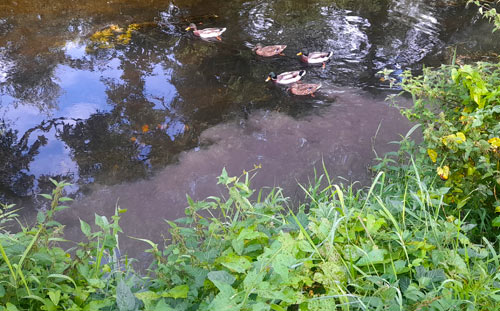
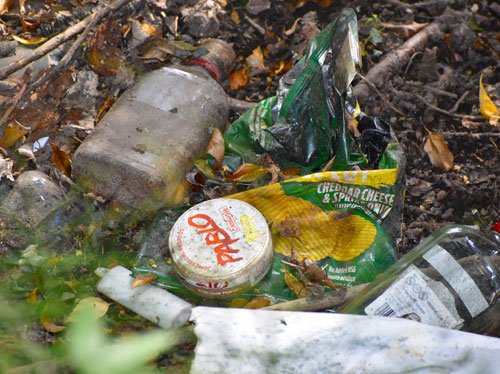
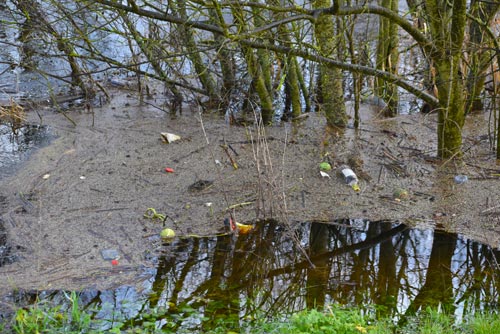
However, the correspondence provides no deadline for the Council’s response, no timetable for the EPA’s assessment and no indication of what evidence or remedial programme has been requested. “In due course” is not an adequate substitute for a transparent schedule, particularly after concerns about pollution, excessive vegetation, restricted flow and the condition of the river have been raised repeatedly for more than a decade.
Another River Suir organisation proposed.
Meanwhile, NoreVision has been consulting communities, landowners, river users and businesses about establishing a River Suir Trust. The proposed organisation would seek to improve the river’s ecological health, develop practical projects and increase public understanding of the river ecosystem. Consultation invitations concerning the proposed trust were publicly circulated in May 2026 through local community channels, including Holycross/Ballycahill.
Pic: G. Willoughby.
A properly constituted trust, supported by qualified scientific staff and sustainable funding, could provide valuable coordination, education and practical restoration work. It might also offer communities a stronger voice when dealing with public authorities.
Nevertheless, a trust remains a proposal until its governance, funding, staffing and work programme are published. Its success should eventually be judged by measurable ecological improvements, not by the number of consultations held, partnerships announced or aspirations expressed.
Most importantly, a community trust must supplement statutory action, not become a substitute for it. Volunteers and charitable organisations cannot be expected to assume the legal responsibilities of local authorities, regulators, public utilities or other State agencies.
“Save Our Suir” also established.
A separate community initiative, “Save Our Suir”, emerged following a public meeting held at Cahir House Hotel on August 26th. Contemporary notices from the Cashel, Golden and Tipperary Anglers Association and local social-media accounts confirm that the meeting took place, with a packed attendance.
This mobilisation demonstrates the depth of public concern. It could also help maintain pressure for disclosure, investigation and action. However, the appearance of several overlapping initiatives now creates a risk of fragmented effort unless their respective objectives and responsibilities are clearly defined.
Pic: G. Willoughby.
The River Suir does not require another layer of meetings in which every organisation participates, but no single body accepts responsibility for delivery.
Responsibilities must not become blurred.
It is also important to describe the agencies’ roles accurately. The Local Authority Waters Programme was officially renamed the River Basin Management Service in July 2026. It works on behalf of Ireland’s 31 local authorities, providing catchment science, community engagement, funding and coordination. The renaming did not create a new enforcement authority or change the organisation’s underlying purpose. The official announcement expressly states that its purpose, services and commitments remain the same.
The EPA coordinates national water-quality monitoring, assessment and reporting. It also regulates EPA-licensed activities and oversees local-authority environmental performance. Tipperary County Council remains the competent authority for many local pollution, drainage, maintenance and enforcement matters, the position now restated in the EPA’s reply.
Inland Fisheries Ireland has responsibilities relating to fisheries protection, habitat and fish passage. Its national barrier programme has funded five projects in County Tipperary, but the published list does not by itself establish that these projects will resolve the particular problems reported in the River Suir at Thurles.
Cooperation among these bodies is necessary and essential, but cooperation without named responsibility, deadlines and published outcomes can too easily become a mechanism for delay.
The public now needs answers.
The EPA’s intervention is welcome, as are the River Suir Trust proposal and the formation of Save Our Suir. Yet none of these developments, by itself, amounts to river restoration.
After some 13 years of documented local complaints and warnings, the public should now be given:
- Tipperary County Council’s complete written response to the EPA;
- A published scientific assessment of the affected sections of the river;
- Identification and investigation of pollution and nutrient sources;
- Relevant water-quality, flow, oxygen and ecological-monitoring results;
- A costed programme of remedial and maintenance work;
- A clear allocation of responsibility among the Council and State agencies;
- Environmental assessment of any proposed vegetation or obstruction removal;
- Firm commencement, completion and public-reporting dates.
The proposed River Suir Trust and Save Our Suir may become constructive forces. They should be supported where their work is evidence-based, transparent and properly coordinated.
But the critical question remains unchanged:- What practical work will now be undertaken, who will be responsible for it, and by what date will the public see measurable improvement in the River Suir?





Leave a Reply