There was once an old wedding tradition that believed it was good luck for a bride and groom to meet a chimney sweep on their wedding day. The story is often linked to a royal legend: a chimney sweep is said to have helped save a king from runaway horses, after which sweeps became known as bringers of good fortune. Whether the tale is fact or folklore, the symbolism is easy to understand. The sweep was connected with the hearth, the fire, and the warmth of the home; all powerful images for a newly married couple beginning life together.
Today, this tradition has become a charming wedding extra. A chimney sweep may appear outside the church, registry office, or wedding venue to greet the couple, shake hands with the groom, kiss the bride on the cheek, pose for photographs, and offer a few words of good luck. It is unusual, memorable, and full of character, exactly the kind of detail many couples now look for when planning a wedding.
Wedding venues and professional photographers could also adopt the idea as an added service for couples looking for something traditional, quirky, and memorable.
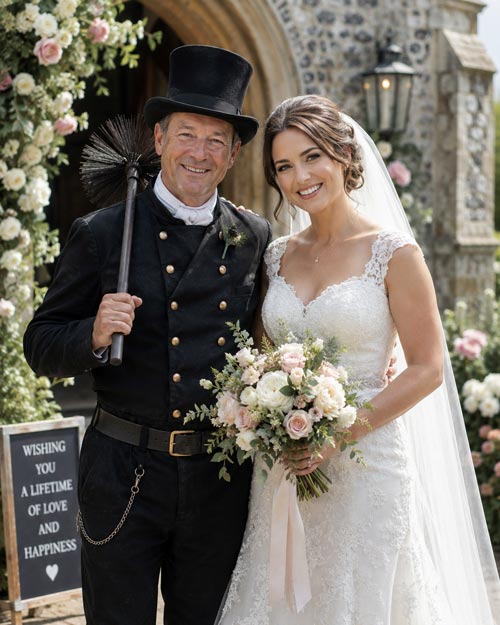
A venue might offer a “lucky chimney sweep” as part of a heritage or vintage wedding package, while photographers could suggest it as a characterful photo opportunity after the ceremony.
Some couples may worry about soot marking the bride’s white dress, but this can be easily avoided. The sweep can arrive in clean ceremonial clothing, use a display brush rather than a working one, avoid close contact with the dress, and pose carefully at the bride’s side. With a little planning, the charm of the tradition can be kept without any risk to the gown.
For modern chimney sweeps, this old custom could also offer a useful additional income stream.
The trade is changing. With cleaner heating policies, reduced reliance on fossil fuels, and the gradual move toward low-carbon homes, traditional chimney work is not the same as it once was. Gas, oil, coal, wood, and smokeless-fuel use are all under closer environmental scrutiny, and many households are moving toward heat pumps, better insulation, and electric heating. At the same time, sweeps remain important for homes with working fireplaces, wood burners, and multifuel stoves, where regular sweeping is still essential for safety.
That creates a challenge but also an opportunity.
A wedding appearance does not replace the practical work of chimney sweeping, but it can sit alongside it. It makes use of the sweep’s traditional clothing, local reputation, storytelling, and historic image. It can be offered as a weekend or seasonal service, especially during the spring and summer wedding months, when demand for chimney maintenance may be lower.
A Chimney Sweep could offer packages such as:
► A lucky sweep appearance after the ceremony.
► Photographs with the bride and groom.
► A short traditional blessing or good-luck greeting.
► A certificate or keepsake for the couple.
► Optional attendance at the reception for photos with guests.
The idea works especially well for historic venues, country weddings, church weddings, vintage-themed ceremonies, and couples who want something different from the usual wedding entertainment. It also gives younger generations a chance to see a trade that was once central to everyday life but is now becoming less visible.
In that sense, the wedding chimney sweep is more than a novelty. It is a way of keeping an old craft in public view, preserving folklore, and helping working sweeps adapt as heating habits change.
For chimney sweeps looking to diversify, the message is simple: the soot may be less common, but the story still has value. A clean chimney keeps a home safe; a lucky sweep at a wedding brings a smile, a photograph, and a tradition that couples will remember for years.
“Come on, lads — let’s bring a little imagination to wedding events.”





Leave a Reply