With €170bn on deposit, Simon Harris targets new savings incentive to open investing to ordinary families.
The Tánaiste, Mr Simon Harris, plans to bring a framework to Government in the first half of 2026 for an incentivised savings scheme, aimed at people who feel shut out of investing by complexity, tax rules and high minimum entry points.
The proposed retail investment strategy is intended to help households build stronger financial resilience, while also channelling more money into the productive economy. Mr Harris has pointed to the scale of cash sitting in deposit accounts in Ireland, estimating it at about €170 billion, and has argued that policy should help those savings work harder for individuals and families as well as supporting small and medium-sized businesses.
Speaking in Brussels during meetings of EU finance ministers, he signalled that the plan would be developed quickly, with an early Cabinet discussion, followed by a dedicated savings and investment forum to gather views from stakeholders and industry. Engagement with the Central Bank of Ireland is also expected as part of the design work.
The Tánaiste has indicated he wants proposals ready for the next Finance Bill, while acknowledging that key issues include the overall tax treatment and the lack of accessible retail investment products through mainstream banks. He has also linked the domestic plan to the push at European Union level for a Savings and Investment Union, arguing that Ireland should align with that agenda in a way that delivers clear benefits for Irish savers.
A North Tipperary councillor has warned that Tipperary County Council must “come out strongly” with regard to its position on the proposed Shannon-to-Dublin water transfer scheme, as the multi-billion euro project moves through the planning process.
Uisce Éireann states the abstraction would be a maximum of 2% of the long-term average flow at Parteen Basin. The volume most commonly cited in public reporting is roughly 330–350 million litres per day(depending on the source and whether a rounded “up to” figure is used).
Cost estimates are varied. Uisce Éireann has referenced a preliminary indicative range in the €4.58bn–€5.96bn bracket, while other reporting has noted higher “worst-case” risk scenarios discussed in official correspondence.
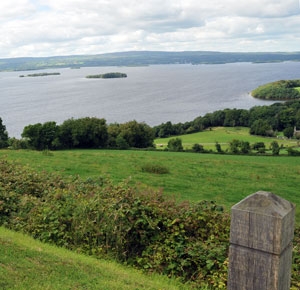
“A legacy of a beautiful lake that’s destroyed” Speaking on local radio, Councillor Bugler said she fears the council will not oppose the project strongly enough when it finalises its submission. She said she raised her concerns directly with council Chief Executive Ms Sinéad Carr, warning against any temptation to prioritise potential local “community benefit” funding over environmental impact. She has urged the council not to “sell us out” and said she was worried about damage to Lough Derg for future generations.
Uisce Éireann has said it is proposing a “bespoke Community Benefit Scheme” linked to communities hosting construction and permanent infrastructure.
Criticism after Killaloe meeting. The councillor also criticised Uisce Éireann’s public engagement after a recent information meeting in Killaloe, saying she was dissatisfied with the answers provided on how the project would operate during low-flow or drought periods. In particular, she questioned how a 2% abstraction figure based on long-term averages would translate during dry spells and whether abstraction would be reduced or suspended, and what that would mean for the reliability of supply to Dublin and the wider region.
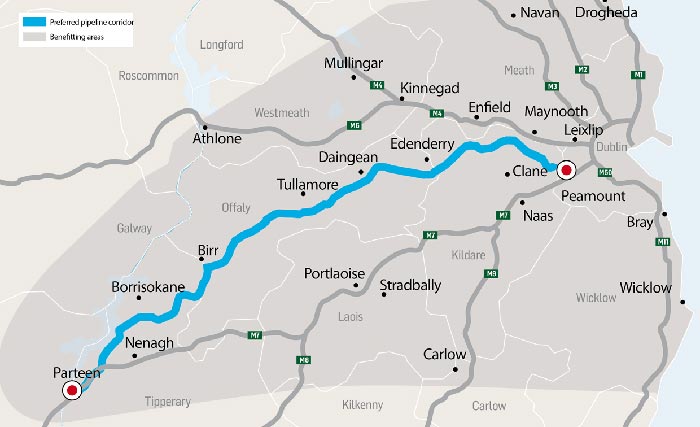
Proposed Tipperary – Dublin Pipeline.
“What turns this from local frustration into national hypocrisy is the scale of spending Ireland is willing to contemplate elsewhere. The Irish Government has backed the Water Supply Project for the Eastern and Midlands region, intended to bring a new long-term water source from the Shannon system towards the greater leaking Dublin area“. See Link Here
Ms Bugler further claimed that some representatives displayed limited familiarity with local water and wastewater infrastructure, including the source of supply for towns Ballina and Newport from the Mulcair River, and raised concerns about treatment levels at Ballina’s wastewater facility. These are allegations made by the councillor in media reports; Uisce Éireann has not, in the published material cited here, issued a point-by-point response to those specific claims.
Council submission in preparation. Meanwhile, Tipperary County Council is preparing its formal submission to the planning authority. Separate coverage has reported that consultants have been appointed to assist the council in drafting its response. With the application now before An Coimisiún Pleanála, we learn that stakeholders and members of the public can also make submissions as part of the statutory process, ahead of a decision on whether the project proceeds and, if so, under what conditions.
Reducing the voting age to 16 is often sold as a simple, modern reform, to bring young people into the ‘democratic tent’ earlier, to boost turnout, and strengthen civic culture. In practice, it is neither simple nor risk-free. If voting is the most consequential act of civic membership, then lowering the threshold should only happen where the benefits are clear, durable and supported by institutional scaffolding to make sure it work. Right now, there are strong reasons not to entertain it.
First is principle and coherence: Eighteen is widely understood as the point at which the State recognises full adult status. Voting sits alongside other “full membership” rights and responsibilities, and it matters that this package is intelligible. Lowering the voting age, while leaving most other adult thresholds intact, either creates a new inconsistency, or invites pressure to “tidy up” the rest of the law to match. Either way, it is not a neat reform; it changes the logic of adulthood in public policy.
Second. The lived reality of 16-year-olds is structural dependence. Many teenagers are financially dependent, living under parental authority, and constrained by school and household expectations. That does not mean they cannot form political views. It does mean their ability to cast an independent vote can be narrower than it is for adults. In some cases, the risk is that a ballot becomes a proxy for household influence, not a genuinely autonomous civic voice.
Third. The modern information environment makes younger cohorts more vulnerable to manipulation. Politics is increasingly shaped by micro-targeting, influencer pipelines and rapid misinformation loops. Expanding the electorate to include minors increases the premium on strong media-literacy and civic preparation. Even advocates of votes at 16 regularly acknowledge that early, structured political education is essential. The problem is that civic education is uneven and often contested, so the reform risks outpacing the safeguards.
Fourth concern: Schools become an unavoidable political battleground. If 16-year-olds are voters, schools are the most efficient point of contact. Teachers and principals would face intensified pressure to “balance” content; parents would worry about politics being smuggled into classrooms; campaign groups would seek access through “non-partisan” resources. International discussions of votes at 16 frequently stress education as a prerequisite, but that is exactly where the most polarising arguments land.
Fifth. There are serious administrative and safeguarding complications around registration. An electoral register must be usable and transparent, but the Irish State also has a duty to protect under 18s’ personal data. Where 16–17s have been enfranchised, special arrangements have been needed to manage this tension. It is not a reason never to do it, but it is a reason not to treat the change as cost-free or merely symbolic.
Sixth. The political and constitutional “bandwidth” argument matters, especially in Ireland. Changing the national voting age is not a routine legislative tweak; it carries constitutional implications and would demand major political energy. In a country with multiple urgent reform priorities; housing, health capacity, infrastructure, cost-of-living etc., there is a fair question; “Is this the best use of this scarce reform capital?”
And Finally. The promised benefits are not guaranteed. Events that feel unusually important, visible, and emotionally charged, can see strong youth participation, but that does not automatically translate into higher turnout in ordinary elections or lasting engagement. Research from countries that have lowered the age are encouraging findings in some contexts, mixed results in others, and a recurring theme that outcomes depend heavily on preparation and political environment. In other words, the evidence is conditional not a clear mandate.
None of this denies that young people deserve a stronger voice. It argues that lowering the voting age is a blunt tool with real downsides. If the aim is youth influence and civic strength, there are lower-risk steps; better civic education and media-literacy; easier registration at 18; structured youth assemblies with real consultation power; even pilots at local level where issues are closer to daily life. Before redefining who gets a vote, we should fix the foundations that make democratic participation meaningful in the first place.
“Where Tipperary leads, Ireland follows” is attributed to Thomas Davis (1814–1845), a writer, poet, and prominent figure in the Young Ireland movement. He used this phrase in the 1840s in his “The Nation” newspaper, to praise the counties intense nationalistic spirit, earning it the title of “The Premier County”, thus highlighting Tipperary’s role in both political and social movements.
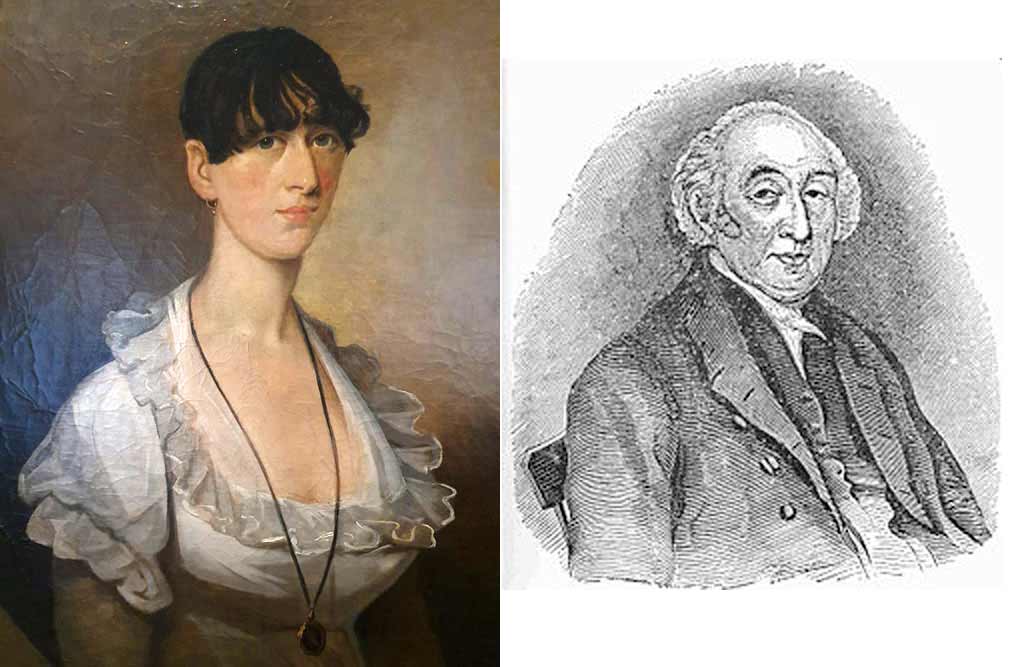
Dr. Robert Emmet M.D., the father of Irish Republican, orator and rebel leader Robert Emmet (1778 – 1803), was born in Tipperary town on November 29th 1729, the younger of two sons in a family where medicine was already a calling. While no biographical sources name a townland or house, a carefully researched account helps narrow the scene; his father’s Will referred to “the house where he resided in Tipperary”, with family interests tied to the town’s trade and market life. In other words, the Emmets belonged to the working, improving fabric of Tipperary town, not some anonymous dot on a map.
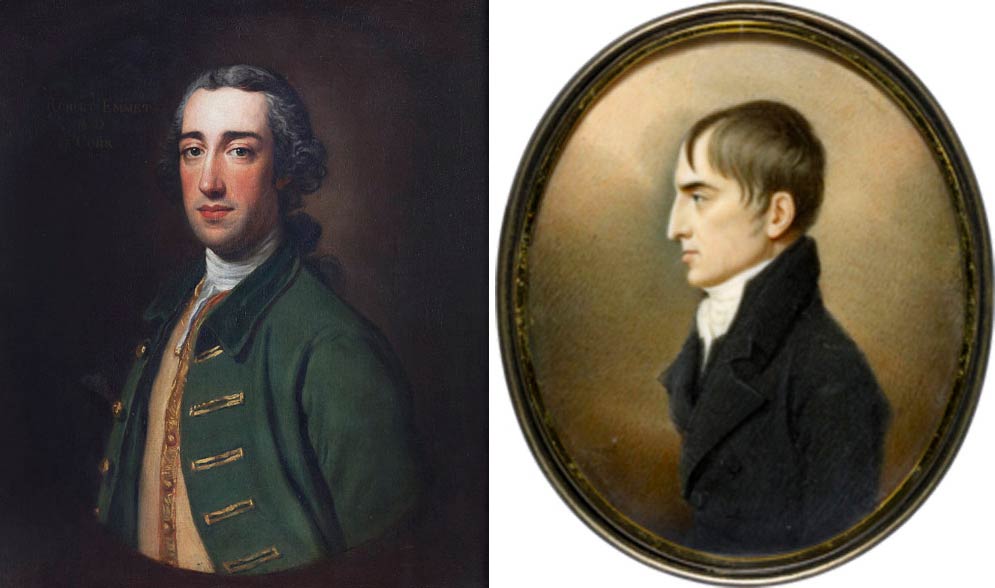
Left: Dr. Robert Emmet. Right: Executed Rebel Robert Emmet. Note the striking resemblance (around the mouth) in all Emmet family featured portraits.
His rebel leader son today has three towns in Co. Tipperarywith streets named after him : In Thurles:Emmet Street (L-4021) connecting Barry’s Bridge and Thomond Road, is most often incorrectly spelt, by Tipperary Co. Council, as “Emmett Street”. His rebel son is also commemorated on the 1798 memorial, visible standing in Liberty Square today, and locally referred to as the “Stone Man”. In Tipperary Town: Emmet Street is one of the main streets laid out connecting Dillon Street, and it’s still an everyday address in use today. In Clonmel: Emmet Street is a more central street (for example, Tipperary County Council lists its Civic Offices there, and An Post lists Clonmel Post Office as being on Emmet Street).
“Where Tipperary leads Ireland follows”. That line, by Thomas Davis, fits him surprisingly well, because the Emmet story becomes a pattern seen again and again in Irish life; provincial beginnings, serious education, success in a southern city, and finally the pull of Dublin’s institutions and power.
A doctor, made in Edinburgh and shaped by Europe. To study medicine properly in the 18th century was to look outward, and Robert Emmet did just that. He graduated at the University of Edinburgh, one of the then great medical schools of that era. A letter he wrote to a Cork newspaper, in 1763, even suggests time spent studying in Paris, the kind of continental polish ambitious doctors prized.
Thomas Addis Emmet.
By the time he returned to Ireland, he was not simply a local practitioner, he was the sort of physician who could move between worlds, rural and urban, Irish and European, private practice and public appointment.
Cork years: Reputation, Marriage, and a growing household: Emmet settled down to practise in Cork, and it was here that his name began to carry weight. The board of Cork’s Charitable Infirmary would later formally thank him for “the great care” he took of patients, the kind of public endorsement that tells you a doctor was not merely competent, but trusted.
In November 1760, he married Ms Elizabeth Mason, linking him to another established family network (the Masons of Munster). Some of their children can be identified clearly in sources, and they anchor the family’s Cork chapter. Christopher Temple Emmet, born in Cork in 1761. He married Anne Western Temple, daughter of Robert and Harriett (Shirley) Temple. Thomas Addis Emmet, born in Cork on April 24th 1764. He married Jane Patten (1771–1846), a daughter of John Patten and Jane (née Colville) Patten, in 1791.
Emmet was also a man of projects. The Munster account shows him involved in property and land, advertising holdings and opportunities in the countryside, a reminder that professional families often broadened their income in practical ways, through farms, leases, and investments.
The turning point –Dublin and the post of State Physician: Then came the step that changed everything. In March 1770, Emmet took up office in Dublin as state physician, after purchasing the office from the widow of the former holder for £1,000; a role that required presence in the capital and placed him close to the heart of administration. The move was abrupt enough that he was winding down Cork affairs and property as he departed; the record even notes the precise start, March 6th 1770.
Dublin was not just a new address. It was a new scale of life, bigger circles, bigger expectations, and a household that would become famous for reasons he could not control.
The sources are blunt about the family’s size and its sorrow; their son Robert was the seventeenth child, but only the fourth to ever survive. That single line captures both prosperity and loss; the realities of family life even among the comfortable classes in the 1700s.
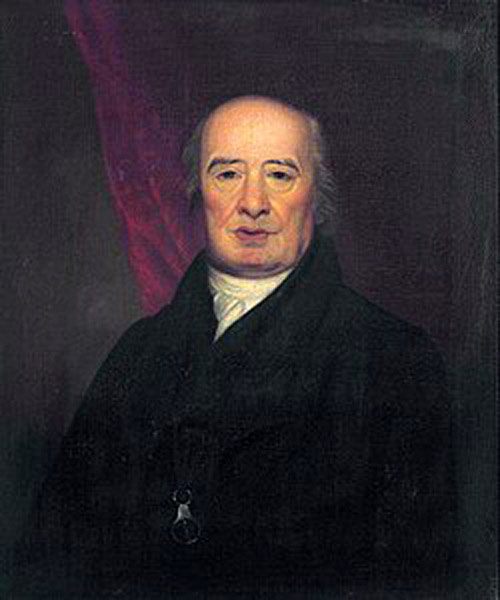
Mary Anne Holmes, (née Emmet) and husband Robert.
The four surviving children are identifiable: Christopher Temple Emmet, born Cork, 1761, and a distinguished barrister and poet, who died aged 27 years, in 1788, followed some months later by his wife. Thomas Addis Emmet, born Cork, April 24th, 1764 and a leader of the United Irishmen, before being forced into exile and later becoming a renowned lawyer in New York city. Mary Anne Holmes, (née Emmet) writer and poet, wife of barrister Robert Homes, former born in Dublin, on October 10th, 1773. Robert Emmet, (Executed Rebel in 1803), born March 4th, 1778 at 109/110, St Stephen’s Green, Dublin. The family’s Dublin story is inseparable from that address: a prosperous, educated household in the capital, and the cradle, ultimately, of one of Ireland’s most remembered names.
Final years and death: Dr. Emmet lived long enough to see his children grown and their talents emerging, and long enough, too, to sense that Irish politics were shifting underfoot. He died on December 9th 1802, and accounts of the period record his burial in the Churchyard of St Peter’s Church, Aungier Street Dublin.
He did not live to witness the family’s most dramatic and tragic chapter, that came less than a year later, when his youngest surviving son Robert junior, stepped into Irish history. It was on his death, that rebel Robert, using the £2,000 left to him by his father, laid preparations for a failed rising against what he described as “the cruel English government and their Irish ascendancy”, on July 23rd, 1803. Chief Justice Lord Norbury sentenced the rebel Emmet to be hanged, drawn and quartered, as was customary for conviction of treason. On September 20th, 1803, Emmet was executed in Thomas Street in front of St. Catherine’s. He was hanged and then beheaded once dead. Today, his actual burial place is still unknown, thus inspiring the phrase, “Do not look for him. His grave is Ireland.”
Still, step back from the legend and the Emmet story comes into sharp focus; a birth in Tipperary, a medical education in Edinburgh, professional success in Cork, a state appointment in Dublin, and a family whose “only four surviving” children would go on to shape Irish public life, literature, law, and rebellion.
A clear look at the figures as €14.5m is doled out in Leinster House post-election payouts.
More than €14.5 million has been paid out in severance-style supports, redundancy and pension lump sums to former TDs and Senators and their staff since last year’s election, according to figures released under FOI and explanatory notes from the Oireachtas. The payments fall into two broad streams: supports for departing politicians and exit payments for staff employed under the Oireachtas scheme.
Leinster House.
Termination payments to former TDs and Senators: The Oireachtas said €2.98 million was paid in monthly termination payments to politicians who retired or lost their seats. That money was shared among 70 people, working out at an average of about €41,800 per recipient. These monthly payments are made to TDs and Senators who meet service requirements and are described as a measure intended to help members transition back into ordinary employment after leaving office. Separately, a total of €1.14 million was paid in termination lump sums under the Oireachtas departure package. Again, this related to 70 former TDs and Senators, averaging around €16,000 each.
An information note accompanying the figures sets out the basic rule: where eligibility conditions are met, a termination lump sum equivalent to two months of salary, including salary allowances held during the period of continuous service, is payable, subject to Revenue rules on severance payments.
Pension lump sums and annual pensions: In addition to termination supports, FOI figures show a further €3.022 million was paid in pension lump sums to retiring and departing TDs and Senators. This pot was shared among 22 people, an average of just over €137,000 per recipient. Those individuals also qualified for annual pensions, with reported yearly amounts ranging from €7,796 to €63,467. Some may also be entitled to ministerial pensions, though those payments are handled through the Department of Finance rather than the Oireachtas administration.
One point highlighted in the reporting is transparency: In previous years, names and individual amounts were published, but that practice has now ceased, with privacy cited as the reason.
Staff severance and redundancy: €7.45m: A large share of the overall €14.5m relates to staff working for TDs and Senators, whose employment ended after the election. Documents released under FOI show around €7.45 million was paid to staff members of former TDs and Senators. This included severance payments of €6.189 million paid to 187 people, an average of about €33,000 each. A further €1.26 million was paid in statutory redundancy to 116 former staff, worth an average of just under €11,000 per recipient. The records also show that nine people were re-employed after the election, triggering repayment requirements. The Oireachtas said €192,875 was repaid in severance by nine people, and one person additionally repaid €14,116 in redundancy. The Oireachtas note explains that where someone who received an exit payment takes up employment under the scheme again within one year, they must repay the money received plus any compound interest that has accrued. It also states that where an exit payment has been repaid, any future payment or pension lump sum will be based on the person’s full service under the scheme.
What it means: Supporters of these arrangements argue elections can bring abrupt job losses and that structured payments provide a buffer for both politicians and staff. Critics tend to focus on the overall cost and optics, particularly at a time when most workers outside politics rely on standard redundancy rules.
Either way, the FOI figures put a firm number on the post-election bill, and ensure the debate around value for money, transparency and reform is likely to continue.
This website uses cookies to improve your experience. We'll assume you're ok with this, but you can opt-out if you wish.AcceptRead More
Privacy & Cookies Policy
Privacy Overview
This website uses cookies to improve your experience while you navigate through the website. Out of these, the cookies that are categorized as necessary are stored on your browser as they are essential for the working of basic functionalities of the website. We also use third-party cookies that help us analyze and understand how you use this website. These cookies will be stored in your browser only with your consent. You also have the option to opt-out of these cookies. But opting out of some of these cookies may affect your browsing experience.
Necessary cookies are absolutely essential for the website to function properly. This category only includes cookies that ensures basic functionalities and security features of the website. These cookies do not store any personal information.
Any cookies that may not be particularly necessary for the website to function and is used specifically to collect user personal data via analytics, ads, other embedded contents are termed as non-necessary cookies. It is mandatory to procure user consent prior to running these cookies on your website.








Recent Comments