Low-income families are increasingly anxious that the next electricity bill will be the one they simply can’t meet, as everyday usage becomes a choice between heat, light and other essentials.
Official figures show that 7.4% of people went without heating at some stage in the past year, due to lack of money, while 4.5% said they were unable to keep their home adequately warm, a stark measure of energy deprivation even before the worst winter pressures bite.
At the same time, the energy regulator’s arrears updates show a significant share of domestic electricity accounts currently remain in arrears, with large numbers in longer-term debt (90+ days), underlining how quickly “a tough month” can become a lasting burden.
Anti-poverty groups, including SVP, warn that once-off supports have faded while costs remain punishing, leaving families fearful of disconnection, mounting repayment plans, and cold homes becoming normal.
However, there is a small glimmer of light at the end of this winter tunnel for people in receipt of Child Support Payments or getting a qualifying social protection payment or taking part in an approved employment, education or training support scheme, so do hang-in there.
Keep in mind that applications will open on June 1st for Back to School Clothing and Footwear Allowance eligibility for 2026. Families who qualify for the Back to School Clothing and Footwear Allowance (BSCFA) can apply from June 1st to 30th September each year, with the Department of Social Protection confirming the scheme window and advising that the 2026 scheme will open in June 2026.
The once-off, means-tested payment is designed to help with the cost of children’s clothing and footwear ahead of the return to school each autumn.
Payment rates. The allowance is paid per eligible child, at two rates: €160 for children aged 4–11. €285 for children aged 12–22 (where eligible). Children aged 18–22 must be returning to second-level education to qualify.
Key change for 2026: extension to children aged 2 and 3. As part of Budget 2026, the Department has confirmed that the €160 rate will be extended to children aged 2 and 3 who qualify, a change that will apply for the 2026 Back to School Clothing and Footwear Allowance BSCFA.
Who qualifies. To be eligible, applicants must meet a number of conditions, including:
Be getting a qualifying social protection payment or taking part in an approved employment, education or training support scheme.
Be getting Child Support Payment (previously Increase for a Qualified Child) for each child claimed (with some exceptions).
Satisfy the household income limit (means test) and be resident in the State, as must each child claimed.
Operational guidelines set out weekly income limits (for 2025, for example: €694 for one child, €756 for two, €818 for three and €880 for four, with an additional €62 for each extra child).
How to apply and who gets paid automatically. The Department says many families will be paid automatically through a data-matching process, with award notices issued to a person’s MyWelfare account or by post in June. However, if you have not received an award notice by the end of June, and you meet the conditions, you will need to apply, even if you were paid automatically in previous years.
Applications are made online via MyWelfare.ie, which requires a verified MyGovID account.
Closing date. The deadline to apply is September 30thof the scheme year.
From Ultra-Processed Foods To Hormone Residues: Food Safety, Public Health & Corporate Accountability Collide.
A landmark lawsuit filed by the City of San Francisco against major food and drink manufacturers has signalled a new phase in public health enforcement, one that treats diet-related harm not as an individual failing, but as a market and regulatory failure demanding immediate accountability.
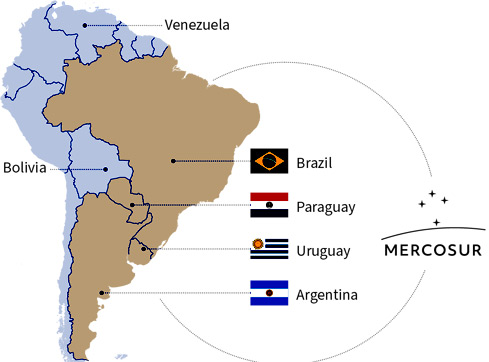
San Francisco alleges that ultra-processed foods were engineered and marketed in ways that encourage over-consumption, especially among children, and that the public ultimately pays the price through higher rates of chronic disease and spiralling healthcare costs. While that case will be tested in court, its wider message is already echoing across the Atlantic: Europe is facing its own “trust test” over what we allow into our food chain, particularly under the EU–Mercosur trade agreement.
Why this matters in Europe now: On 9 January 2026, EU member states greenlit the signature of the EU–Mercosur agreements, with the European Parliament’s consent still required before conclusion.
The European Commission states that EU rules apply equally to domestic and imported food, and that the agreement “upholds” EU food safety and animal/plant health standards.
However, confidence in “standards on paper” depends on something more basic: verifiable controls and traceability in practice.
Banned substances are not theoretical: recent Irish and EU recalls. The EU prohibits the use of hormones for growth promotion in farm animals. EFSA has also noted that ractopamine, a beta-agonist, is banned for use in food-producing animals in the EU and that the ban applies to meat produced in the EU and imported from third countries. Against that backdrop, Irish and EU reporting in recent weeks has documented the recall of Brazilian beef products after banned hormone residues were detected, including confirmation that a quantity entered the Irish market and was subject to official recall and follow-up.
The enforcement gap: what the EU’s own audit found. A 2024 European Commission DG SANTE audit of Brazil’s residue controls concluded that while many aspects of residue control plans were broadly consistent with EU principles, arrangements to guarantee that cattle destined for the EU market had never been treated with oestradiol 17β were “ineffective”. The audit stated the competent authority could not guarantee the reliability of operators’ sworn statements on non-use, and was not in a position to reliably attest to compliance with the relevant EU health certificate section.
This is the crux of the Mercosur anxiety: not whether Europe has rules, but whether Europe can consistently verify compliance, when supply chains are long, oversight differs, and commercial incentives are strong.
Ultra-processed foods and “addictive design”: the parallel problem. The San Francisco case centres on claims of deceptive marketing and products engineered to drive consumption. Meanwhile, the health evidence base around UPFs continues to expand. A major BMJ umbrella review reported that greater UPF exposure is associated with higher risk of adverse health outcomes, particularly cardiometabolic outcomes, across many studies. Controlled research has also shown that ultra-processed diets can increase calorie intake and weight gain compared with minimally processed diets under tightly controlled conditions.
The common thread is accountability: when products (or supply chains) are designed to maximise throughput and profit, public health cannot rely on consumer vigilance alone.
Calls to action Tipperary is now calling for a joined-up response that protects consumers, supports credible producers, and restores trust in our food chain: (1) A tougher “trust-but-verify” regime on imports). Full use of the EU’s Official Controls framework to ensure import compliance is proven through audits, sampling, and enforceable consequences, not assurances alone. (2)Mandatory transparency on audit findings and corrective action plans. Where EU audits identify weaknesses in residue controls or traceability, the public must see timelines, milestones and proof of remediation. (3)Stronger protections for children in the food environment. Restrictions on marketing tactics that normalise high-sugar, high-salt, heavily engineered foods to children—mirroring the direction of the San Francisco action. (4)Clearer front-of-pack information and health claims enforcement. Consumers should not need a chemistry degree to understand what they are buying, or whether “healthy” claims stand up. (5)A level playing field for farmers and processors meeting EU rules. Irish and EU producers operating under strict bans and controls must not be undercut by imports where verification is demonstrably weaker.
San Francisco has drawn a line under the era of ‘hands off’ regulation when public health harms are foreseeable and widespread. Europe is now at a similar crossroads. The EU–Mercosur debate cannot be reduced to tariffs and quotas: it is also about trust, enforcement and the credibility of our bans on hormones and other restricted substances. Public health must not be negotiated away, nor should consumers be asked to carry the risk.
With Tipperary named by Lonely Planet as one of the world’s top places to visit in 2026, the county’s lesser-known heritage sites deserve renewed attention and care. An example of same should include a small, enclosed burial ground, where a scattering of largely forgotten eighteenth and nineteenth century headstones still survives at the edge of Thurles town.
Carved stones from a lost church, mounted on a pillar. Pic: G. Willoughby.
St Bridgid’s graveyard (Eircode E41 AC91), the remnant of a former medieval parish church site, lies just west of Ardán Bhríde (Bridgid’s Terrace), directly opposite Thurles train station and running parallel to what was once named Garryvicleheen Road, now better known as Abbey Road.
Trailing Ivy now protects Thurles history. Pic: G. Willoughby.
What makes this modest graveyard particularly significant, however, is a limestone pillar beside the entrance to this enclosure, where architectural fragments and carved stones, wisely salvaged from the lost church, have been gathered and mounted for safekeeping.
A pillar of fragments and a warning in stone. On the south face of the pillar, four carved stones are now just about visible. At the top sits a rectangular corner stone bearing a carved seated cat, traditionally said to have once had two tails. Severe weathering has already softened key details, and the carving is now so worn that it may not survive intact for another generation. The cat’s face is described as V-shaped, with what appears to be a mouse held in its jaws. Locally, the workmanship has been associated with the trademark craft of An Gobán Saor (Gobban the Builder),the legendary seventh-century master mason, though the cat itself appears stylistically later, likely of eighteenth or nineteenth-century date.
To the right of the cat is a square stone depicting a lion, set within a circular frame. Same may also have British Royal Family connections. A surviving window fragment, same a rare prominent, ornate window arch, with S-shaped curves (ogee) and decorative carved panels (spandrels) is yet another striking historic piece. Finally, a rectangular limestone block carved with what appears to be a bald individual in a long robe and tunic, the clothing suggesting a cleric, (could it represent St Bridgid/ Bridget). The individual holds a cross in their right hand and a circular string of beads, most likely a paternoster♦, in their left. Beneath the figure, the names Patrick Kennedy and James Bulter have been crudely cut, later interventions that now form part of the stone’s layered story.
♦Paternoster: The paternoster was used to count prayers, typically 150 recitations of the “Our Father”. These beads often formed a loop, sometimes with a cross, reliquary (a container for holy relics), or pomander (latter worn or carried in a case as a protection against infection in times of pestilence or merely as a useful article to mask bad smells), as its end. This style eventually evolved into the modern rosary beads used today. Wearing the paternoster openly served as a devotional act, identifying the wearer as a Christian and displaying their religiosity. Depending on the materials used, serve as a display of wealth.
The west side of the pillar carries a single, highly recognisable carving, now unseen while protected by ivy: a limestone block showing a unicorn and lion rearing on their hind legs, (See immediately hereunder) beneath a crown, framed within a recess with a semi-circular head and straight sides. This scene represents the Royal Coat of Arms of the United Kingdom; Thurles being the ancestral Home of current reigning King Charles III. The window head and the heraldic carving are considered older than the cat, with a provisional seventeenth-century date proposed for the lion and unicorn, (See picture hereunder).
A simple, yet urgent message: Please Protect What Remains!
Behind the ivy, the Royal Coat of Arms of the United Kingdom. Pic: G. Willoughby.
The carvings at St Bridgid’s/Bridget’s gaveyard site are not museum pieces behind glass; they sit in the open air, exposed year-round. Weathering is now actively destroying this history, softening edges, flattening relief work, and erasing the very features that allow the stones to be read, dated and understood.
Once those details are gone, they are gone for good. There is now a clear need for immediate, practical conservation at this site which must include protective covering to reduce direct rainfall and frost damage.
A practical way to safeguard this valuable heritage would be to enlist the services of Mr James Slattery, Slattery Monumental Works, Fianna Road, Thurles, Co. Tipperary (Tel: +353 86 2430213) to oversee the careful, professional removal of the carved stones and their placement in more secure, sheltered conditions.
It is suggested that the four limestone relief blocks, depicting (1) cat, (2)lion, and (3) unicorn and lion, be taken in hand and sympathetically installed within the Thurles Library area of ‘The Source’, in Cathedral Street, Thurles, where they could be properly interpreted and enjoyed by the public and visitors, in a controlled environment.
In addition, the limestone block carved with the (a) cleric figure shown in a long robe and tunic, and the (b) window fragment, could be respectfully mounted on a pedestal within the nearby Church of St Joseph & St Brigid, in Thurles, ensuring, again, both protection and an appropriate setting.
In both instances, these measures would not only secure all the fragments for future generations, but would also create safe, welcoming and attractive points of interest for visitors and history-minded tourists to Thurles.
While St Bridgid’s graveyard maybe a quiet corner of Thurles; these stones, gathered loosely on the top of that pillar, carry centuries of craft, belief, power, memory and identity. If they are left fully exposed, the weather will finish what time has already begun, erasing an important and irreplaceable chapter of Thurles history in plain sight.
This post has been sent to officials at Tipperary Co. Council, marked for the attention of Ms Sinead Carr, (sinead.carr@tipperarycoco.ie).
♦ Note: At no stage should an attempt to remove these historic fragments out of Thurles town, be undertaken, and any efforts to do so should be vehemently and firmly resisted.
“The first, the gentle Shure (Suir) that making way By sweet Clonmell (Clonmel), adornes (adorns) rich Waterford; …” (Excerpt from poem by Edmund Spenser’s ‘Irish rivers’.)
♦ Note: It should be noted that in 2026 Cahir Castle has since been fully restored and has now become a major tourist attraction in Cahir, Co. Tipperary. However this was not the case in 1912 when McCraith published her book.
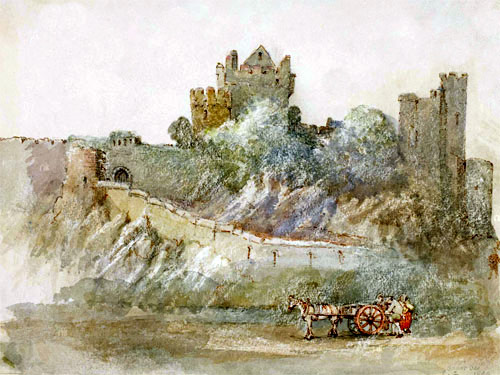
Cahir Castle as depicted by the artist James Stark Fleming (1834-1922).
The Suir – From Its Source To The Sea.
Cahir Castle rises on an island in the Suir, and commands the bridge in the middle of the town. This old ivy-clad Butler stronghold is probably the best example of late feudal architecture in Ireland. It was built in the fifteenth, or early in the sixteenth, century, and has remained in the family of its builders ever since.
The Butlers ceased to live in their castle about a hundred and fifty years ago. It has not been inhabited since a company of infantry was quartered there in the days of the late Earl of Glengall (he it was who gave the site for the present barracks, about a mile outside the town, formerly used for Cavalry, and now used for Field Artillery). For over a century the Castle has undergone no structural alteration, but remains an eloquent witness of the life led long ago in Ireland by a Lord of the Pale.
Centuries before the Butlers built the present Castle; centuries before even Conor O’Brien, Lord of Thomond, founded his castle there in 1142, the rock in the Suir upon which it stands was regarded as a natural point of vantage, to be defended by a “dun,” or fort. Its very name in Irish, Cathair-Duine-Iascaigh, (Irish – “the stone stronghold of the fish-abounding fort), is a word-history.
An old Irish MS♦., the Book of Lecan, records the destruction of this fort of Cathair Curreagh in the third century.
♦ Note: “MS” is the standard abbreviation for “Manuscript” (from Latin manu scriptus, “written by hand”)
This is the outline of the romantic story. A relative of Curreagh Lifé was killed by Finn MacRadamain, chief of the district surrounding Cathair, the modern Cahir. In revenge, Curreagh Lifé murdered Finn’s mistress, Badamair, who had her dwelling on the Cathair-Duine-Iascaigh, whence she supplied Finn with food and clothing, no doubt of her own catching and weaving. After murdering her, Curreagh plundered the fort, and escaped away beyond the river Bannow towards Waterford. Finn pursued him. After many days he got sight of Curreagh in the distance. Thereupon Finn pronounced an incantation over his spear, and hurled it at Curreagh, who was in the midst of a group of friends. Nevertheless, the spear found its way truly to Curreagh’s heart and killed him.
The Brehon Laws refer to this fort of Cathair, and Geoffrey Keating states that, among many other royal residences, Brian Boru fortified and used this fort of Cathair also.
When the Anglo-Normans came first to Ireland, Knockgraffon, and not Cahir, was the principal place in the Barony, which passed, about 1215, to one of Henry II’s knights, Philip of Worcester. From him it passed to his nephew, William, whose great-granddaughter brought it to the de Berminghams by her marriage with Milo de Bermingham. In 1332 the Barony reverted to the Crown on William de Bermingham’s attainder. But the English King was little bettered by Cahir. As has been said already, Bryan O’Brien and his Irish had by 1332 overrun and re-conquered Tipperary.
However, in 1325 the King granted the Barony to James, Earl of Ormonde, and to Elizabeth, his wife. James Cildare, the natural son of this Earl, by Catherine Fitzgerald, daughter of the Earl of Desmond, has generally been recognised as the founder of the Cahir branch of the Butlers. Since he, or his successor, quartered the de Bermingham arms with his, there was probably also a prudent alliance with the previous owners.
The new Lords of Cahir held an equivocal position. They occupied the borderland between the two great warring houses of Butler (Ormonde) and Fitzgerald (Kildare). Butlers by descent, Fitzgeralds by marriage and interest, they contrived throughout the Barons’ War, and the fiercest struggles of the sixteenth century, to retain their estates amid the ruin of their confederates. Perhaps the position of their Castle helped them, for an old record says:
“In the mydst of ye ryver Suyre lyeth an Ilaund, ye same a natural rock, and upon yt a Castle, which, although yt may not be built with any greate arte, yet is ye seite such by nature that yt may be said to be inexpugnable.”
Cahir Castle has changed little during the centuries. Today it closely resembles its appearance in 1599, as pictured in the Pacata Hibernia ♦.
♦ Note: Pacata Hibernia (Latin for “Pacified Ireland”) is a significant 17th-century historical work by Sir Thomas Stafford detailing the Elizabethan Wars in Ireland, particularly the campaign in Munster under Sir George Carew, offering a contemporary, soldier’s perspective with valuable maps and plans of Irish towns and fortifications. First published in 1633, it serves as a primary source for understanding the final, bloody stages of Gaelic Irish resistance against English rule, culminating in the Flight of the Earls and the Plantation of Ulster.
Instead of at once attacking O’Neill in the North, those of the Irish Council who had estates to lose in the South persuaded Essex to lead his army into Munster. Having been defeated near Maryborough, Essex marched to Kilkenny, thence to Clonmel, and so on to Cahir.
Reynolds, secretary to the Earl of Essex, describes Cahir as “the only famous Castle of Ireland which was thought impregnable; it is the bulwark for Munster, and a safe retreat for all the agents of Spain and Rome.” The Butlers of Cahir were staunch for Hugh O’Neill. Cahir Castle, therefore, Essex attacked.
Encouraged by Hugh O’Neill’s victories, and expecting reinforcements from Mitchelstown, those “heathens,” as the English writer courteously termed the garrison, refused to surrender. Thereupon Essex put his cannon into position, and began a vigorous siege. Despite wide breaches in their walls the garrison held out bravely for ten days, until they found that their expected reinforcements had been cut off. Despairing, the garrison attempted to make a sortie and to vacate the Castle under cover of darkness. It was a desperate endeavour, and was discovered by the besiegers. Eighty of the garrison were slaughtered, and the English took the Castle.
Essex re-garrisoned Cahir with English troops, left his wounded there, and went on to Clonmel. It was his first success, and his last, in Ireland.
In spite of this armed resistance, the Lord of Cahir managed to keep his Castle and lands from confiscation. This was through the influence of the head of the Butlers, Thomas, Earl of Ormonde, called “the Queen’s Black Husband” from his colouring and his Sovereign’s marked preference.
During the Cromwellian Wars and, later, during the Revolution, the luck of the Butlers of Cahir held. The Baron of Cahir was a minor during the wars of 1641–50, his guardian being George Mathew, a half-brother of the Earl of Ormonde. In 1647, previous to the coming to Ireland of Cromwell in person, Lord Inchiquin, ‘Murrough of the Burnings‘, (Murrough O’Brien, 1st Earl of Inchiquin♦), who was then fighting on the side of the Parliamentarians, invested Cahir Castle. The siege was one of hours only. The Castle was promptly handed over to Inchiquin, and a flimsy story put about to shelter Mathew’s cowardice; or was it his prudence?
♦ Note: The slaughter of the garrison at Cashel and the subsequent devastation of Catholic-held Munster earned Inchiquin the Irish nickname, Murchadh na Dóiteáin or “Murrough of the Burnings”.
Cromwell himself appeared before Cahir Castle on February 24th, 1650, and again George Mathew surrendered without a shot having been fired. One of the conditions of surrender was that: “The Governor may enjoy his estate, which he has as his jointure, and the wardship of the heir of Cahir”.
Although the Butler estates were surveyed by Petty♦during the Commonwealth for that object, they were not actually allotted to soldiers or adventurers; and at the Restoration, in 1662, Ormonde had little difficulty in reinstating his kinsman, “the heir of Cahir.”
♦ Note: Sir William Petty (1623–1687), an English scientist, physician, and political economist who was a key figure in the Cromwellian land confiscations in Ireland. He was responsible for overseeing the famous Down Survey of Ireland in the 1650s, which was the first detailed, large-scale land survey in the world.
The Butler luck, or prudence, held also during the Revolution. Thomas, seventh Baron Cahir, fought for James II on the bloody and disastrous field of Aughrim♦, and was outlawed in 1691. But, two years later, his outlawry was reversed and his estates restored. Being known as strong Catholics, with Jacobite leanings, the Lords of Cahir lived abroad during the eighteenth century.
♦ Note: Aughrim, County Galway. The battle was one of the bloodiest ever fought in Britain and Ireland; 7,000 people were killed.
By the death of Pierce, eleventh Baron, in 1788, the old Butler line became extinct. But a claimant appeared in the person of Richard Butler of Glengall, who derived his descent from Sir Theobald Butler, Baron of Cahir, in the time of Elizabeth. Richard Butler was married to a niece of Lord Chancellor Clare, and, as legal difficulties were thus smoothed over, he succeeded as twelfth Baron Cahir. He was afterwards created first Earl of Glengall. His son, the second Earl, died in 1858 without a male heir. The Barony of Cahir fell into abeyance again, and the Earldom became extinct.
The present representative of the Butlers of Cahir is the last Earl of Glengall’s daughter, Lady Margaret Charteris, to whom belongs the beautiful park through which the Suir runs for over two miles, together with many acres of surrounding mountain and valley.
Cahir Castle is in excellent preservation. It still serves for flower shows and other gatherings. The Butlers migrated, first, to Cahir House, a Georgian mansion, overlooking the Market Square on one side, and the lovely demesne upon the other, and, later, to the Lodge, on the opposite bank of the Suir.
Cahir Park.
The beautiful green banks of the River Suir are nowhere more attractive than in Cahir Park. To appreciate the place properly, you really have to see it for yourself.
Fortunately, the park is open to pedestrians. Private carriages and anglers can also enter, but only with permits, which (at the time of writing) were available from the Estate Offices in Castle Street.
It’s hard to say when Cahir Park looks its best: on a hot summer’s day, when cattle stand knee-deep in the broad, clear river and the trees and pastures are at their richest “living green”; or in late autumn, when the scarlet coats of huntsmen and the dappled white, black and tan of the foxhounds come and go through groves of golden oaks and coppices, with yellow bracken underfoot and laurels still keeping their summer colour.
In places the riverbanks become almost steep, and a graceful bridge spans the Suir at Kilcommon. From there you can reach a picturesque thatched cottage, built as a tea-house♦, and once a favourite rendezvous-is reached.
♦ Note: “Picturesque thatched cottage, built as a tea-house” refers to the ‘Swiss Cottage’ and again, is today 2026 also fully restored and a major tourists attraction. END
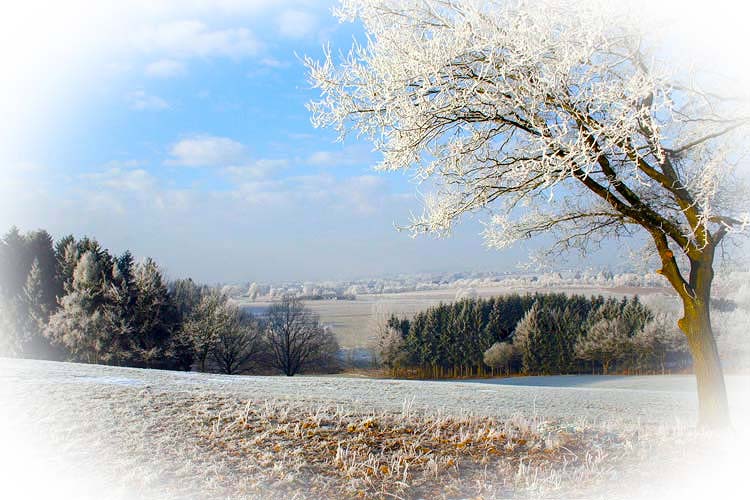
Met Éireann’s figures from Gurteen AWS (Automatic Weather Station); latter situated on the grounds of Gurteen Agricultural College, Co. Tipperary, point to 28 very wet days and 33 frost days, in the Thurles area.
Met Éireann’s Annual Climate Statement for 2025 confirms that indeed 2025 was Ireland’s second warmest year on record (since 1900), continuing a clear warming trend, with 2022 to 2025 now the four warmest years in the national series.
Using the Island of Ireland dataset, Met Éireann reports an average annual air temperature of 11.14°C for 2025, 1.59°C above the 1961 to 1990 long-term average and 0.97°C above the 1991 to 2020 average. Provisional rainfall for 2025 is 1,338.7mm, around 104% of the 1991 to 2020 long-term average, placing 2025 as the 15th wettest year since 1941.
Met Éireann’s Gurteen AWS also notes the year included the warmest and sunniest spring on record, the warmest summer on record, and a very wet autumn (the 4th wettest on record), with major weather impacts including ‘Storm Éowyn‘ which witnessed record winds at Mace Head, Co. Galway.
Thurles area snapshot:(nearest official monthly “weather events” station being Gurteen, Co Tipperary) While Met Éireann’s Annual Climate Statement is national in scope, its Public Works Contracts “weather events” tables provide month-by-month counts at station level. The closest suitable station for a Thurles-area proxy is Gurteen, Co Tipperary, which recorded the following information in 2025:
Days with rainfall>10mm: 28 days in total. Monthly counts: Jan 2nd, Feb 2nd, Mar 1st, Apr 4th, May 2nd, Jun 1st, Jul 2nd, Aug 0, Sep 3rd, Oct 6th, Nov 3rd, Dec 2nd.
Frost days(minimum temperature <0°C): 33 days in total. Monthly counts: Jan 13th, Feb 5th, Mar 5th, Apr 1st, May 1st, Jun 0, Jul 0, Aug 0, Sep 0, Oct 0, Nov 4th, Dec 4th.
Wind threshold days(maximum 10-minute mean wind speed ≥15m/s): 4 days in total Monthly counts: Jan 1st, Feb 1st, Mar 0, Apr 0, May 0, Jun 0, Jul 0, Aug 0, Sep 0, Oct 1st, Nov 0, Dec 1th.
These month-by-month counts are published as an objective measure of whether weather thresholds are exceeded for public works contract purposes, and provide a useful, locally relevant indicator of very wet days, frost incidence and notable wind events in the wider mid-Tipperary area.
This website uses cookies to improve your experience. We'll assume you're ok with this, but you can opt-out if you wish.AcceptRead More
Privacy & Cookies Policy
Privacy Overview
This website uses cookies to improve your experience while you navigate through the website. Out of these, the cookies that are categorized as necessary are stored on your browser as they are essential for the working of basic functionalities of the website. We also use third-party cookies that help us analyze and understand how you use this website. These cookies will be stored in your browser only with your consent. You also have the option to opt-out of these cookies. But opting out of some of these cookies may affect your browsing experience.
Necessary cookies are absolutely essential for the website to function properly. This category only includes cookies that ensures basic functionalities and security features of the website. These cookies do not store any personal information.
Any cookies that may not be particularly necessary for the website to function and is used specifically to collect user personal data via analytics, ads, other embedded contents are termed as non-necessary cookies. It is mandatory to procure user consent prior to running these cookies on your website.







Recent Comments