* Tipperary Country Recording Artist Molly O’Connell announced as contestant on Glór Tíre 2023. * Molly rounds off a most successful 2022 with a new Christmas single entitled “Jingle Rock A Melody“.
Country Recording Artist Molly O’Connell chosen as contestant on Glór Tíre 2023.
Top Country Music recording artist Molly O’ Connell will round off a great year, in style, with the announcements that she will be a contestant on Glór Tíre 2023. Sharing her Glór Tíre news on her social media platforms, Molly said, “Over the moon to tell you all that I am a contestant on Glór Tíre 2023. I hope ye can tune in along the way and I would be so appreciative of your continued support.”
The Tipperary woman shot to fame on the country scene in 2022, thanks to a string of original releases that have helped win her a multitude of loyal fans across the country, wherever she has performed. As 2022 comes to a close, Molly clearly has no signs of slowing down when it comes to capturing hearts, with her Christmas single looking like it’s going to be that tune you can’t help but hum through the holiday season.
From the pen of Maurice Ferris, “Jingle Rock A Melody” actually originated as a poem, some forty years ago, before eventually taking shape as a song with a production influenced by the style of the recently deceased country icon Loretta Lynn.
Molly, a native of Kilcommon, Thurles, Co. Tipperary, was approached by Maurice after the songwriter had been following her rapid rise to prominence, during the course of 2022. As with music lovers the country over, Molly’s smooth, honeyed, bird-sweet tones quickly made an impression on Maurice, and he knew hers was the voice through whom he wanted to share some of his songs with the world.
Among a selection of songs he sent to Molly was “Jingle Rock A Melody”. “It’s funny, because I had actually been looking for a Christmas song for a while”, revealed the ‘Crazy, Crazy Baby’ singer. “I love that frosty time of the year, so I’ve always had it in the back of my mind that I wanted to record my own Christmas single, sometime soon.
During 2022, Molly first announced her arrival on the Country Music scene starting in May with a trio of fan and radio favourites; “Crazy, Crazy Baby” – “Waltz A Lifetime With You”, which followed in August, and “Don’t Judge The Book By Its Cover”, recorded in early October. All three records came from the songbook of well-known country musician Stephen Hamilton, latter a collaborator that Molly hopes to work with again in the future, having described meeting him as being “a blessing”. Molly now looks ahead to yet another milestone moment in her music career, with her first Christmas single.
Molly who hails from a family of talented musicians, has fondest memories of songs, echoing through the hills of Kilcommon, during past Christmases. “With all the family home for Christmas, my late dad Denis would be first out with his button-accordion, followed by my sister Siobhan, following suit soon after. From there, it would only be a matter of time before my other two sisters – Breda Jr. and Deirdre, my brother Denis Jr, my Mam Breda, also joining in.” Molly explained. These sing-song sessions were always a family affair in our house and any relatives who came by on Christmas night, would contribute their own favourite party-piece for the occasion as well. We’d never needed to worry about what was on the television, because we’d have such great entertainment going on around us. You’d hear everything from Christmas carols, to country songs, to trad tunes, and needless to say there’d be dancing around the kitchen as well. You couldn’t but dance with all that music.” continued Molly laughing.
“And of course, in more recent times”, recalls Molly, “all the grandchildren would be called by my mum and dad to play their tin-whistles and sing a few songs by the fire too. So many great memories of so many great times
If my new Christmas single can become a part of peoples’ happy memories of this time of the year”, says Molly, “something that can make everyone happy now and give them a reason to look back on days gone by with smiles on their faces in the years to come, well, I don’t think I could make a more lovely Christmas wish than that.” Note: “Jingle Rock A Melody“, this brand new Christmas single from Molly O’Connell, will be available on all digital platforms and to request from radio, later this month.
For more information, do follow Molly’s official music page on Facebook, Molly O’Connell Music.
Pre-deceased by his mother Kitty and brother Jim (Dingle); Mr Kelly sadly passed away suddenly.
His passing is most deeply regretted by his loving wife Anne (nee Dunne, The Islands, Mullinahone), sons Liam, Anthony, John and Noel, daughter Sharon, grandchildren Grace, Aaron, Megan, Lorna, Eva and Reuben, great-grandchildren, daughters-in-law, in-laws, extended relatives, neighbours and good friends.
For those unable to attend Requiem Mass for Mr Kelly, same can be viewed, streamed online HERE.
The extended Kelly family wish to express their appreciation for your understanding at this difficult time and have made arrangements for those wishing to send messages of condolence, to use the link shown HERE.
Note Please: House strictly private on Friday morning.
The Government has today approved the publication of the Gambling Regulation Bill.
Led by Minister of State for Law Reform, Mr James Browne TD, this Bill sets out the framework for a modern, robust regulatory and licensing regime for the gambling sector. The legislation paves the way for the establishment of a gambling regulator focused on public safety and well-being covering gambling online and in person, with the powers to regulate advertising, gambling websites and apps.
The Bill gives legislative underpinning for the new Gambling Regulatory Authority, which will be essential to its success.
Welcoming today’s Government decision, Taoiseach Mr Micheál Martin said: “This approval by Cabinet is significant and the publication of the Bill is unquestionably a major milestone. It is an important and necessary piece of legislation, designed to meet the challenges of gambling responsibly in 21st century Ireland. This long awaited and much needed Bill takes a responsible approach to balancing the freedom to gamble with the safeguards to protect people from falling prey to addiction. This Bill provides a clearer framework for operators and for consumers.”
Speaking at the launch of the Bill today, Minister for Justice Mrs Helen McEntee said: “At the heart of the Bill is the establishment of the Gambling Regulatory Authority of Ireland, an independent body equipped to enforce regulation of the gambling sector. The Bill will ensure that the Gambling Regulatory Authority can appropriately, meaningfully and swiftly respond to ongoing and future developments in the gambling sector. The focus on preventing harm is of vital importance. As a former Minister of Mental Health and as a local representative, I have seen the damaging impact gambling addiction can have on people and families, particularly on their mental health.”
The Bill provides for a modern and streamlined approach to gambling licensing activities which will replace the currently fragmented regime. Three types of licences for both in-person and online or remote betting will be introduced: * Business to Consumer Gaming, Betting and Lottery Licences; * Business to Business Licences; * Gambling licences for Charitable/Philanthropic Causes.
Welcoming the Government’s decision today, Minister Mr James Browne TD said: “Reforming gambling legislation and regulation in Ireland is a key commitment in our Programme for Government and Justice Plan, and has been one of my key priorities as Minister. I am pleased to have gotten the draft legislation to this point, and look forward now to it being published and brought through the Houses to enactment. This legislation will establish a Gambling Regulator which will be robust with a focus on prevention of harm to people vulnerable to problem gambling and particularly protecting children, and also a focus on enforcement of a strong, modern regulatory framework for the gambling industry. Operators who provide gambling activities without a gambling licence issued by the Authority, or who do not operate in accordance with the provisions of their licence could, if convicted, face to up to 8 years imprisonment and/or a fine at the discretion of the courts. Strict regulation of gambling advertising will be a priority area for the Authority. Under the legislation, advertising intended to appeal to children will be prohibited, as will advertising that promotes excessive or compulsive gambling. A watershed prohibiting gambling advertising at certain times of day (between 5:30am and 9:00pm) will be introduced. In this digital age, to address the particular proliferation of gambling advertising on social media, such advertising shall be prohibited by default. The Bill also puts forward certain measures to minimise the ill-effects of gambling. The Bill will establish of a National Gambling Exclusion Register. The Bill prohibits the use of credit credits as a form of payment. The Bill will allow the Authority to prohibit the offer of inducements and promotions. A Social Impact Fund will be created and managed by the Authority while being funded from the industry. It will be used to finance initiatives to reduce problem gambling and support awareness–raising and educational measures.”
There is a pathway mapped for the legislation progressing which will facilitate the Gambling Regulatory Authority of Ireland being established and operational in 2023.
Noting the Government’s decision today, Minister for Children, Equality, Disability, Integration and Youth Mr Roderic O’Gorman said:
“As Minister with the responsibility for Children and Youth I welcome Government’s approval to publish this new legislation which places a particular focus on prevention of harm to people vulnerable to problem gambling, children and young people. The ever-changing but technologically advanced nature of the gambling industry means that children and teenagers are more exposed than ever to both overt and subtle gambling advertising. It is important that this is properly regulated to ensure that where gambling is advertised, it is done in a way that minimises harmful influences to young people.”
Local authorities play a vital role in protecting the environment and carried out over 205,000 inspections in 2021. The majority (70%) of these inspections relate to waste management.
Local authorities need to deploy and target resources more effectively in order to improve the quality of our air and water.
Local authorities need to increase the level of farm inspection and enforcement activity to reduce the impact of agricultural activities on water quality
There is a need for increased enforcement efforts by local authorities on the segregation of domestic and commercial waste and the management of construction & demolition waste, which is the largest waste stream in Ireland with over eight million tonnes produced annually.
In order to help protect human health from harmful air pollutants, local authorities should prioritise inspections of fuel sellers to ensure only approved fuels are sold nationwide.
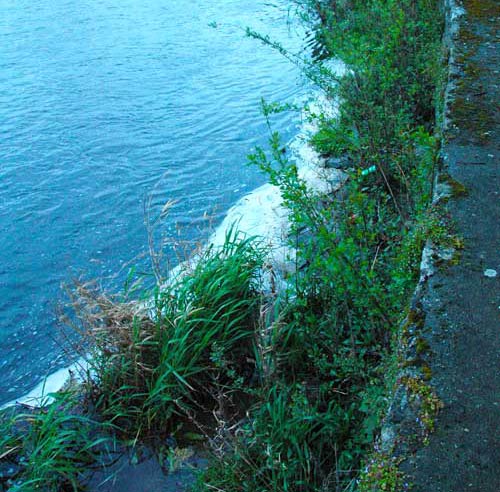
Polluted River Suir at ‘The Source’ building, central Thurles, Co Tipperary.
The Environmental Protection Agency(EPA) has today published its report on the environmental performance of local authorities in 2021. The report shows that the scale of environmental enforcement work carried out by local authorities is significant. In 2021, over 500 local authority staff handled almost 81,000 complaints and carried out over 205,000 environmental inspections.
Local authorities play a vital role in the protection of our environment and are responsible for enforcing much of our environmental protection legislation. The EPA’s Local Authority Performance Framework is crucial to ensuring a consistent national approach to the enforcement of environmental standards.
This is the first year of the revised Local Authority Performance Framework, which assesses the effectiveness of inspection activities in targeting key environmental issues. The assessment is based on 20 priorities, and measures how local authority actions deliver environmental outcomes – such as better segregation of household and commercial waste, cleaner air through controls on solid fuel sales and minimising risks to water quality from farming activities. Most importantly, there is an emphasis on assessing the follow-up and closure of issues detected so that real environmental improvements are achieved.
Commenting on the findings of the report, Dr Tom Ryan, Director of the EPA’s Office of Environmental Enforcement said: “Local authorities have a fundamental role to play in protecting the environment within their counties, and their performance in that role needs to improve. The EPA’s report shows that less than half of the 620 performance assessments undertaken across 20 national environmental enforcement priorities achieved the required standard in 2021. The local environmental challenges are great. The water quality in our rivers, lakes, estuaries and coastal waters is in decline and there are concerning localised issues that are impacting negatively on the air we breathe. The segregation of waste streams, which is so critical to supporting materials reuse in the development of a circular economy, is not as good as it needs to be.”
He further added: “Local authorities need to have a more strategic approach to addressing these issues within their counties so as to protect people’s right to the enjoyment of a healthy environment. While local authorities are engaged in a great deal of enforcement activity, they need to have a better focus on priority environmental issues and increase or escalate enforcement action where required.”
Our water quality is in decline with just over half of surface waters (rivers, lakes, estuaries and coastal waters) in satisfactory condition. Agriculture is one of the sectors that is impacting on our water quality. The science has identified areas where agricultural measures are required to prevent nutrients including nitrogen and phosphorus from leaking into our waterways. Local authorities must target farm inspections in these areas. The proper use of fertilisers and the correct management of slurry will benefit both the farmer and the environment.
Mr David Pollard, Programme Manager of the EPA’s Office of Environmental Enforcement said: “Local authorities continue to carry out extensive water quality monitoring, however, there is scope to make better use of this monitoring to target enforcement action aimed at improving water quality.”
Air and noise enforcement continues to have the lowest level of dedicated resources within local authorities. Better targeting and coordination of resources in this area is necessary to protect public health. It is crucial that local authorities tackle air pollution issues by making sure that only approved solid fuels are sold.
The scale of waste and litter enforcement carried out by local authorities is significant. However, the range of the waste priorities to be addressed is broad and few local authorities managed to cover the full scope in 2021. In particular, there is a need for increased enforcement efforts to improve segregation of domestic, commercial, construction and demolition waste in order to improve reuse and recycling of materials.
The Focus on Local Authority Environmental Enforcement – Performance Report 2021 report is available HERE.
In 1922 an agreement was reached between the British and the newly formed Provisional, 26 county, Irish government, to disband the Royal Irish Constabulary (RIC). To this end, in February of 1922, a meeting was held at the Gresham Hotel, Dublin. The purpose of this meeting was to establish a police force to replace the now exiting RIC force. Thus, on February 22nd, 1922, the “Civic Guard” was formed, before later being renamed “An Garda Síochána”, (an unarmed force), on August 8th, 1923.
This Civic Guard had initially been armed and were trained first at the Royal Dublin Society Showgrounds, Ballsbridge, Dublin, on April 25th 1922; then transferred to Kildare Military Barracks, Co. Kildare; before being transferred to Collinstown, Santry, Dublin. Eventually the force would take up residence at the former Royal Irish Constabulary depot, built in 1842, in the Phoenix Park, Dublin, in early 1923. (Later, in 1963, a new Training Centre was established in the old military barracks at Templemore, North Co. Tipperary.)
Fianna Éireann officers, 19 year old John Cole and 21 year old Alfred Colley, both shot dead in the Yellow Lane, Whitehall, Dublin, possibly by Intelligence Officers of the Irish National Army.
A troubled birth of this newly formed Garda force saw a mutiny in Kildare, same due to the objection of some of its members to the promotion to its senior ranks, of ex-members of the RIC. It took a personal visit by Michael Collins, to the Kildare Barracks in mid-May 1922, which resulted in an uneasy peace among the ranks of trainee Civic Guards. This was followed by the first Civic Guard commissioner, Mr Michael Staines, [a former member of the IRB and TD], (May 1st 1885 – October 26th 1955), tendering his resignation on August 18th. Same brought about following the deaths of Fianna Eireann officers, 19 year old John Cole (electrician) and 21 year old Alfred Colley(tinsmith), both murdered; shot dead in the Yellow Lane, Whitehall, Dublin, possibly by Intelligence Officers, previously controlled by Michael Collins. Indeed, it was believed to be an act of reprisal, following the shooting dead of Michael Collins, which had taken place just four days previously.
It was Staines who warned “The Garda Síochána will succeed not by force of arms or numbers, but on their moral authority as servants of the people”.
Dublin Castle and nearby Ship Street Barracks was next taken over by the Civic Guards, on August 17th 1922.
Michael Staines was succeeded by General Eoin O’Duffy, (Chief of Staff of the IRA in 1922, pro-Treaty, Irish military commander, police commissioner and politician) the following month, in September.
With the civil war continuing to rage; an assurance was given, stating that this new Garda force were all above politics and were concerned only with criminal matters. However, same guarantee failed to impress anti-Treaty IRA forces and their supporters. In the first months alone a number of Garda Barracks were attacked, and it became blatantly obvious to all, that it would be only a matter of time before a Civic Guard member, would end up shot dead by the IRA.
Garda Henry Phelan. R.I.P.
Garda Henry Phelan, aged just 21 years, (Reg No: 1347), from the Callan Garda Barracks in Co. Kilkenny, sadly, would become the first victim shot dead by the IRA, following a tragic encounter in the village of Mullinahone, Co. Tipperary; latter officer having served just 6 months in the service.
Garda Henry Phelan was born in 1899, at Ruskin, Mountrath, Co. Laois; the youngest of a family of nine children. His father was already deceased, leaving his mother and their nine offspring’s to manage the family’s small farm holding. Interested in nationalism, Henry Phelan became a member of the IRA during the Irish War of Independence and after the truce, he had applied and was quickly accepted as a member of the newly formed Civic Guards. He underwent a brief period of training in the Curragh camp, before qualifying and was amongst the first detachment of twenty-six Gardaí sent to the old RIC barracks, on Parliament Street, Kilkenny City, Co. Kilkenny on September 27th 1922. He, together with twelve of his colleagues and a Sergeant, were a short time later transferred, some to the town of Callan, towards the end of October of that same year.
In the afternoon of Tuesday, November 14th 1922, [one hundred years ago today] Garda Phelan, together with two colleagues, Garda Irwin and Garda Flood, were granted leave by Sergeant Kilroy on condition they return to barracks before 5:00pm that evening. The men had decided to cycle a short five miles to the village of Mullinahone, Co. Tipperary; their intention was to buy a sliotar for a new team that garda Phelan was attempting to set up in the Callan district. Aware that anti-Treaty IRA still held great power in the area of Mullinahone, an unarmed Garda Phelan and his colleagues decided to go to the village.
Having succeeded in their mission by 4:00pm that afternoon, they decided to go to Miss Mullally’s pub and grocery on Kickham Street in the village for a lemonade. (Note: Gardaí then were forbidden by their superiors to partake of alcohol.)
Shortly on entering the premises, three armed men entered. The first produced a revolver, while the man directly behind him held a rifle. The first man fired a shot in the direction of the three Gardaí; the bullet hitting Garda Phelan in the jaw, and exiting from the back of his head.
The remaining two Gardaí put their hands up, before being asked to hand over their weapons. Both officers replied that they were unarmed. The assassins quickly left claiming, ‘it was an accident’, after Garda Irwin had gone for a priest and Garda Flood was left to raise the lifeless head of Garda Phelan. A local doctor, Dr Conlon and a nurse attended the scene quickly, but could not help, as Garda Phelan had died almost instantly.
Garda Phelan’s body was laid out in Miss Mullally’s Pub and Grocery shop, but it was later decided that night, to remove his body back to Callan Co. Kilkenny by motor vehicle.
Local people in Callan were already aware of this senseless shooting and a large crowd awaited the return of his body to his Garda barracks. According to reports, the body of Garda Phelan lay in the barracks through Tuesday night and early Wednesday, before being visited by groups of people, who offered prayers for the repose of his soul. All businesses closed and houses drew their curtains. The funeral cortège bearing his coffin travelled to Mountrath, where Garda Phelan was buried in his home parish, attended by Gardaí.
An inquest into his death was held on Thursday, November 16th. It returned a verdict of murder by persons as yet unknown.
Miss Mullally appeared at the inquest; outlining the serious events of that day and agreeing to write down the name of the assassin, she believed had carried out the shooting. Three days after Garda Phelan’s death, four anti-Treaty IRA members became the first people to be executed by the Irish State, after being found to hold guns in their possession illegally. These executions were further accelerated with 81 republicans being executed during this civil war period, for having guns in their possession.
This action by the Irish State forced Chief of Staff of the anti-Treaty IRA, General Liam Lynch to issued orders forbidding the shooting of unarmed members of the Civic Guard and no other Gardaí were killed, during the remaining period of the Civil War, which continued until May 24th 1923.
It took almost two years before anyone was detained for Garda Phelans murder. At 5:00am on August 1st 1924, local houses in the Mullinahone area were raided. Two known republicans, namely Mr James Daly, (labourer and ex-British soldier from Coolagh, Callan, Co. Kilkenny) and Mr Philip Leahy (farmer’s son and native of Poulacapple, Mullinahone, Co. Tipperary) were arrested by Gardaí and Military Police, before being charged in connection with the killing. Neither man were believed to have fired the shot, but both were described as having aided and abetted the murder.
The two prisoners appeared before Kilkenny District Court, three days later, refusing to recognise the court or participate in the trial. Both men sat facing away from the judge, while refusing to remove their headgear or stand up. Gardaí forcibly removed their headgear and the Superintendent informed the court that the men had told Gardaí, when arrested, that they were innocent of the charge. Neither individual was accused of murder and although the name of the man believed to have murdered Garda Phelan was known, he was not before the court as the Gardaí were unable to locate him. No real evidence was forthcoming and both arrested men were later acquitted. The murderer had allegedly been spirited away to America, following his crime; and would never face justice.
On Saturday last at St Fergal’s Church, Camross, Co Laois, a Memorial Mass was held to commemorate Garda Phelan’s life. This morning, November 14th, 2022, a Memorial Mass was held at St Michaels Church, Mullinahone, Thurles, Co. Tipperary, following which the Deputy Commissioner of An Garda Siochana, Ms Anne Marie McMahon, unveiled a monument, erected to the memory of Garda Phelan.
This website uses cookies to improve your experience. We'll assume you're ok with this, but you can opt-out if you wish.AcceptRead More
Privacy & Cookies Policy
Privacy Overview
This website uses cookies to improve your experience while you navigate through the website. Out of these, the cookies that are categorized as necessary are stored on your browser as they are essential for the working of basic functionalities of the website. We also use third-party cookies that help us analyze and understand how you use this website. These cookies will be stored in your browser only with your consent. You also have the option to opt-out of these cookies. But opting out of some of these cookies may affect your browsing experience.
Necessary cookies are absolutely essential for the website to function properly. This category only includes cookies that ensures basic functionalities and security features of the website. These cookies do not store any personal information.
Any cookies that may not be particularly necessary for the website to function and is used specifically to collect user personal data via analytics, ads, other embedded contents are termed as non-necessary cookies. It is mandatory to procure user consent prior to running these cookies on your website.










Recent Comments