|
|
The Minister of State at the Department of Justice, Mr James Browne, TD, will today, host the annual ceremony to mark the tenth national Missing Persons Day.
Missing Persons Day is an annual commemorative day for families and friends to remember their missing loved ones. Missing Persons Day also provides a nationwide platform to appeal to the public for information on missing persons.
To mark national “Missing Persons Day”, a commemorative ceremony is hosted each year. The ceremony features spoken contributions from families of missing persons, as well as speeches from the Garda Commissioner Mr Drew Harris, and others including state and voluntary organisations, expert practitioners and academics. This year’s ceremony is compèred by Mr Barry Cummins, (RTE’s Prime Time Security Correspondent).
2022 marks the welcome return of an in-person ceremony, following the delivery of online commemorative ceremonies in 2020 and 2021, during the COVID-19 pandemic. This year’s ceremony takes place at Croke Park. The ceremony will also be livestreamed on the Department’s website, enabling those who are unable to attend in person or are living overseas, to view proceedings.
Speaking ahead of the ceremony, Minister Browne said: “National Missing Persons Day is an important date in our national calendar. The objective of Missing Persons Day is twofold: the Missing Persons Day ceremony offers families and friends of missing people the opportunity to gather together to commemorate their loved ones; while Missing Persons Day equally provides a critical national focal point to raise awareness of Ireland’s missing persons.
I want to use today to echo the central messages we communicate each year. If you have information, no matter how minor it may appear, I would urge you to please come forward and share this information with An Garda Síochána. Any information has the potential to make a contribution to resolving a missing person case.
I also want to encourage families of missing persons who have yet to provide a DNA sample to consider doing so. Your DNA sample will be compared with samples held on Ireland’s DNA database to check if a matching sample of DNA is already stored on the database. Forensic scientists are available at today’s ceremony to take your DNA sample, or you can provide a DNA sample to Gardaí. The collection and matching of DNA samples has made a crucial contribution to several missing persons cases in this country in recent years.”
Also speaking ahead of the ceremony, Garda Commissioner Drew Harris has stated,
“An Garda Síochána has a duty to establish the facts about those who have gone missing in Ireland. The Garda Missing Persons Bureau and Gardaí nationwide work hard to locate all those who go missing. This can sometimes require our close co-operation with international policing partners including Europol and Interpol.
In recent years, there has been a greater, collective focus on ensuring families are kept informed of the progress of investigations. The tools available to us to investigate missing persons also continue to expand and improve. Advances in DNA Tracking and the establishment of a National Missing Persons DNA database place us in a far stronger position to identify those who have gone missing.
We urge anyone with information linked with the disappearance of a person, no matter how insignificant it might seem, to please come forward and speak with a member of An Garda Síochána.”
This year, families of missing people are being encouraged to provide a DNA sample, to Gardaí, at an annual ceremony marking National Missing Persons Day.
Minister Browne added: “On this significant anniversary of Ireland’s national Missing Persons Day, I am delighted to launch an information guide for families and friends of missing persons. The guide seeks to act as a signpost to information on justice sector agencies and their role in missing persons’ cases. Additional information on other State, support and voluntary organisations is also included in the guide.
Missing Persons Day is an all-Ireland commemorative day and I am particularly pleased that the PSNI will speak at this year’s ceremony for the first time. My Department greatly appreciates the long-standing support for Missing Persons Day from a range of organisations in Northern Ireland.
My special thanks goes to the families of missing people who will speaking at this years ceremony. I also want to thank all who have supported Missing Persons Day since its inception. Thanks to your support Missing Persons Day can continue to evolve over the coming decade.”
This year’s ceremony commences at 11:15am and is livestreamed at National Missing Person’s Day Ceremony 2022 – YouTube and via social channels (Twitter, Facebook and YouTube). The ceremony will also be available to be watched on the Department’s website, at any point after the conclusion of the event.
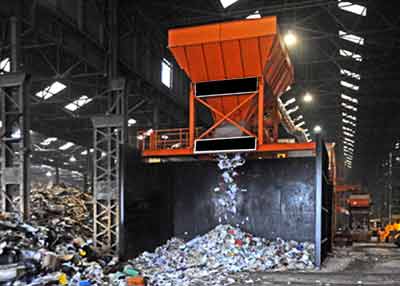
- Waste generation in Ireland continued to increase in 2020. Our rising levels of waste make it difficult to maintain or increase recycling rates.
- Ireland is in danger of missing future (2025) EU municipal waste and plastic packaging recycling targets.
- Ireland remains reliant on export markets for the treatment of specific waste streams including residual municipal wastes, hazardous waste, packaging waste and more recently biowastes.
- Immediate targeted actions are needed in 2023 to drive improvements in our municipal and plastic packaging recycling.
The EPA’s National Waste Statistics Summary Report for 2020, published today, reports on the most recent official data on waste generation and management in Ireland.
The report reveals a number of worrying trends.
Ireland is generating too much waste, but this is not just a waste management problem. There are wider climate and environmental impacts of increasing waste such as the land-use, resources, chemicals and the energy involved in the creation of products that become waste. In 2020 key waste streams were also impacted by Covid restrictions:
- Municipal waste increased from 3.1 million in 2019 to 3.2 million.
- Packaging waste remained high at 1.1 million tonnes, the fourth year in a row that total packaging waste generated exceed 1 million tonnes.
- Construction waste decreased by 600,000 tonnes to 8.2 million tonnes
- Overall waste generation increased to 16.2 million tonnes, up from and 12.7 million tonnes in 2012.
Ireland’s waste generation continues to increase in line with economic growth, indicating that we have not succeeded in moving from the linear economic model of “take, make, use, and waste”.
A recent OECD study found that Ireland has a circular material use rate of 1.8%, relative to an EU average of 12.8% . We need to move to circular economy where resources are re-used, repaired or recycled as much as possible, and the generation of waste is minimised.
Ms Sharon Finegan, (Director of the EPA’s Office of Environmental Sustainability) noted,
“A circular economy is one that is based on less waste and more reuse of materials; these trends show Ireland is going in the wrong direction. Our rising levels of waste are unsustainable and immediate steps must be taken to address these trends. Systemic change is needed across all economic sectors to shift the focus to designing out and reducing waste and promoting reuse and recycling.”
Ireland is continuing to meet many of its current EU targets. However, targets for 2025 and beyond are extremely challenging. Our increasing levels of waste are undoing our efforts to recycle more, and our rate of recycling has stagnated.
For example:
- Municipal waste recycling rate was 41% in 2020, however it must reach 55% by 2025.
- Plastic packaging recycling rate was 29% in 2020, however it must reach 50% in 2025.
Disposal to landfill has fallen sharply in Ireland over the past decade; a welcome development since this is the least desirable option in the waste management hierarchy. The municipal waste landfill rate in 2020 was 16%, down from 58% in 2010. The share of municipal waste sent for energy recovery increased from 4% in 2010, to 42% in 2020.
Ireland remains heavily reliant on export for the treatment of a number of key waste streams, pointing to some significant waste infrastructure deficits and missed opportunities to foster a circular economy.
Exported waste for treatment in 2020 included:
- 27% of biodegradable waste;
- 39% of municipal waste;
- 55% of hazardous waste;
- 50% of packaging waste; and
- almost all WEEE was exported for the final treatment step.
Commenting on the recycling trends Mr Warren Phelan, (Programme Manager of the EPA’s Circular Economy Programme) said:
“Our rising levels of waste are unsustainable and are threatening Ireland’s achievement of EU recycling targets. We urgently need mandatory incentivised charging for the collection of non-household (commercial) municipal waste. We need to increase the rollout of brown bins, collect more food waste separately and increase the capture of plastic packaging for recycling at collection and processing stages.”
Further information: Contact Ms Emily Williamson, EPA Media Relations Office, Tel: 053 9170770, Email: media@epa.ie.
“Scarlet Ribbons“
The folk style ballad, “Scarlet Ribbons” was written in just 15 minutes in 1949 in Port Washington, New York, with lyrics by the late Minnasota native Jack Segal and music by the late Texas native Evelyn Danzig Levine.
There have been many recorded versions on several recorded Christmas albums, but none better than that by the great American singer, Grammy Award winner, activist, actor and current 95-year-old Mr Harry Belafonte, (born Harold George Bellanfanti Jr).
I peeped in to say goodnight,
Then I heard my child in prayer,
“And for me some scarlet ribbons,
Scarlet ribbons for my hair”.
All the stores were closed and shuttered.
All the streets were dark and bare.
In our town, no scarlet ribbons,
Not one ribbon for her hair.
Through the night my heart was aching.
Just before the dawn was breaking.
I peeped in and on her bed,
In gay profusion, lying there,
Lovely ribbons, scarlet ribbons,
Scarlet ribbons for her hair.
If I live to be a 100,
I will never know from where,
Came those lovely scarlet ribbons,
Scarlet ribbons for her hair.
END
It was with great sadness that we learned of the death, on Sunday last, 4th December 2022, of Mr Eddie Hackett, formerly of Derheen, Thurles, Tipperary.
Pre-deceased by his parents Margaret and Tom, brothers Paddy, Jim and Thomas; Mr Hackett passed away unexpectedly, while in the care of staff at Rathkeevan Care Home, Clonmel, Co. Tipperary.
His passing is most deeply regretted by his loving family; sister Margaret, nephews, nieces, grand-nephews, grand-nieces, brother-in-law P.J., extended relatives, neighbours,the Haywood Lodge community and friends.
Requiescat in pace.
Funeral Arrangements.
The earthly remains of Mr Hackett will repose at Hugh Ryan’s Funeral Home, Slievenamon Road, Thurles, on Friday evening next, December 9th, from 5:00pm to 7:00pm, before being received into the Church of St. Joseph and St. Brigid, Bothar-na-Naomh, Thurles, at 7:45pm.
Requiem Mass will be celebrated on Saturday morning, December 10th, at 10:00am, followed by interment immediately afterwards in St. Patrick’s Cemetery, Moyne Road, Thurles, Co. Tipperary.
For those who are unable to attend Requiem Mass for Mr Hackett, same can be viewed, streamed live online HERE.
The extended Hackett family wish to express their appreciation for your understanding at this difficult time and have made arrangements for those wishing to send messages of condolence, to use the link shown HERE.
Ar dheis Dé go raibh a anam uasal.
Efforts by Tipperary Co. Council engineers, same intended to slow traffic, while increasing pedestrian safety in Thurles, are proving costly for local taxpayers.
Photographs hereunder, taken today, show lights on two busy pedestrian crossings, situated on Parnell Street (comprising an area of the N62 & R498), totally eradicated; one outside Thurles Credit Union offices and the other just below the main entrance to Semple Stadium, at the busy junction of Bohernanave.
The directional signage for the village of has also been adjusted. Same image can be viewed on Slievenamon Road (N62) at the junction with Thomond Road and Fianna Road.
Of course all of this destruction is being caused by high sided vehicles forced to mount footpaths, while attempting to pass each other on strips of roadway not fit for purpose. All of these issues are being caused by poor, below standard, planning within Tipperary Co. Council’s engineering department.
Further evidence of this poor engineering ability can be viewed HERE and HERE and HERE and HERE etc. etc.
We wonder are road engineers graduating too soon from colleges, with little or no real project work being undertaken? Perhaps the problem is more the fact that lecturers engaged in giving such training, themselves lack on-the-job experience.
Thurles residents have in the past watched the money being wasted at the N62 junction, opposite Lidl on Slievenamon Road in the town, where road adjustments were required on no less than 3 different occasions, at massive cost to the taxpayer.
Meanwhile, 25 years later, after Thurles Council’s first submission for a town road bypass; local, elected representatives have failed dismally to obtain funding for a bypass for Thurles town, and now we hear same issue may be included as part of the 2040 National Development Plan.
With two elected TD’s living in the town, (one of whom, Fianna Fáil’s Mr Jackie Cahill, latter who claims to have “the ear of Micheál Martin”), now twenty five years later, Thurles is viewed as the “poor relation” of other towns in the county; as continued waste of taxpayer’s money, by Tipperary Co. Council, continues unabated, while our Local Property Taxes (LPT) increase.
|
Support Us Help keep Thurles.info online by donating below. Thank you.
Total Donated 2026: €290.00
Thank You!
Daily Thurles Mass Livestream
|








Recent Comments