M7 night closures proposed between Borris-in-Ossory and Moneygall, for resurfacing works.
Motorists are being advised of proposed overnight closures on sections of the M7 between Junction 21 at Borris-in-Ossory(Co. Laois) and Junction 23 at Moneygall, (Co. Offaly), both junctions located in Co. Tipperary.
Tipperary County Council has published a notice of its intention to temporarily close sections of the motorway in both directions to facilitate surfacing works.
The proposed closures are:
M7 westbound from Junction 21 to Junction 22.
M7 westbound from Junction 22 to Junction 23.
M7 eastbound from Junction 23 to Junction 22.
M7 eastbound from Junction 22 to Junction 21.
The closures are proposed to operate nightly from 7:00pm on Thursday, October 22, 2026, until 6:00am on Saturday, December 19th, 2026.
Diversion routes will use sections of the R435, R445 and N62, depending on which section of the motorway is closed.
The works are being planned to allow resurfacing of the M7 in both the eastbound and westbound directions.
Importantly, the council notice is currently an intention to close the road, meaning the temporary closure order has not yet been finalised.
Objections to the proposed closure can be submitted to Tipperary County Council up to 12 noon on Thursday, October 8, 2026.
A new law raising the minimum age for e-scooter users in Ireland has officially come into effect.
From today 2nd October 2026, anyone under the age of 18 is no longer permitted to use an e-scooter in a public place. The minimum age had previously been 16.
The change was introduced by Minister for Transport Mr Darragh O’Brien and Minister of State with responsibility for Road Safety Mr Seán Canney as part of a series of measures aimed at improving safety for e-scooter users and other road users.
According to the Road Safety Authority, e-scooters became legal on Irish public roads in May 2024, subject to a range of conditions. The latest age restriction means 16 and 17 year-olds who were previously allowed to ride compliant e-scooters can no longer do so on public roads or in other public places.
The age change follows new safety requirements introduced on September 4th 2026. E-scooter riders must now wear a securely fastened helmet as well as high- visibility clothing covering at least the front and back of the torso.
Other rules remain in place. E-scooters are limited to a maximum speed of 20km/h, and riders must follow the rules of the road applying to cyclists. They may use cycle lanes, bus lanes and local, regional and national roads, but they are prohibited from footpaths, pedestrianised areas and motorways. Riders are also prohibited from carrying passengers or goods and from holding or using a mobile phone while travelling. E-scooters must have working brakes, lights, reflectors and a bell or other audible warning device.
The new minimum-age requirement represents another significant tightening of Ireland’s rules governing the use of e-scooters.
At what point do individual controversies over public spending stop looking like isolated incidents and start raising a much bigger question about governance, oversight, accountability and value for taxpayers’ money?
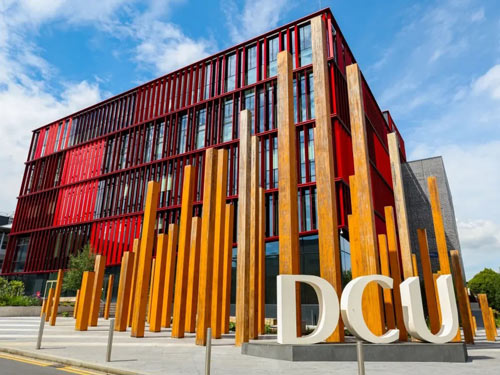
Consider what we now know. €4.38 Million – And Not A Single Student Bed Delivered Dublin City University has written off €4.38 million in professional fees connected with a proposed student accommodation development. Planning permission had originally been secured for 1,235 student beds at DCU. A first phase involving 405 beds received approval in principle for Government support, but following tendering, escalating construction costs raised value-for-money concerns and the development did not proceed. DCU says the €4.38 million included architectural and planning fees, two tender processes and redesign work required to comply with updated building regulations. Planning permission remains valid until 2029 and DCU is continuing to seek a viable funding solution, meaning the provision could potentially be reversed if the project ultimately proceeds. But the position today remains stark; €4.38 million spent – and no additional student accommodation delivered. At a time when students are struggling to find somewhere affordable to live, that deserves serious scrutiny.
Dublin City University.
The National Children’s Hospital — From €987 Million To About €2.24 Billion
Then there is the National Children’s Hospital. Construction began in 2016 and the project has experienced repeated delays and escalating costs. The estimated project cost has risen from approximately €987 million to €2.24 billion. As recently as September 2026, contractor BAM had submitted claims amounting to €983 million in disputed additional costs. These are claims, not established additional liabilities, and there remain substantial contractual disagreements between BAM and the National Paediatric Hospital Development Board. Whatever the eventual outcome of those disputes, the public is entitled to ask how one of the most important infrastructure projects in the history of the Irish State became so expensive and so delayed.
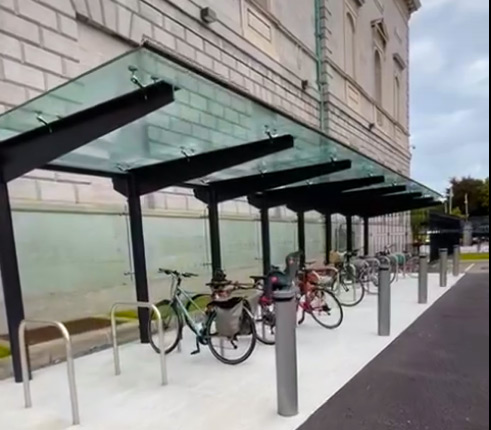
A Bicycle Shelter At Leinster House, €336,000. Then came the €336,000 bicycle shelter at Leinster House. This was not simply a case of members of the public deciding that something looked expensive. A subsequent Deloitte audit found an “absence of some fundamental good practices”, including the absence of a value-for-money assessment before the project proceeded. The audit found that when the decision was taken to proceed in 2021, project costs were neither presented nor discussed. That is precisely the type of governance issue taxpayers should be concerned about. If nobody properly establishes whether a project represents value for money before approving it, how can taxpayers have confidence that their money is being protected?
€336,000 Bicycle Shed
A Security Pavilion, €1.429 Million A separate security pavilion at the Leinster House/Government Buildings complex cost €1.429 million. It is important to acknowledge that this was considerably more than a simple “security hut”. The OPW said the development followed a Garda security review and incorporated extensive security, communications, CCTV, anti-ram protection, mechanical and electrical systems, underground works and the re-routing of existing services. The OPW also stated that the work went through an open competitive tender process. Nevertheless, €1.429 million remains an extraordinary amount of public money for a relatively small structure, and its cost understandably became another focus of questions over value for money in public construction.
Up To €3.9 Million In EV Grant Overpayments – Only About €109,000 Recovered Now here we have another troubling example. The Comptroller and Auditor General has examined overpayments under the State scheme supporting electric vehicle purchases. When the scheme was extended to demonstration vehicles purchased by dealerships, EU State-aid limits applied. But the administration of the scheme relied heavily on self-declaration to establish whether individual dealerships were connected to larger dealership groups for the purposes of those limits.
That system failed to identify all of the relevant linked businesses.
The potential overpayments were subsequently estimated at up to €3.9 million.
As of September 2026, only approximately €109,000 had been recovered.
Some dealerships are contesting SEAI’s assessment, so it would be wrong to imply that every disputed euro has definitively been improperly retained.
But the Comptroller and Auditor General’s findings raise a fundamental governance question:- Why were sufficiently robust verification controls not in place before millions of euro in public money were paid out?
See also previous post:-“€20m Armoured Vehicle Fleet Raises Serious Questions Over Value For Money”. View HERE.
The Common Thread: Governance Before Spending These projects and schemes are very different. They involve different organisations, different circumstances and different explanations. It would therefore be unfair to suggest that every euro involved represents “waste”. But taken together, they raise legitimate and serious questions about how the Irish State protects taxpayers’ money:-
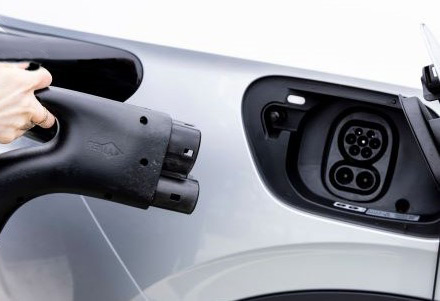
Electric Charging Station.
€4.38 million in professional fees on student accommodation that has yet to produce a bed.
€336,000 for the Leinster House bicycle shelter, followed by an audit identifying shortcomings in fundamental project practices.
€1.429 million for a security pavilion.
Up to €3.9 million in disputed EV grant overpayments, with only about €109,000 recovered so far.
A National Children’s Hospital now estimated at about €2.24 billion, following years of delays and substantial contractual disputes.
The common issue is not whether Ireland should build hospitals, provide student accommodation, improve security, install bicycle facilities or encourage electric vehicles. Of course we should invest in public services and infrastructure. The question is whether we consistently demand the same discipline when spending taxpayers’ money that families and businesses are expected to exercise with their own.
Governance should mean proper business cases before projects begin:-
Independent challenge of costs; Meaningful value-for-money assessments; Strong verification before grants are paid; Clear responsibility for decisions; Continuous monitoring as costs change; Swift action when something goes wrong.
Accountability after money has been spent is important, but prevention is far better. Every million unnecessarily lost to poor planning, inadequate controls, excessive costs or avoidable delays is a million that cannot be spent on housing, healthcare, disability services, education, policing or other essential public services and ultimately there is no mysterious pot of “Government money”. It is “taxpayers’ money”. The public has every right to expect that those entrusted with spending it can demonstrate not merely that procedures were followed, but that value was obtained. Because repeatedly discovering problems after millions, or billions, have already been committed is not enough.
Public money should be protected before it is spent, not simply explained after it is gone.
A multimillion-euro purchase of armoured vehicles for Ireland’s Defence Forces has come under renewed scrutiny after the State’s spending watchdog concluded that the fleet delivered substantially less value than had been expected.
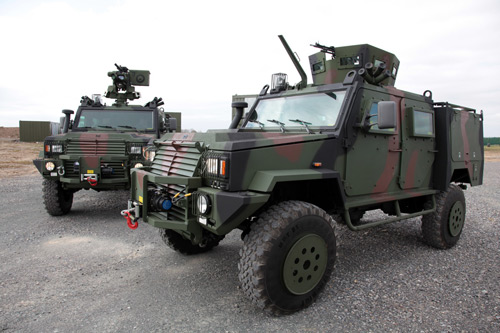
The Department of Defence purchased 27 RG-32M Light Tactical Armoured Vehicles from BAE Systems in South Africa in 2008, at a total cost of approximately €19.6 million. The vehicles were intended to bridge the operational gap between ordinary “soft-skinned” military vehicles and heavier armoured personnel carriers, giving Defence Forces personnel greater protection and mobility in potentially dangerous environments.
However, the Comptroller and Auditor General has found that the Defence Forces did not receive the level of service anticipated from the fleet. Although the vehicles were expected to remain operational for around 20 years, they were withdrawn from active service in December 2023, roughly six years earlier than originally planned.
RG-32M Light Tactical Armoured Vehicles.
Usage of some vehicles was remarkably low. The watchdog found that average annual mileage across the fleet was below 1,500 kilometres per vehicle, while individual vehicles recorded even lower levels of activity. Questions were also raised about the reliability of mileage records, with gaps and problems involving odometers leading the auditor to identify what it described as a serious fleet-management control failure.
Mechanical and logistical difficulties further reduced the usefulness of the fleet. Technical problems included drivetrain issues, while obtaining replacement parts was frequently difficult and resulted in delays to repairs and reduced vehicle availability.
Despite the fleet’s relatively limited use, the vehicles were deployed on overseas missions, including operations in Lebanon and Syria, as well as being used for training in Ireland.
The Department of Defence recorded an impairment, or write-down, of €2.77 million on the fleet. The Comptroller and Auditor General concluded, however, that the overall loss of value to the State was significantly greater because the vehicles were withdrawn early and had apparently seen relatively light use during their service lives.
The retired vehicles were subsequently offered to Ukraine, but the Ukrainian Armed Forces declined them after determining that they were unsuitable for their requirements. No final decision had been made on their disposal when the auditor reported.
The episode provides an important case study in the long-term costs associated with major defence procurement. Buying specialised military equipment involves much more than the initial purchase price: reliability, spare-parts availability, maintenance arrangements, accurate fleet records and the expected operational lifespan all play a major role in determining whether taxpayers ultimately receive value for money.
The Department of Defence has said lessons have been learned from the procurement and that purchasing procedures have changed significantly since 2008, with greater emphasis now being placed on the full life-cycle costs and sustainability of expensive military equipment.
With Ireland planning substantial further investment in Defence Forces equipment in the years ahead, the findings underline the importance of rigorous procurement, long-term logistical support and effective oversight of major public expenditure.
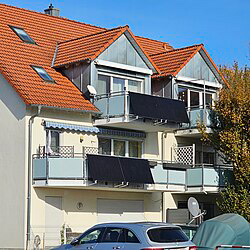
We recently looked into why small plug-in solar systems, sometimes called balcony solar, are widely available in countries such as Germany but are still difficult to use in Ireland.
Irish households are paying some of the highest electricity prices in Europe. Eurostat reported that Ireland had the highest household electricity price in the EU in the second half of 2025, at €40.42 per 100 kWh compared with an EU average of €28.96. At prices like these, people should have access to every safe and affordable way of reducing the amount of electricity they have to buy from the grid.
Balcony Solar
Small plug-in solar systems will not solve Ireland’s energy-cost problem, but they could give households a simple and relatively low-cost way to generate some of their own electricity. If certified 800-watt systems can be used safely elsewhere in Europe, Ireland should move quickly to establish clear standards, simple registration and approved products so Irish consumers can benefit too.
The answer is surprisingly simple. The solar panels themselves are not the problem. The main issue is how our electrical and grid rules currently treat them. In Germany, households can buy small solar kits, often around 800 watts, connect an approved micro-inverter and register the system through a simplified process. Some of these complete systems are sold by retailers such as Lidl for only a few hundred euro.
In Ireland, however, a small plug-in system is currently treated much more like a conventional solar installation. Grid-connected solar generally has to comply with ESB Networks requirements, Irish electrical standards and microgeneration connection rules. That makes a €300–€500 DIY solar kit far less practical here.
The good news is that Ireland is now actively examining the issue. The Department of Climate, Energy and the Environment has been considering plug-in mini-solar, together with ESB Networks and other relevant bodies. Safety issues, including how electricity flows back through household circuits are part of that work. Nobody is suggesting that electrical safety should be ignored. But other European countries have shown that small solar systems can operate within clear limits, using approved equipment and appropriate registration.
For Ireland, the important questions are now straightforward:
What maximum output should be allowed?
What safety standards should the inverter meet?
What electrical protections are required?
Can consumers register an approved system through a simple online process?
Once those questions are settled, Ireland can publish clear rules so consumers and retailers know exactly where they stand. Small plug-in solar will not replace rooftop solar farms or large home PV systems. But it could give people living in apartments, rented homes or houses, where a full solar installation isn’t practical, another way to generate some of their own electricity. It could also lower the entry cost of solar from several thousand euro to a few hundred euro.
Ireland has already spent considerable time examining this technology. The next useful step is for the Government, ESB Networks, CRU, NSAI and Safe Electric to complete that work and publish a clear, safe framework.
If an approved 800-watt solar kit can be safely used by households elsewhere in Europe, Ireland deserves a clear answer on how, and under what conditions, the same technology can be used here.
Let’s get the rules settled and give Irish consumers clarity.
This website uses cookies to improve your experience. We'll assume you're ok with this, but you can opt-out if you wish.AcceptRead More
Privacy & Cookies Policy
Privacy Overview
This website uses cookies to improve your experience while you navigate through the website. Out of these, the cookies that are categorized as necessary are stored on your browser as they are essential for the working of basic functionalities of the website. We also use third-party cookies that help us analyze and understand how you use this website. These cookies will be stored in your browser only with your consent. You also have the option to opt-out of these cookies. But opting out of some of these cookies may affect your browsing experience.
Necessary cookies are absolutely essential for the website to function properly. This category only includes cookies that ensures basic functionalities and security features of the website. These cookies do not store any personal information.
Any cookies that may not be particularly necessary for the website to function and is used specifically to collect user personal data via analytics, ads, other embedded contents are termed as non-necessary cookies. It is mandatory to procure user consent prior to running these cookies on your website.





Recent Comments