Pre-deceased by her daughter Niamh, parents Jack and Madge, brother John-Joe and nephew Joseph; Mrs Mullahy passed away peacefully, surrounded by her loving family, following a long illness most bravely borne.
Her passing is most deeply regretted, sadly missed and lovingly remembered by her sorrowing family; loving and devoted husband Chris, son Jarlath and his partner Meghan, grandchildren Jack, Leah and Ryan, sisters Anna (Power), Breda (Fallon, Two Mile Borris), Maureen (Ruth), nephews, nieces, brothers-in-law Joe, Joe, Richard, Michael, Tom and Michael, sisters-in-law Angela, Mary, Bríd, Carmel, Anne, Teresa and Pauline, cousins, extended relatives, neighbours and friends.
The extended Mullahy family wish to express their appreciation for your understanding at this difficult time, and have made arrangements for those persons wishing to send messages of condolence, to use the link shown HERE.
Agriculture accounts for 40% of deaths; three work-related fatalities recorded in Co. Tipperary.
Provisional figures published by the Health and Safety Authority (HSA) show 58 people died in work-related incidents during 2025, a 61% increase on the 36 deaths recorded in 2024. The HSA said the work-related fatality rate rose to 2.1 per 100,000 workers in 2025, up from 1.3 in 2024, while noting the long-term trend remains downward.
61% increase in work-related incidents during 2025.
Sector breakdown. The agriculture sector recorded 23 fatalities, accounting for 40% of all work-related deaths in 2025, from a sector employing approximately 4% of the workforce. Construction recorded 10 fatalities (up from five in 2024), while manufacturing recorded 5 fatalities (up from none in 2024).
Leading causes. The leading causes of workplace fatalities in 2025, included incidents involving heavy loads/falling objects, machinery or vehicles, and falls from heights.
Older and self-employed workers disproportionately affected. Of the 58 deaths recorded, 19 victims (33%) were aged 65 or over, with the oldest aged 88. Self-employed workers accounted for 23 deaths (40%), underlining the heightened risks faced by people working alone or without wider organisational supports.
County figures – Ref: Co. Tipperary. The HSA’s provisional county breakdown shows three work-related fatalities in Co Tipperary during 2025.
Commenting on the figures, HSA Chief Executive Mr Mark Cullen said the increase is “deeply concerning” and urged employers and workers to remain vigilant and avoid complacency regarding safety.
The Food Safety Authority of Ireland (FSAI) today advises that Nestlé is voluntarily recalling specific batches of its SMA infant formula and follow-on formula due to the potential presence of cereulide.
Cereulide is a toxin produced by some strains of the bacterium Bacillus cereus, which can cause food poisoning.
This recall is a precautionary measure being taken in the interest of public health, and there have been no reported cases of illness to date. The FSAI is advising parents, guardians and caregivers who may have the recalled products at home not to feed them to their infant or young child.
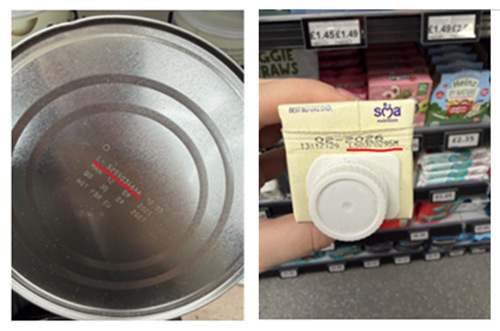
Batch codes can be found on the base of the tin or box for powdered formulas, or the base of the outer box and on the side / top of the container for ready-to-feed formulas.
The FSAI advises that cereulide toxin may be pre-formed in a food and is extremely heat resistant. Consumption of foods containing cereulide toxin can lead to nausea and severe vomiting. Symptoms can appear within five hours. The duration of illness is usually 6 to 24 hours.
The FSAI is advising parents, guardians and caregivers who may have the recalled products at home not to feed them to their infant or young child. If no symptoms are displayed, nothing further needs to be done. If a parent, guardian or caregiver is concerned about the health of their infant or young child, they should contact a healthcare professional.
Nestlé is advising its customers who have purchased any of these batches to contact:
Via its online form, sharing a photo of the product and the batch code: https://www.nestle.co.uk/en-gb/getintouch.
By calling its careline on 1800 931 832 (Ireland) or 0800 0 81 81 80(UK).
For more information, please see the Food Alert and Q&A.
Pre-deceased by his parents Denis and Kathleen; Mr Carr, sadly, passed away suddenly at his place of ordinary residence.
His passing is most deeply regretted, sadly missed and lovingly remembered by his sorrowing family; loving wife Martina, son Adam, daughter Lisa, aunts, uncles, cousins, sisters-in-law, brother-in-law, nieces-in-law, nephews-in-law, extended relatives, neighbours and friends.
Requiescat in Pace.
Funeral Arrangements.
The earthly remains of Mr Carr will repose at Kennedy’s Funeral Home, Castlecourt, Borrisoleigh, Thurles, (Eircode E41 VX81) on Wednesday afternoon from 5:00pm with removal at 7:00pm, before being received into the Church of the Sacred Heart, Pallas Street, Borrisoleigh, Thurles, same evening. Requiem Mass for Mr Carr will be offered at 11:00am, on Thursday morning, followed by a family service of cremation in Shannon crematorium, Illaunmanagh, Shannon, Co. Clare, (Eircode V14 PV30).
For those persons who would wish to attend Requiem Mass for Mr Carr, but for reasons cannot, same can be viewed streamed live online, HERE.
The extended Carr family wish to express their appreciation for your understanding at this difficult time, and have made arrangements for those persons wishing to send messages of condolence, to use the link shown HERE.
Met Éireann also listed a grass minimum (“Gmin”) for Gurteen of -6.0°C for the same reporting period.
Tipperary Weather forecast for Tomorrow (Tue Jan 6th 2026): A cold start with lots of cloud, patchy showers developing around early morning (about 7–8am), then generally brighter in the afternoon with sunny spells, before a few showers return around early evening. High around 6°C, low around -1°C to 0°C overnight/early morning.
Weather warning: A Met Éireann Yellow warning for low temperature/ice is in effect until 9:00am.
Note: Sharp frost and icy stretches/black ice risk, so lets be careful out there if you are driving.
This website uses cookies to improve your experience. We'll assume you're ok with this, but you can opt-out if you wish.AcceptRead More
Privacy & Cookies Policy
Privacy Overview
This website uses cookies to improve your experience while you navigate through the website. Out of these, the cookies that are categorized as necessary are stored on your browser as they are essential for the working of basic functionalities of the website. We also use third-party cookies that help us analyze and understand how you use this website. These cookies will be stored in your browser only with your consent. You also have the option to opt-out of these cookies. But opting out of some of these cookies may affect your browsing experience.
Necessary cookies are absolutely essential for the website to function properly. This category only includes cookies that ensures basic functionalities and security features of the website. These cookies do not store any personal information.
Any cookies that may not be particularly necessary for the website to function and is used specifically to collect user personal data via analytics, ads, other embedded contents are termed as non-necessary cookies. It is mandatory to procure user consent prior to running these cookies on your website.










Recent Comments