Uisce Éireann must use its new investment plan to end pollution of our rivers and coastal waters from waste water.
Over half of Ireland’s waste water discharges are not meeting EU standards set to protect the environment.
Uisce Éireann has committed to eliminating raw sewage discharges by 2025 from the majority of the 26 towns and villages with no treatment.
Uisce Éireann still does not have clear plans to prevent pollution at some of the most significantly impacted water bodies, and it is vital these are resolved through its new investment plan.
Treatment plants must be operated and maintained properly to prevent impacts on the environment.
The Environmental Protection Agency (EPA) report “Urban Waste Water Treatment in 2022”, released today, shows that Uisce Éireann has made progress in stopping discharges of raw sewage over the past year, with the connection of six villages to new treatment plants in 2022. However, waste water continues to harm the quality of many of Ireland’s rivers, estuaries, lakes and coastal waters. While works to upgrade treatment plants and prevent pollution are progressing in some areas, Uisce Éireann’s delays in other areas are prolonging the risks to the environment and public health.
Launching the report, Dr Tom Ryan, EPA Director said: “While it is encouraging to see continued progress in stopping the unacceptable practice of discharging raw sewage into our environment, waste water remains a significant pressure on Ireland’s water ways and is adversely impacting water quality. The pace at which Uisce Éireann is delivering improvements needs to accelerate to prevent pollution and protect water quality”.
He added: “Uisce Éireann must take the opportunity of its new investment plan for 2025 to 2029 to deliver waste water infrastructure that meets the needs of our society and protects and improves our environment into the future. The investment plan must prioritise resources to prevent pollution in the priority areas highlighted by the EPA.”
Thirty years after Ireland was required to bring provisions into force to comply with EU treatment standards set to protect the environment, less than half (45%) of waste water is treated to these standards. This is expected to improve significantly to over 90% when the upgrade of Ireland’s largest treatment plant at Ringsend in Dublin is complete.
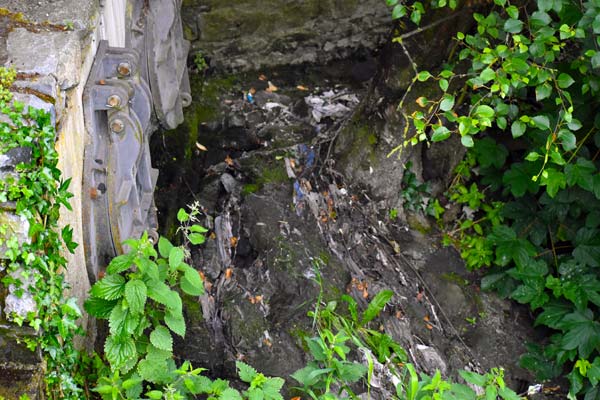
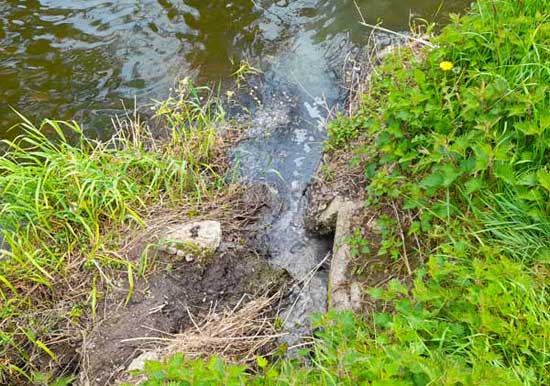
River Suir, ‘Barry’s Bridge’, Thurles, Co. Tipperary.
Mr Noel Byrne, EPA Programme Manager, said: “It is welcomed that Uisce Éireann is currently building infrastructure at large urban areas, including Ringsend and Arklow, which are designed to treat waste water to a high standard. However, poor management practices at upgraded plants, such as Skibbereen and Courtmacsherry, caused inadequately treated sewage to discharge into the environment. This is not acceptable as these plants have sufficient treatment capacity. Uisce Éireann must implement effective maintenance programmes for existing infrastructure and improve its operation and management of treatment plants to prevent such failures in future.”
Hard Undenyable Facts: It will take a multi-billion euro investment, and at least two decades, to bring all waste water treatment systems up to the standard needed to protect our environment and also provide for future needs. As all the problems cannot be fixed in the short term, Uisce Éireann must direct the resources that are available to the areas where they are needed most and will bring the greatest benefits. The EPA identifies the following as priority areas:
River Suir, Thurles, Co. Tipperary
*26 towns and villages that were discharging raw sewage daily in mid-2023. New treatment plants were recently completed at two of these, Kerrykeel, Co. Donegal and Liscannor, Co. Clare.
*15 large towns and cities where waste water treatment failed to meet European Union standards set to protect the environment. These include the greater Dublin area, served by an overloaded plant at Ringsend that treats over 40 per cent of Ireland’s urban waste water.
*39 areas where waste water is adversely impacting the quality of rivers, estuaries, lakes and coastal waters. Uisce Éireann is taking far too long to design and start delivering the improvements needed at many (28) of these areas.
*12 towns and villages where waste water treatment must improve to protect freshwater pearl mussels. Uisce Éireann’s failure to advance works at half of these areas is prolonging the risks to these endangered species.
*6 large towns and cities where collecting systems (sewers) must be upgraded to protect the environment and address the findings of a 2019 judgement from the Court of Justice of the European Union.
You can view the list of priority areas and the environmental issues at each area on the EPA website at the link HERE. This also shows when and how Uisce Éireann plans to resolve the priority issues at each area.
Mr Maher sadly lost his life following a car accident in Maine, U.S.A on Tuesday last.
His passing is most deeply regretted and sadly missed by his heartbroken family; his loving wife Elizabeth, adored daughters Ciara, Ava and Saoirse, loving parents Larry and Marie, sisters Breda (Kelly), Sinead (O’Shea) and Siobhán (Carrigan), grandfather Mickey Holden, brothers-in-law, sisters-in-law, parents-in-law, aunts, uncles, nieces, nephews, cousins, the extended Maher and Veroneau families, neighbours and a wide circle of friends.
Requiescat in Pace.
Funeral Arrangements.
Mr Maher’s Funeral will take place in Maine, U.S.A. with arrangements details to be announced later.
A Memorial Mass for Mr Maher will be celebrated here in Ireland at a date yet to be decided.
The extended Maher family wish to express their appreciation for your understanding at this difficult time and have made arrangements for those persons wishing to send messages of condolence, to use the link shown HERE.
People in Ireland feel that ‘others’ – such as future generations or people far away – are more threatened by climate change than themselves in the here and now.
This means that many people underestimate the immediate risks and already-occurring effects of climate change here in Ireland.
The youngest adults (18-24 years) consistently exhibit significantly higher levels of concern, with young women most concerned about climate change.
People in Ireland support climate change policies. Where opposition to climate policies arise, it appears to be driven by practical concerns, rather than by scepticism or suspicion of the science of climate change.
The Environmental Protection Agency (EPA) has today published two insight reports from its ‘Climate Change in the Irish Mind’ study. The reports ‘Climate Change in the Irish Mind – Support for Climate Policies’ and ‘Climate Change in the Irish Mind – Climate Risk Perceptions’ provide a detailed examination of some of the findings of the baseline study published in 2021.
The insight reports show that despite high levels of concern among the Irish public about climate change and high levels of overall support for climate action, there is a sense that ‘others’, or people in other countries and people in the future, will be more impacted than Irish people in the here and now. The reality is that climate change is already having real and measurable impacts on people in Ireland, and this is likely to increase in the future without concerted action.
The reports also show that among a minority of people (on average 30%) there is opposition to specific climate policies reflecting practical concerns such as the feasibility of electrifying home heating and transport.
Launching the reports, Dr. Eimear Cotter, Director of the EPA’s Office of Evidence & Assessment said: “This assessment indicates that the majority of people in Ireland support climate policies. People who oppose climate policies are not, however, climate deniers and opposition does not appear to be reflective of underlying concerns or suspicions around climate change. Rather, it appears to be specific to localised concerns and issues which must be addressed to enact major climate change policies”.
She added, “Today’s report also shows that there is an ‘othering’ or disconnection from the impacts of climate change. People believe that it will harm people in the future, far away, animals and plants, other people, and lastly themselves personally. This shows how important it is to convey the immediacy of the threat of climate change to people, that each of us is already being impacted by it and will be increasingly impacted into the future unless action is taken now”.
The Climate Change in the Irish Mind insight reports focus on the national responses to risk perceptions and policy support.
Speaking about the findings Dr. Conor Quinlan, Senior Manager in the Office of Evidence and Assessment said: “Age is the biggest factor in determining how concerned people are about climate change. The youngest adults (18-24 years) consistently exhibit significantly higher levels of concern and risks perceptions in relation to climate, with young women disproportionately concerned about climate change. And unlike some groups, they act on these concerns: young people’s consumer choices and purchasing patterns reflect their perception of climate change as a major risk”.
The insight reports can be found on the EPA website, HERE and HERE.
Pre-deceased by her parents John and Norma; Mrs Walsh passed away peacefully, surrounded by her loving family, while under the care of staff at Tipperary University Hospital, Clonmel, Co. Tipperary.
Her passing is most deeply regretted and sadly missed by her devoted husband Michael, sons Mark, Cian, Cormac and Ben, daughter-in-law Cristina, grandson Samuel, brother Val, sisters Denise and Madelaine, nephews, nieces, brothers-in-law, sisters-in-law, uncle, aunts, extended relatives, great neighbours and a wide circle of friends.
For those persons who are unable to attend the funeral service for Mrs Walsh, same can be viewed streamed live online, HERE.
The extended Walsh family wish to express their appreciation for your understanding at this difficult time and have made arrangements for those persons wishing to send messages of condolence, to use the link shown HERE.
Image of whippet/greyhound killing caged Hare in St. Patrick’s cemetery Thurles, Co. Tipperary.
On July 25th 2023 last, Thurles.Info, together with the Mail On Sunday Newspaper, posted a story stating that local people had expressed anger over the fact that Thurles Municipal District Authorities were failing to introduce or indeed implement bye-laws. Same story related to the barbaric sacrifice of a gentle, harmless, trapped, live Hare; all of which was permitted to occur in St. Patrick’s Graveyard, Moyne Road, Thurles, Co. Tipperary. A video posted on social media and shown HERE, has already been viewed, much to the embarrassment of Thurles residents, on almost 75,000 occasions.
Garda at Thurles, having been made aware of the barbaric incident, which actually took place during a funeral service; and having viewed the social media video; undertook a criminal investigation into the issue.
This morning in St. Patricks Graveyard, the image now shown above, which met those visiting the final resting place of their loved ones, were appalled to view a 50.8cm x 76.2cm (20in x 30in) image of a greyhound sniffing a dead hare, which had been sacrificed as part of this funeral ceremony; during which, also, saw large quantities of alcohol consumed, as evidenced by the large amount of discarded bottles and cans left strewn about, for cemetery employees clean up and remove.
It would appear that the image together with a large amount of discarded wreaths was deliberately thrown in an area that would attract most attention and not in the area provided.
About time now that large plastic litter bins were positioned around this graveyard to dispose of waste matter, as is provided in other properly run graveyards.
Once again, we ask the Question; “What are we getting in return for increasingly rising Property Tax”. It certainly is not being used in Thurles to fill potholes.
This website uses cookies to improve your experience. We'll assume you're ok with this, but you can opt-out if you wish.AcceptRead More
Privacy & Cookies Policy
Privacy Overview
This website uses cookies to improve your experience while you navigate through the website. Out of these, the cookies that are categorized as necessary are stored on your browser as they are essential for the working of basic functionalities of the website. We also use third-party cookies that help us analyze and understand how you use this website. These cookies will be stored in your browser only with your consent. You also have the option to opt-out of these cookies. But opting out of some of these cookies may affect your browsing experience.
Necessary cookies are absolutely essential for the website to function properly. This category only includes cookies that ensures basic functionalities and security features of the website. These cookies do not store any personal information.
Any cookies that may not be particularly necessary for the website to function and is used specifically to collect user personal data via analytics, ads, other embedded contents are termed as non-necessary cookies. It is mandatory to procure user consent prior to running these cookies on your website.









Recent Comments