Fianna Fáil Senator Ms Imelda Goldsboro received €16,779 in travel and accommodation allowances in 2026 during an eight-month absence, through serious illness, according to an Irish Times report published today, 11th September 2026.
Ms Goldsboro said she continued working in Tipperary and while in hospital. Fianna Fáil subsequently said she was engaging with the Oireachtas to ensure her records and payments were accurate.
Ms Goldsboro’s political career includes serving on Tipperary County Council for the Carrick-on-Suir area from May 2014 until February 2025. She unsuccessfully contested the Tipperary constituency in the 2020 general election, Tipperary South in the 2024 general election, and the Agricultural Panel in the 2025 Seanad election. She also served on the South East Regional Drug and Alcohol Task Force. She became a senator in February 2025 last, following her nomination by An Taoiseach Mr Micheál Martin.
Following Ms Goldsboro’s appointment to the Seanad, her daughter Ms Amy Goldsboro, then 21 years of age, won a Fianna Fáil selection convention and was subsequently co-opted unto her mother’s vacant seat on Tipperary County Council, representing the Carrick-on-Suir area.
Travel and accommodation allowance payments continue automatically unless the member gives written instructions to stop them, according to an Irish Times report.
Oireachtas rules allow medically certified illness to be considered when assessing attendance requirements.
Pre-deceased by his parents Michael and Nora, brother Seamus, niece Louise, parents-in-law Eileen and Freddie (McBride); Mr Shanahan passed away peacefully, surrounded by his loving family, while in the care of staff at Tullamore General Hospital, Co Offaly.
His passing is most deeply regretted, sadly missed and lovingly remembered by his sorrowing family; loving partner Sonia (McBride), son Graham (Ballysimon Co Limerick), daughters Rosie and Catherine, sisters Mary (Fitzpatrick – Youghlarra, Nenagh, Co. Tipperary), Nonie (Hogan – Monaquill Killeen, Nenagh, Co. Tipperary), brothers Tommy (Ashford, Co. Wicklow), Paddy (Nenagh, Co. Tipperary), Gerard (Shannon, Co. Clare), nephews, nieces, aunts Molly and Una, sisters-in-law, brothers-in-law, cousins, extended Shanahan and McBride relatives, neighbours and friends.families.
For those persons who would wish to attend Requiem Mass for Mr Shanahan, but for reasons cannot, same can be viewed streamed live online, HERE.
The extended Shanahan and McBride families wish to express their appreciation for your understanding at this difficult time, and have made arrangements for those persons wishing to send messages of condolence, to use the link shown HERE.
Note Please: House strictly private on Sunday morning.
The Shanahan and McBridefamilies would like to thank Mr Shanahan’s personal GP Dr Patrick Yon Hin; Mr Kieran Slattery and team (Murphy’s Pharmacy); Dr. Paul Sheils and team at Tullamore general hospital, for the love, respect, kindness and dignity shown to Mr Shanahan.
Pre-deceased by her grandad Michael; Ms Phelan passed away peacefully at her place of ordinary residence, while in the arms of her loving family.
Her passing is most deeply regretted, sadly missed and lovingly remembered by her sorrowing family; loving and heartbroken parents Patrick and Deirdre, brother Lochlainn, sister Neala, grandparents, uncles, aunts, cousins, school friends, extended relatives, carers in the medical profession, neighbours and a wide circle of friends.
For those persons who would wish to attend the Mass of the Angels for Ms Phelan, but for reasons cannot, same can be viewed streamed live online, (Link to follow).
The extended Phelan and Tuohy families wish to express their appreciation for your understanding at this difficult time, and have made arrangements for those persons wishing to send messages of condolence, to use the link shown HERE.
Those wishing to attend the funeral will have the opportunity to meet with the family at the end of Mass in the Church. The family have requested that bright clothes to be worn at the Church, in memory of Ms Phelan.
Please Note: House private at all times please. Donations if desired to a charity of your choice.
Pre-deceased by her parents Thomas and Maura; Ms Hackett, sadly, passed away unexpectedly, while in the care of staff at Fennor Hill care facility, Urlingford, Co. Kilkenny.
Her passing is most deeply regretted, sadly missed and lovingly remembered by her sorrowing family; sister Mary (Treacy, Cloncleigh, Two Mile Borris), brother-in-law Billy, nieces Michelle, Aisling, Audrey and Avril, grand-nephew Danny, Sean and Kai, uncle, aunts, cousins, Fennor Hill care facility community, neighbours and friends.
For those persons who would wish to attend Requiem Mass for Ms Hackett, but for reasons cannot, same can be viewed streamed live online, HERE.
The extended Hackett family wish to express their appreciation for your understanding at this difficult time, and have made arrangements for those persons wishing to send messages of condolence, to use the link shown HERE.
On the morning of September 11, 2001, (25 years ago today), two hijacked passenger planes struck the Twin Towers of New York’s World Trade Center. Both towers collapsed.
Together with the attacks at the Pentagon and the crash of another hijacked aircraft in Pennsylvania, that day claimed nearly 3,000 lives, leaving families and communities grieving across the world.
For Cappawhite, County Tipperary, that loss had a familiar name: Mr Martin Coughlan.
Mr Coughlan was 53 years old, a carpenter working in the South Tower. He had made his home in Queens with his wife, Catherine, and their four daughters. During the unfolding tragedy, he called his wife, Catherine to tell her that something terrible was happening and that he was trying to get out. He never came home.
Those who knew Mr Coughlan remembered his pride in his craft and the long hours he worked to support his family. He had spoken of perhaps returning to Ireland. In Cappawhite, Co. Tipperary, more than 1,000 people attended a memorial Mass in his memory; a community gathering to mourn one of its own.
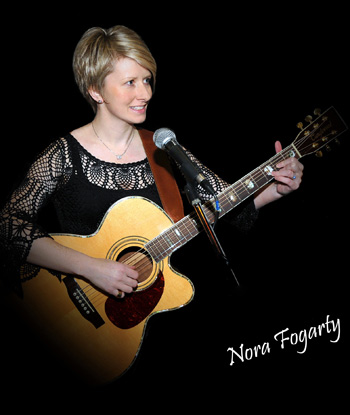
TalentedKilkenny singer and guitarist Ms Nora Fogarty, in the video hereunder, remembers the USA Terrorist Attack On 11th September 2001.
“Shattered Dreams”
(Lyrics written by Co. Kilkenny poet Kathleen Blanchfield).
As we remember that terrible day, let us hold Mr Coughlan’s family in our thoughts, alongside all those whose loved ones were lost. Behind every name is a life full of relationships, ordinary joys and plans left unfinished. Remembering Mr Coughlan means making room for that life, as well as mourning its ending.
May Mr Coughlan’s memory be held with love in Cappawhite, in New York, and wherever your story is told.
This website uses cookies to improve your experience. We'll assume you're ok with this, but you can opt-out if you wish.AcceptRead More
Privacy & Cookies Policy
Privacy Overview
This website uses cookies to improve your experience while you navigate through the website. Out of these, the cookies that are categorized as necessary are stored on your browser as they are essential for the working of basic functionalities of the website. We also use third-party cookies that help us analyze and understand how you use this website. These cookies will be stored in your browser only with your consent. You also have the option to opt-out of these cookies. But opting out of some of these cookies may affect your browsing experience.
Necessary cookies are absolutely essential for the website to function properly. This category only includes cookies that ensures basic functionalities and security features of the website. These cookies do not store any personal information.
Any cookies that may not be particularly necessary for the website to function and is used specifically to collect user personal data via analytics, ads, other embedded contents are termed as non-necessary cookies. It is mandatory to procure user consent prior to running these cookies on your website.






Recent Comments